Full of folk significance: Tainan’s “Shangbaishi Worship Festival” kicks off on the 10th
Reported by You T-Ru / Taipei
The annualShangbaishi Ancestral Worship Festival at Xuejia Ciji Temple
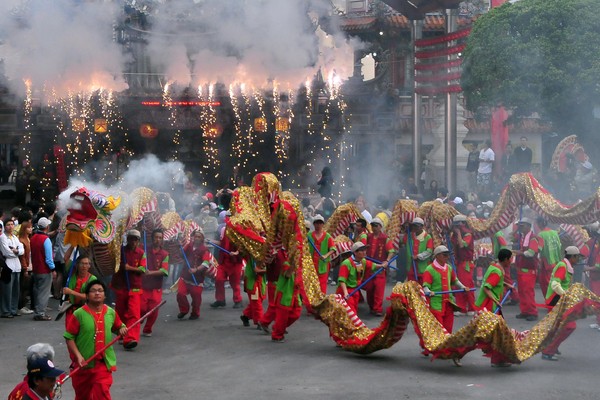
will take place this Thursday (the 11th day of the third lunar month). This unique event carries deep folk meanings such as “remembering one’s roots” and “passing on the incense of tradition,” and is closely tied to local history and development. The Tainan City Tourism Bureau recommends that interested visitors take the opportunity to experience the lively atmosphere during the festival and explore related local tours.
▲ The annual Shangbaishi Ancestral Worship Festival at Xuejia Ciji Temple will take place this Thursday (the 11th day of the third lunar month). (Photo / Provided by Tainan City Tourism Bureau)
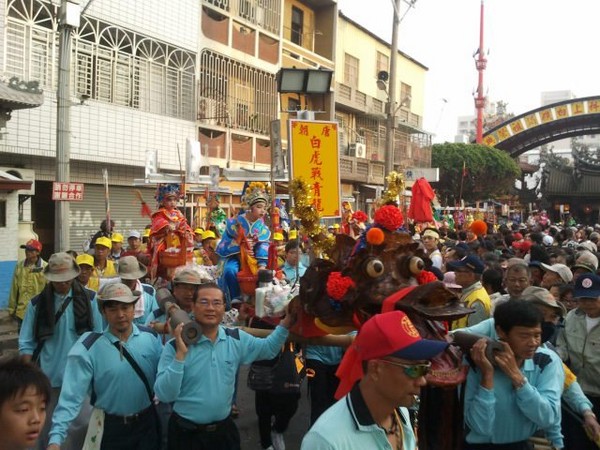
The main deity of Xuejia Ciji Temple is Baosheng Dadi, commonly known as Da Dao Gong (Great Emperor), who was brought to Taiwan by immigrants from Tong’an County, Quanzhou Prefecture, Fujian Province, during the late Ming Dynasty along with Zheng Chenggong’s forces, landing at the mouth of Jiujiang River near Touqianliao in Xuejia. The Shangbaishi Worship Festival originated during the Qing Dynasty. In the early days, residents of the Xuejia area often returned to their ancestral home in Tong’an’s Baishi Ciji Temple to pay homage. Since the birthday of Baosheng Dadi falls on the 15th day of the third lunar month, worshippers had to cross the sea several days earlier to make it in time, hence the decision to hold the festival annually on the 11th day of the third lunar month. After the Japanese colonial period, due to restricted cross-strait exchanges and travel difficulties, the ritual transitioned into a “sea-separated ancestral worship ceremony” held at the original landing site.
Share
This article is published by HowToTrip. Sharing and reposting are welcome — please credit the source.
Article URL: https://www.howtotrip.net/views-23745
Related Articles
- Shaoxing's "Grandpa Gourd" hangs the gourds back up: "If there are too many people, we'll interact less — just take a quick look from afar"
- Chinese authorities announce "reciprocal adjustment" to Japan visa fees — single-entry visa jumps from 2,250 to 16,750 yen!
- The "health stones" carried by a traveler were found to have radiation levels exceeding safety limits by a thousand times, potentially endangering fellow passengers on the same flight. Customs issues warning!
- Shenzhen Airport Issues Late-Night Notice: Unidentified Aerial Object Detected, Causing Widespread Flight Delays!
- “They only said it cost money after I opened the box and washed it!” 200g of grapes sold for 60 yuan on a high-speed train—12306 responds!
- Can't buy an airline ticket? Denied exit? Blocked from boarding? A large number of Chinese tourists have mysteriously become "discredited individuals"
- Adverse weather and economic fluctuations impact Colombia's coffee market
- Beach bathing area responds to 2 yuan/30 seconds fee for freshwater foot rinsing: Clearly priced!
- Taking off with an improperly closed cabin door? Wing malfunction? Multiple flights made emergency returns mid-journey!
- Experience the gifts of nature! A countdown of the world’s ten most stunning coastlines