Lovers of serene greenery will adore this Izu-style ryokan reminiscent of "The Izu Dancer"
Photos & text / *Japan’s 100 Famous Ryokan*: The definitive guide to Japan’s finest traditional inns by hospitality authority Kazutoshi Kashiwaya — 100 selections of breathtaking scenery, hot springs, and gourmet lodging
"A hot spring inn located in Yunodaira, Izu." Just hearing this description evokes a distinctly charming atmosphere. I believe Yasunari Kawabata must have felt the same, as he once stayed at a ryokan in Yunodaira for four and a half years while writing his renowned masterpiece, *The Izu Dancer*. A little further beyond Yunodaira lies the Amagi Mountain Range, where Kawabata is said to have found endless inspiration.
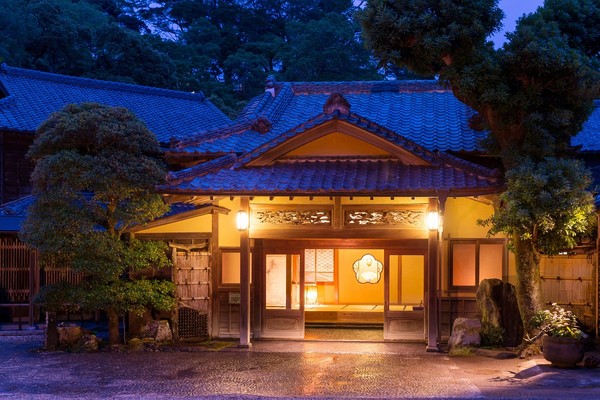
Izu is an extraordinary place, with the eastern, western, and central regions each offering distinct local flavors. Eastern Izu basks in abundant sunshine; Western Izu nestles against the towering Mount Fuji and faces the ocean reflecting the glow of the setting sun; while Central Izu is the most charming, with the Kano River meandering through the area, where tranquil greenery cradles a handful of secluded hot spring ryokan.
Among them, *Ryokan Ochiai-ryou Murakami* is the most quintessentially Yunodaira. As you stand at the entrance of the ryokan, no one can help but be enchanted by its unique charm. Few Japanese inn entrances can rival its beauty. Just seven years after the end of the Meiji Restoration, a hot spring inn called *Mimuyuurou* was established here, aiming to provide a place of rest and relaxation for those weary from the chaos and unrest of the post-restoration period.
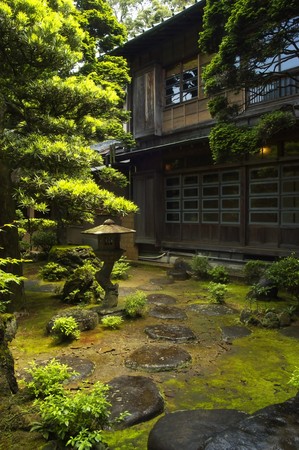
The owner hoped that guests staying here would gaze at the white clouds drifting across the sky and drift off to sleep peacefully—hence the name *Mimuyuurou*, meaning “Sleeping Clouds.” This became the precursor to *Ryokan Ochiai-ryou Murakami*. The current proprietor, inheriting the founder’s vision, deliberately named the annex *Mimuyuuroutei* (“Pavilion of Sleeping Clouds”). From the Meiji era through the Taisho and Showa eras, and until the 14th year of Heisei (2002), the ryokan underwent many changes before its management was passed on to the current owner. The main building, constructed in the early Showa period, was designated as a Tangible Cultural Property of Japan, thus sparing it from demolition, and fortunately preserving its original form to this day—an incredible feat.
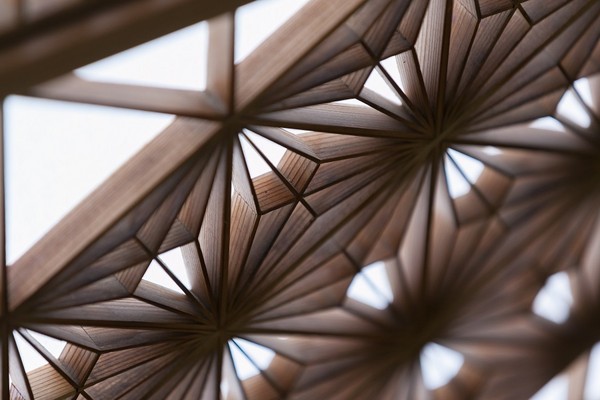
Similar to the *Fujiya Hotel* in Hakone, the staff here will gladly give guests a guided tour of the facilities upon request, along with detailed explanations. Just getting up close to admire the craftsmanship of the wooden lattice shoji doors and ranma transoms—masterpieces of traditional joinery techniques—is reason enough to visit.
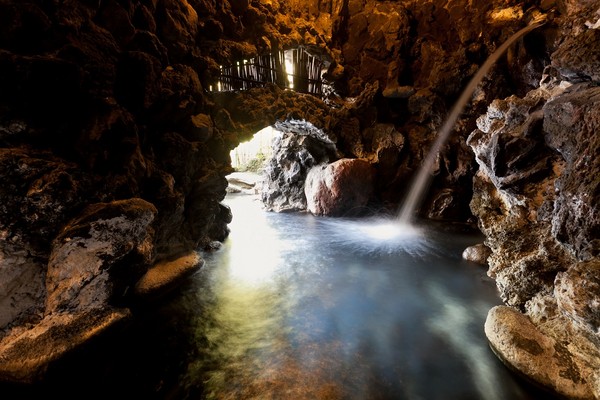
My recommended room is *Fujiji*, which comes with its own private open-air hot spring bath. Dine in a Western-style room with a Showa-era modern touch, then relax in a 10-tatami mat Japanese-style room or engawa veranda. When it’s time for a bath, use the flowing open-air hot spring, where lush greenery spreads out before your eyes and the gentle murmur of the Kano River reaches your ears—a truly luxurious and serene experience.
By the way, the name *Ryokan Ochiai-ryou Murakami* originates from two rivers.
The ryokan is situated at the confluence (original Japanese: “ochiau,” meaning “to meet”) of the Nekko River and the Hon’yama River, the headwaters of the Kano River—hence the name *Ochiai-ryou Murakami* (“Inn at the Confluence, Murakami”). The Nekko River is referred to as the “male river,” and the Hon’yama River as the “female river.” Their meeting point is believed to possess a powerful energy that brings people together. The bridge above the confluence is also named accordingly: the “Male Bridge” and the “Female Bridge.” Guests who cross these two bridges to stay at *Ryokan Ochiai-ryou Murakami* might just find themselves forging a beautiful connection.
Share
This article is published by HowToTrip. Sharing and reposting are welcome — please credit the source.
Article URL: https://www.howtotrip.net/views-23719
Related Articles
- Shaoxing's "Grandpa Gourd" hangs the gourds back up: "If there are too many people, we'll interact less — just take a quick look from afar"
- Chinese authorities announce "reciprocal adjustment" to Japan visa fees — single-entry visa jumps from 2,250 to 16,750 yen!
- The "health stones" carried by a traveler were found to have radiation levels exceeding safety limits by a thousand times, potentially endangering fellow passengers on the same flight. Customs issues warning!
- Shenzhen Airport Issues Late-Night Notice: Unidentified Aerial Object Detected, Causing Widespread Flight Delays!
- “They only said it cost money after I opened the box and washed it!” 200g of grapes sold for 60 yuan on a high-speed train—12306 responds!
- Can't buy an airline ticket? Denied exit? Blocked from boarding? A large number of Chinese tourists have mysteriously become "discredited individuals"
- Adverse weather and economic fluctuations impact Colombia's coffee market
- Beach bathing area responds to 2 yuan/30 seconds fee for freshwater foot rinsing: Clearly priced!
- Taking off with an improperly closed cabin door? Wing malfunction? Multiple flights made emergency returns mid-journey!
- Experience the gifts of nature! A countdown of the world’s ten most stunning coastlines