The understated elegance of Kyoto’s Ginkaku-ji Temple Visitors also come for its famed karesansui (dry landscape garden)
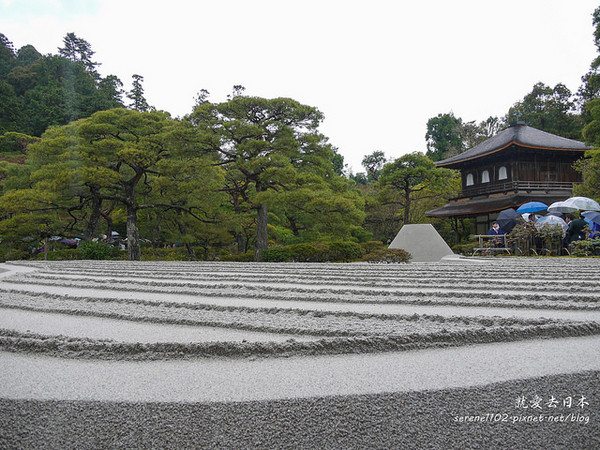
Photos and text byRight Forty-Five Degrees
When visiting Kyoto, people usually head to the glittering Kinkaku-ji (Golden Pavilion), but Right Forty-Five Degrees prefers the understated elegance of Ginkaku-ji—and also comes for its famed karesansui.
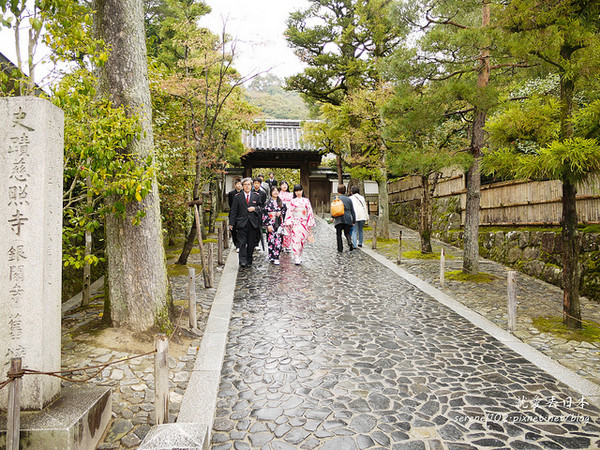
It was drizzling slightly when I took the bus to Ginkaku-ji. The temple approach and the gate were unexpectedly narrow, paved with stone, and compared to other temples’ grandeur, it felt quite simple.
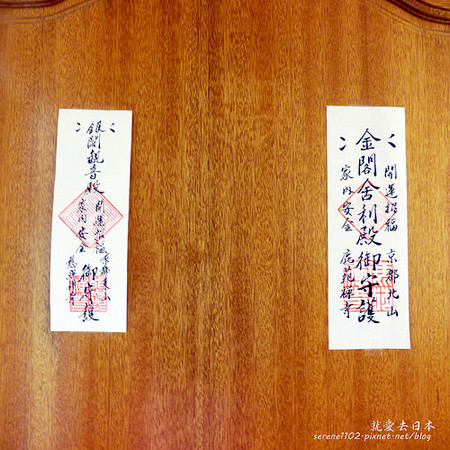
Both Ginkaku-ji and Kinkaku-ji issue entrance tickets as beautifully designed amulets. I carefully tucked mine away to take home and stuck it on my door—not just as a souvenir, but also as a symbol of protection for my home.
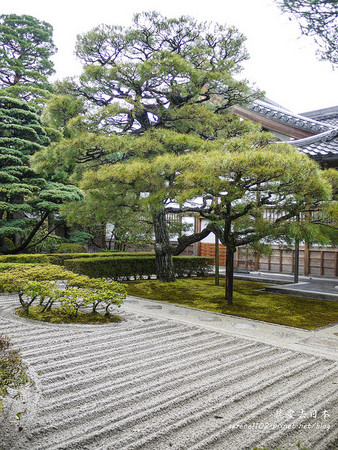
Not long after entering, I was truly surprised by the exquisite detail of the karesansui.
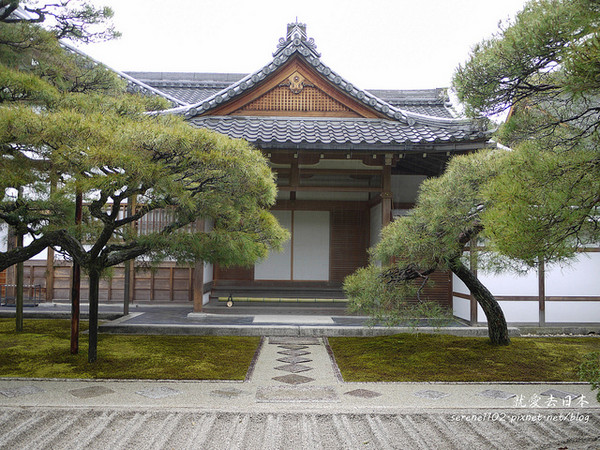
Ginkaku-ji’s original name is Jishō-ji, belonging to the Rinzai sect’s Kennin-ji branch, which represents Higashiyama culture. Both Ginkaku-ji and Kinkaku-ji belong to a branch of Kennin-ji, and their official websites are even combined. However, Kennin-ji isn’t well-known among tourists, whereas the two "Golden and Silver Temples" attract countless visitors.
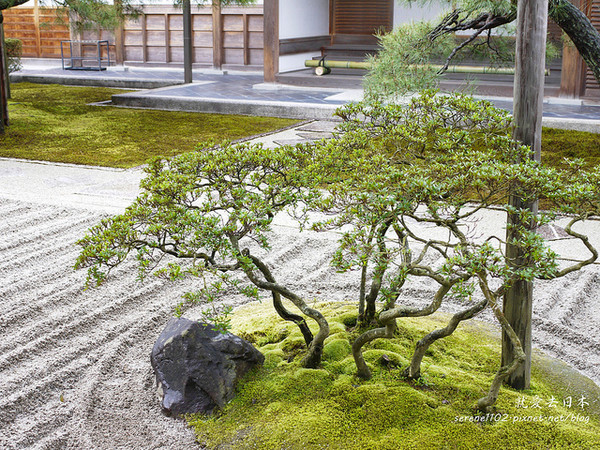
The founder of the temple was Ashikaga Yoshimasa. Initially, he built it as his personal villa, and it was only renamed Jishō-ji and converted into a temple after his death.
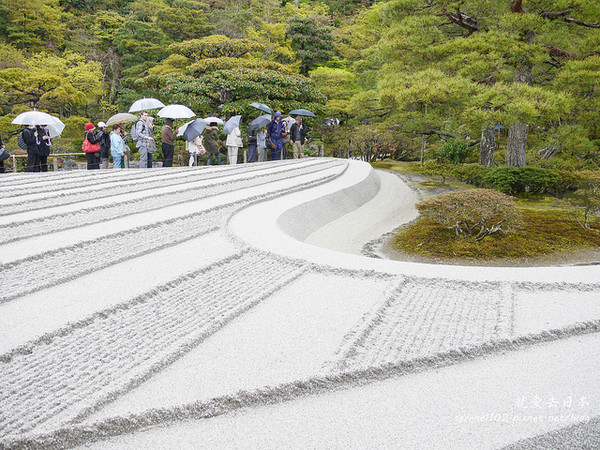
The silver sand mound in front of the main hall, along with the hall itself, were constructed after the mid-Edo period. Although I didn’t go inside the main hall this time, I heard that viewing the silver sand mound from inside is the most spectacular sight.

From the side, the silver sand mound is about 60 centimeters high. I mean, you’d have to step on it to create those patterns, right? But why doesn’t the weight of a single person make the sand collapse? I secretly guessed whether it’s like sand sculptures—with a high moisture content to keep it from falling apart.
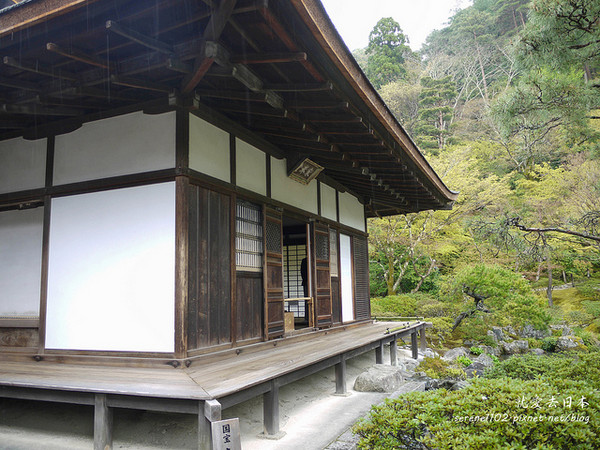
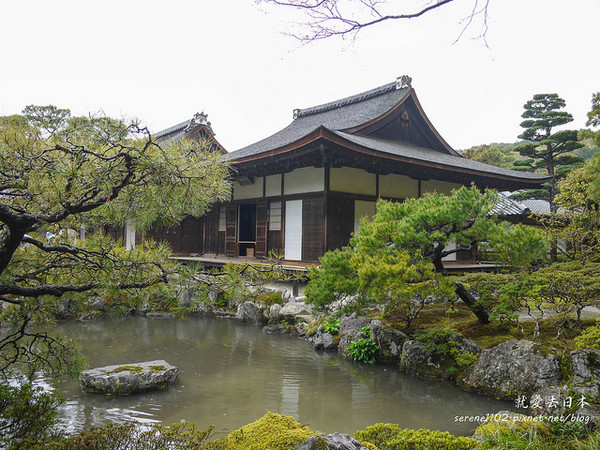
Ginkaku-ji preserves the Tōgudō (East Seeking Hall), which dates back to its original construction. The entire building is incredibly simple, and compared to many other temples I’ve seen in Kyoto, it more resembles a wealthy family’s garden. The main hall enshrines Shakyamuni Buddha, and its purity and simplicity, I feel, actually highlight the true essence of Buddhism even more.
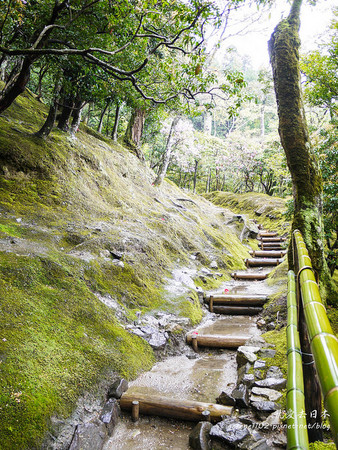
Walking toward the side of the garden, you can climb up a gentle hill via a mountain path.
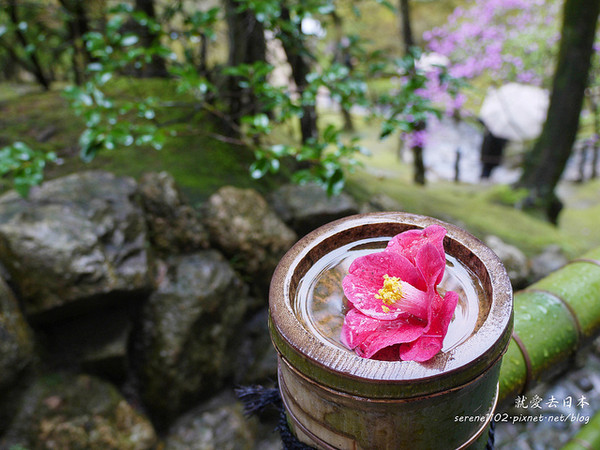
A single, fully bloomed camellia happened to land on a bamboo railing, its teardrop-shaped petals adding a splash of brilliant crimson to this pristine green hill.
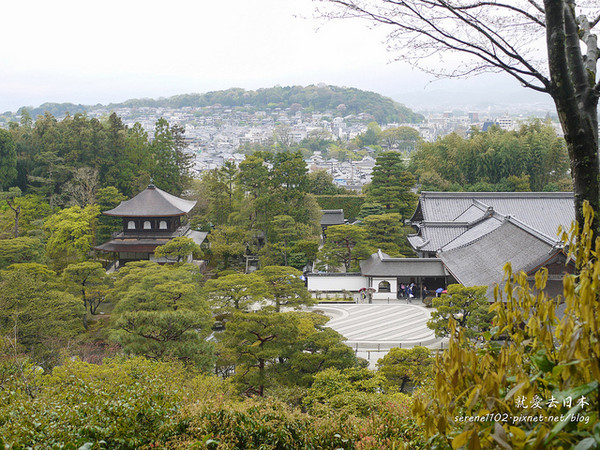
Climbing to the top, you get a bird’s-eye view of the entire temple—it’s truly a small yet exquisitely delicate scene.
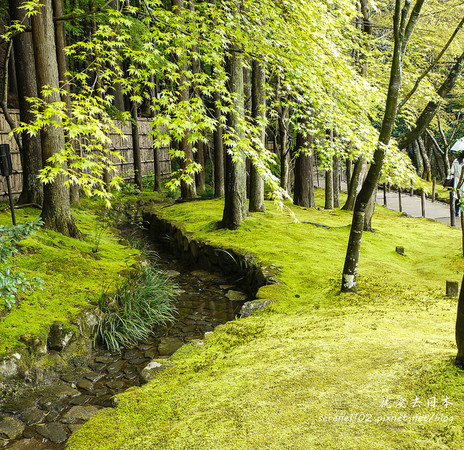
Walking through the garden, I found many fresh young green maple leaves sprouting in spring.
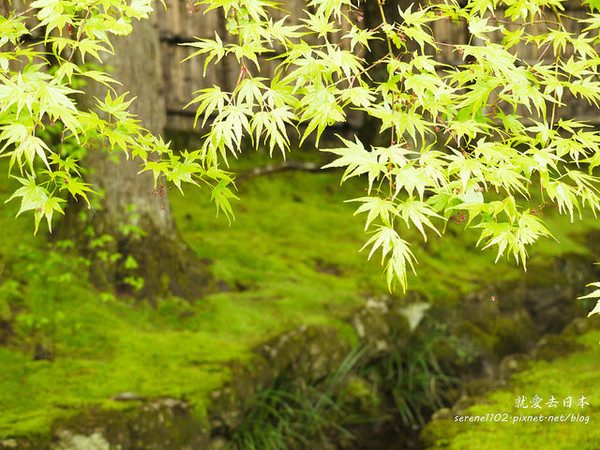
Ginkaku-ji isn’t a famous cherry blossom spot, and I think it’s because of these maples. Come autumn, I’d love to visit again and see how the temple, adorned in its annual vibrant reds, looks so captivating.
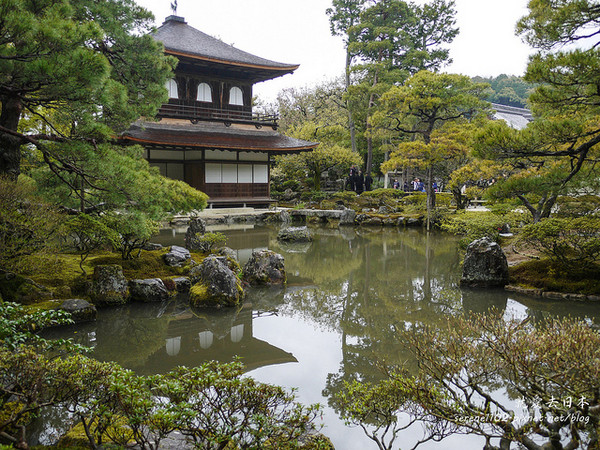
This is the Ginkaku (Silver Pavilion). When it was first built, it was a Kannon Hall, but later it came to be known by this name due to comparisons with the Golden Pavilion built by Ashikaga Yoshimitsu, Yoshimasa’s grandfather.
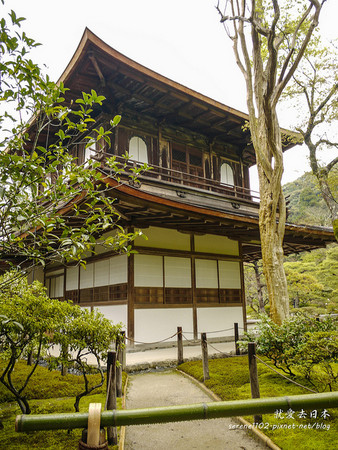
Looking at the Ginkaku from another nearby angle, the worn second-floor door panels subtly carry the traces of history.
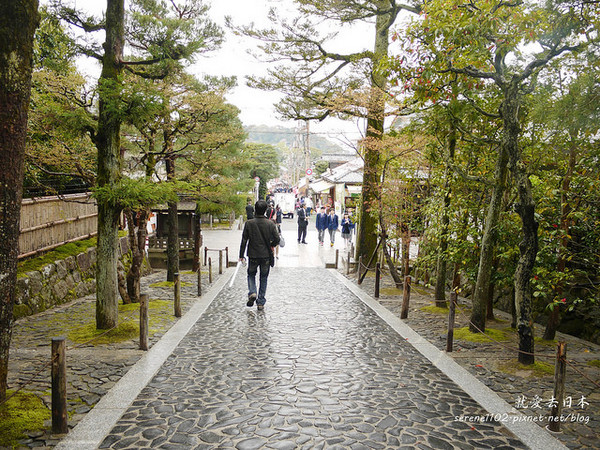
After leaving Ginkaku-ji, it took just over an hour. Back in the mundane world, of course, one must do something worldly… which meant heading to the first matcha dessert shop up ahead to the right (laughs).
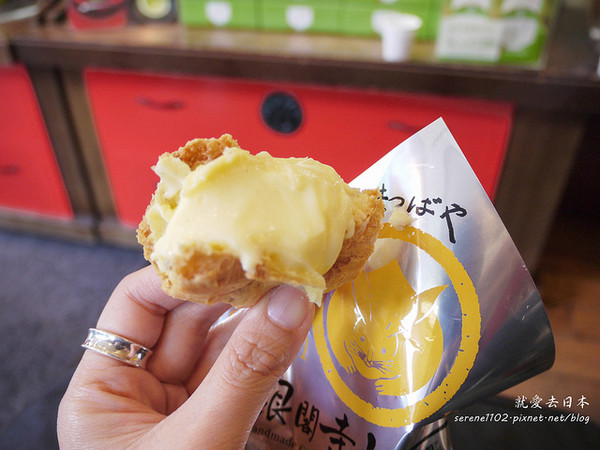
Seriously, this custard-filled cream puff was incredibly rich—the filling was so full that it kept oozing out no matter how I ate it, leaving me so shameless as to lick my fingers (laughs).
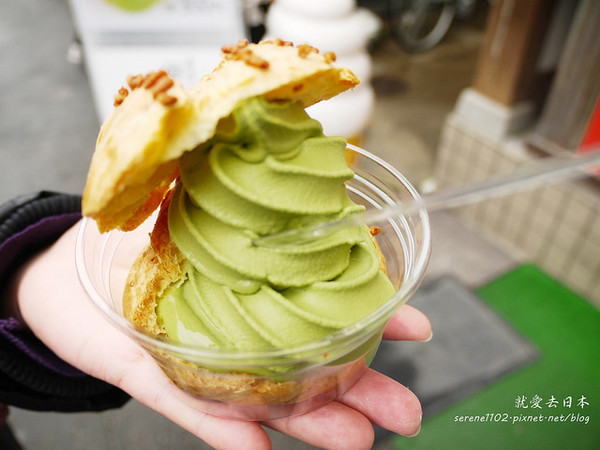
The matcha ice cream cream puff had ice cream that was thick, soft, and luscious—but paired with the puff pastry, it felt a bit mismatched. Putting them both in your mouth, you just want to sing a song: the two are completely “going their own separate ways”!
[Ginkaku-ji (Jishō-ji)]
Address:2, Ginkaku-ji-chō, Sakyō-ku, Kyoto
Website:http://www.ginkakuji.jp/
Phone:075-551-1234
Admission:500Q?br />
Directions:Take bus 32 or 100 and get off at "Ginkaku-ji-mae," then walk about 3 minutes. If you take bus 5, 17, 203, or 204 and get off at "Ginkaku-ji-dōri," it’s farther and requires a 10-minute walk.
VisitingHours:Summer (March 1 – November 30): 8:30 AM – 5:00 PM, Winter (December 1 – end of February): 9:00 AM – 4:30 PM, irregular holidays
Upper right 45-degree angle girl’s Japanese-style food travel diary
Just love going to Japan
http://serene1102.pixnet.net/blog
Share
This article is published by HowToTrip. Sharing and reposting are welcome — please credit the source.
Article URL: https://www.howtotrip.net/views-23320
Related Articles
- Shaoxing's "Grandpa Gourd" hangs the gourds back up: "If there are too many people, we'll interact less — just take a quick look from afar"
- Chinese authorities announce "reciprocal adjustment" to Japan visa fees — single-entry visa jumps from 2,250 to 16,750 yen!
- The "health stones" carried by a traveler were found to have radiation levels exceeding safety limits by a thousand times, potentially endangering fellow passengers on the same flight. Customs issues warning!
- Shenzhen Airport Issues Late-Night Notice: Unidentified Aerial Object Detected, Causing Widespread Flight Delays!
- “They only said it cost money after I opened the box and washed it!” 200g of grapes sold for 60 yuan on a high-speed train—12306 responds!
- Can't buy an airline ticket? Denied exit? Blocked from boarding? A large number of Chinese tourists have mysteriously become "discredited individuals"
- Adverse weather and economic fluctuations impact Colombia's coffee market
- Beach bathing area responds to 2 yuan/30 seconds fee for freshwater foot rinsing: Clearly priced!
- Taking off with an improperly closed cabin door? Wing malfunction? Multiple flights made emergency returns mid-journey!
- Experience the gifts of nature! A countdown of the world’s ten most stunning coastlines