A must-visit in your lifetime: The world’s 8 most unique zoos
Reported by Xiao Wanning / Comprehensive report
Besides amusement parks, zoos are definitely among the best places to take kids during holidays. Foreign media outlet eblogfa has also compiled a list of the world’s 8 most unique zoos, including those with the highest survival rates for released animals, all-in-one land-and-sea experiences, and the largest city zoo in the world. In fact, various types of zoos are mostly educational, and taking kids out should definitely include a trip to the zoo—you can also teach them a bit about conservation while observing the animals.
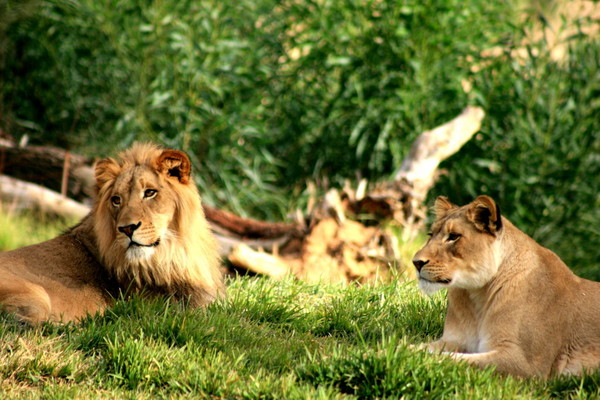
▲ Lions are one of the most popular stars in the zoo. (Photo / from the internet)
1. The world’s zoo with a high survival rate for released animals—Prague
Prague Zoo was established in 1931 and is located in the Troja district in the northern part of Prague. It houses a total of 4,422 domestic and endangered animals from 672 species. The zoo receives 1.2 million visitors annually. The Indonesian Jungle and Monkey Island are the most popular exhibits at Prague Zoo, featuring a variety of flora and fauna. The zoo is also very family-friendly, offering areas where children can interact with and feed local animals such as rabbits, lambs, ponies, and geese. It is the world’s largest breeding facility for the critically endangered Przewalski’s horse, and notably, animals released by Prague Zoo have a high survival rate. When visiting the zoo, it is recommended to set aside 4–6 hours, as it features diverse terrains and takes advantage of its tourism and educational activities.
2. All-in-one land-and-sea zoo—Switzerland
Basel Zoo, established on July 3, 1874, on 32 acres of land, is a locally popular zoo also nicknamed “Zolli,” home to a large number of exotic species. It now welcomes over 1.8 million visitors annually and houses more than 5,000 animals from nearly 600 species. The zoo’s future plans include the Ozeanium, a large marine aquarium that will be Switzerland’s first, expected to open in 2019.
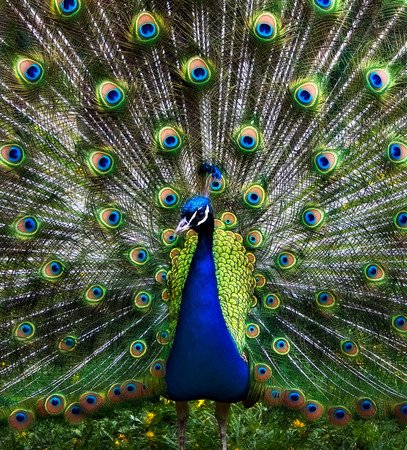
▲ A peacock displaying its feathers is very eye-catching. (Photo / from the internet)
3. SuperZoo with many reptiles—South Africa
South African National Zoo covers 210 acres. Established in 1899, the park manages over 10,000 specimens and 600 species of animals, including mammals, reptiles, fish, birds, invertebrates, and amphibians. In addition, the park is the country’s largest zoo and serves purposes such as research, training, and scientific advancement. Its aquarium is also the largest marine aquarium in the country, and the reptile park is one of its most attractive sections.
4. The world’s largest city zoo—USA
Bronx Zoo, opened on November 8, 1899, is located in the Bronx borough of New York City and is the world’s largest city zoo. The park collaborates with the Wildlife Conservation Society and the Association of Zoos and Aquariums, housing about 6,000 animals from approximately 650 species. The zoo receives around 700,000 visitors annually. Zoo staff recommend spending about 2 hours to see famous exhibits such as Tiger Mountain, Himalayan Highlands, and Congo Gorilla Forest.
5. One of the oldest zoos in the USA—Washington, D.C.
Smithsonian National Zoo is one of the oldest zoos in the United States (established in 1889) and is home to many feline species, such as tigers and lions. Additionally, the park includes a 3,200-acre campus known as the Smithsonian Conservation Biology Institute, a private institution that assists in the captive breeding of endangered species and trains caretakers for valuable fish species. These two facilities manage a total of 2,000 animals from 400 species.
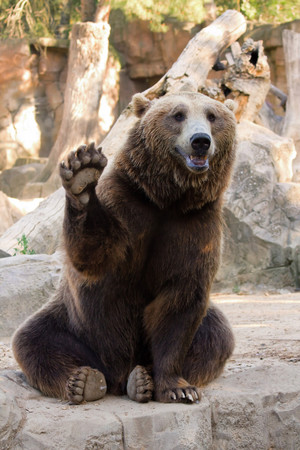
▲ Brown bears are also very cute. (Photo / from the internet)
6.Zoo with minimal caging—USA
San Diego Zoo is home to over 3,700 animals from more than 650 species and is most successful in giant panda breeding. With over 5 million visitors annually, San Diego Zoo hosts major animal exhibitions such as those featuring apes, monkeys, elephants, pandas, and polar bear diving. This zoo was also a pioneer in open enclosures, featuring fewer cages and reconstructing animals’ natural habitats to keep them in more naturalistic conditions.
7.The first zoo with captive breeding—Canada
Toronto Zoo, opened on August 15, 1974, covers 710 acres and is Canada’s largest zoo. It is divided into seven regions: Indo-Malaya, Africa, Americas, Tundra Trek, Australasia, Eurasia, and Canada. Each area not only features animals but also plants and environments designed to closely resemble their native habitats. This park was the first to implement a captive breeding program for black-footed ferrets. The zoo is expected to receive about 1.5 million visitors in 2014.
8. Educational zoo for travelers—Singapore
Singapore Zoo, also commonly known as Mandai Zoo, spans 69 acres and was established on June 27, 1963. It attracts 1.7 million visitors annually. Operated under Singapore’s wildlife conservation efforts, the zoo not only serves as an animal park but also plays an educational role for visitors. It is the first zoo in Southeast Asia to receive international certification for its environment, animal health, and safety standards. The zoo is home to 2,530 animals from 315 species.
Share
This article is published by HowToTrip. Sharing and reposting are welcome — please credit the source.
Article URL: https://www.howtotrip.net/views-23257
Related Articles
- Shaoxing's "Grandpa Gourd" hangs the gourds back up: "If there are too many people, we'll interact less — just take a quick look from afar"
- Chinese authorities announce "reciprocal adjustment" to Japan visa fees — single-entry visa jumps from 2,250 to 16,750 yen!
- The "health stones" carried by a traveler were found to have radiation levels exceeding safety limits by a thousand times, potentially endangering fellow passengers on the same flight. Customs issues warning!
- Shenzhen Airport Issues Late-Night Notice: Unidentified Aerial Object Detected, Causing Widespread Flight Delays!
- “They only said it cost money after I opened the box and washed it!” 200g of grapes sold for 60 yuan on a high-speed train—12306 responds!
- Can't buy an airline ticket? Denied exit? Blocked from boarding? A large number of Chinese tourists have mysteriously become "discredited individuals"
- Adverse weather and economic fluctuations impact Colombia's coffee market
- Beach bathing area responds to 2 yuan/30 seconds fee for freshwater foot rinsing: Clearly priced!
- Taking off with an improperly closed cabin door? Wing malfunction? Multiple flights made emergency returns mid-journey!
- Experience the gifts of nature! A countdown of the world’s ten most stunning coastlines