Hidden cinematic wonderland: Does Donghe’s Luanshan Tribe have a “walking tree”?
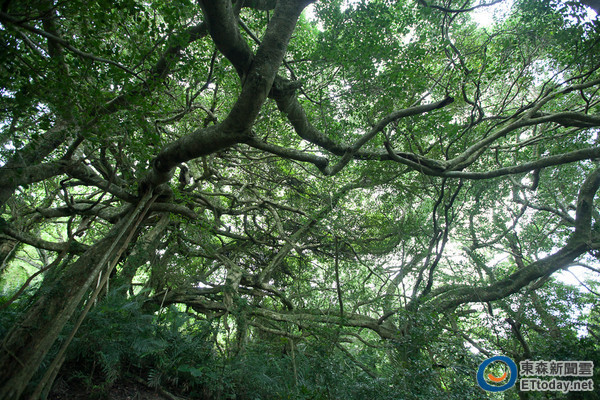
▲ A unique tree in the Luanshan Tribe is called the “walking tree” by local Indigenous people. (Photo / Reporter Xu Wenbin)
Reported by Chen Ziying / Taitung
Can a tree really walk? This “miraculous walking tree” in Donghe’s Luanshan Tribe was so mysterious that even Jackie Chan came here to film scenes for his movie “Chinese Zodiac.” Its enigmatic allure certainly piques travelers’ curiosity. Tucked away on a mountain trail, this hidden gem is unknown to those without a local guide—but to the Bunun people, it’s been a forest playground since childhood. Here, the intertwined roots of the banyan tree create a surreal sight, earning it the nickname “Avatar’s Homeland.”
Following Bunun friend Long into “Avatar’s Homeland” and getting up close with nature, you’ll suddenly look up to find this massive banyan that almost completely blocks out the sky. Its branches twist like giant serpents. Long says it’s the “walking tree.” But why is it called that? It turns out that the Bunun people originally lived at high altitudes and only began migrating during the Japanese colonial period. When they first arrived here, they saw the tree’s branches continuously stretching out with seemingly endless aerial roots, so they named it “Vakvak ka lun,” which in the Bunun language means “to take a step.” The banyan tree suddenly seemed to take on a life of its own, as if taking a human-like step forward.
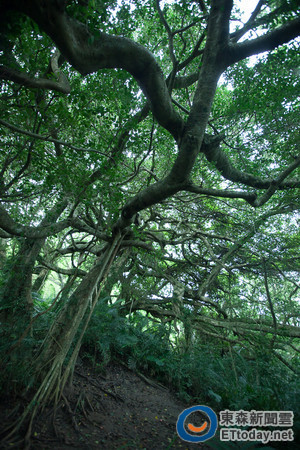
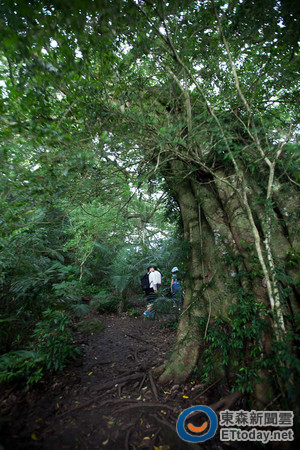
▲ The massive old banyan tree in the forest appears to be “walking.” (Photo arranged by reporter)

Facing the enormous old banyan from the movie, you can’t help but wonder: “How old is this banyan tree, really?” Long laughs and says, “When I was a kid, I asked my grandpa this, and he told me he had asked his grandpa the same thing when he was young.” “My great-grandpa said, ‘However old you think it is, that’s how old it is.’” Though this answer might sound like a dodge, it reflects the Indigenous people’s most carefree and harmonious attitude toward nature. They have lived in symbiosis with the old banyan for generations. But as for the tree’s actual age, the “serious” answer is that since banyan trees don’t have growth rings and no experts have officially assessed it, the age remains unknown.
There may be a sense of being fooled, but that’s precisely what makes the Indigenous friends so warm and amusing—their unfiltered sense of humor in everyday life. And so, the micro-travel journey through Taitung begins with the laughter shared after visiting the “walking tree” in the Luanshan Tribe.
※ The “Walking Tree” tour is organized by the Luanshan Tribe, including visits to the Forest Museum, the Walking Tree, and lunch. The cost is NT$500 per person for groups of 20 or more. Without lunch, the price is NT$300 per person for groups of 6 or more.
Share
This article is published by HowToTrip. Sharing and reposting are welcome — please credit the source.
Article URL: https://www.howtotrip.net/views-23026
Related Articles
- Shaoxing's "Grandpa Gourd" hangs the gourds back up: "If there are too many people, we'll interact less — just take a quick look from afar"
- Chinese authorities announce "reciprocal adjustment" to Japan visa fees — single-entry visa jumps from 2,250 to 16,750 yen!
- The "health stones" carried by a traveler were found to have radiation levels exceeding safety limits by a thousand times, potentially endangering fellow passengers on the same flight. Customs issues warning!
- Shenzhen Airport Issues Late-Night Notice: Unidentified Aerial Object Detected, Causing Widespread Flight Delays!
- “They only said it cost money after I opened the box and washed it!” 200g of grapes sold for 60 yuan on a high-speed train—12306 responds!
- Can't buy an airline ticket? Denied exit? Blocked from boarding? A large number of Chinese tourists have mysteriously become "discredited individuals"
- Adverse weather and economic fluctuations impact Colombia's coffee market
- Beach bathing area responds to 2 yuan/30 seconds fee for freshwater foot rinsing: Clearly priced!
- Taking off with an improperly closed cabin door? Wing malfunction? Multiple flights made emergency returns mid-journey!
- Experience the gifts of nature! A countdown of the world’s ten most stunning coastlines