Kyoto’s Gion Matsuri Begins in Japan: A Closer Look at the Millennia-Old Festival’s Intricate Details
Reported and photographed by You T□ Ru / Kyoto, Japan
As one of Japan’s three great festivals, the Gion Matsuri’s Saki Matsuri (preliminary ceremonies) officially kicked off on the 17th, while the main event, the Ondo Matsuri (grand parade), begins on July 24, featuring massive yamaboko floats paraded through all 33 districts of Kyoto. This time, ETtoday EBC News specially visited Kyoto during the Gion Matsuri, covering everything from the initial festival prayers to the start of the procession, focusing on the “Kuwabara Yamaboko” float to unravel the history of this over thousand-year-old tradition.
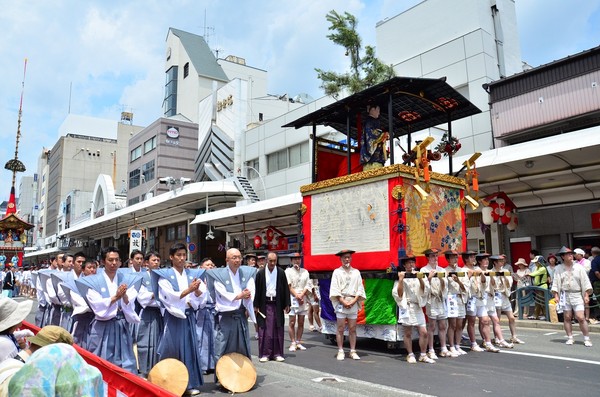
▲ Scene of the Kuwabara Yamaboko during the parade. (Photo / © Provided by the Kuwabara Yamaboko Preservation Association)
In fact, the least ideal travel season in Kyoto is summer. Once July arrives, the city’s sweltering heat can be quite unbearable. However, the millennia-old Gion Matsuri, which spans the entire month of July, attracts many travelers who deliberately choose to visit Kyoto during this time. Originating in the 9th century, when Japan was divided into 66 small feudal provinces, central Kyoto sought to appease a plague by asking each province to create a float and send it to Shinsen-en Shrine for prayer. After the disease subsided, the Gion Matsuri Goryoe (spirit-inviting ceremony) was held—this marked the festival’s origins.
What began as a ritual to dispel plague evolved into an important summer celebration. The Gion Matsuri is organized by Yasaka Shrine and kicks off on July 1 with the “Shifuiri, Naginata Hoko-chō no Onkidō” ceremony. On July 2, a lottery determines the order of the yamaboko parade. This is followed by prayers, purification rituals, leading up to the Saki Matsuri’s highlight—the “Yamaboko Junkō” (float parade)—on July 17. The entire festival concludes officially on July 31, making it a must-see event for visitors to Kyoto in the summer.
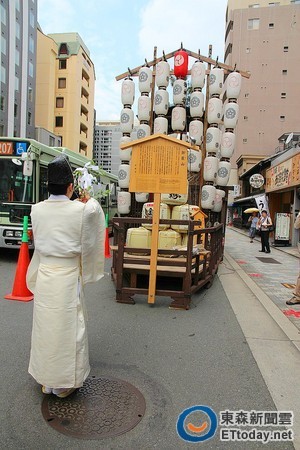
▲ % Spine? Xi Jie ?? Xie Lai Suo Cang Xing An De Wei Can Sheng.
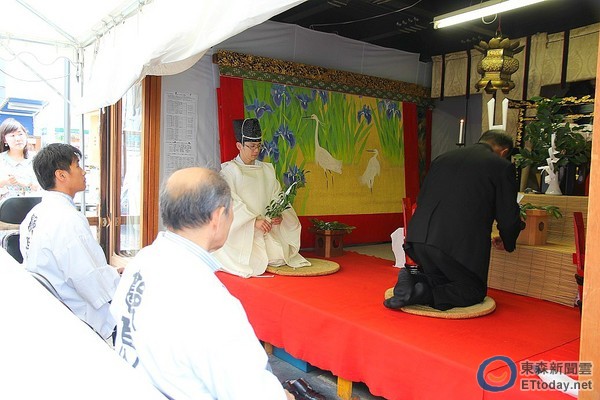
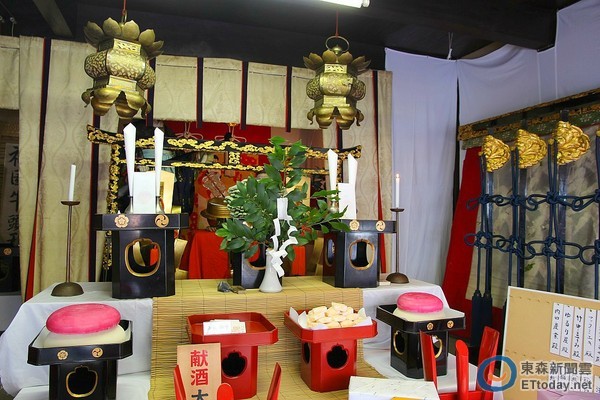
▲ Interior view of the worship area.
The reporter arrived at the “Kuwabara Yamaboko,” which had the final draw position in this year’s (2014) Saki Matsuri lottery, on the morning of July 15 to shoot footage. At that time, the Kuwabara Yamaboko was undergoing its final prayers before the parade, and its worship area, open to the public only once a year, was specially opened. The origin of the “Kuwabara Yamaboko” comes from the story of the filial son Guo Ju: one day, Guo Ju’s son unfortunately drowned. Worried about his elderly mother’s health and unable to bear telling her, Guo Ju secretly buried the child. Unexpectedly, his filial piety moved heaven—when the child was buried, thunder struck, and gold and money were found in the earth. The digging tool used and the rice pot symbolizing wealth became the important emblems of the “Kuwabara Yamaboko.”
The worship area enshrining statues of Guo Ju and his son is an important site open to the public only once a year. At other times, it remains closed. During the Gion Matsuri, Kuwabara Yamaboko staff conduct prayers here and offer residents “zongzi” (sticky rice dumplings) symbolizing peace and various omamori (protective amulets). Other yamaboko floats also follow this model, opening their areas for public worship or interior visits.
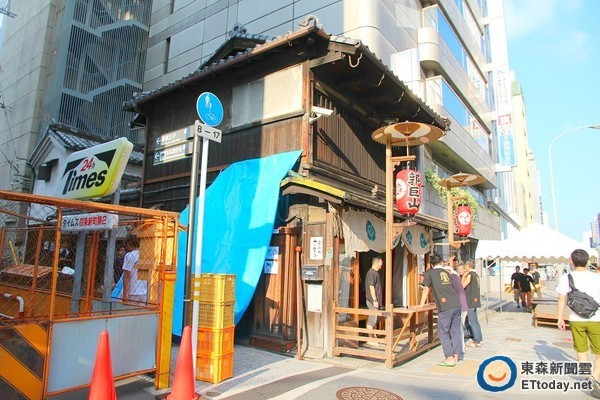
▲ The worship area for Guo Ju and his son is an important site open to the public only once a year.
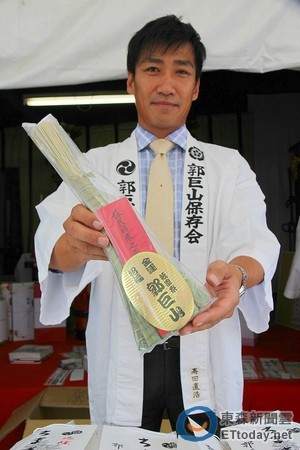
▲ Zongzi offered to visitors for warding off misfortune at home.
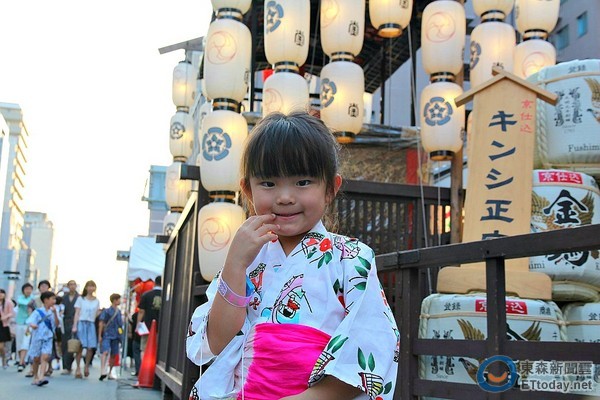
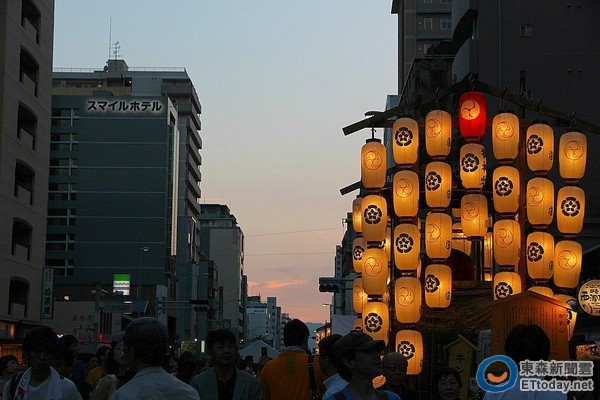
On the day before the Gion Matsuri, the 16th, known as “Yoiyama,” major streets in Kyoto are closed off starting at 6 p.m. Each yamaboko float is illuminated with nighttime decorations, accompanied by music and lined with stalls. People wear yukata (casual kimono) and stroll around the floats taking photos, praying for the safety and health of their families. This is the most atmospheric moment before the festival and one of the liveliest nights in Kyoto all year.
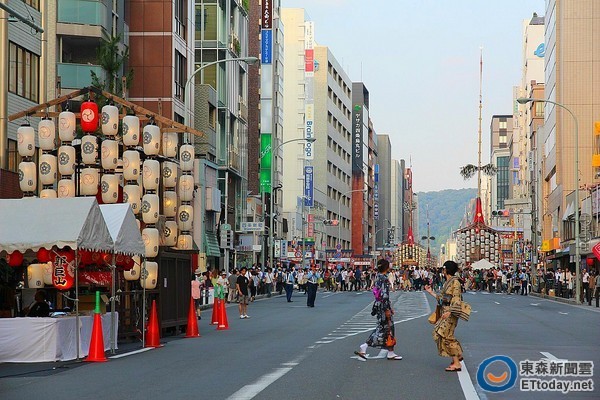
▲ % Ji Ba Zhan? Jian De Bi Dan Zheng, ? Ya Ye Ye Dian Liang.
On the 17th, the highlight of the festival, the reporter arrived at the Kuwabara Yamaboko site at 7 a.m. After a short wait, drumbeats could be heard from the roadside, signaling the official start of the festival. The Kuwabara Yamaboko then began its formal ceremonial preparations: first, the statues of Guo Ju and his son were placed on the float, then four sides were adorned with century-old woven tapestries, and key yamaboko insignia were inserted—transforming the entire Kuwabara Yamaboko into a dazzling sight.
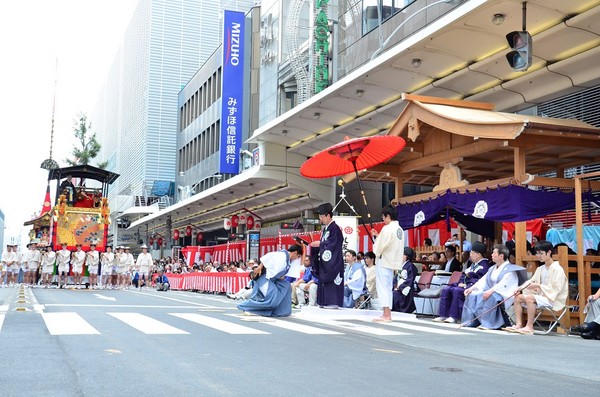
“In the past, yamaboko floats would parade through all corners of Kyoto. Now they only circle the four main streets,” explained Heihara Masataka of the Kuwabara Yamaboko Preservation Association. Walking through Kyoto’s alleys, if you notice certain corners with open spaces, they might have been preserved specifically to allow the floats to turn. The festival’s highlight, the “Yamaboko Junkō,” begins at 9 a.m. on the 17th. Based on the lottery results, each yamaboko parades through different parts of Kyoto, symbolizing the cleansing of impurities and the invocation of peace. Nearly all of Kyoto’s tourists and residents gather for the event, creating a spectacular scene.
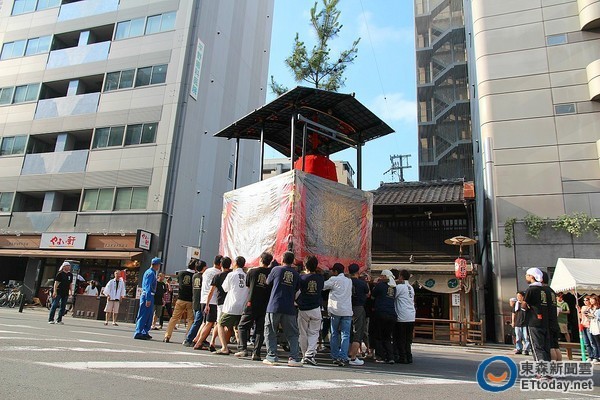
▲ % Ji Zhu? Xian Jiao Hu Lao Dao?, ?? Na Li Kan Cai Liao Fu, ? Zhen Xiang Cai She Wei.
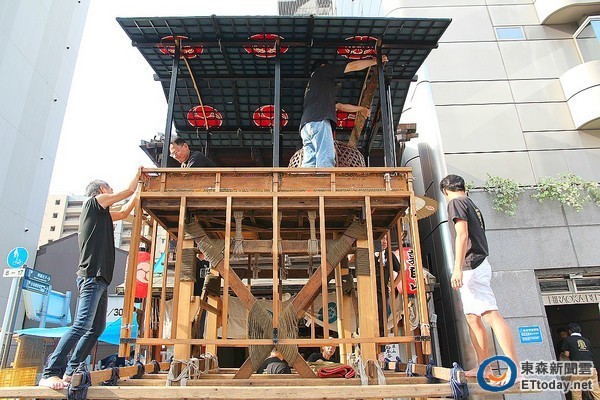
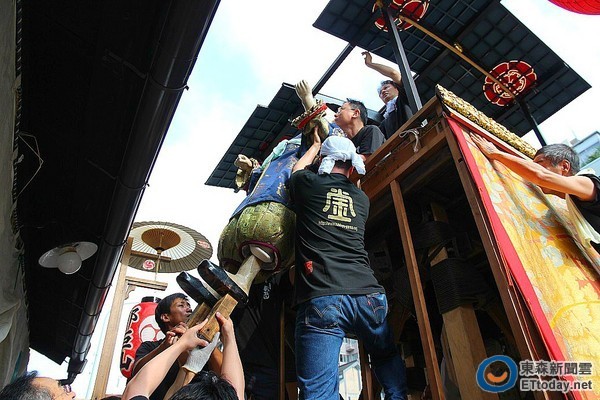
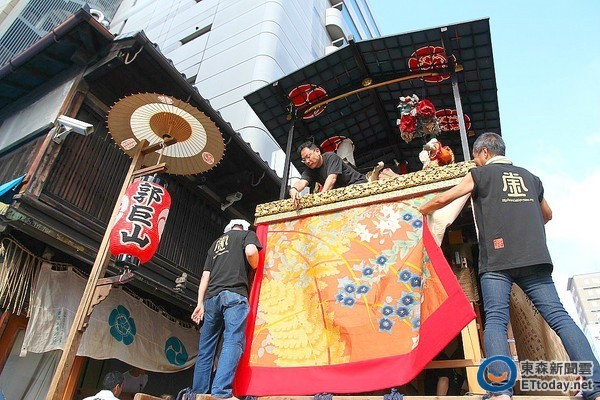
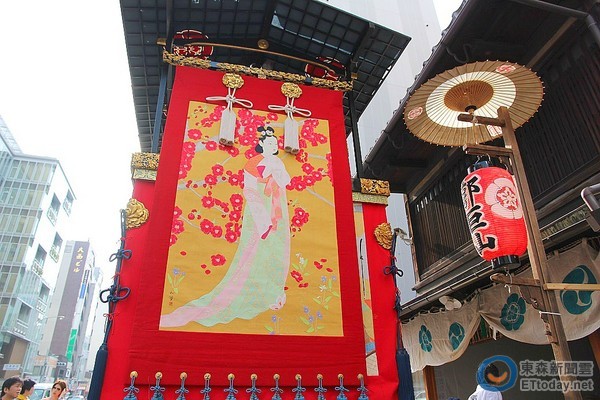
▲ The fully adorned Kuwabara Yamaboko, radiating stunning beauty.
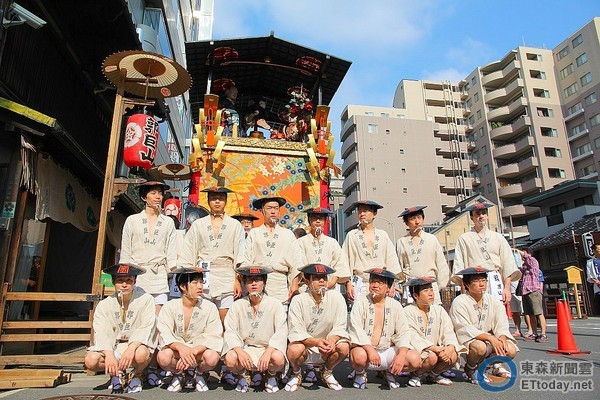
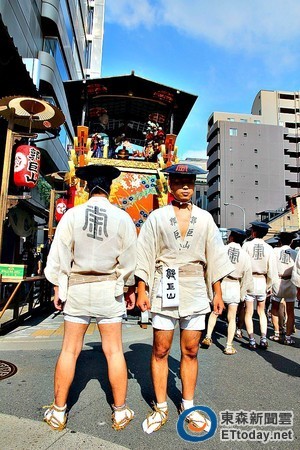
▲ Staff also take leave on the day of the parade—this is an important festival for Kyoto residents, comparable to New Year.
% Jia Can Xing? Jiao? Ji. (Photo / © Provided by the Kuwabara Yamaboko Preservation Association)
Additional reference: Highlights of the Gion Matsuri
July 1 – “Shifuiri”: Various districts hold related activity discussions.
July 2 – “Kujōshi”: Lottery to determine the yamaboko parade order. Out of 33 floats, 8 have fixed positions by tradition and do not participate in the draw.
July 10 – “Onishi Arai-shiki”: Fires are lit at 8 p.m., water is drawn from the Kamo River to wash the mikoshi (portable shrine), which is then returned to Yasaka Shrine for decoration.
July 13 – “Naginata Hoko Chigo Mairi”: Children dress in new clothes for a shrine visit.
July 14–16 – “Yoiyama”: Celebrations take place on closed streets such as Shijō Street, featuring song and dance performances.
July 17 – The festival’s climax, the “Yamaboko Junkō,” begins at 9 a.m. with floats starting from Shijō-Karasuma.
July 17 – “Mikoshi Tōgyō”: Three divine mikoshi depart from Yasaka Shrine at 6 p.m., showcasing luxurious portable shrines.
July 24 – “Hanagasa Junkō”: Women in traditional hats and children parade from Yasaka Shrine all the way to the City Hall.
July 24 “Kanoshi Festival” — At 5 p.m., the portable shrine enshrined at the Otabisho will be carried back to Yasaka Shrine.
July 31 “Yasaka Shrine’s Ejiri Summer Crossing Festival” — It is said that passing through the ring hung above the torii gate of Yasaka Shrine can cleanse impurities.
Share
This article is published by HowToTrip. Sharing and reposting are welcome — please credit the source.
Article URL: https://www.howtotrip.net/views-22437
Related Articles
- Shaoxing's "Grandpa Gourd" hangs the gourds back up: "If there are too many people, we'll interact less — just take a quick look from afar"
- Chinese authorities announce "reciprocal adjustment" to Japan visa fees — single-entry visa jumps from 2,250 to 16,750 yen!
- The "health stones" carried by a traveler were found to have radiation levels exceeding safety limits by a thousand times, potentially endangering fellow passengers on the same flight. Customs issues warning!
- Shenzhen Airport Issues Late-Night Notice: Unidentified Aerial Object Detected, Causing Widespread Flight Delays!
- “They only said it cost money after I opened the box and washed it!” 200g of grapes sold for 60 yuan on a high-speed train—12306 responds!
- Can't buy an airline ticket? Denied exit? Blocked from boarding? A large number of Chinese tourists have mysteriously become "discredited individuals"
- Adverse weather and economic fluctuations impact Colombia's coffee market
- Beach bathing area responds to 2 yuan/30 seconds fee for freshwater foot rinsing: Clearly priced!
- Taking off with an improperly closed cabin door? Wing malfunction? Multiple flights made emergency returns mid-journey!
- Experience the gifts of nature! A countdown of the world’s ten most stunning coastlines