Next Stop, Love: Hsinchu’s Hoping Station Reborn Through Romance
Photos & Text /kuma
Faced with the loss of economic viability and even considerations of closure...The protagonists of a love story sparked by chasing trains, reluctant to let go, adopted this memory-filled station. The arrival of Lavender Forest gave this once-old station a new lease on life. Nowadays, Hoping Station exudes a romantic atmosphere and has also earned the nickname “Love Station.” Rediscover the rise, fall, and revival of Hoping Station through a touching love story.
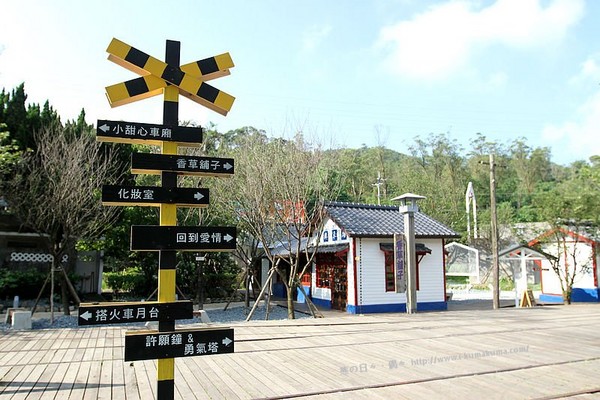
Turn right onto County Highway 120 from Provincial Highway 3, and you’ll see a red sign that says “Take a turn, meet love” about 50 meters down the inner curve road. It’s not very big, so it’s easy to drive past by accident. There’s a parking lot at the station with around 65 spaces. Upon entering the premises, you’ll first notice signs marked with railroad crossing symbols ^^
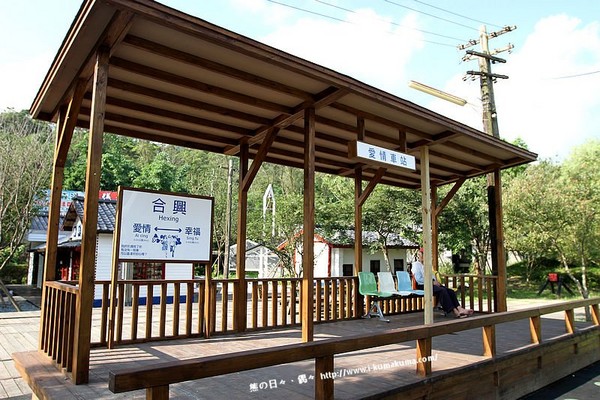
Next to the preserved railway tracks in the park area, there’s a wooden platform — this is the “Love Station.” Coming here reminds Bear of the “Ai Guo (Patriotism) & Xing Fu (Happiness)” Station in Obihiro, Hokkaido. Buy a ticket: from the land of love, heading to happiness.
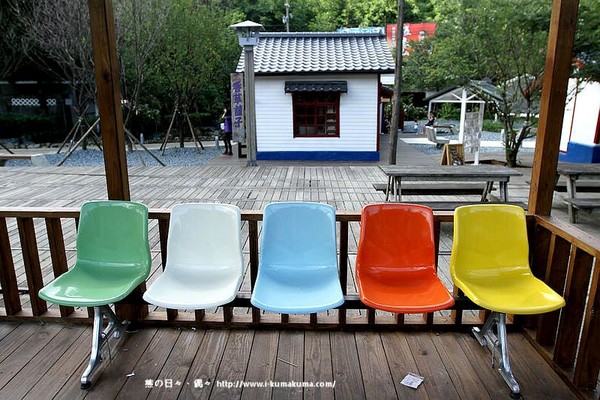
The colorful waiting chairs brighten the mood while waiting for the love train to arrive — it doesn’t feel heavy. Sitting on them, you can act out the anticipation of watching a train arrive; standing on the platform and glancing anxiously at your watch — both poses are quite vivid and fun.
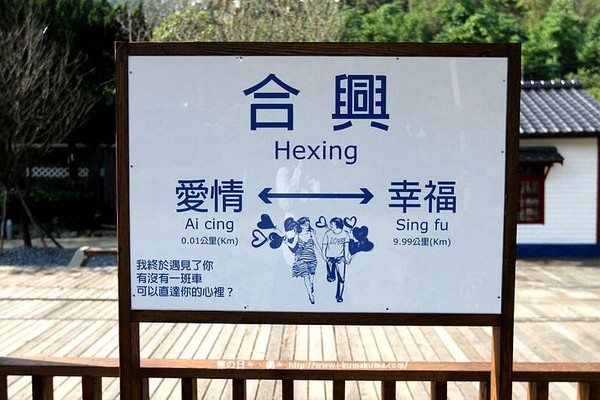
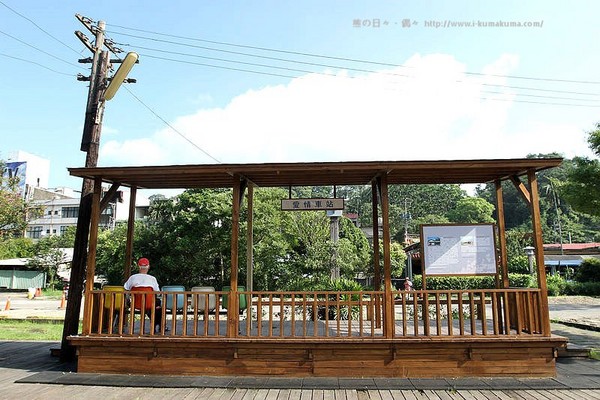
At the back of the station, there’s a description of a love story that took place here. When we visited, an elderly man was already sitting inside the station, adding a rather intriguing vibe. The old man, who was just out for a stroll and some rest, had unknowingly become one of the “passengers” waiting to board at the Love Station =^^=
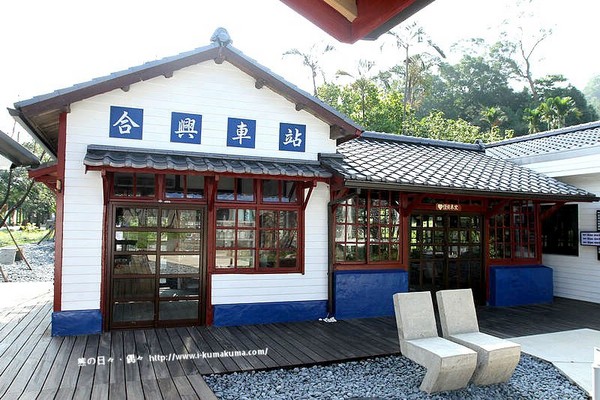
Behind it is the Japanese-style wooden Hoping Station. Touched by the love story embedded within Hoping Station, the Lavender Forest Group moved in, renovated, and refurbished the site. This brought the station, which had faced closure due to the shutdown of the Taiwan Cement Hsindong Factory and the subsequent loss of economic value, back to life with a fresh new look. A 1940s-era station and the only switchback station in Taiwan, it holds both romance and historical significance in railway heritage.
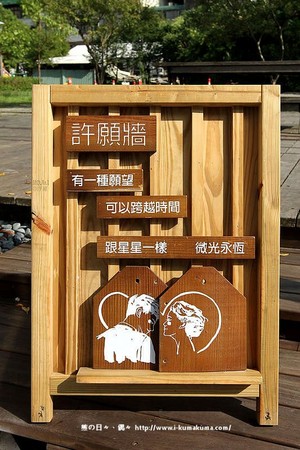
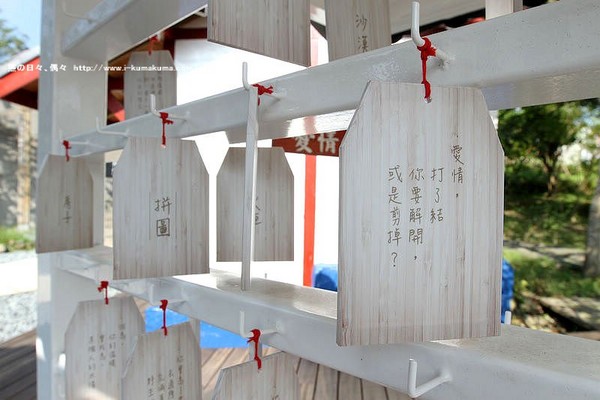
At the wishing wall, white wooden plaques inscribed with words of love are hung. Each one has its own title. In front of the Love Waiting Room, quietly read these expressions of love, as the wind turns the message boards, drawing you into different love stories — feelings of unrequited love, first love, deep affection, and lingering attachment.
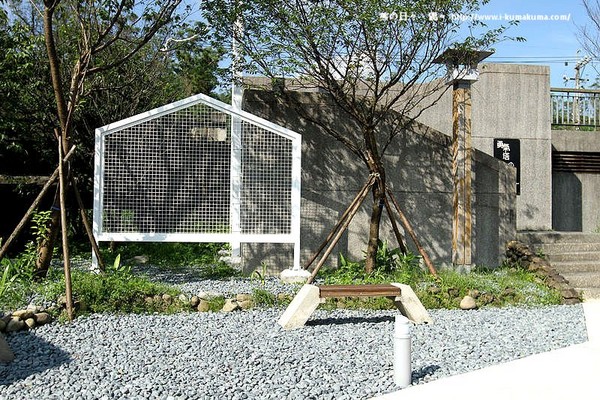
In front of the station, there’s a white-gridded iron frame that looks like a place to hang love locks, but it seems not yet in use — it’s still empty. Then head toward the Courage Tower...
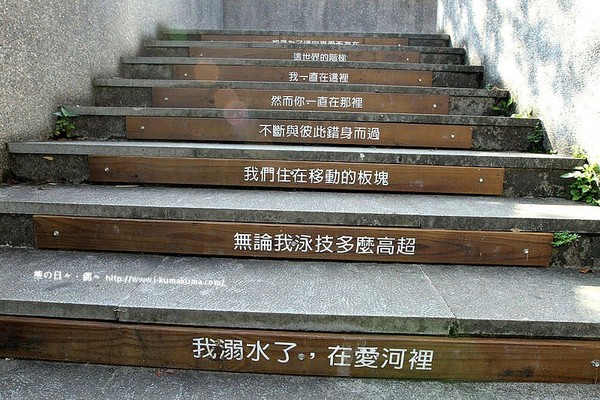
Fear of rejection and hurt often makes love seem daunting; waiting can cause one to miss true love. Only courage ensures we won’t have regrets.
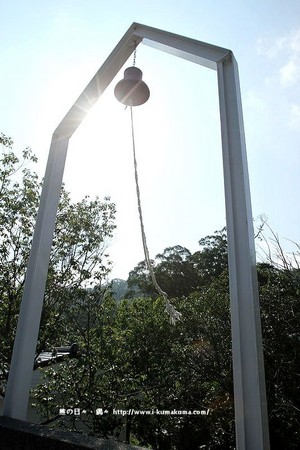
Walk up the stairs that inspire bravery, and you’ll reach the “Wishing Bell.” Pull the rope to ring the white bell and make a wish for happiness. The only hitch: the rope might have been blown by the wind and gotten caught on a tree branch — you can’t reach it to ring the bell ^^" Keep walking up, and you’ll reach County Highway 120, where traffic coming into the inner curve is heavy, so stay safe.
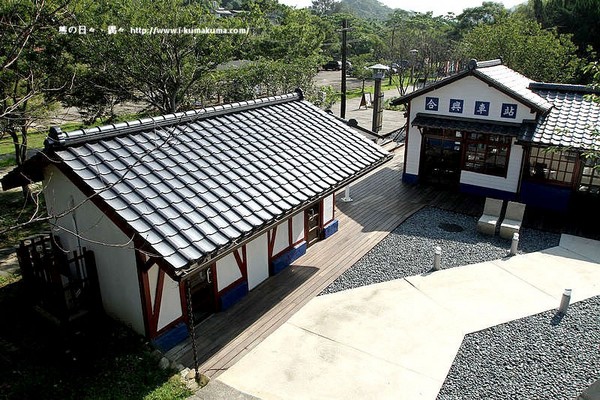
From up here, you can take photos looking down on the station with its strong Japanese aesthetic.
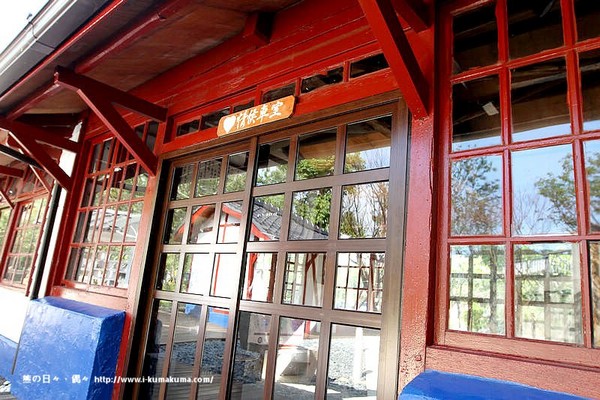
I really like the atmosphere created by the wooden window frames — wood always feels sentimental. The scenery reflected in the glass panes resembles a series of well-mounted landscape paintings. And there’s a secret on the glass windows too. Next to the Love Waiting Room is Lavender Forest’s brand: Vanilla Shop.
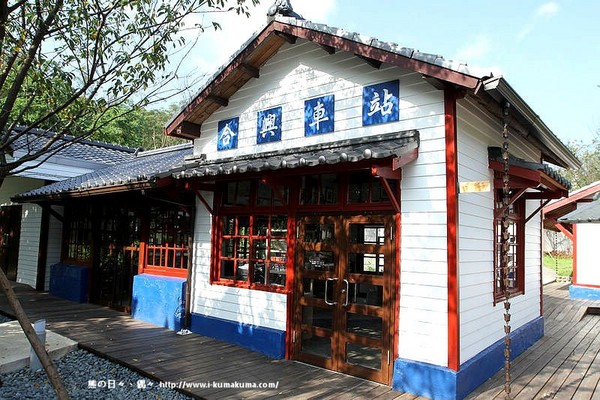
Formerly called “Shifenliao,” it’s also the only wooden station on the Neiwan Line. The black tiles on the roof give the station a rustic, simple feel.
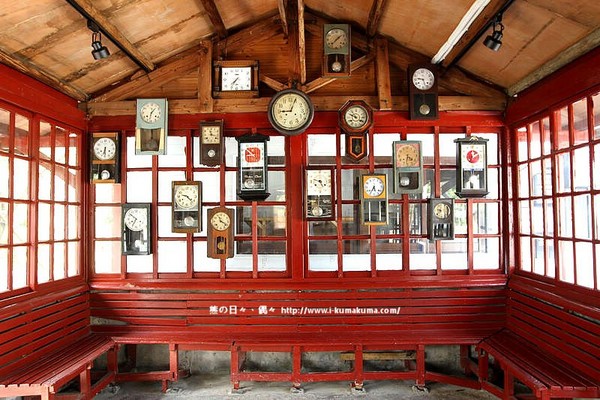
The original waiting room has now been turned into the Love Waiting Room, adorned with various antique clocks. When you go inside, it’s recommended to close the door to better hear the ticking of the antique clocks.
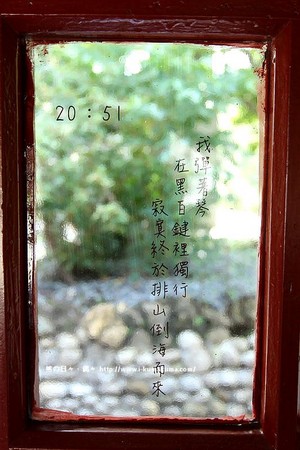
Listening to the pendulum swing of the antique clocks and gazing at the words left on the window frames, it’s as if you’ve traveled back to those innocent days of chasing trains and chasing love.
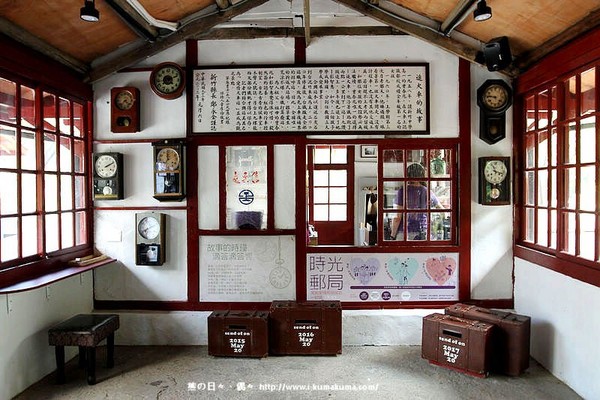
The former ticket window is now the Time Post Office window, and there’s a stamp on the small table nearby that you can use.
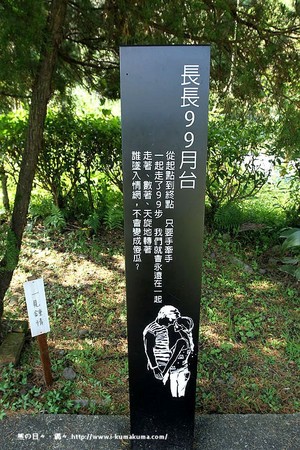
Leaving the Love Waiting Room, walk forward to the Long-Lasting Platform. Starting from the beginning of love, every ten steps represents a stage.
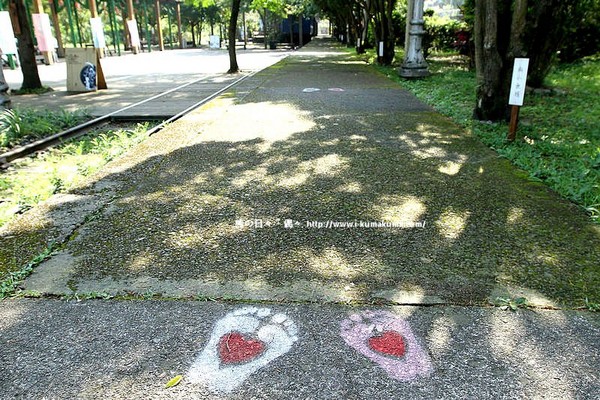
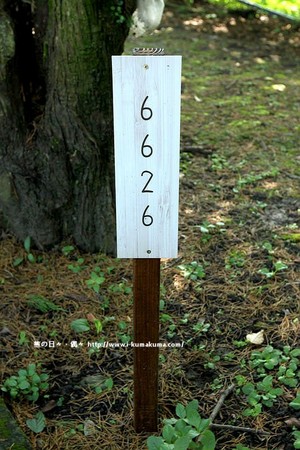
From love at first sight, childhood sweethearts, three lives of fortune... to six, which is 6626 — the student ID number of the female student in the love story. How romantic =^^=
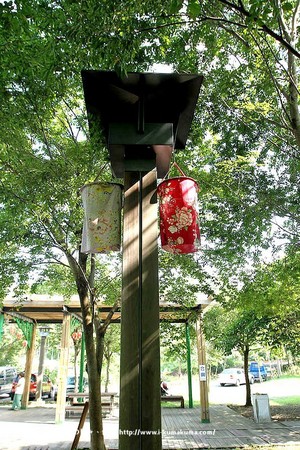
By the way, the street lamps here are decorated with Hakka floral fabric, though most have been blown off and are no longer there.
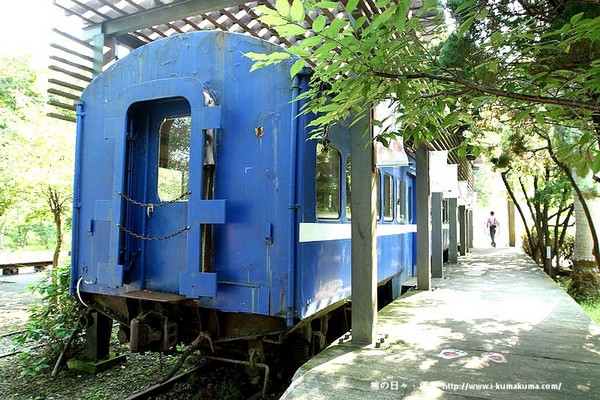
At the end of the platform, there are two retired blue diesel railcars from the Taiwan Railways Administration. Under Lavender Forest’s planning, they’ve been transformed into romantic, blissful spaces named “Little Sweetheart.”
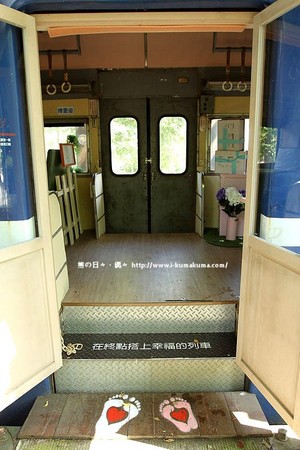
Let’s step into Car B first.
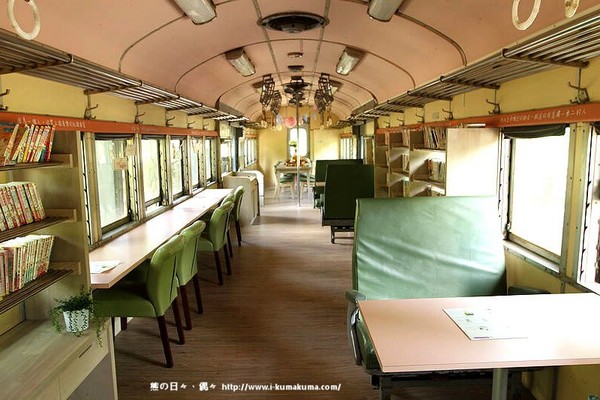
The interior largely retains its original appearance, and you can still see signs of the carriage’s aged history. On both sides of the aisle inside this car, there are numerous comic books displayed. Unfortunately, since it wasn’t yet business hours, there were no drinks or snacks available, nor air conditioning in the car. Otherwise, I’d have loved to sit down and read comics ^O^
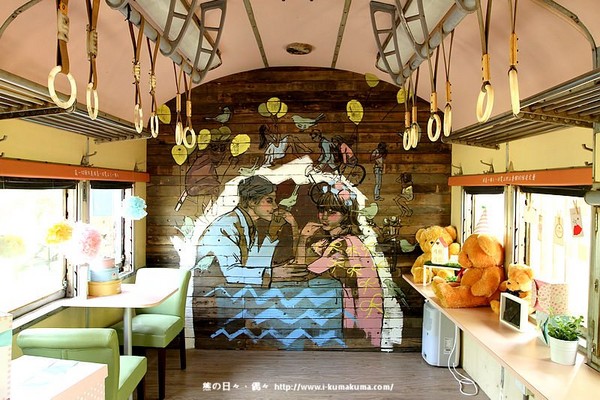
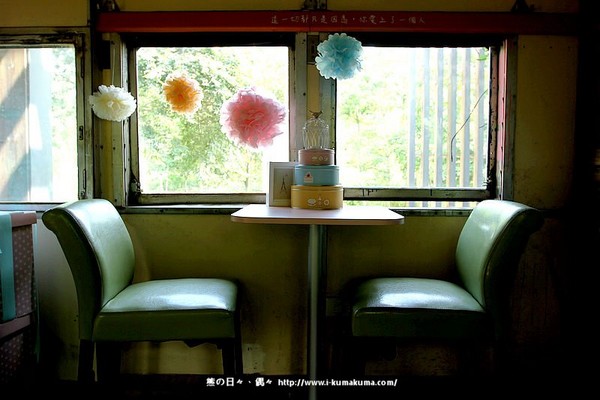
The seating area in front of the romantic murals lets visitors enjoy the same intense romance undisturbed.
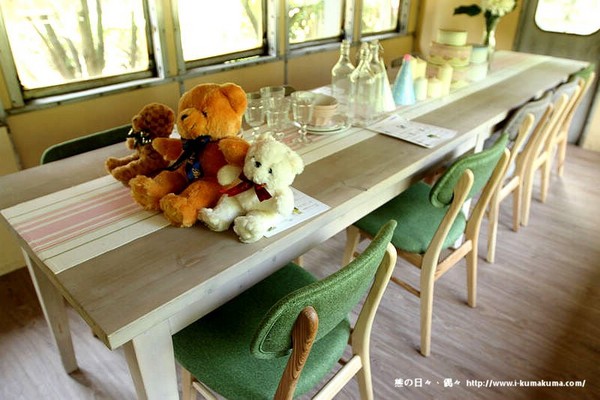
At the back of the car, there’s a long table suitable for group gatherings. The car’s decor is mostly cute with a bit of a general store vibe. Great for those who love taking photos, enjoy quirky goods, or are comic fans.
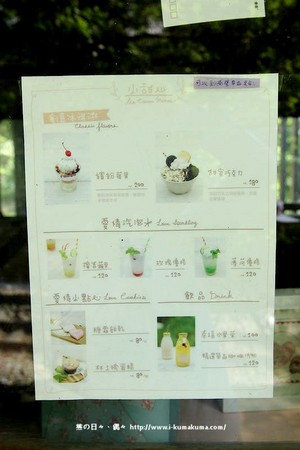
The meals offered at Little Sweetheart.
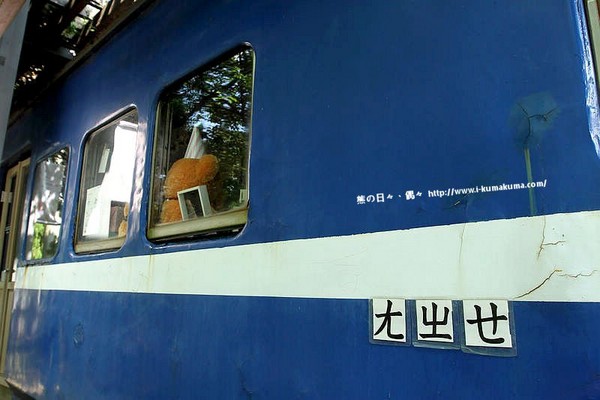
Car A doesn’t open until 10 AM. It’s currently being prepared and isn’t open to the public. Compared to Car B, the more dreamy and photogenic Car A is something everyone should go explore.
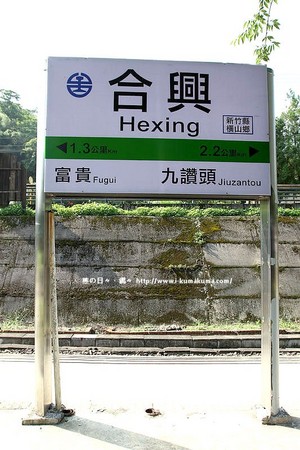
The protagonist, Mr. Zeng Chunzhao, met the heroine, Ms. Peng Zhihui, during their days attending Zhongzhong High School and commuting to school by train. Their lives began to intertwine from then on. During one monthly exam, Mr. Zeng overslept and missed his train. Worried that failing the exam and being held back would affect his friendship with the heroine, he ran along the railway tracks to catch the train. He ran over 2 kilometers and finally caught up with the train at Jiuzantou Station. This love story had a beautiful ending, as the two eventually got married. Later, when they learned that Hoxing Station was about to be closed, they couldn’t bear to see it go and adopted the station. As a result, Hoxing Station was spared from becoming just a memory in photos and was preserved intact.
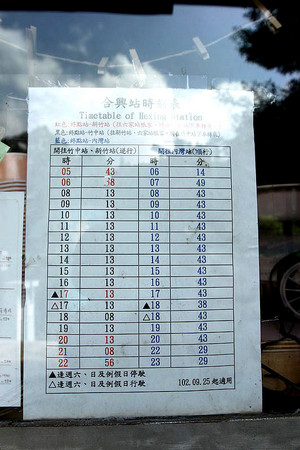
Want to capture the revived Neiwan Line? Here's a timetable for reference.
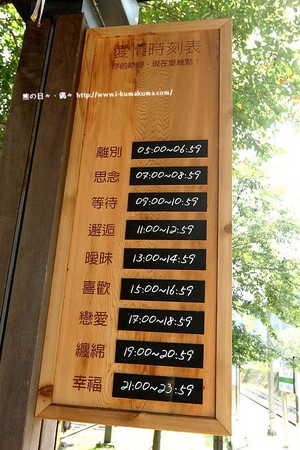
In addition to the train schedules, the adjacent "Love Timetable" invites you to pause, reflect, and set your watch accordingly.
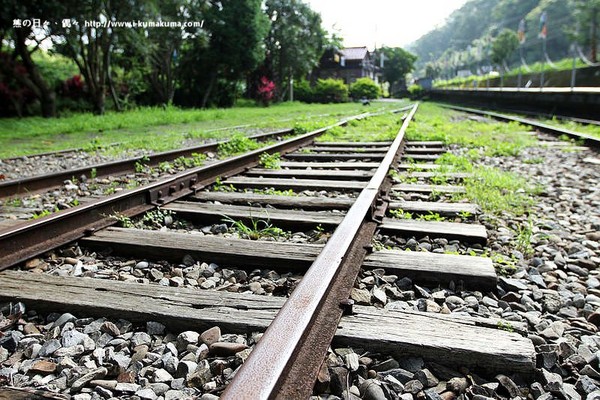
Thank you to the protagonists of this love story for adopting Hoxing Station, allowing this rare switchback-style station—built in 1950 and the only one of its kind remaining in Taiwan—to be preserved.
Hoxing Station was once the second busiest freight station in Taiwan in terms of annual cargo volume and the second-largest freight station on the TRA’s round-island main line. However, due to the terrain, the railway tracks were located on an uphill curve. To ensure the safety of freight transport at the time, two separate platforms were built at a distance. Trains did not stop immediately upon entering the station but passed through a junction first before reversing into the platform. If a train came from the other side, it would enter the station first and then reverse out. This “switchback” operation became a distinctive feature of Hoxing Station. Fortunately, it has been preserved. Although the switchback tracks have been disconnected from the main line, walking along the rails allows you to imagine the station’s former glory.
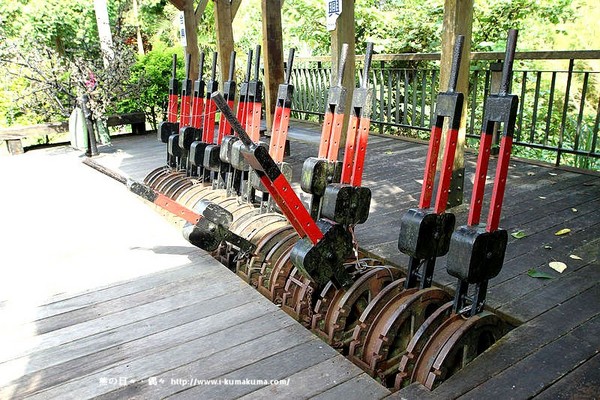
Walking further, you’ll find a row of switches used to control track switching. It’s truly astonishing to see such a sight for the first time—there’s a row of 14 sets, which must have been extremely busy back in the day.

While photographing the switches, you hear the sound of a train approaching. Hurry to the opposite platform, where the 2011 reopened Neiwan Line and the nearby “Little Sweetheart” train car create a uniquely charming atmosphere.
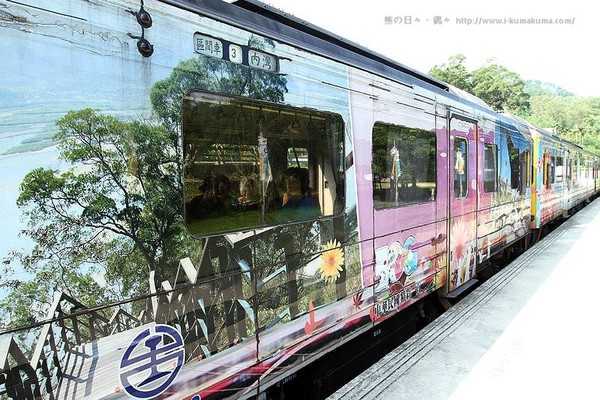
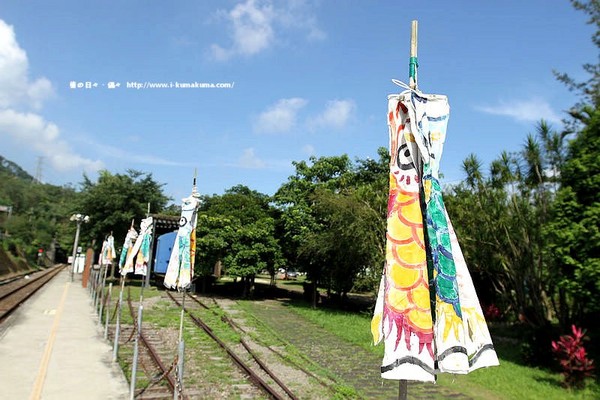
Capture the train with a burst shot, and the platform falls quiet again, with carp-shaped flags fluttering gently in the breeze...
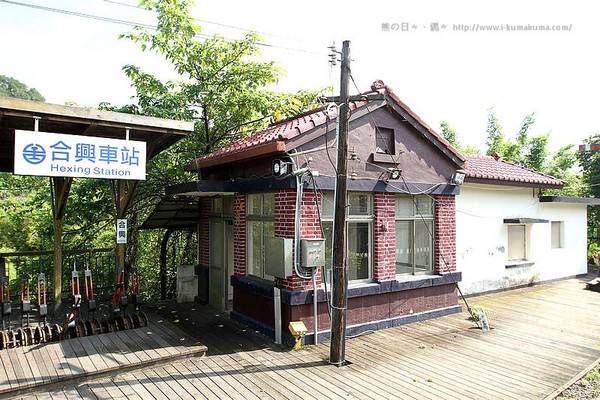
Unlike the black-tiled waiting room up front, the operational building on the platform is made of red bricks and red tiles. Next to the white structure, there’s also a rarely preserved old-style semaphore signal—an uncommon sight indeed.
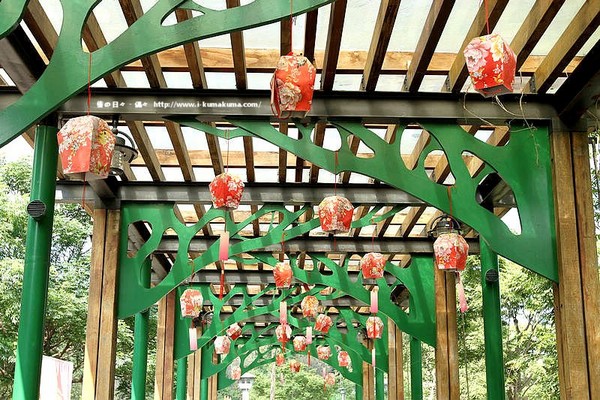
Slowly stroll back to the square, where you’ll find a resting area full of Hakka charm. Sky lanterns adorned with unique Hakka patterns add a different kind of romance to Hoxing Station.
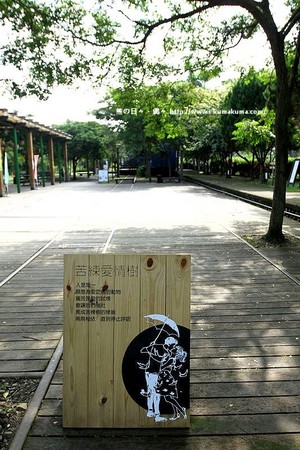
The abandoned railway tracks have been covered with wooden decking to make walking and activities more convenient. The chinaberry tree—I first heard of this tree during my freshman year in college when a professor pointed out the large tree outside our classroom and said it was a chinaberry. I didn’t dislike the tree, but its name always gave me a sense of sadness: love that’s too bitter, a bitter romance...
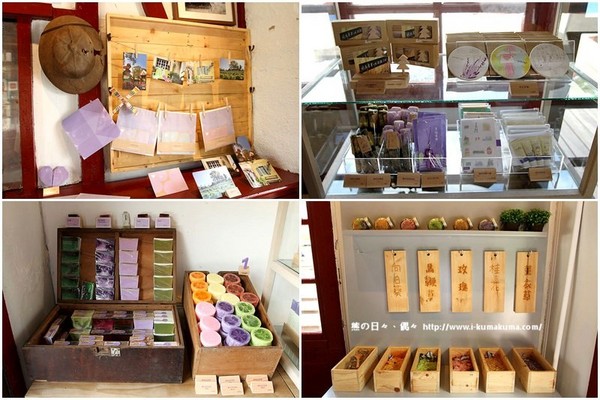
Although the official opening hours are at 10 a.m., it usually opens around 9:30 a.m. on holidays. Come inside Hoxing Station’s herb shop. Compared to other stores, it offers fewer items, but the postcard area features a rather historic-looking hat. Write a postcard, fold a letter into a heart shape (OS: wow, that was so youthful and playful), and hand it over to the Time Post Office to send to someone—or to yourself. The interior decor, in keeping with the station’s style, is also nostalgic with wooden furnishings. The black-and-white photos on the walls and the preserved little cabinets remind me that even as more and more grand modern stations appear, I still love this old-school vibe: full of nostalgia and human warmth.
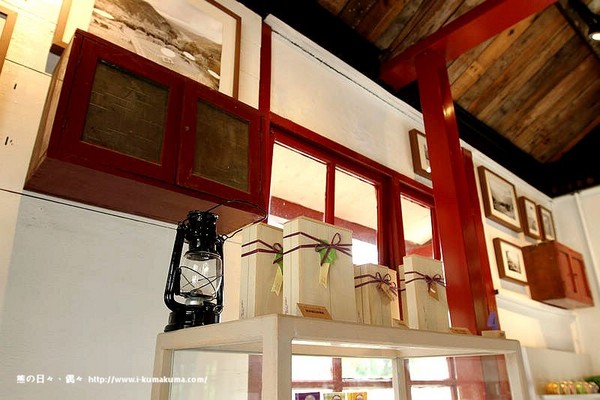
Wood always feels warm. In this wooden station, you can feel the love story of chasing trains in those youthful, reckless days. Walking along the decommissioned tracks, you can reminisce about the place’s past prosperity, decline, and revival.
It’s a bit of a pity that it was abandoned for economic reasons. It could have been repurposed for educational or tourism value. This is also a part of Taiwan’s history—something irreplaceable by modern architecture.
That day, at this Love Station, I didn’t wait for an incoming train, but on the platform at the other end, I caught the train to Fugui. At a station that tells a love story, everything feels romantic and timeless.
[Hoxing Station]
Address: No. 17, Section 1, Zhongshan St., Lixing Village, Hengshan Township, Hsinchu County
Opening Hours (Love Waiting Room, Herb Shop, Little Sweetheart Carriage): Monday to Friday 10:30–18:30 / Saturday and Sunday 10:00–18:30 (Closed on Tuesdays)
Record life’s everyday moments and occasional special times through words and images.
Bear’s daily life, every now and then.
Share
This article is published by HowToTrip. Sharing and reposting are welcome — please credit the source.
Article URL: https://www.howtotrip.net/views-22294
Related Articles
- Shaoxing's "Grandpa Gourd" hangs the gourds back up: "If there are too many people, we'll interact less — just take a quick look from afar"
- Chinese authorities announce "reciprocal adjustment" to Japan visa fees — single-entry visa jumps from 2,250 to 16,750 yen!
- 旅客携带的“保健石”核辐射超标千倍,同机人员或遭殃!海关提醒!
- 深圳机场深夜通报!出现不明升空物,航班大面积延误!
- “拆盒洗了才说要钱!”高铁200克葡萄卖60元,12306回应!
- 买不了机票?出境被拒?登机被拦?一大波中国游客莫名成了“失信人”
- 不利天气和经济波动影响哥伦比亚咖啡市场
- 海边浴场回应冲脚淡水收费2元/30秒:明码标价!
- 舱门没关好就起飞?机翼出现问题?多个航班途中紧急折返!
- 感受大自然的馈赠!盘点世界十大唯美海岸线