It feels like stepping into a Japanese village—“Anton Tei” is enveloped in the rich fragrance of 80-year-old hinoki cypress.
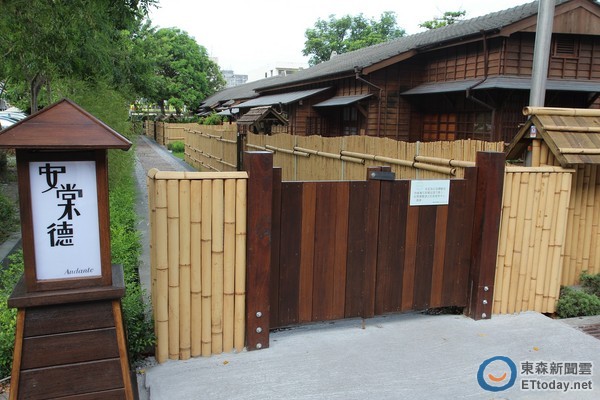
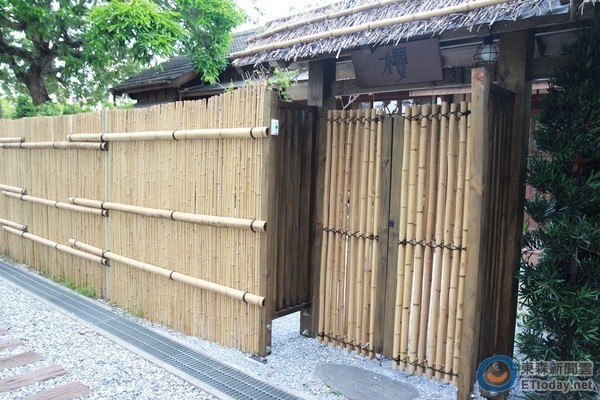
▲Push open the wooden door of “Anton Tei” and it’s like entering an old Japanese village.
Reported and photographed by Tsai Wen-jun / Hualien
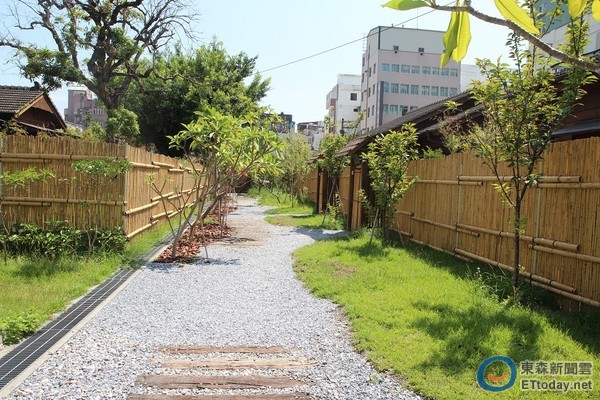
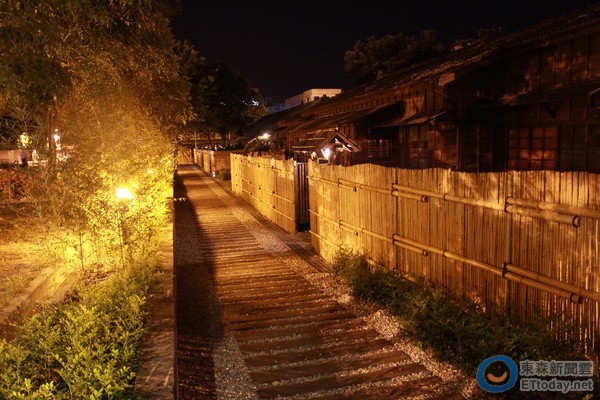
Walking past rows of low to mid-height bamboo fences, on the other side lies a collection of nearly century-old Japanese wooden houses, scattered yet orderly, standing quietly as if isolated from the world... Push open the wooden door at the entrance, walk along the crunching gravel path and the wooden board walkway, passing by old wooden houses exuding an ancient historical aura. The serene environment makes it hard to imagine that this place is right in the heart of Hualien City.
%The contrast between the bright and dark areas creates different moods in the space.
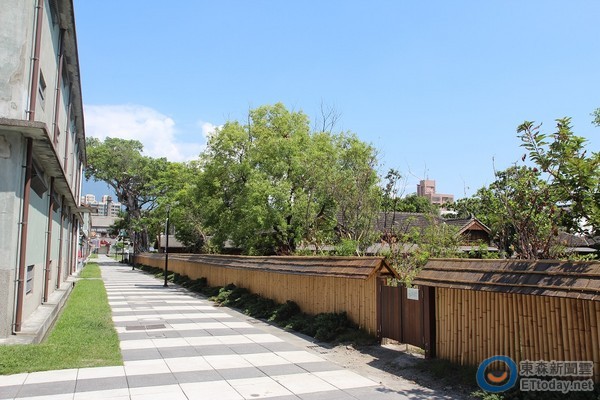
Located within the Hualien Cultural and Creative Industries Park, built between 1928 and 1937, the “Anton Tei Wooden House Area” was once the senior staff dormitory of the Hualien Red Liqueur Distillery. It has a history of approximately 87 years. Managed and renovated by Ambassador Hotel, and specially designed by landscape architect Pan I-ju—who has worked on Taipei’s Gongguan Baozangyan and Taichung’s Green Corridor—it not only preserves the original appearance of the wooden houses and existing greenery but also adds cherry blossoms, peach blossoms, frangipani, gardenias, and jasmine around the area. Bamboo fences are used to separate the 13 individual wooden houses, and green bamboo delineates the boundary between the wooden house area and the park.
Each of the preserved plants has its own heartwarming little story.Zheng Yu-lun, Senior Manager of the Business Department at Ambassador Hotel, said that in the past, when a baby was born in one of these residences, a fruit tree with seeds—such as a star fruit or longan tree—would be planted outside the house, symbolizing the homonym “having children.” Aside from commemoration, it also celebrated the continuation of future generations.
%The preserved greenery not only enhances the environment but also carries the memories of the people who once lived here, continuing their legacy.
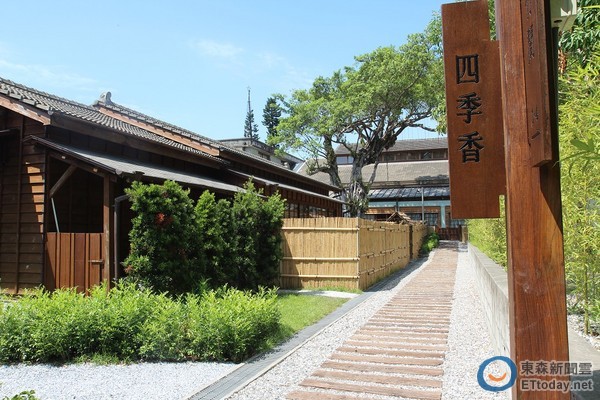
Aside from the largest wooden house, now named “Yuetong,” which was previously a single-person dormitory, the other 12 wooden houses are named after the 12 representative plants of the months in Japan: pine, plum, cherry, wisteria, iris, peony, reed, rush, chrysanthemum, red leaf, willow, and tung tree. The corresponding plant patterns are carved on the wooden plaques and keys of each room for identification. Each courtyard also features plants that match the name of the house. When the flowering season arrives, simply slide open the paper doors to enjoy pink cherry blossoms fluttering in the yard or admire autumn chrysanthemums swaying in the breeze.
The reporter stayed in the cherry blossom room, representing March. Although the blooming season had passed, visiting next spring would surely offer a breathtaking view of fallen cherry petals scattered throughout the garden.
%The “Green Room” is the largest of the three rooms and can accommodate the most guests.
▲%The plants in the rooms correspond to the seasonal elements and are placed accordingly within the rooms.
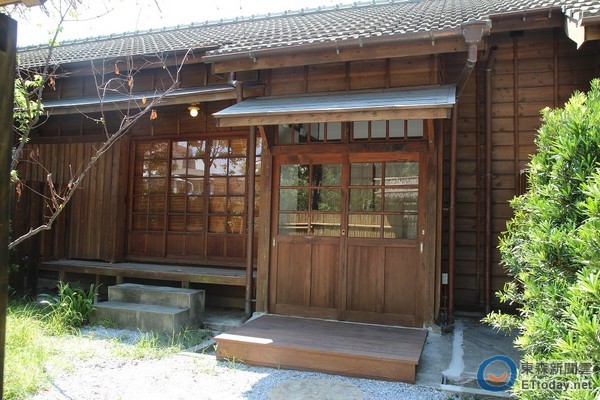
Push open the wooden door at the entrance, and the rich scent of hinoki greets you right at the foyer. Stepping into the tatami-floored Japanese-style room, sliding shoji screens and wooden lattices simply divide the roughly 10-tsubo space into a living area, bedroom, and bathroom. On the day of check-in, the weather in Hualien was sunny, and the dazzling sunlight streamed straight through the front and back paper doors without being harsh, keeping the room bright even during the day without turning on the lights.
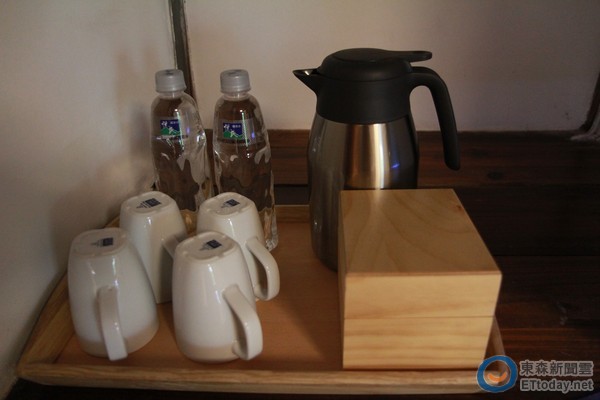
A guide from Anton Tei explained that to preserve the integrity of the historic site, only essential modern amenities such as a TV, low table, bed, and telephone have been added to the rooms. To protect the heritage, traditional water kettles have been replaced with well-known brand electric kettles, ensuring guests can still enjoy hot water. Not only the rooms but the entire compound is strictly non-smoking, so smokers must go outside the premises—which is just as well, as there is another exit of the Hualien Cultural and Creative Industries Park not far from the wooden house area.
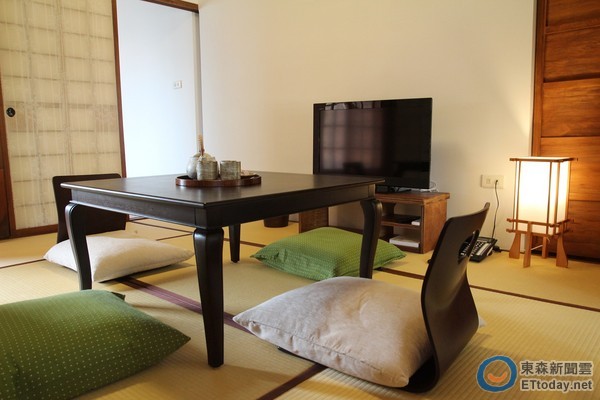
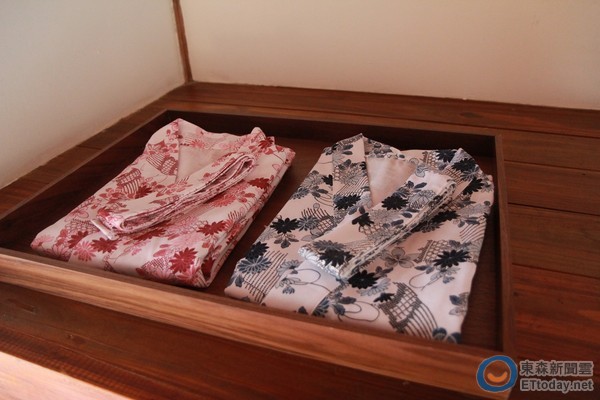
▲%The interior furnishings create a warm, family-like atmosphere, even in the compact spaces.
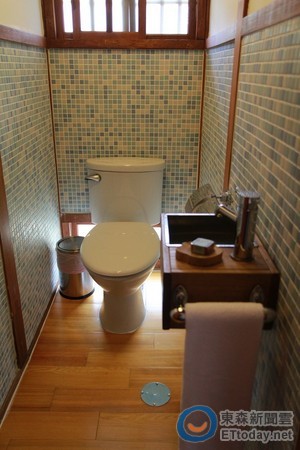
Exploring further inside the room, unlatch the wooden door at the left end of the living area, and you’ll find a wooden veranda much like the one beloved by the character Hoshi in the Japanese drama “Shitsukoi no Tsuma wa Doko e Iku”—perfect for lounging. Open the wooden door to the left of the veranda, and you’ll see the backyard garden also filled with various plants. At the end of the veranda is a standalone bathroom with mosaic tiles lining the walls—modern yet in harmony with the building’s original character.
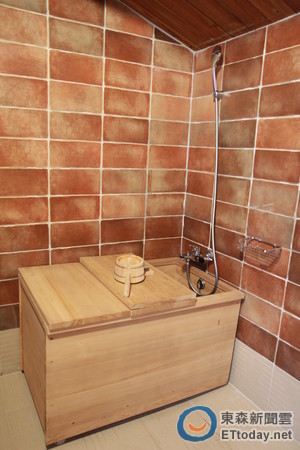
Aside from the comfortable Japanese-style room, what guests shouldn’t miss is the bathroom space resembling a traditional Japanese onsen. The hinoki bathtub, covered by three large wooden boards, comes with a thoughtfully provided wooden ladle for scooping water. After a long day, pour bath salts into the tub filled with hot water, wait a moment, then soak in it to wash away all fatigue.

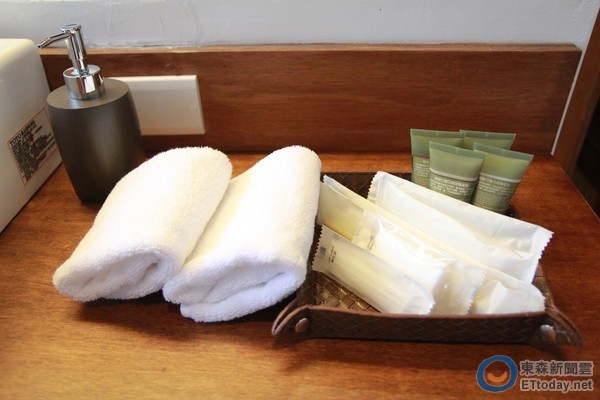
▲%The modern bathroom facilities blend seamlessly with the traditional architectural style.
Speaking of which, how can we not mention the most important sleeping space? Aside from the aforementioned “Yuetong,” the other 12 wooden houses are divided into double rooms, four-person rooms, and six-person rooms. The “Cherry Blossom Room” is a double room. Two separate white single beds with down comforters invite guests to sink into the soft mattresses and drift into a completely relaxed sleep. If you wish to enjoy the garden scenery before bed, simply slide open the right-side shoji screen and the left-side blinds facing the bedroom—you can take in the view of the Japanese garden without even stepping outside.
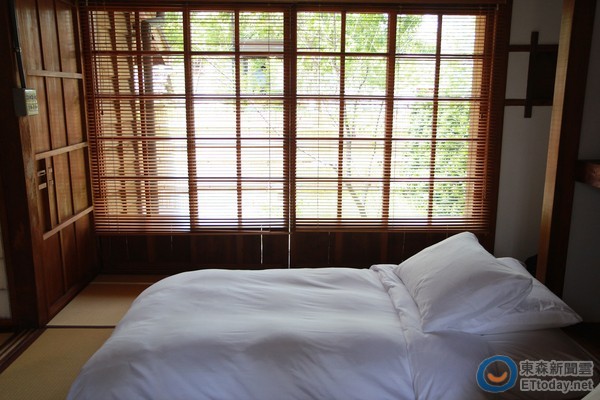
▲Slide open the blinds by the bed, and rays of sunlight will stream through, offering a full view of the front garden.
%The tranquil setting also helps guests unwind and fully immerse themselves in nature.
Share
This article is published by HowToTrip. Sharing and reposting are welcome — please credit the source.
Article URL: https://www.howtotrip.net/views-22131
Related Articles
- Shaoxing's "Grandpa Gourd" hangs the gourds back up: "If there are too many people, we'll interact less — just take a quick look from afar"
- Chinese authorities announce "reciprocal adjustment" to Japan visa fees — single-entry visa jumps from 2,250 to 16,750 yen!
- The "health stones" carried by a traveler were found to have radiation levels exceeding safety limits by a thousand times, potentially endangering fellow passengers on the same flight. Customs issues warning!
- Shenzhen Airport Issues Late-Night Notice: Unidentified Aerial Object Detected, Causing Widespread Flight Delays!
- “They only said it cost money after I opened the box and washed it!” 200g of grapes sold for 60 yuan on a high-speed train—12306 responds!
- Can't buy an airline ticket? Denied exit? Blocked from boarding? A large number of Chinese tourists have mysteriously become "discredited individuals"
- Adverse weather and economic fluctuations impact Colombia's coffee market
- Beach bathing area responds to 2 yuan/30 seconds fee for freshwater foot rinsing: Clearly priced!
- Taking off with an improperly closed cabin door? Wing malfunction? Multiple flights made emergency returns mid-journey!
- Experience the gifts of nature! A countdown of the world’s ten most stunning coastlines