Shocked by the perfect atmosphere of serene space – an Okinawan shop selling reclaimed building materials and furniture
Photos and text / Excerpted from the book *Okinawa Travel: A Relaxed Lifestyle*, provided by Home’s Publishing
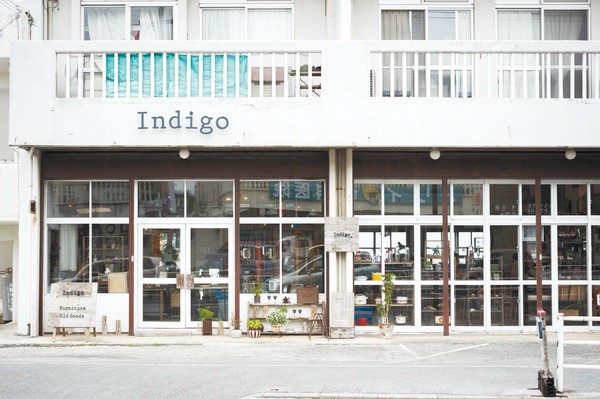
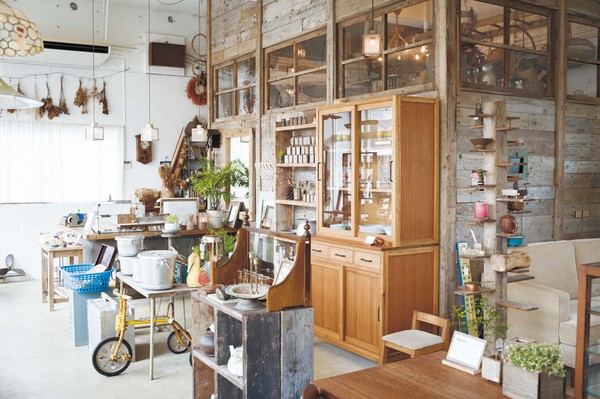
In Yomitan Village, there’s a shop called “Indigo” that sells furniture crafted from reclaimed building materials (Translator’s Note 1) and vintage goods. The moment I stepped inside, I was awestruck by the tranquil space created by the vast array of beautifully arranged items – I even got goosebumps.
The owner, Mr. Ryo Higa, is a native of Okinawa. Originally, he worked at an interior design firm elsewhere but at the age of 25, the idea of creating something on his own sparked in his mind. He then moved to a furniture manufacturing company to begin learning how to make furniture. As he gradually mastered the techniques of furniture-making, he also became puzzled by the work environment that prioritized “efficiency and speed.” In order to make the kind of furniture he truly wanted, he decided to change his environment and open his own shop.
The uniquely “laid-back” atmosphere of Okinawa’s air can be viewed positively as “relaxed,” but also negatively as “lazy.” At the time, he leaned more toward the latter view, feeling that Okinawa didn’t suit him, which is why he left to work elsewhere. Later, he realized that every time he returned to his hometown, he would completely relax, which led him to decide to choose Okinawa as the place where he would live and open his shop in the future. He told himself that he would return to Okinawa before turning thirty. Before that, he had to learn all about furniture-making techniques and how to run a shop.
“From that point on, my mind was solely focused on opening the shop—how to avoid losses? How to make it sustainable? Though I still haven’t found the answers, I’ve worked hard up to this point, so even if I fail in the future, I’ll have no regrets.”
After returning to Okinawa and contemplating where to open his shop, he learned that a clothing store run by a relative—aunt—had just become vacant, so he took over the lease. The location is in Yomitan Village, somewhat far from Naha City. Whether selling furniture here would succeed was an unknown, but despite his anxiety, he decided to open the shop in this hometown where he grew up. It took about a year for the shop to finally open. After officially starting business, he realized he wasn’t good at dealing with customers. So they divided the roles—the welcoming and customer service were handled by his wife Yoko, while he took care of supply. Normally, he worked diligently in a workshop renovated from his grandfather’s old cowshed, crafting furniture.
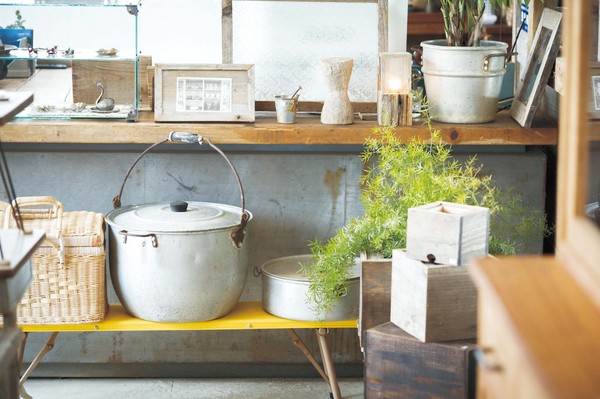
At first, he only thought about how to make furniture that would sell. However, the furniture he made with too much focus on sales did very poorly, which also made him unhappy. Just as he realized that relying solely on custom-made furniture wasn’t enough to attract business, he met a dealer who dealt in antiques (Translator’s Note 2), and the shop began selling vintage items he had always liked. To complement these vintage goods, he started making furniture using reclaimed building materials. His first piece was a mirror. No one around him understood why he would use reclaimed building materials to make furniture, except for Ms. Yoko, who agreed with him. She said, “Just make what you want to make!” Gradually, he reduced the previously sales-driven services and items, and adjusted the direction of his business.
What matters most is feeling happy within yourself
“I began to focus on whether I was happy and felt fulfilled, and that’s what led to the furniture you see now. My designs may not be the most novel or the most distinctive, but they help people rediscover familiar beauty—that’s the kind of furniture I want to create.”
Just like that, as he adjusted his mindset, incredibly, his furniture sales improved as well. Because of this shop, many people come to this place and understand the worldview that Indigo holds. Nowadays, families and cafés across Japan order furniture from them, accounting for 80% of their total revenue. Although he still feels anxious, no matter what, giving his best is what matters. Being honest with himself and going along with the flow of life, he has finally reached this point. So he doesn’t think what he does is anything particularly remarkable.
Personally, I believe Indigo is the most representative furniture and vintage shop in Okinawa. The products they make and select by listening to their inner voice radiate a strong and unwavering spirit. Sometimes, the warmth of reclaimed building materials can instantly make a space feel familiar and comforting. Furniture made from reclaimed materials becomes more charming the more it is used, and the more you like it—and Indigo is exactly like that.
Translator’s Notes
1 Refers to second-hand building materials reused after being dismantled from old houses or furniture.
2 The original term is 古道具 (kodōgu), where 道具 (dōgu) means tools, utensils, or vessels, and 古道具 generally refers to old everyday household items.
Indigo
Address: 1119-3 Chūben, Yomitan Village
Phone: +81-98-894-3383
Hours: 10:00–17:00 (until 18:00 on holidays)
Closed: Tuesdays, Wednesdays, and Thursdays
Share
This article is published by HowToTrip. Sharing and reposting are welcome — please credit the source.
Article URL: https://www.howtotrip.net/views-21684
Related Articles
- Shaoxing's "Grandpa Gourd" hangs the gourds back up: "If there are too many people, we'll interact less — just take a quick look from afar"
- Chinese authorities announce "reciprocal adjustment" to Japan visa fees — single-entry visa jumps from 2,250 to 16,750 yen!
- The "health stones" carried by a traveler were found to have radiation levels exceeding safety limits by a thousand times, potentially endangering fellow passengers on the same flight. Customs issues warning!
- Shenzhen Airport Issues Late-Night Notice: Unidentified Aerial Object Detected, Causing Widespread Flight Delays!
- “They only said it cost money after I opened the box and washed it!” 200g of grapes sold for 60 yuan on a high-speed train—12306 responds!
- Can't buy an airline ticket? Denied exit? Blocked from boarding? A large number of Chinese tourists have mysteriously become "discredited individuals"
- Adverse weather and economic fluctuations impact Colombia's coffee market
- Beach bathing area responds to 2 yuan/30 seconds fee for freshwater foot rinsing: Clearly priced!
- Taking off with an improperly closed cabin door? Wing malfunction? Multiple flights made emergency returns mid-journey!
- Experience the gifts of nature! A countdown of the world’s ten most stunning coastlines