Three Grand Villas in Atami Transformed into Artistic Heritage Sites – Explore the Century-Old Qiyunge Pavilion
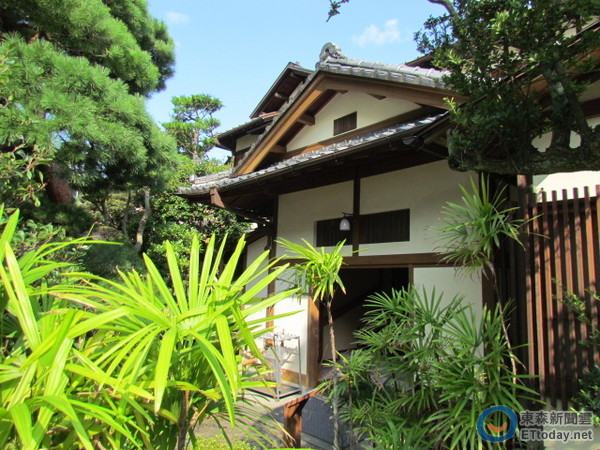
▲ One of Japan’s “Three Grand Villas of Atami,” Qiyunge Pavilion.
Reported and photographed by Liu Kangyan / Japan
Recognized as one of the “Three Grand Villas of Atami” in Shizuoka, the “Qiyunge Pavilion” was constructed during Japan’s Taisho and Showa periods, filled with the romantic ambiance of that era. Originally built in a purely traditional Japanese architectural style, after changing hands, it was expanded to include a new garden and Western-style decorative buildings, covering a vast area of 3,000 tsubo and showcasing immense luxury and grandeur. What began as a private home later transformed into a hotel, becoming the preferred accommodation for Japan’s literary figures visiting Atami, and is now designated as a tangible cultural property (municipal heritage site) by the Atami City Office.
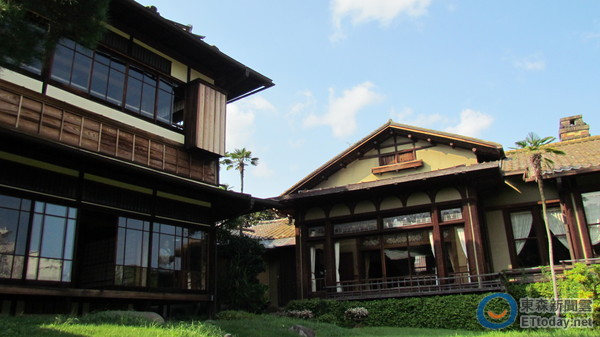
▲ On the left is the traditional Japanese building, on the right is the hybrid architectural style blending Japanese, Chinese, and European elements.
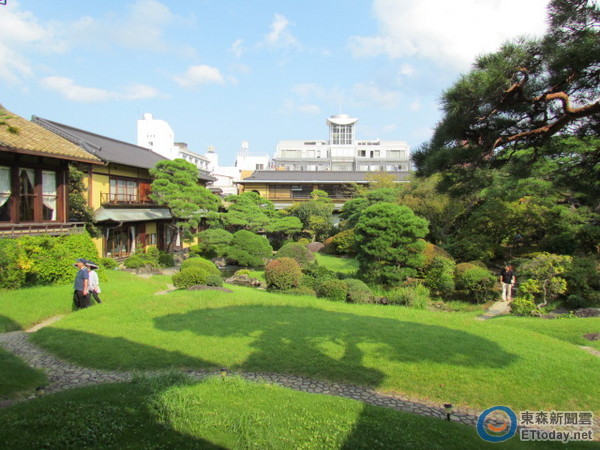
The entire villa is divided into Japanese-style sections named “Kirin,” “Dafeng,” and “Kongque,” as well as hybrid structures combining Japanese, Chinese, and European architectural styles, such as “King Kong,” “Yuhji,” and “Yuxi,” making it a highly valuable historical heritage site in Atami. The original owner was Uchida Shinya, a prominent figure in Japan’s political and business circles in the early 20th century, known as the “Shipping King.” It was later sold to the “Railway King,” Neguchi Kaichiro.
The lush garden within the “Qiyunge Pavilion” was not only personally designed by Neguchi Kaichiro, but he also directed 20 landscape gardeners to spend nearly two months moving a 20-ton boulder to the center of the garden. In addition, the newly added Western-style building “Yuhji” not only incorporates architectural features commonly seen in Japanese temples and Chinese decorative elements but also features French influences.
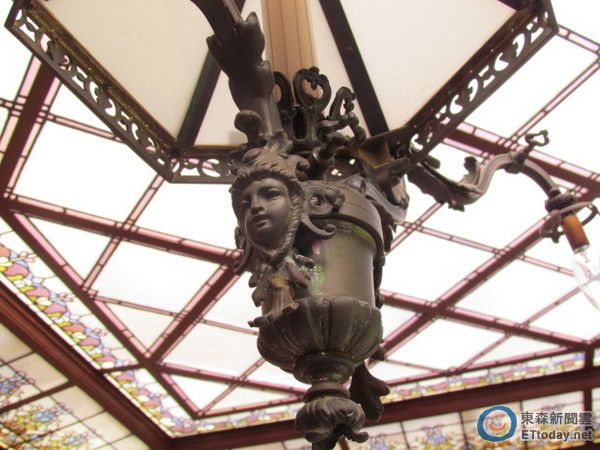
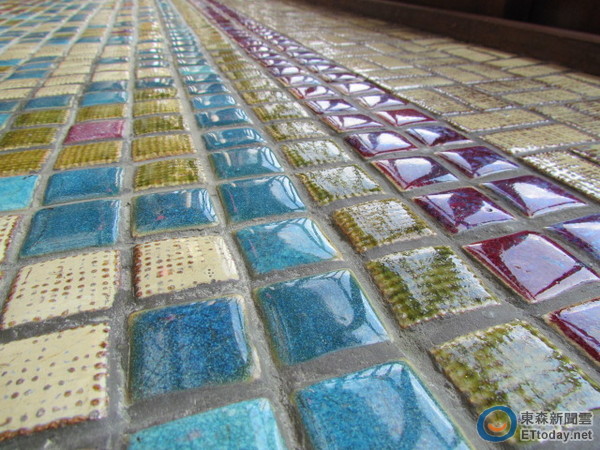
▲ The chandelier decor and floor tiles inside “Yuhji.”
As for “Yuxi,” which adopts a British style, includes a Japanese tokonoma-style space, and is adorned with Sanskrit carvings, it proudly showcases its unique architectural charm. The “King Kong” reception area exudes an elegant atmosphere, while the luxurious Roman-style bathroom symbolizes the refined lifestyle of the villa’s owners. Every aspect of the “Qiyunge Pavilion” tells the story of its former glory, and with every step you take, you can feel the unique time and space suspended within the villa.
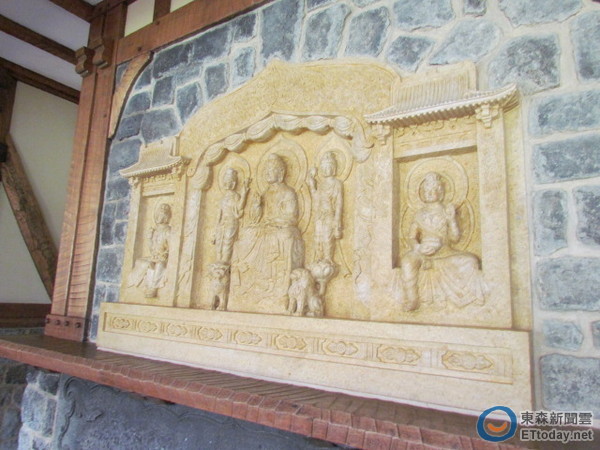
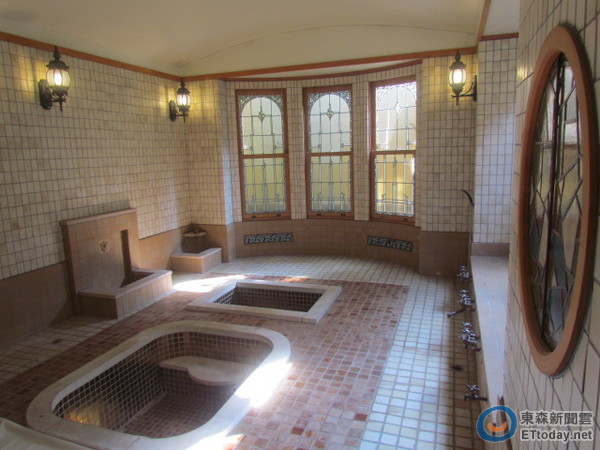
▲ The Sanskrit decorations inside “Yuxi,” with the Roman-style bathroom on the right, are both grand and luxurious.
Share
This article is published by HowToTrip. Sharing and reposting are welcome — please credit the source.
Article URL: https://www.howtotrip.net/views-20197
Related Articles
- Shaoxing's "Grandpa Gourd" hangs the gourds back up: "If there are too many people, we'll interact less — just take a quick look from afar"
- Chinese authorities announce "reciprocal adjustment" to Japan visa fees — single-entry visa jumps from 2,250 to 16,750 yen!
- The "health stones" carried by a traveler were found to have radiation levels exceeding safety limits by a thousand times, potentially endangering fellow passengers on the same flight. Customs issues warning!
- Shenzhen Airport Issues Late-Night Notice: Unidentified Aerial Object Detected, Causing Widespread Flight Delays!
- “They only said it cost money after I opened the box and washed it!” 200g of grapes sold for 60 yuan on a high-speed train—12306 responds!
- Can't buy an airline ticket? Denied exit? Blocked from boarding? A large number of Chinese tourists have mysteriously become "discredited individuals"
- Adverse weather and economic fluctuations impact Colombia's coffee market
- Beach bathing area responds to 2 yuan/30 seconds fee for freshwater foot rinsing: Clearly priced!
- Taking off with an improperly closed cabin door? Wing malfunction? Multiple flights made emergency returns mid-journey!
- Experience the gifts of nature! A countdown of the world’s ten most stunning coastlines