“Japan’s New Tax-Free System” Cheat Sheet: 8 Common Questions Answered
▲ Japan’s new tax-free system has just launched—do you get it? (Image / from Wikimedia Commons)
Reported by Tsai Wen-Jun / Special Feature
Japan implemented a new tax-free system starting October 1, which includes cosmetics, medicine, food, and other popular purchases among Taiwanese travelers as tax-free items. However, many additional regulations have left visitors confused. In short, it’s just a matter of “the old and new systems running in parallel” and the distinction between “general goods and consumables.” Below is a cheat sheet of frequently asked questions to help you clearly understand the new tax-free system.
Q1: What’s the difference between the new tax-free system starting October 1 and the old one?
Old System:Only items such as electronics, clothing, and accessories were tax-free. They could be opened and packed directly into suitcases for check-in.
New System:Consumables such as food and beverages, medicine, cosmetics, alcohol, and tobacco are also included as tax-free items. However, during your stay in Japan, you cannot open the packaging or consume them, and you must take them out of the country within 30 days.
In short, the old system’s general tax-free goods remain unchanged, so travelers only need to understand the new rules for “consumables” regarding tax exemption and refunds to fully enjoy their shopping experience.
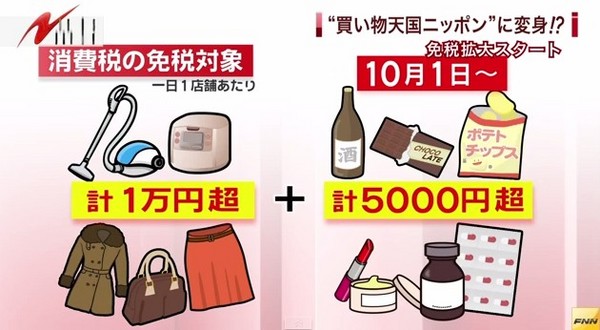
%The new system is easier to understand if you categorize items into “general” and “consumable” (Image / Screenshot from YouTube)
Q2: What’s the price range eligible for tax exemption?
For general tax-free goods such as electronics, clothing, and accessories, the old rules still apply—you must purchase over 10,001 yen (pre-tax) and up to 500,000 yen (pre-tax) on the same day at the same store to qualify for tax exemption.
For newly added consumables such as medicine and cosmetics, the tax-free threshold is between 5,000 and 500,000 yen (pre-tax), purchased on the same day at the same store.
Q3: Can all stores offer tax-free services?
Only stores displaying the tax-free sign (see image below) can offer tax exemption. Stores without this sign do not provide the service. Additionally, the well-known drugstore “Matsumoto Kiyoshi” only began offering tax-free services on October 21.
Click here to view the list of tax-free stores (English version)
%Only stores with the following logo can offer tax-free services. (Image / Screenshot from Japan National Tax Agency)

Q4: Who is eligible for tax-free shopping?
Any general tourist is eligible for tax-free services.
The following are not eligible:
1. Individuals working in Japan
2. Foreigners staying in Japan for more than 6 months
Q4: The new system specifies packaging requirements for tax-free goods. How should they be packaged?
According to Japanese regulations, tax-free consumable goods must be packed in specially designed transparent plastic bags or cardboard boxes and cannot be opened until you leave Japan. Store staff will assist in packing your purchases in the designated tax-free bags, so all you need to remember is not to open the outer packaging before departure.
Based on information from some netizens, most items are currently packed in special plastic bags, with very few using cardboard boxes. However, if a cardboard box is used, remember that “the box must not be opened.”
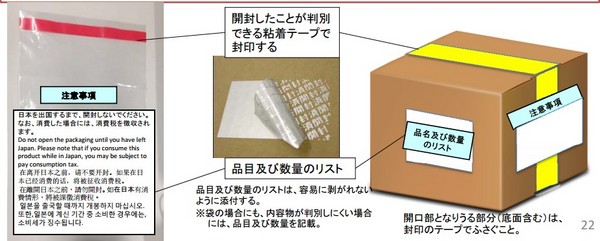
▲%Tax-free consumables must be packed according to the regulations. They must remain sealed before departure (Image / Screenshot from Japan National Tax Agency; photo by Tsai Wen-Jun)


%If opened, a “PEN” mark will be stamped. (Image / Photo by Tsai Wen-Jun)

Q5: As above, but if I buy snacks, cosmetics, or medicine I like at a tax-free shop, can I open and eat or use them after getting the refund?
No.According to Japanese government regulations, new tax-free items added from October 1 must not only be taken out of Japan within 30 days,but also cannot have their outer packaging opened for use or consumption.If caught, customs will require you to pay the 8% consumption tax.
Especially for specially designed transparent plastic bags, once they are opened, the bag will display the words "OPENED" (已开封). In principle, regardless of whether the goods have been used or not, travelers will generally be required to pay the 8% consumption tax, which must be noted carefully.
However, many popular items such as electronics and clothing that fall under the old tax-free system still follow the previous rules—clothing can be worn directly, and electronics can have their packaging removed and be placed directly in checked luggage.
Q6: How do I process tax-free/refund procedures at a tax-free shop?
1. Show your passport, and after the store confirms the “landing permission sticker” inside your passport to verify your eligibility for a refund, you can proceed with the payment and checkout.
2. Travelers must fill out a “Purchaser’s Pledge” (two copies), ensuring compliance with tax-free regulations—one copy for yourself and one for the store.
3. The store will provide a prepared “Purchase Record Ticket,” which you need to fill out, sign, and have stapled into your passport. It must be kept properly and not removed.When departing, before going through customs, there will be a “Customs Office” where you must voluntarily remove the purchase record and submit it to the customs office..
Actual process flow >>>Osaka drugstore “tax-free process” test: Japan’s new system is simpler than expected
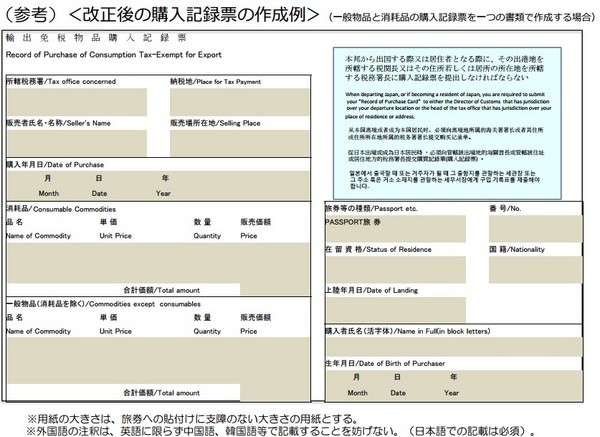
▲% (Image of the Purchaser’s Pledge top, sample shown) and the Purchaser’s Pledge (bottom image), the clerk staples the Purchase Record Ticket and sales details onto the passport. (Image / Screenshot from Japan National Tax Agency)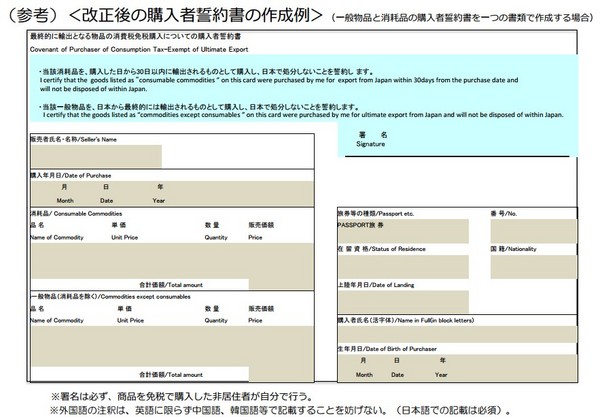
Q7: Should the tax-free items I purchased be checked in first or inspected by customs first?
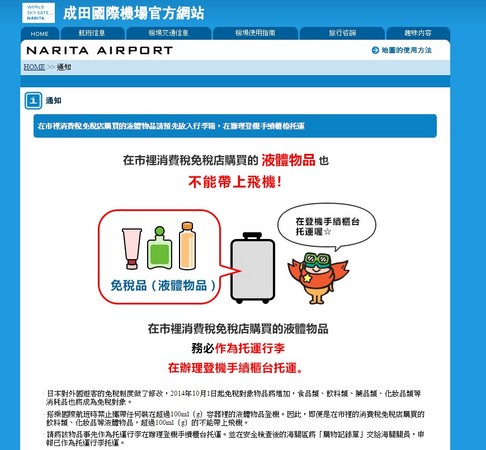
One of the most confusing issues for many travelers is whether “liquid-type tax-free items” should be packed in a suitcase for check-in or carried to customs for inspection. Narita International Airport has now issued a notice stating that since international flights prohibit carrying liquid items in containers over 100ml on board, travelers must pack liquid tax-free items in their suitcases for check-in. After passing security, they should submit the purchase record ticket at the customs area, declaring that it has been checked in as baggage.
Update:All tax-free goods can be checked in, but travelers must still note that consumable tax-free goods must not be opened. If found opened, you may still be required to pay the tax.
% (Image related to consumables and liquids, statement released) regarding liquids and consumables, Narita Airport has issued specific guidance (Image / Screenshot fromNarita Airport official website)
Q8: I bought too much and want to mail some items back to Taiwan. How do I get these items checked by customs?
You need to keep the receipt from mailing the items, and when exiting customs, show the receipt to inform customs that the tax-free items have been mailed.
Share
This article is published by HowToTrip. Sharing and reposting are welcome — please credit the source.
Article URL: https://www.howtotrip.net/views-19058
Related Articles
- Shaoxing's "Grandpa Gourd" hangs the gourds back up: "If there are too many people, we'll interact less — just take a quick look from afar"
- Chinese authorities announce "reciprocal adjustment" to Japan visa fees — single-entry visa jumps from 2,250 to 16,750 yen!
- The "health stones" carried by a traveler were found to have radiation levels exceeding safety limits by a thousand times, potentially endangering fellow passengers on the same flight. Customs issues warning!
- Shenzhen Airport Issues Late-Night Notice: Unidentified Aerial Object Detected, Causing Widespread Flight Delays!
- “They only said it cost money after I opened the box and washed it!” 200g of grapes sold for 60 yuan on a high-speed train—12306 responds!
- Can't buy an airline ticket? Denied exit? Blocked from boarding? A large number of Chinese tourists have mysteriously become "discredited individuals"
- Adverse weather and economic fluctuations impact Colombia's coffee market
- Beach bathing area responds to 2 yuan/30 seconds fee for freshwater foot rinsing: Clearly priced!
- Taking off with an improperly closed cabin door? Wing malfunction? Multiple flights made emergency returns mid-journey!
- Experience the gifts of nature! A countdown of the world’s ten most stunning coastlines