Is the travel product you bought “cheap, toxic oil”?
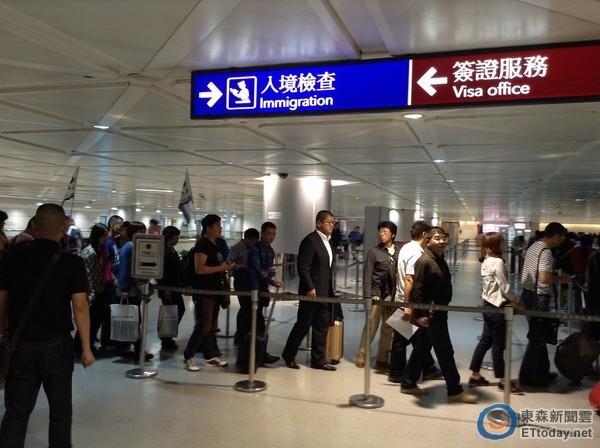
▲ Mainland tourists line up at Taoyuan Airport upon entry. (Photo / Reporter Chen Shichang)
Photos and text byI had a lousy time in South Asia
Pandora’s box has been opened, and the people of Taiwan have recently been living in disgust and fear; not long ago, the oil we used, ate, and bought every day was reprocessed and refined from gutter oil, kitchen waste bins, and night market recycled black oil—or deodorized with chemical ingredients. Is this the oil we use to stir-fry our daily meals and fry fish?
The public is angry; they have been waiting anxiously for the government to handle the issue as soon as possible, but all they see is a cover-up that only makes things worse, followed by one scandal after another. The public is furious; even the well-respected chef Ah Ji cried and shouted in pain—his endorsement was for GMP-certified products, after all. Who would’ve thought that GMP is nothing more than a laughable “safety certification” awarded to themselves by the black-hearted oil industry, supported by government, industry, academia, and officials?
Looking back at the tourism industry
Since the opening of Taiwan to mainland tourists in 2008 (Year 97 in Taiwan’s calendar), six years have flown by, and the number of mainland visitors to Taiwan has surpassed ten million. Smart operators came up with a good idea to lower tour prices and attract customers—they could charge tour guides a head fee and get kickbacks from shopping stops, while also cutting costs on accommodation, food, and transportation. After all, the volume is large enough to take a gamble.
But the reality is that under such fierce and vicious competition, many companies have withdrawn from the mainland tourist market in Taiwan. Coupled with the infiltration of many mainland operators through Hong Kong-funded channels and various other means, manipulating everything from vehicles and hotels to shopping stops in a vertically integrated way, pocketing all the profits themselves—what about Taiwanese operators?
Now let’s look at the domestic Our Bound market
Thanks to the development of the internet, the transparency of information has made it easy to look up trip details online. Large companies, in order to boost volume and present impressive results to airlines to secure more flight discounts, have engaged in price wars. Every year, during the 3–5 major travel fairs, the most eye-catching offers are hotel and restaurant coupons, along with cutthroat pricing on short-haul routes (Northeast Asia, Southeast Asia). Many deals allow you to travel abroad for just over ten thousand NT dollars, tempting you to willingly sign up.
But after the excitement fades, travelers often realize only after the tour that the high-quality experience they were promised is nowhere to be found. They then start questioning why the travel agency arranged such poor-quality hotels or wasted so much time at shopping stops. This is one of the main reasons for the numerous travel disputes. Just think—those ultra-low tour prices don’t even cover the cost of airfare, let alone accommodation, food, transportation, and the fees for guides, drivers, and tour leaders.Businesses will take on risky ventures, but no one will do business at a loss.Warm service and quality are absolutely supported by “reasonable pricing.” So before signing up for any product, please think carefully. Don’t let low-cost offerings poison your precious vacation and the excitement of traveling abroad, just like toxic oil does.
Share
This article is published by HowToTrip. Sharing and reposting are welcome — please credit the source.
Article URL: https://www.howtotrip.net/views-16387
Related Articles
- Shaoxing's "Grandpa Gourd" hangs the gourds back up: "If there are too many people, we'll interact less — just take a quick look from afar"
- Chinese authorities announce "reciprocal adjustment" to Japan visa fees — single-entry visa jumps from 2,250 to 16,750 yen!
- The "health stones" carried by a traveler were found to have radiation levels exceeding safety limits by a thousand times, potentially endangering fellow passengers on the same flight. Customs issues warning!
- Shenzhen Airport Issues Late-Night Notice: Unidentified Aerial Object Detected, Causing Widespread Flight Delays!
- “They only said it cost money after I opened the box and washed it!” 200g of grapes sold for 60 yuan on a high-speed train—12306 responds!
- Can't buy an airline ticket? Denied exit? Blocked from boarding? A large number of Chinese tourists have mysteriously become "discredited individuals"
- Adverse weather and economic fluctuations impact Colombia's coffee market
- Beach bathing area responds to 2 yuan/30 seconds fee for freshwater foot rinsing: Clearly priced!
- Taking off with an improperly closed cabin door? Wing malfunction? Multiple flights made emergency returns mid-journey!
- Experience the gifts of nature! A countdown of the world’s ten most stunning coastlines