The perfect combination of cherry blossoms and shrines—classic charm that truly stands out
Photos & Text byRight-up 45-degree Girl
Visitors to Miyajima definitely come for the iconic Great Torii Gate, but after wandering off to the side, I stumbled upon the uniquely styled Senjokaku Pavilion, which became the most unforgettable memory of my trip to Miyajima.
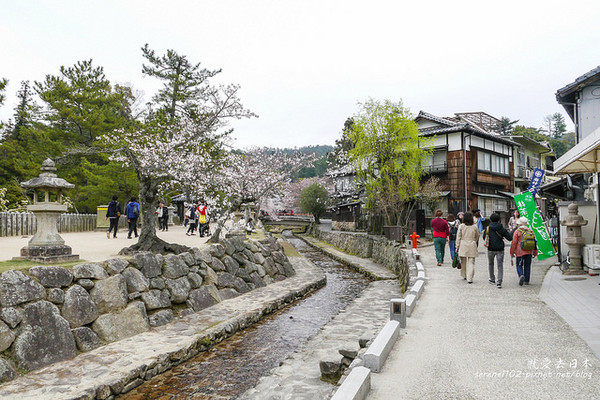
Along the roadside alleys, there are many shops selling local specialty souvenirs and crafts, but as I mentioned in my previous posts, the shops you casually pass by can feel a bit too touristy, almost like what you’d find in Taiwan’s old streets—lacking some uniqueness or freshness. If you’re not up for walking, taking a rickshaw ride is also a uniquely charming option—the driver might even share historical anecdotes and point out scenic spots along the way.
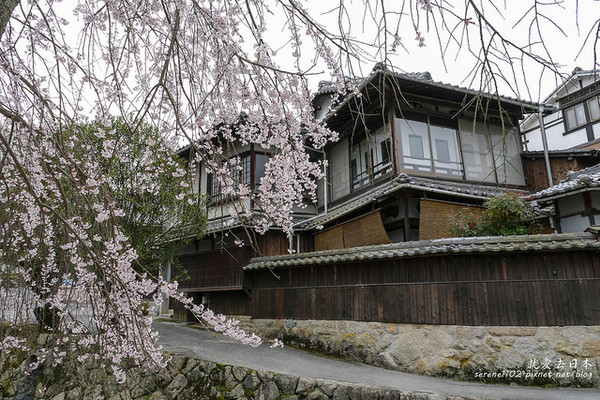
Due to historical reasons, the residential houses right next to the shrine still maintain the elegant look of traditional machiya townhouses. I mean, waking up every day to the view of a torii gate on the sea—how could you ever get tired of that? Because the shops by the road didn’t catch my attention, I had more time to take photos and enjoy the cherry blossoms.
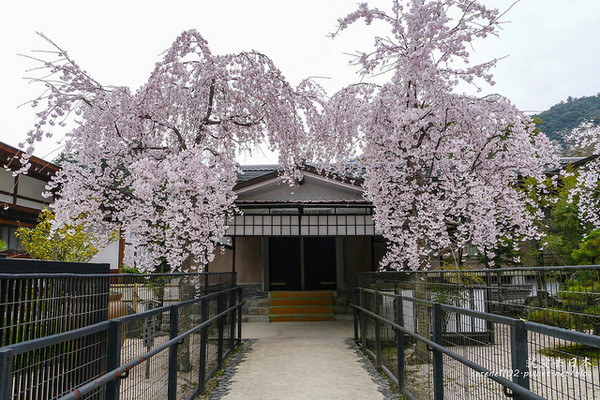
This building, which you can’t go inside, has two exuberantly blooming weeping pink cherry trees at its entrance that almost compel every passing visitor to take a photo.
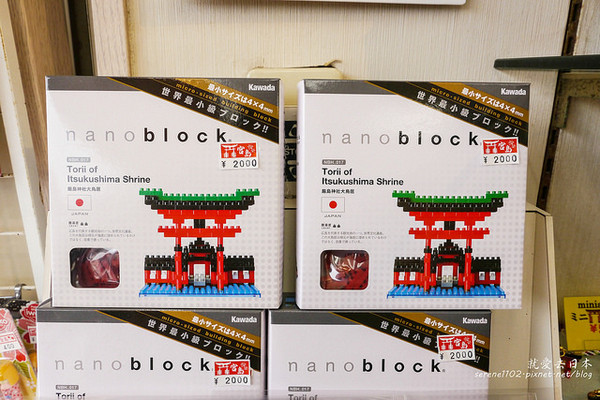
I’ve seen this at Taiwan’s Eslite Spectrum before (lol)! It’s so fitting to see it being sold here in Miyajima.
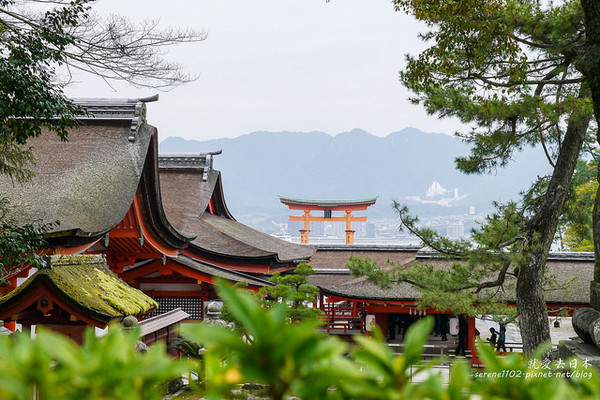
Just like this!! This view—so beautiful, so lovely~~
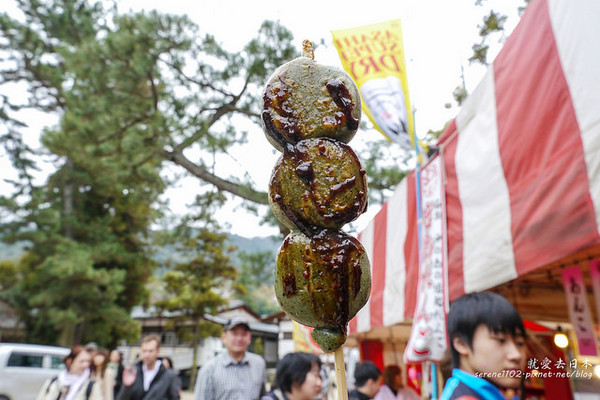
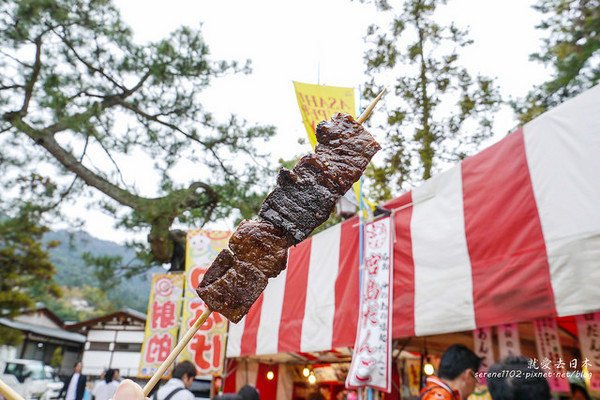
Although the street food I tried at the night market near Yanagigawa Rainbow Bridge last time was a bit of a shock (Yanagigawa, Rainbow Bridge Night View & Night Market), by lunchtime in Miyajima, I still needed to eat something. The mugwort mochi brushed with sweet soy sauce had just the right amount of stickiness. It wasn’t particularly outstanding, but the sweet red bean filling was delicious and left me wanting more—I ended up buying quite a few.
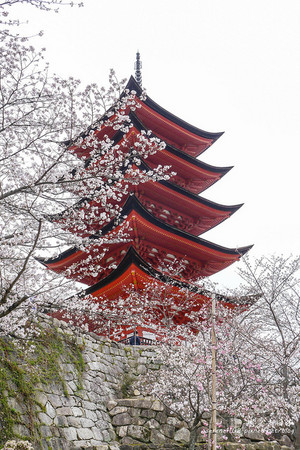
A few steps ahead, you can vaguely make out the five-story pagoda and Senjokaku Pavilion on the small hill. The five-story pagoda is a building in Tang-style architecture, standing 27.6 meters tall, and has remained undamaged and unreconstructed since its completion in 1407. It’s said that the interior is adorned with colorful carvings and paintings, but it’s not open to visitors.<。
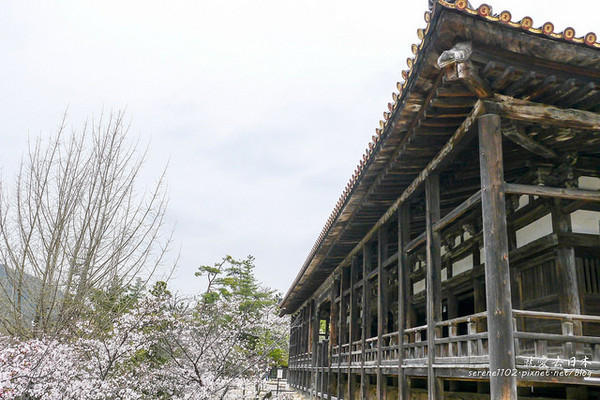
I immediately headed to the nearby Senjokaku Pavilion. Even before entering, I was drawn in by its aged wooden pillars—I’m just a girl who loves old things (twirls).
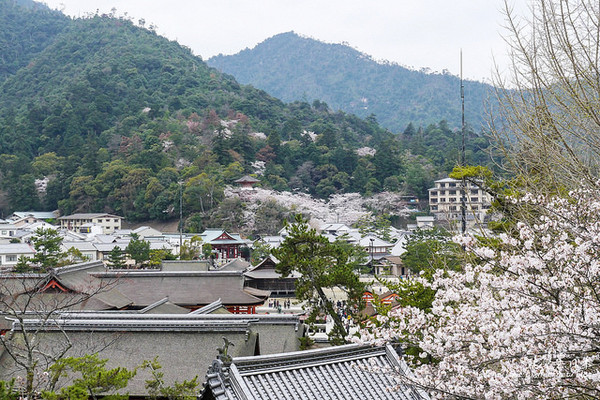
Looking from the front of Senjokaku Pavilion, the hill opposite isthe beautiful cherry blossom grove I wrote about in the previous post.
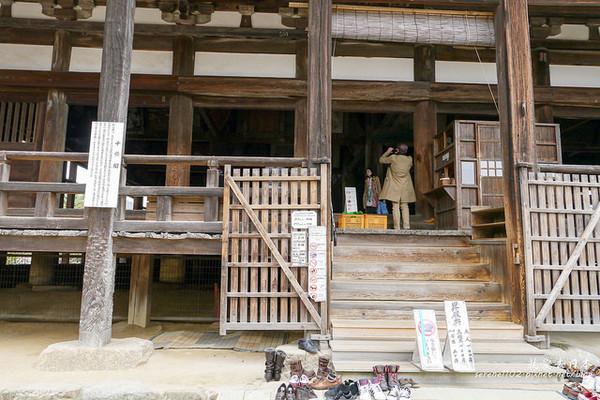
To protect the wooden floors, you must remove your shoes upon entry, and lying down, eating, smoking, or bringing pets inside is not allowed.
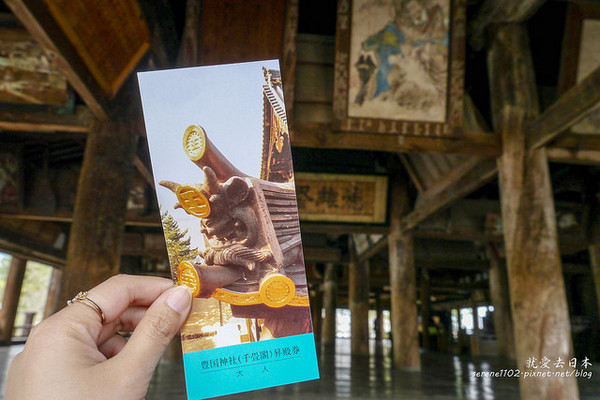
Entry to Senjokaku Pavilion requires a separate ticket, which is very affordable at just 100 yen.
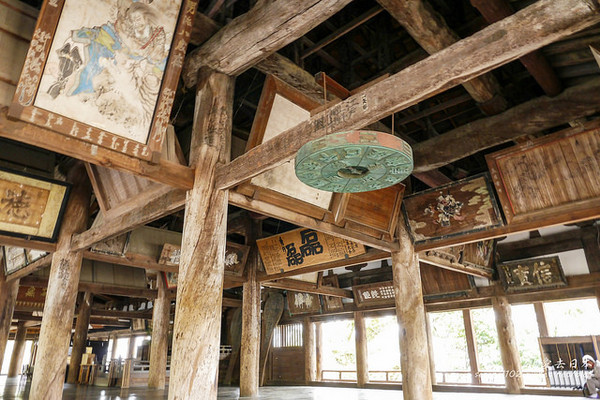
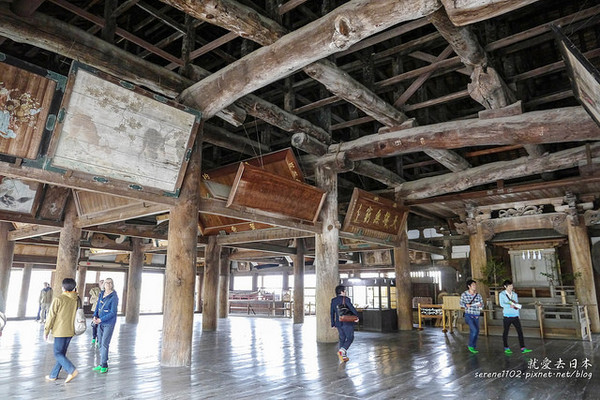
It’s commonly called Senjokaku (Thousand Mat Hall) because it’s extremely spacious, covering an area equivalent to 857 tatami mats, hence the name. Its official name is actually Toyokuni Shrine. The ceiling is adorned with hanging scrolls, all bearing the traces of age. I think the restored ancient calligraphy and paintings are beautiful, but even if they’re not specially preserved and just age naturally with time, that has its own kind of beauty. Though not as ancient as the architecture, most of these artworks are over a hundred years old.
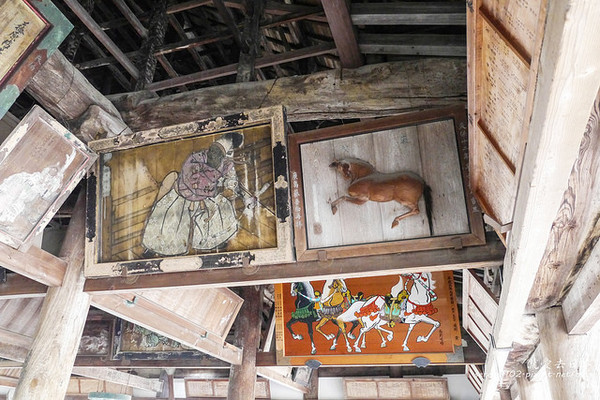
In addition to regular calligraphy and paintings, there are also three-dimensional carvings like this horse.
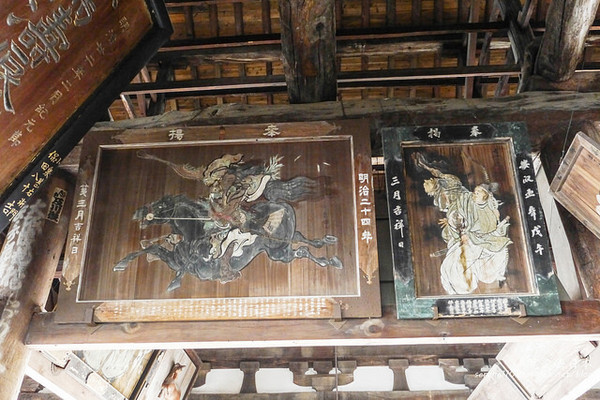
The calligraphy and paintings dedicated to the shrine from various regions don’t seem to follow a specific theme. The relatively newer painting on the left was already offered in Meiji 24 (1891), during the 17th year of the Guangxu Emperor in China—when Empress Dowager Cixi was still in power.
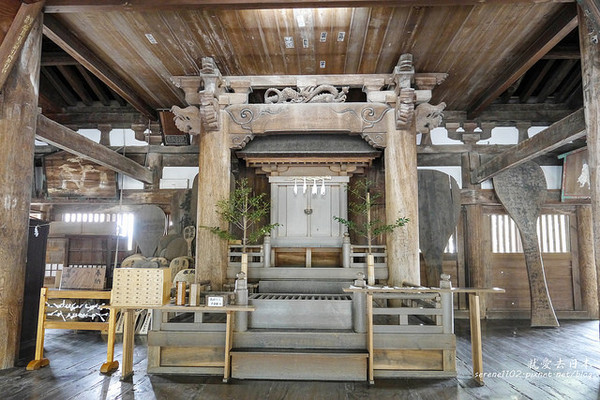
The entire hall is very spacious, with the main altar set right in the center. Senjokaku Pavilion was built in 1587 by Toyotomi Hideyoshi to enshrine those who died in battle, with a rule that a thousand Buddhist sutras be chanted monthly in their memory. But due to Toyotomi Hideyoshi’s sudden death, the surrounding wall panels were never completed, and remain unfinished to this day—resulting in excellent natural lighting and visibility.
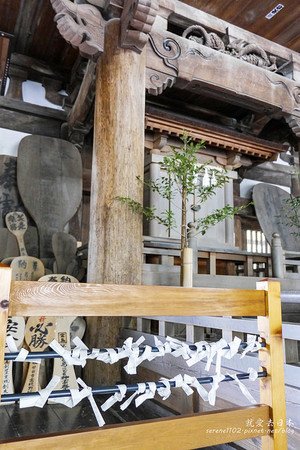
Like other shrines, you can draw an omikuji (fortune slip) here. If you get a bad one, remember to tie it up instead of taking it home~
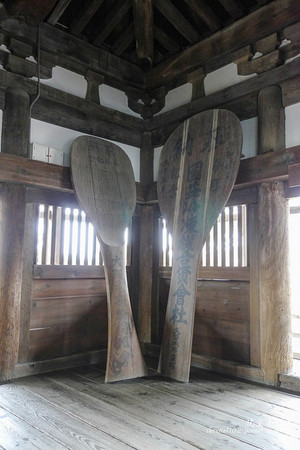
Huge ladles taller than NBA players stand all around. Hiroshima’s giant ladles are famous—they’re said to bring household safety, business prosperity, and guaranteed election victories.
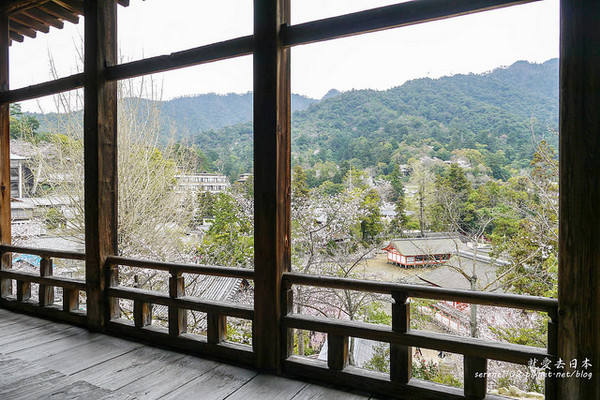
Stepping out of the inner hall and looking outside, the ocean view unfolds right before your eyes. It would surely be even more beautiful and serene under a clear blue sky.
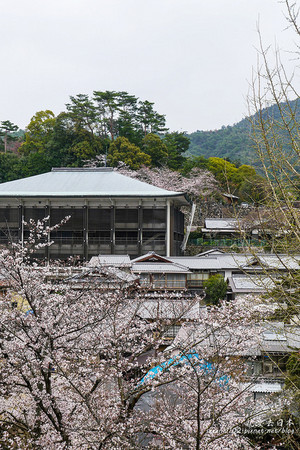
I arrived a couple of days earlier than peak bloom, so the cherry blossoms were only about 30% open, but they were already stunningly beautiful.
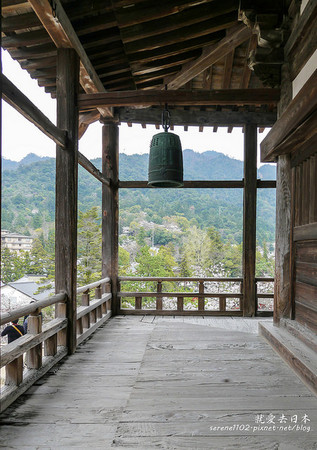
The vintage clock centerpiece—wonder when it will chime across Miyajima?
[Senjokaku Pavilion (Toyokuni Shrine) & Five-Story Pagoda]
Japanese websitehttp://www.miyajima.or.jp/sightseeing/ss_goju.html
^?瑚 廿日市市宫岛町1162-18
(0829)44-2011
Visiting hours: 8:30–16:30
Admission fee: 100Q?/strong>
How to get there: Take the JR Sanyo Main Line to 【Miyajimaguchi】 Station. Walk straight out of the station for 5 minutes, then take a ferry for about 10 minutes. After disembarking, walk for 10 minutes to reach the site. It is located to the left when facing Miyajima Shrine.
Japanese-style food travel notebook of a girl at a 45-degree angle to the right
Loves going to Japan
Share
This article is published by HowToTrip. Sharing and reposting are welcome — please credit the source.
Article URL: https://www.howtotrip.net/views-14581
Related Articles
- Shaoxing's "Grandpa Gourd" hangs the gourds back up: "If there are too many people, we'll interact less — just take a quick look from afar"
- Chinese authorities announce "reciprocal adjustment" to Japan visa fees — single-entry visa jumps from 2,250 to 16,750 yen!
- The "health stones" carried by a traveler were found to have radiation levels exceeding safety limits by a thousand times, potentially endangering fellow passengers on the same flight. Customs issues warning!
- Shenzhen Airport Issues Late-Night Notice: Unidentified Aerial Object Detected, Causing Widespread Flight Delays!
- “They only said it cost money after I opened the box and washed it!” 200g of grapes sold for 60 yuan on a high-speed train—12306 responds!
- Can't buy an airline ticket? Denied exit? Blocked from boarding? A large number of Chinese tourists have mysteriously become "discredited individuals"
- Adverse weather and economic fluctuations impact Colombia's coffee market
- Beach bathing area responds to 2 yuan/30 seconds fee for freshwater foot rinsing: Clearly priced!
- Taking off with an improperly closed cabin door? Wing malfunction? Multiple flights made emergency returns mid-journey!
- Experience the gifts of nature! A countdown of the world’s ten most stunning coastlines