A Mountain of East-Central European and Vietnamese Delicacies: The Pork Intestine Cake Platter as a Condensed History of Ho Chi Minh City
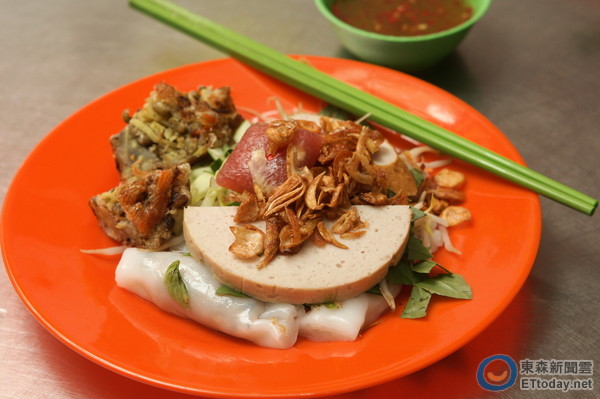
▲ A pork intestine cake piled high with sausages, cured pork, mung bean paste cake, and lettuce is as rich as the history of Ho Chi Minh City. (Photo by reporter Chen Rui-zhong, the same below)
Reporter Chen Rui-zhong / Reporting from Ho Chi Minh City
In Ho Chi Minh City, Vietnam, there is a unique snack called pork intestine cake. This dish, made from flour wrappers and savory minced pork, feels somewhat similar to Hong Kong’s cheung fun, but because of its shape—resembling a pig’s small intestine—it is locally referred to as pork intestine cake. It is usually served with a variety of sausages, cured meats, and side dishes, creating a distinctive platter meal.
At pork intestine cake stalls, you can watch skilled vendors smoothly spread rice batter onto a flat pan. Once the batter congeals into thin, translucent pancakes, they roll seasoned minced pork inside to form sausage-like rolls about the thickness of an intestine. These are then sliced into 7–8 cm pieces to complete the pork intestine cake.
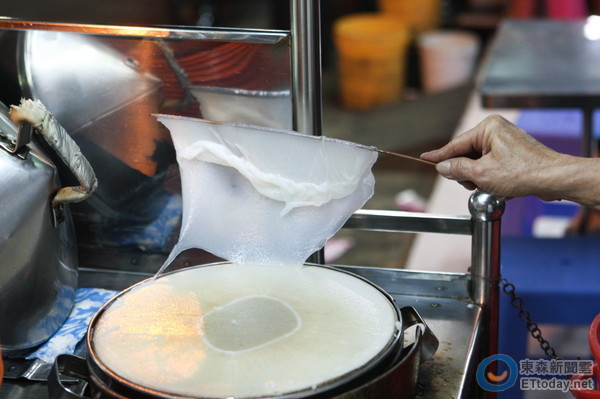
▲ The thin layer of rice batter pancake forms the “skin” of the pork intestine cake.
According to locals, not only is the main component important—the supporting elements also matter. Cured pork cubes are a must-have in every pork intestine cake serving. In addition, slices of various flavored pork sausages, lettuce, fried mung bean paste cakes, basil, bean sprouts, and fried onions are stacked on top. Some shops even add fish balls or fish cakes, building a small mountain-like pile that makes the pork intestine cake even more abundant. A generous full plate typically costs around 30,000 Vietnamese dong (approximately 47 New Taiwan dollars).
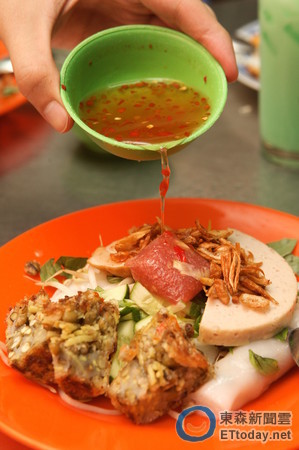
%闹沓Ω庾钫?车某苑?褪橇苌嫌懵兑黄鸪浴</strong>
Topped with the shop’s prepared fish sauce, the pork intestine cake has a texture similar to Hong Kong’s cheung fun, but the flavor is somewhat akin to Taiwan’s salted pork rice. Because it contains no filling inside, it absorbs the sauce, herbs, and vegetables, creating a burst of flavor.
As for the various ingredients in the platter, each brings its own distinct taste. Lettuce and herb leaves dipped in fish sauce offer a uniquely Southeast Asian aroma, while the mung bean paste cake is sweet with a fragrant kick that becomes more flavorful the more you chew. The cured pork and sausage slices provide the main oily richness and saltiness, forming the essential piece of the puzzle.
Although the pork intestine cake itself leans toward Chinese flavors, the sausages have a Western taste, and the fish sauce along with various spices are distinctly Vietnamese. The combination may seem unusual, but when eaten together, the flavors harmonize, adding an element of fun to the meal. Overall, it’s like Ho Chi Minh City itself—blending the histories and cultures of Europe, Vietnam, and China to create a uniquely delicious and distinctive specialty. Next time you’re in Ho Chi Minh City, be sure to try this iconic street food that captures the essence of Vietnamese daily life.
Share
This article is published by HowToTrip. Sharing and reposting are welcome — please credit the source.
Article URL: https://www.howtotrip.net/views-13844
Related Articles
- Shaoxing's "Grandpa Gourd" hangs the gourds back up: "If there are too many people, we'll interact less — just take a quick look from afar"
- Chinese authorities announce "reciprocal adjustment" to Japan visa fees — single-entry visa jumps from 2,250 to 16,750 yen!
- The "health stones" carried by a traveler were found to have radiation levels exceeding safety limits by a thousand times, potentially endangering fellow passengers on the same flight. Customs issues warning!
- Shenzhen Airport Issues Late-Night Notice: Unidentified Aerial Object Detected, Causing Widespread Flight Delays!
- “They only said it cost money after I opened the box and washed it!” 200g of grapes sold for 60 yuan on a high-speed train—12306 responds!
- Can't buy an airline ticket? Denied exit? Blocked from boarding? A large number of Chinese tourists have mysteriously become "discredited individuals"
- Adverse weather and economic fluctuations impact Colombia's coffee market
- Beach bathing area responds to 2 yuan/30 seconds fee for freshwater foot rinsing: Clearly priced!
- Taking off with an improperly closed cabin door? Wing malfunction? Multiple flights made emergency returns mid-journey!
- Experience the gifts of nature! A countdown of the world’s ten most stunning coastlines