Spain’s Biennial Gastronomic Event: Experience the Profound Culture of Eating Pork
Text and photos by Yu Tian
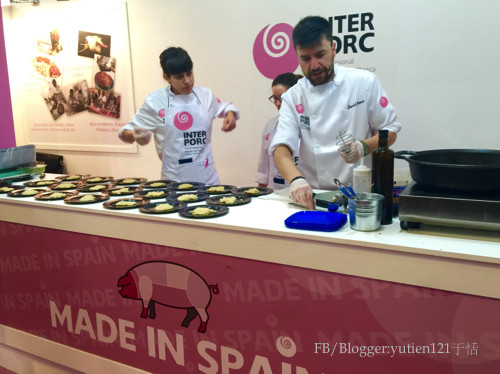
I was honored to attend Spain’s biennial gastronomic event, held in the country’s fifth-largest city—Zaragoza (Zaragoza).The event brought together representatives from official local food bodies such as the Spanish Ministry of Agriculture and the InterPorc (White Pig Farming Federation), showcasing the continuous refinement and yearning for better cuisine in the gastronomy industry.

▲ The diners gathered here are all discerning gourmets, and the exhibition is also a highly reported event among local food media.
When talking about Spanish cuisine, you absolutely must serve a ham.The profound Spanish culture of eating pork can be traced back to historical classic novels and famous artworks. Most people only know about the world-renowned Iberian ham, but through this gastronomic journey, I discovered that Spaniards have a long-standing traditional habit of eating pork, including pig blood and offal.... From breeding to cooking, everything is meticulously handled. Spain has very mature expertise in pig farming techniques, meat cutting, and food safety control. In the past, we thought undercooked pork could carry pathogens, but here, with good conditions and advanced technology, Spanish pork can even be eaten semi-raw. Locals are quite surprised by our belief that pork must always be fully cooked, and I was equally shocked by their common practice of eating semi-cooked pork—it was truly an eye-opener for me.
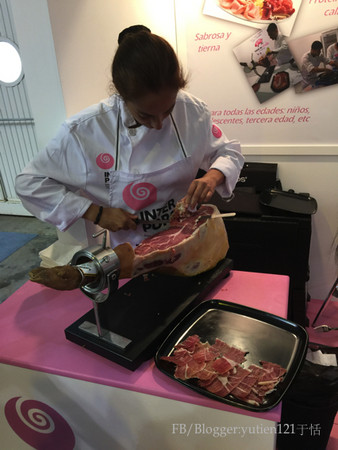
▲ A female ham slicer prepares Jamón Serrano from white pigs.
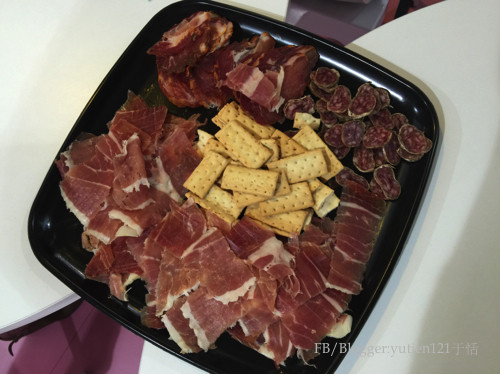
▲ A ham platter that can serve as both an appetizer and a drink pairing. Various cuts of ham and sausages offer different flavors with every bite. Clockwise, they are Fuet (my favorite), Jamón, and a spicy, reddish-hued ham.


▲ An adorable egg-shaped mascot dressed as a gentleman or lady roams the exhibition as a goodwill ambassador. The inflatable character is incredibly friendly.

▲ Engaging in discussions with on-site staff and journalists about the differences in food and culture.
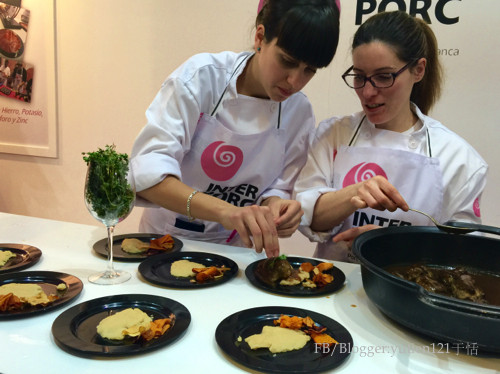
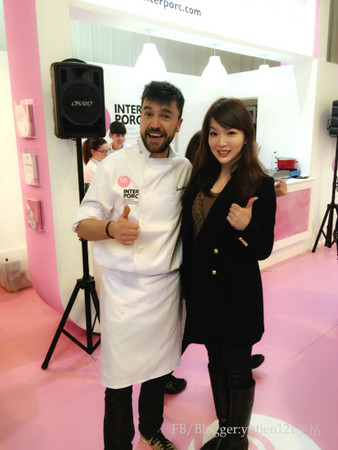
Next up is Spain’s celebrity chef on screen: Daniel Yranzo demonstrating refined pork dishes. It was truly lucky to taste a full set of the chef’s creations on-site, asking about the methods while eating and sharing unique culinary ideas with everyone.
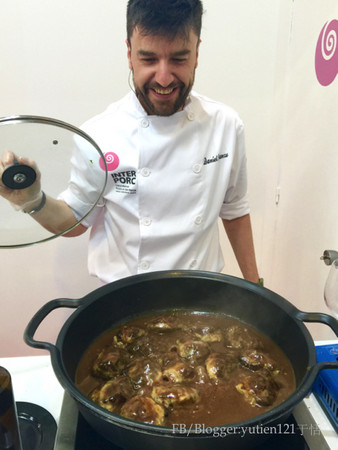
Pork membrane pie (cheek meat stuffed with cheese and mushrooms, wrapped in a pig’s amniotic membrane. The cooking method using the pig’s fetal membrane naturally produces a rich, gelatinous sauce with a silky thickened texture.). PS: The pig’s fetal membrane is exported in large quantities to Japan due to its high gelatin content. After processing, it is turned into placenta powder, a beauty and health food favored by women.
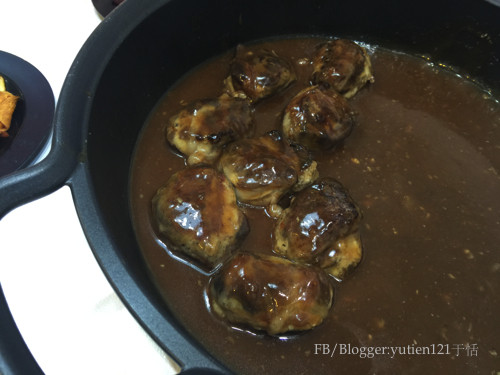
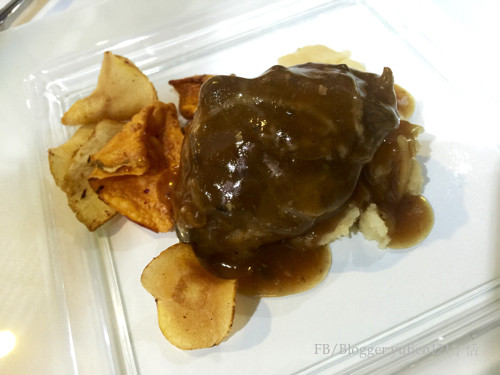
The finished pork pie, served with mashed potatoes, potato slices, and sweet potato slices, makes for a complete main dish.
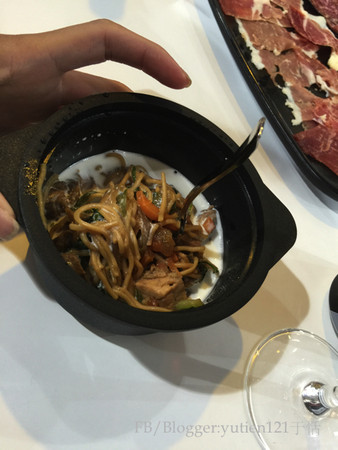
Stir-fried pork noodles—tender pork stir-fried with shredded vegetables and carrots, topped with a final drizzle of cheese and coconut milk sauce. It’s a very unique combination with an unexpectedly special texture and a delightful pairing.
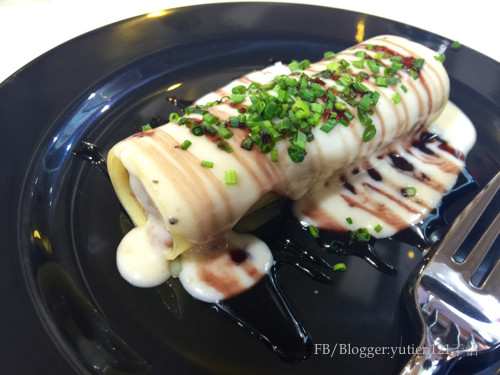
Italian-style rolled pasta—the pasta sheets resemble lasagna sheets, filled with minced lean meat, cured ham, and chopped pig’s trotter meat. The presentation features a white sauce made from butter, flour, and milk, topped with a sauce made from reduced red wine. The aroma and rich, layered pork flavor are incredibly satisfying.
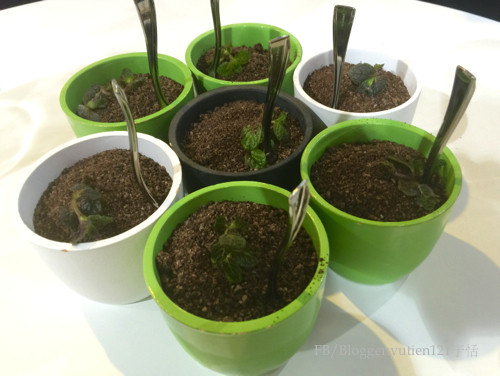
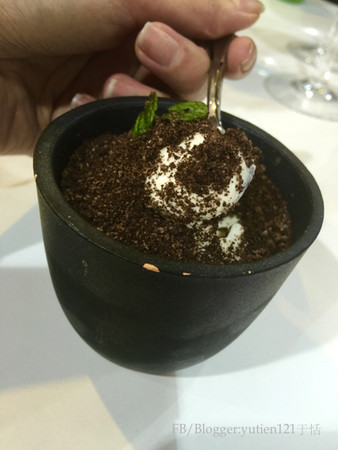
This dessert didn’t seem particularly special at first glance. Some bakeries in Taiwan already have similar “plant pot” dessert concepts, often filled with tiramisu and garnished with cocoa powder to resemble soil. But here, the soil looks like fertilized, soft earth. Upon asking, I learned it’s made by grinding Oreo cookies. What amazed me most was that it’s not tiramisu—inside, there’s a tangy and sweet passion fruit sauce as the finishing touch. Impressive, right?
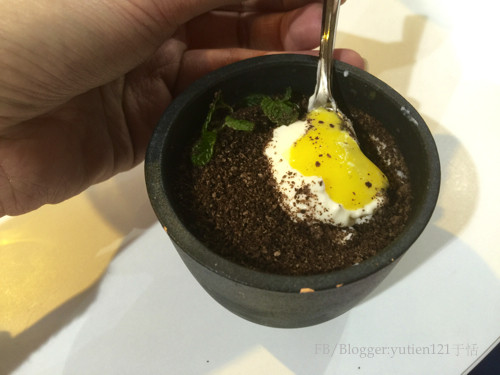
(The passion fruit sauce in the chocolate dessert cup looks a bit like a raw egg yolk.)
Today, whether in terms of discovering new foods or creative cooking techniques, I gained a lot of insights. So many thoughts like “so this is how you can pair things!” and “so this is how you can cook it!” kept popping up as I tasted. I also truly witnessed the depth and richness of Spanish pork-loving culture. Taiwan began importing Spanish meats last September, so when I go back, I want to try out Chef Daniel’s cooking methods and experiment with some Spanish-style pork dishes myself.
!! The currently officially approved premium white pork has been imported to major supermarkets in Taiwan (CitySuper, Jason’s, breeze Supermarket, etc.)!!
To follow this author, please check:
Yu Tian’s Facebook Page
Yu Tian’s Blog
Share
This article is published by HowToTrip. Sharing and reposting are welcome — please credit the source.
Article URL: https://www.howtotrip.net/views-12383
Related Articles
- Shaoxing's "Grandpa Gourd" hangs the gourds back up: "If there are too many people, we'll interact less — just take a quick look from afar"
- Chinese authorities announce "reciprocal adjustment" to Japan visa fees — single-entry visa jumps from 2,250 to 16,750 yen!
- The "health stones" carried by a traveler were found to have radiation levels exceeding safety limits by a thousand times, potentially endangering fellow passengers on the same flight. Customs issues warning!
- Shenzhen Airport Issues Late-Night Notice: Unidentified Aerial Object Detected, Causing Widespread Flight Delays!
- “They only said it cost money after I opened the box and washed it!” 200g of grapes sold for 60 yuan on a high-speed train—12306 responds!
- Can't buy an airline ticket? Denied exit? Blocked from boarding? A large number of Chinese tourists have mysteriously become "discredited individuals"
- Adverse weather and economic fluctuations impact Colombia's coffee market
- Beach bathing area responds to 2 yuan/30 seconds fee for freshwater foot rinsing: Clearly priced!
- Taking off with an improperly closed cabin door? Wing malfunction? Multiple flights made emergency returns mid-journey!
- Experience the gifts of nature! A countdown of the world’s ten most stunning coastlines