The secret beneath conveyor belt sushi plates — the kitchen always knows what you've eaten!

▲What’s the secret beneath conveyor belt sushi plates? (Photo / TV Asahi)
Travel Center / Comprehensive Report
As plate after plate of conveyor belt sushi makes its way to you, its affordability and deliciousness make it hard to stop at just one. Japanese conveyor belt sushi is both cheap and tasty, and the rotating belt always seems to feature nigiri that tempts you to grab it. Ever wonder why? Because there’s a tiny chip hidden under each plate — the kitchen staff know exactly what you’ve taken and how many plates you’ve eaten.
Japanese conveyor belt sushi may seem like simple, everyday fare, but it hides some clever business tricks. Each plate has an IC chip attached underneath. The chefs instantly know which fish was eaten and when, allowing them to promptly restock the types of sushi being taken. Through these IC chips, restaurants can track what’s running low on the belt and replenish it in real time. In addition to chips under plates, some conveyor belt sushi shops place them on the lids instead.
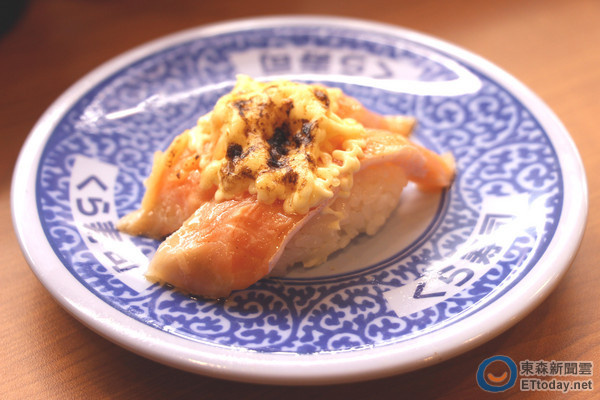
▲Conveyor belt sushi is Japan’s affordable delicacy. (Photo / Huang Shiyuan)
Thanks to these chips, conveyor belt sushi businesses also gain access to today’s most popular resource — big data. Analyzing nearly 1 billion records per year, they found that most Japanese people prefer tuna nigiri, and tend to eat half of their meal within the first 10 minutes. With big data analysis, they learn which types of sushi are most popular, cater to those preferences to encourage more orders, and avoid having unpopular sushi sitting on the belt and eventually going to waste.
In the early days, sushi was expensive because it relied on the craftsmanship of the chef, making it unaffordable for most people. In 1958, after seeing the beer bottle conveyor system at a brewery, the founder of Genroku Sushi, Shiraishi Yoshiaki, came up with the idea of conveyor belt sushi. This innovation cut labor costs, made nigiri more affordable and accessible, with each plate costing just 20 yen at the time.
Over time, conveyor belt sushi has evolved with many creative features, such as adding a reservation system where customers can order via screen, and the chefs prepare the order before sending it directly to the customer’s seat through another belt. Conveyor belt sushi has already saved businesses a lot of labor, but some go even further — used plates dropped into a recycling slot on the table are sent straight to the dishwasher in the back, and stacking five plates earns you a mini-game to add fun to your meal. (Source: TV Asahi)
Share
This article is published by HowToTrip. Sharing and reposting are welcome — please credit the source.
Article URL: https://www.howtotrip.net/views-11789
Related Articles
- Shaoxing's "Grandpa Gourd" hangs the gourds back up: "If there are too many people, we'll interact less — just take a quick look from afar"
- Chinese authorities announce "reciprocal adjustment" to Japan visa fees — single-entry visa jumps from 2,250 to 16,750 yen!
- The "health stones" carried by a traveler were found to have radiation levels exceeding safety limits by a thousand times, potentially endangering fellow passengers on the same flight. Customs issues warning!
- Shenzhen Airport Issues Late-Night Notice: Unidentified Aerial Object Detected, Causing Widespread Flight Delays!
- “They only said it cost money after I opened the box and washed it!” 200g of grapes sold for 60 yuan on a high-speed train—12306 responds!
- Can't buy an airline ticket? Denied exit? Blocked from boarding? A large number of Chinese tourists have mysteriously become "discredited individuals"
- Adverse weather and economic fluctuations impact Colombia's coffee market
- Beach bathing area responds to 2 yuan/30 seconds fee for freshwater foot rinsing: Clearly priced!
- Taking off with an improperly closed cabin door? Wing malfunction? Multiple flights made emergency returns mid-journey!
- Experience the gifts of nature! A countdown of the world’s ten most stunning coastlines