Challenge the traditional notion of volunteering as "giving" – Cai Fuda ventures into indigenous villages and treks deep into mountains to learn.
ETtoday EVA News Cloud – Special Report Series on Transportation Intermediaries #5
A journey from departure to arrival can be likened to traveling by boat toward a destination. If the vehicles along the way – such as buses, taxis, airports, and hotels – are seen as the boats ferrying passengers to their endpoint, then the service staff working in these sectors are the “ferry operators,” steering the vessel through the waterways with skill and care. It is their attitude and dedication throughout the process that create the most beautiful scenery.
Reported by You Tru-Ju / Taipei
In recent years, Taiwanese youth have begun to embrace travel experiences that differ from conventional sightseeing. Rather than simply visiting popular attractions or taking cursory tours, they delve deep into the heart of the island to explore an alternative philosophy of life. Among these initiatives, the “Obailai” project, founded by Cai Fuda, Chen Yilin, and others...Obailai...has proven especially innovative. They share the moving stories of Taiwan’s land and promote the “Island Puzzle” travel program, guiding young people into indigenous villages to authentically experience the rich and unique flavors of Taiwan’s landscapes.
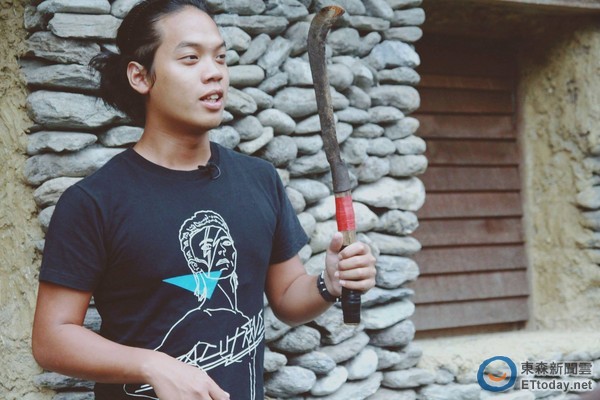
▲ Cai Fuda initiated the “Island Puzzle” project. (Photo / Provided by Cai Fuda, the same below)
Initially, the “Obailai” Facebook fan page was created online simply to share heartfelt moments of life. Founder Cai Fuda said, “We originally set out with a dream of inspiring more people to pursue their travel aspirations.” What began as an online sharing space gradually evolved into tangible real-life experiences, and eventually led to the launch of locally rooted travel experiences in Taiwan. These programs allow young people to immerse themselves in the serene beauty of mountains and forests through two-day-one-night or three-day-two-night trips.
Having attended university in Hualien, Cai Fuda once lived with his Bunun classmate Mayun’en and visited his home village. “The first time I went to the Mayuan Village, I was deeply moved by the way people treated one another and the wisdom found deep in the mountains.” Although deeply touched, he and other young people at the time—without money or clear plans—could only watch as the land slowly changed, “As I witnessed its gradual disappearance, I kept asking myself what I could do.” After graduation, he established the Obailai team online. Once gaining attention, the group began seeking a viable business model. Cai Fuda then considered how to combine eco-friendly travel with sustainable business practices, launching the “Island Puzzle” initiative – also supported by the Ministry of Culture as part of its Youth Village Cultural Development Program.
%Cai Fuda and Bunun tribesman Mayun’en (pictured right) enable young people to immerse themselves in tribal life and learn about the culture of the land.
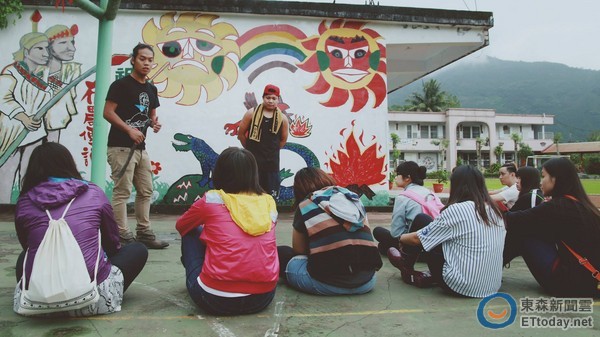
Young participants live in Mayuan Village and pay a travel fee that covers not only accommodation with local families but also serves largely as a “tuition fee.” “We go to the fields to farm and harvest bamboo shoots—not as volunteers, but to learn.”Believing that the knowledge and experience of tribal elders are treasures worth preserving, the daily life and experiences within the villages become important sources of learning.Cai Fuda’s concept challenges the conventional idea of urban youth volunteering in remote areas, and even more so, it flips the dynamic so that tribal elders are not just passive recipients of outside help but active contributors.
“In truth, we are the ones learning from the land and the elders. We pay tuition and gain knowledge—this is the only sustainable way forward,” said Cai Fuda. The Island Puzzle project aims to align one's desired lifestyle with the monetary economy, while preserving the original way of life. “Those who resonate with it can join—every family, from children to elders, is welcome.” Cultural cohesion builds from individuals to the entire tribe, forming diverse, detailed experiences. “Many things aren’t valuable because they’ve been discovered, but because they’ve always been special—only no one took the time to notice,” Cai Fuda explained.
%Explaining the deeper meanings behind tribal culture is a key part of Cai Fuda’s work.

Culture is a living, evolving organism. As times change, so does the way of life in tribal villages. In the hearts of indigenous peoples, the deep mountains were once sacred places where women were not allowed to tread. But the first exception was made for the Island Puzzle project. “If we only follow tradition rigidly, young people will gradually lose their way home.” The deep mountains were opened to the youth who wished to “learn,” Cai Fuda recalled. On his first mountain stay, sleeping in a hunting lodge, the tribal elder thanked him:“Thank you. I never thought someone would be willing to pay to learn our culture. Not every Bunun person loves this place, but through you, we come to know ourselves better.”
To ensure the ongoing vitality of the villages, each participating Island Puzzle family contributes 10% of their tuition or accommodation fees into a shared tribal promotion fund. This fund supports initiatives within the tribe such as building schools, maintaining traditional houses, or organizing community-sharing events. The funding not only provides income for tribal members but also motivates youth to reconnect with their roots.
In Taiwan—and the world—many things teeter on the edge of disappearance.“I hope Taiwan can become an island where one million people visit ten times, rather than ten million who come once and forget. If Taiwan’s land is a river, and its stories lie at the river’s end, then my job is to be the ‘ferry operator’ in the hearts of travelers—steering the boat toward the river’s most beautiful spots.”
Share
This article is published by HowToTrip. Sharing and reposting are welcome — please credit the source.
Article URL: https://www.howtotrip.net/views-11525
The Jinmen City God Welcome Festival Also Goes “Tech-Savvy”: Real-Time Mobile Tracking for the Parade
Next →Leofoo Village’s limited-edition Dreamy White Christmas Village is stunningly beautiful this year, and the real Santa Claus from the North Pole has made a surprise appearance, causing a huge online sensation!
Related Articles
- Shaoxing's "Grandpa Gourd" hangs the gourds back up: "If there are too many people, we'll interact less — just take a quick look from afar"
- Chinese authorities announce "reciprocal adjustment" to Japan visa fees — single-entry visa jumps from 2,250 to 16,750 yen!
- The "health stones" carried by a traveler were found to have radiation levels exceeding safety limits by a thousand times, potentially endangering fellow passengers on the same flight. Customs issues warning!
- Shenzhen Airport Issues Late-Night Notice: Unidentified Aerial Object Detected, Causing Widespread Flight Delays!
- “They only said it cost money after I opened the box and washed it!” 200g of grapes sold for 60 yuan on a high-speed train—12306 responds!
- Can't buy an airline ticket? Denied exit? Blocked from boarding? A large number of Chinese tourists have mysteriously become "discredited individuals"
- Adverse weather and economic fluctuations impact Colombia's coffee market
- Beach bathing area responds to 2 yuan/30 seconds fee for freshwater foot rinsing: Clearly priced!
- Taking off with an improperly closed cabin door? Wing malfunction? Multiple flights made emergency returns mid-journey!
- Experience the gifts of nature! A countdown of the world’s ten most stunning coastlines