Kyoto’s most popular queue-worthy snack: Red bean daifuku from a century-old traditional wagashi shop
Text & Photos /25°C Blank
Near several important shrines and temples in Kyoto, you can find famous traditional sweets. There’s no clear reason why, but after paying your respects, having one of these traditional treats really lifts your mood.
The Shimogamo Shrine and Kamigamo Shrine, both deeply connected to Kyoto and recognized as UNESCO World Heritage Sites, were originally shrines dedicated to the Kamo clan, an ancient powerful family in Kyoto. Next to these two World Heritage Sites that I personally love, there are two must-try traditional sweets shops worth visiting.
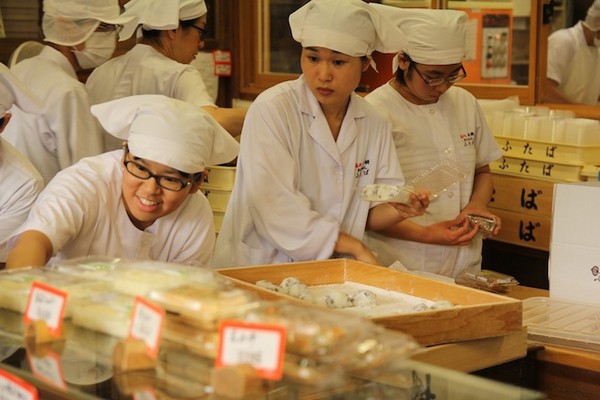
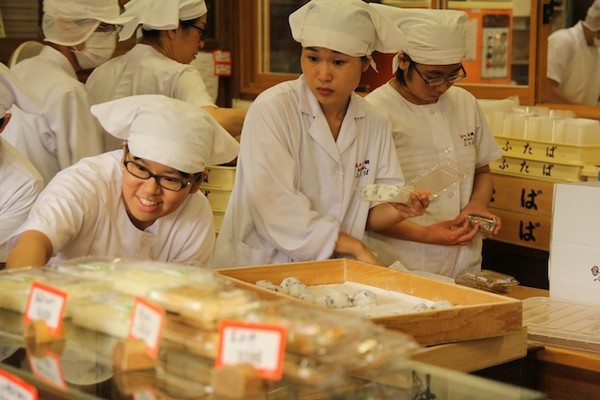
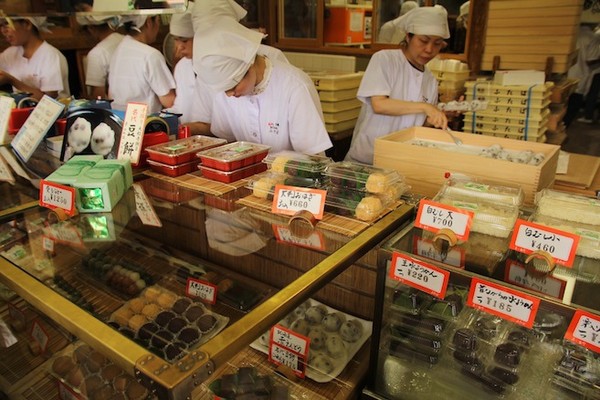
Chimotsuba, a super-popular century-old traditional wagashi shop near Shimogamo Shrine, is one I’ve visited many times. This summer, during my visit to Kyoto coinciding with the Obon Festival, there was quite a line—probably because it’s customary to buy these sweets during the holiday. We arrived early in the morning, and there was already a long queue, with everyone buying plenty.
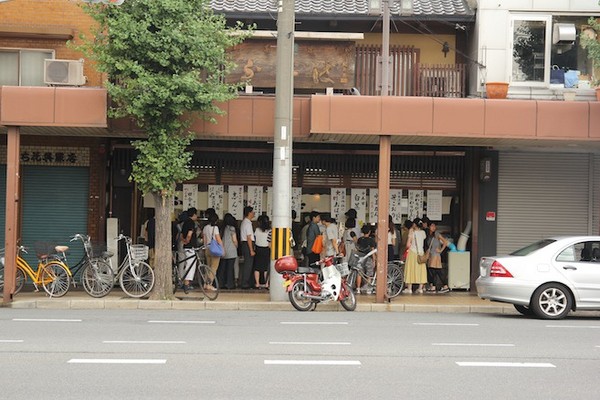
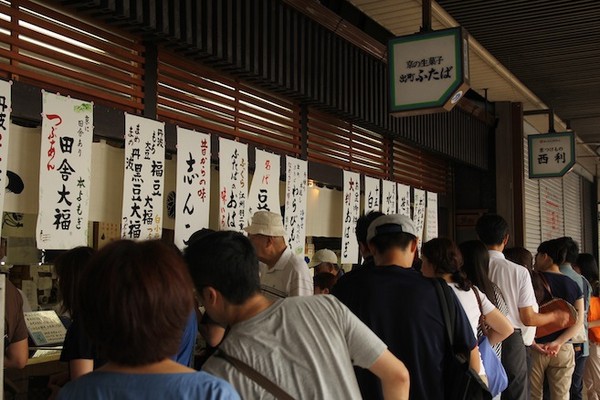


Chimotsuba’s most famous offering is the tōfu mochi, which is essentially red bean daifuku. It’s the best red bean daifuku I’ve had in Japan. Not only is it beautifully presented, but when you take a bite, the generous red bean filling isn’t overly sweet, and it pairs perfectly with the chewy mochi texture. Each piece is small but incredibly satisfying. It’s a bit pricey, but totally worth it. I always tell my friends that if they’re in Kyoto in July or August, they should definitely stop by. Even though it’s not right next to the shrine, it’s very close, so it’s very convenient. However, it’s often sold out by midday, so I sometimes end up leaving empty-handed.


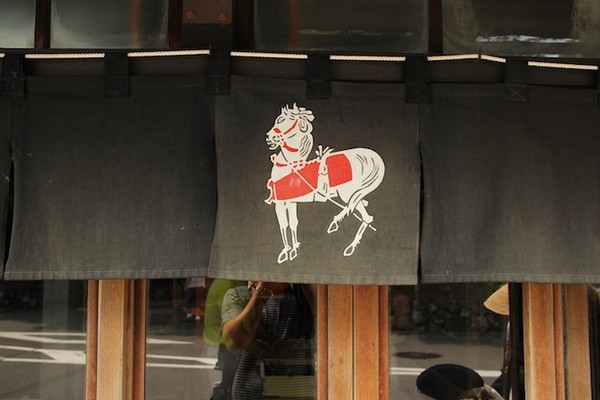
Also, at the entrance of Kamigamo Shrine, there’s another delicious traditional sweet that often has long lines and sells out quickly. Its name is related to the Aoi Festival, one of Kyoto’s three major festivals held at Kamigamo Shrine. Every year, the selected Aoi Festival participants ride in ox-drawn carriages in the evening, so the shop is decorated with ox-themed motifs. The sweet itself is simple yet elegant, featuring a rustic taste that reflects the festival’s traditional atmosphere.
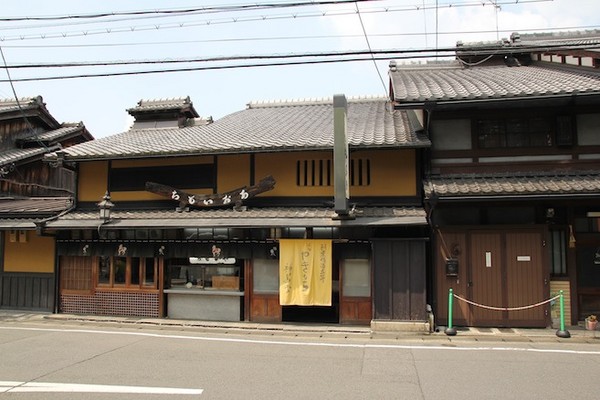
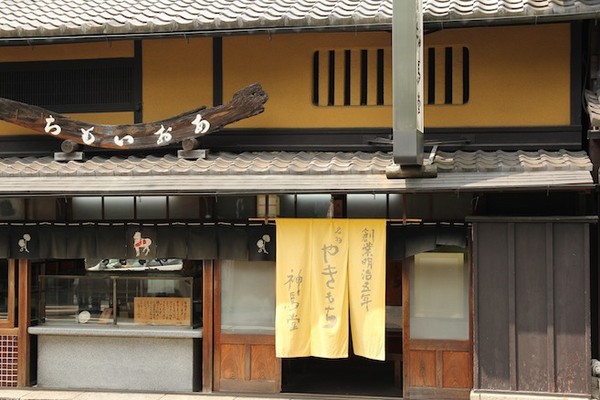
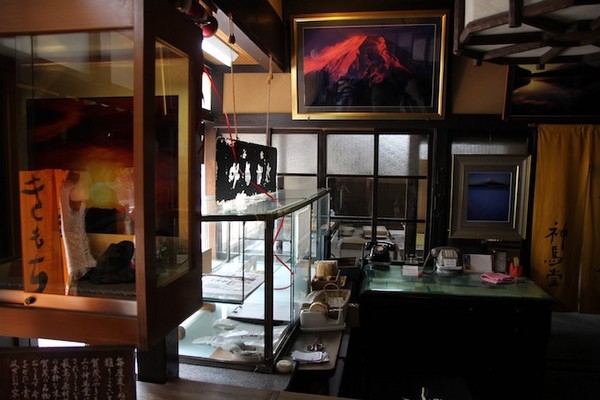
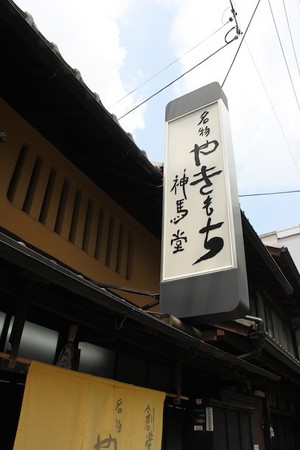
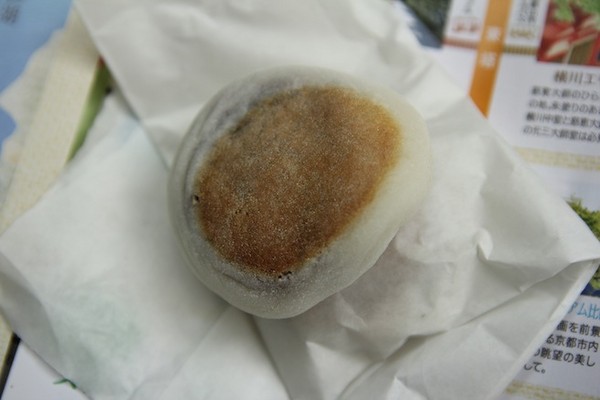
Unlike Chimotsuba, which offers a wide variety of sweets, Kamigamyouin (Kamigamo Shrine’s confectionery shop) sells only one type of cake: the Kamigamo Bing, which features an embossed image of a divine horse. It’s a flat, grilled wheat flour cake, not too thick, and has a light flavor without being greasy. The design on top is very cute, featuring a divine horse motif. It also comes in a sweet soy glaze flavor, making it a delightful treat to enjoy while strolling around.
Aside from the two highly popular wagashi shops near Shimogamo and Kamigamo Shrines, there’s another famous traditional sweet spot a bit further away: Ichimonjiya Wasuke, known for its grilled soy sauce-flavored mochi dumplings. This shop has a history spanning a thousand years, and its grilled mochi has a rich, savory aroma that’s incredibly enticing. It’s a must-try for anyone visiting the area.
Chimotsuba
236 Seiryucho, Kamidachiuri-dori, Imadegawa-agaru, Kamigyoku, Kyoto City
Business Hours: 8:30–17:30 (Closed Tuesdays / 4th Wednesday of every month)
Demachiyanagi
http://tabelog.com/kyoto/A2601/A260302/26001520/
Kamigamyouin
Address: 4 Kamigamo-misakicho, Kita Ward, Kyoto City
Phone: 075-781-1377
Business Hours: 07:00 until sold out, Closed Wednesdays
http://tabelog.com/kyoto/A2601/A260503/26000370/
Ichimonjiya Wasuke
10:00–17:00 (Closed Sundays)
30-min walk from subway “Kita-oji Station”
Kyoto City Bus Route 46
Get off at “Imamiya Shrine-mae Bus Stop,” then a 2-min walk
69 Shino-Imamiyacho, Kita Ward, Kyoto City
http://tabelog.com/kyoto/A2601/A260503/26001669/dtlmap/
Share
This article is published by HowToTrip. Sharing and reposting are welcome — please credit the source.
Article URL: https://www.howtotrip.net/views-11278
Related Articles
- Shaoxing's "Grandpa Gourd" hangs the gourds back up: "If there are too many people, we'll interact less — just take a quick look from afar"
- Chinese authorities announce "reciprocal adjustment" to Japan visa fees — single-entry visa jumps from 2,250 to 16,750 yen!
- The "health stones" carried by a traveler were found to have radiation levels exceeding safety limits by a thousand times, potentially endangering fellow passengers on the same flight. Customs issues warning!
- Shenzhen Airport Issues Late-Night Notice: Unidentified Aerial Object Detected, Causing Widespread Flight Delays!
- “They only said it cost money after I opened the box and washed it!” 200g of grapes sold for 60 yuan on a high-speed train—12306 responds!
- Can't buy an airline ticket? Denied exit? Blocked from boarding? A large number of Chinese tourists have mysteriously become "discredited individuals"
- Adverse weather and economic fluctuations impact Colombia's coffee market
- Beach bathing area responds to 2 yuan/30 seconds fee for freshwater foot rinsing: Clearly priced!
- Taking off with an improperly closed cabin door? Wing malfunction? Multiple flights made emergency returns mid-journey!
- Experience the gifts of nature! A countdown of the world’s ten most stunning coastlines