“Even Nicholas Tse loves praying here!” — Three Must-Visit Temples for a Blessing Trip in Downtown Bangkok
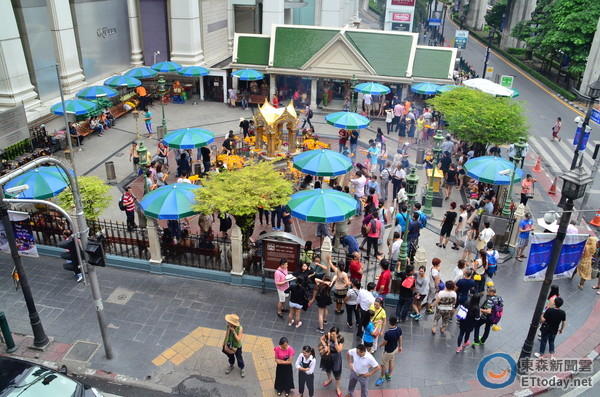
▲ The Erawan Shrine in Bangkok, Thailand, is bustling with worshippers. (Photo / Reporter Chen Zi-Yin)
Reporter Chen Zi-Yin / Reporting from Bangkok, Thailand
The streets of Bangkok, Thailand, are bustling with activity and filled with hurried travelers, yet they cannot conceal the Thai people’s deep and steadfast faith in Buddhism. In the downtown area of Bangkok, there are several roadside temples. According to local guides, Thais believe these temples are highly efficacious and hold them in great reverence. Moreover, because they are located in the city center, right next to major department stores, many international visitors have also heard of them and come to pay their respects, making them somewhat of an alternative tourist attraction.
1. The Erawan Shrine
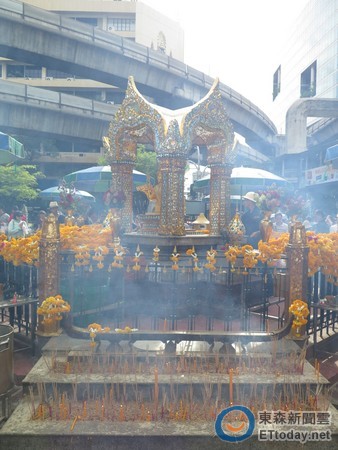
▲ The incense-smoke-filled Erawan Shrine. (Photo / Reporter Chen Zi-Yin)
The Erawan Shrine is no stranger to most travelers and has numerous devout followers locally, even being referred to as the “God Who Grants All Wishes.” Many believe that the Erawan Shrine located in front of the Erawan Hotel in downtown Bangkok is the most efficacious Buddha statue in all of Thailand. Hong Kong and Taiwanese celebrities are often spotted praying here, including Nicholas Tse, Jolin Tsai, Show Lo, Dee Hsu, and Elva Hsiao, all of whom have visited to pay their respects.
The Erawan Shrine originated in Thailand in 1956. It is said that during the initial construction of the Erawan Hotel, construction faced frequent mishaps and was not going smoothly. As a result, the Erawan Shrine was invited to suppress evil spirits. After the hotel opened, business boomed and customers flocked in, leading to the spread of the shrine’s miraculous reputation.
How to pray: Each face of the Erawan Shrine represents a different type of wish, and you must start praying from the first face.
First face: Career, academics, government positions
Second face: Marriage, relationships, interpersonal connections
Third face: Wealth
Fourth face: Health
According to locals, starting from the first Buddha face, you should state each wish you want to make while offering a stick of incense for each face. Then, for the wish you desire the most, place a garland, light a candle, and offer incense.
2. The God of Love
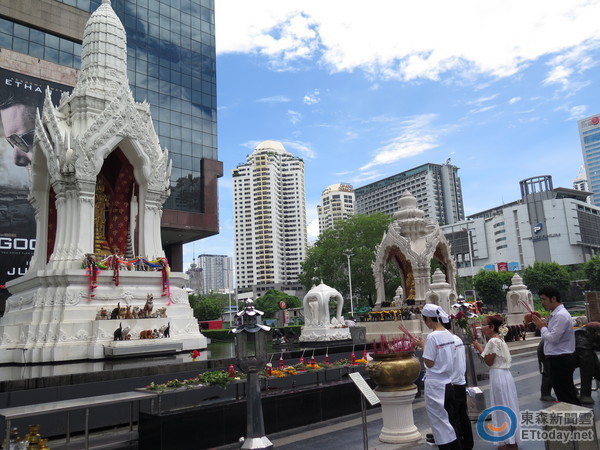
▲ Local single men and women praying devoutly to the God of Love. (Photo / Reporter Chen Zi-Yin)
Just across the street from the Erawan Shrine isthe God of Love,along with the Elephant God — both are also popular pilgrimage spots in Bangkok. It is said that the God of Love is an incarnation of the Erawan Shrine, with the actual name being the “Trimurti,” representing the three main deities of Hinduism — Brahma (the Erawan Shrine, the god who creates the world), Vishnu (the god of protection), and Shiva (the god of destruction). Legend says the Trimurti took the form of handsome men who tried to seduce a highly accomplished celestial maiden. Unexpectedly, the three were transformed by the maiden into three newborn babies, whom she then nurtured with compassion. Therefore, the God of Love also symbolizes pure, boundless love.
Many people pray to the God of Love and promise to return to repay their vows if their wishes come true. According to Thai tour guide A-Bao, the God of Love loves dogs, so many devotees who come to fulfill their vows offer dog-shaped carvings at the shrine.
How to pray: It is said that the God of Love favors the color red, so when praying, you must prepare red offerings and red incense. Nearby vendors sell red roses, red incense, red candles, and special red soda. Unlike the Erawan Shrine, you don’t need to pray to four sides when praying to the God of Love — just kneel before the main face. Place your red offerings in front of the deity (if you bought red soda from a vendor, remember to open the cap and insert the straw), then hold the red rose, red incense, and red candle, and state your wish to the deity. After praying, insert the incense and candle, and place the red flower in front of the shrine.
(It is said that praying to the God of Love at 9:30 PM every night is the most efficacious, as this is when the God of Love is believed to descend to hear the prayers of devotees.)
3. The Elephant God
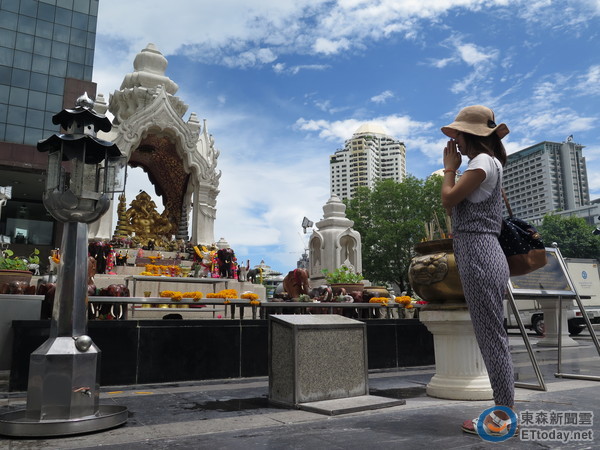
▲ The Elephant God is believed to be efficacious for career and wealth. (Photo / Reporter Chen Zi-Yin)
Located next to the God of Love is the Elephant God, also known as the “Roadside Elephant God.” He also originates from India, and many people come here to pray to both the God of Love and the Elephant God. In fact, the Elephant God has another main temple located in Huai Khwang in Bangkok, but the one near CentralWorld is particularly popular due to its proximity to the Erawan Shrine and the God of Love. The roadside Elephant God in Bangkok is said to be very efficacious for business and wealth, so many people who open shops or companies come here to pray, which is why he is also calledthe “God of Business.”
▲ The Elephant God’s statue is surrounded by elephant carvings, offerings presented by devotees fulfilling their vows. (Photo / Reporter Chen Zi-Yin)
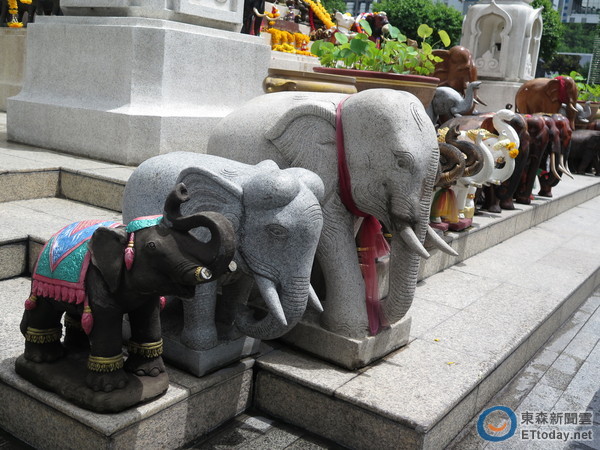
How to pray: To pray to the Elephant God, you’ll need nine sticks of incense, two candles, and a yellow garland. Then, chant the mantra “Om Sri Ganeshaya Namaha” three times in front of the deity and state your wish. Place the garland in front of the deity, and then insert the candles in the offering tray. That’s it — the donation amount is up to you.
Method of worship: When worshipping the Elephant God (Ganesh), you will need nine incense sticks, two candles, and a yellow garland. Then, in front of the deity, recite the mantra “Om Sri Ganeshaya Namaha” three times and express your wish. Offer the garland to the deity, and then place the candles and incense in the burner. The donation amount is flexible.
Note: Thai local guide A-Bao mentioned that when praying to the deities, please do so with a clear mind and sincere intentions. If you are unable to fulfill a vow in person, don’t make promises lightly about returning to repay your gratitude—just make a wish when you truly need to.
Share
This article is published by HowToTrip. Sharing and reposting are welcome — please credit the source.
Article URL: https://www.howtotrip.net/views-11146
Related Articles
- Shaoxing's "Grandpa Gourd" hangs the gourds back up: "If there are too many people, we'll interact less — just take a quick look from afar"
- Chinese authorities announce "reciprocal adjustment" to Japan visa fees — single-entry visa jumps from 2,250 to 16,750 yen!
- 旅客携带的“保健石”核辐射超标千倍,同机人员或遭殃!海关提醒!
- 深圳机场深夜通报!出现不明升空物,航班大面积延误!
- “拆盒洗了才说要钱!”高铁200克葡萄卖60元,12306回应!
- 买不了机票?出境被拒?登机被拦?一大波中国游客莫名成了“失信人”
- 不利天气和经济波动影响哥伦比亚咖啡市场
- 海边浴场回应冲脚淡水收费2元/30秒:明码标价!
- 舱门没关好就起飞?机翼出现问题?多个航班途中紧急折返!
- 感受大自然的馈赠!盘点世界十大唯美海岸线