Authentic Nagasaki Castella "Ushio" is available here, along with Zenzai and Uji Kintoki desserts

▲ Nagasaki Castella from Ushio Ryokan.
Reported and photographed by Huang Shiyuan, Taipei
Japan’s famous Nagasaki Castella is known for its rich texture and the special sugar crystals at the bottom. Loved not only by Taiwanese but also by Japanese, it ranks fourth on the list of most desired Japanese souvenirs (Japanese Most Wanted Souvenirs: Sekiho Takes the Crown, Nama Yatsuhashi Comes Second). To allow Taiwanese friends to enjoy an authentically Japanese version of Nagasaki Castella,the founder of Amo Cake specifically traveled to Japan for research, hired a Japanese master baker for guidance, and established Ushio Ryokan.Ushio Ryokan not only sells Nagasaki Castella, but also offers Japanese-style desserts on the second floor.
Xu Xiangqi, marketing and PR for Amo Cake, said that when the founder, Zhou Zhengxun, first tried Nagasaki Castella in Japan, he was amazed and had always wanted to bring this kind of cake back to Taiwan. The preparation for Ushio Ryokan took nearly two years. During that time, the founder continuously traveled to Japan for research, taste-tested various types of Nagasaki Castella, and also hired a Japanese master baker for guidance. In the end, both the recipe and the texture were uniquely developed by Ushio Ryokan. Additionally, Ushio Ryokan doesn’t just sell Nagasaki Castella; Zhou Zhengxun also wanted everyone to enjoy authentic Japanese desserts. That’s why the second floor offers treats such as red bean mochi, matcha ice cream, and matcha beverages.
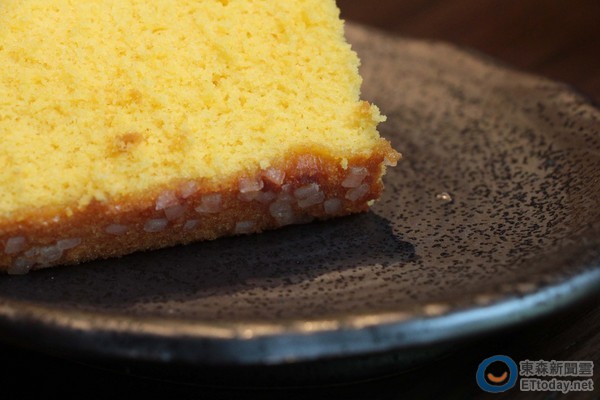
▲ The sugar crystals at the bottom of the Nagasaki Castella.
To suit Taiwanese tastes, the Nagasaki Castella at Ushio Ryokan has been slightly adjusted—it has a smoother texture, lower sweetness, and contains no added fats. Moreover, the hallmark feature of Nagasaki Castella—the sugar crystals at the bottom—can still be found in Ushio Ryokan’s version. A box of Nagasaki Castella is priced at NT$330.
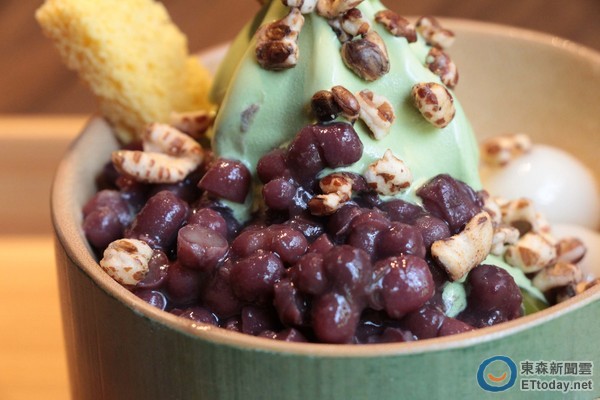
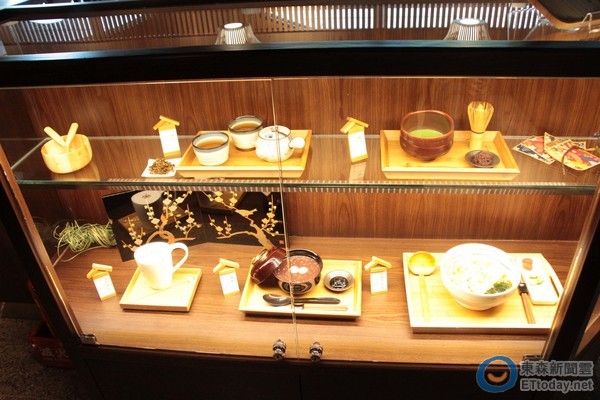
In addition to the Nagasaki Castella sold on the first floor, Ushio Ryokan also offers Kyoto-style desserts such as red bean daifuku, Japanese-style shaved ice, and matcha ice cream. Not only the desserts, but even the décor and furnishings have a distinct Kyoto vibe, making you feel as if you’ve stepped into a traditional Kyoto confectionery shop. The dessert names at Ushio Ryokan are playful and very Japanese—for example, the matcha ice cream is called “Qing Hong Zao Bai” (literally “Black, White, Red, and Blue”). It turns out the matcha ice cream is topped with red beans, daifuku (Japanese mochi), and black sugar barley, covering the four colors black, white, red, and blue. Ushio Ryokan explained that the matcha powder used in Qing Hong Zao Bai comes from Uji in Kyoto, but considering Taiwanese tastes, the bitterness has been toned down through blending while retaining the rich matcha aroma.
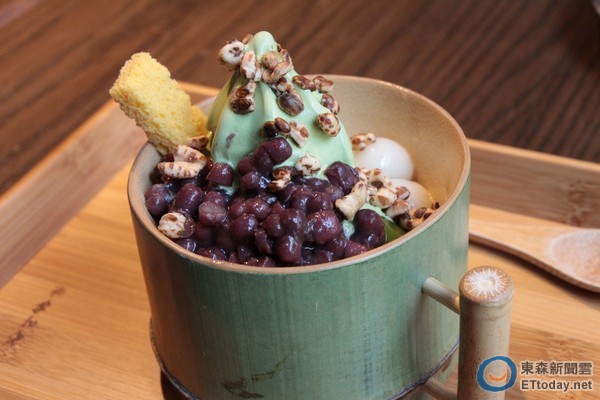
▲ %The matcha ice cream named “Qing Hong Zao Bai”.%
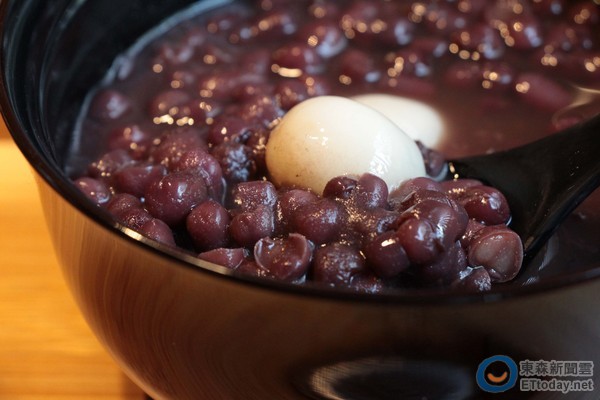
Here, the red bean soup is also named in the Japanese style as“Zenzai”. Why is Japanese red bean soup called “Zenzai”? It turns out that the famous Japanese monk Ikkyu once drank a bowl of red bean soup and, impressed by its deliciousness, exclaimed “Zenzai!” The person who served the soup thought Ikkyu had given it a new name, and the name stuck, leading to Japanese red bean soup being called “Zenzai.” At Ushio Ryokan, the red beans in the soup are simmered over low heat for three to four hours with constant water additions, aiming for individually intact beans with a soft, fluffy texture—and the skins must not fall off. This is all according to the founder Zhou Zhengxun’s requirements. As for the two daifuku inside, the ingredients are imported from Japan, and their texture is quite different from Taiwanese mochi.
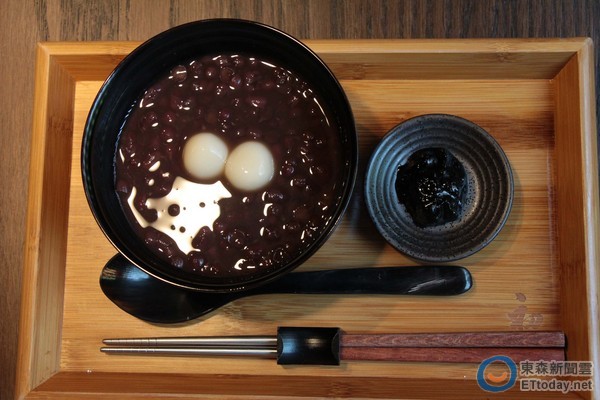
▲ Red bean soup “Zenzai,” where the beans are simmered for 3–4 hours to achieve a soft yet firm texture.
Uji Kintoki, the well-known Japanese shaved ice dessert, is also available here. The ice shaver at Ushio Ryokan is imported from Japan and differs from traditional Taiwanese ice shavers—it produces granular ice that melts more slowly and offers a better texture. The Uji Kintoki is topped with sweet red beans, daifuku, and matcha konjac, then drizzled with a specially made matcha syrup and Okinawan brown sugar syrup, resulting in a refreshing and sweet treat. Xu Xiangqi also mentioned that there's a little secret hidden in their Uji Kintoki—everyone will have to come and experience it for themselves.
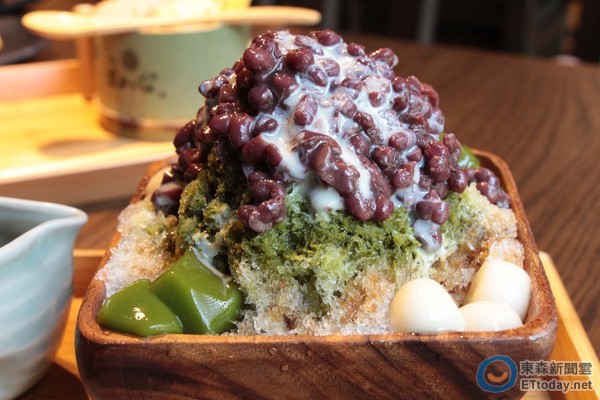
▲ The shop has hidden a little secret in its Uji Kintoki dessert!
Still hungry after the desserts? No problem—Ushio Ryokan also serves savory dishes. The only noodle option here is Kitsune Udon, with a broth simmered gently from kelp and bonito flakes, priced at NT$150.
Ushio Ryokan
Address: No. 86, Wende Road, Neihu District, Taipei City
Business Hours: First floor 09:00–21:00; second floor 12:00–21:00.
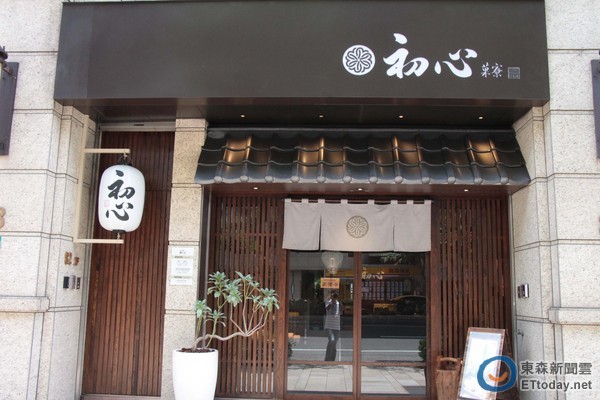
▲ The very Japanese-style storefront.
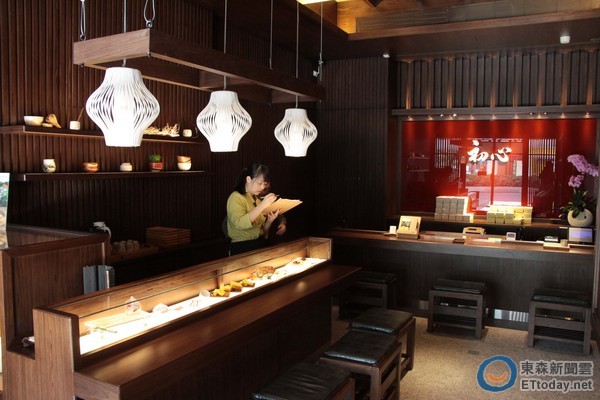
▲ The counter on the first floor where Nagasaki Castella is sold. As soon as you enter, the staff will offer you a half-piece for tasting.
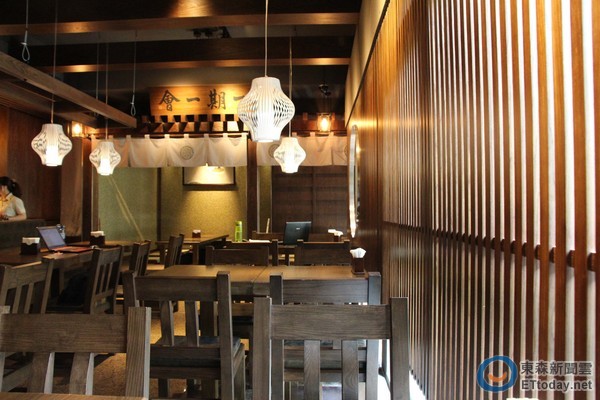
▲ The staff here include Japanese speakers, reflecting the Japanese influences.%
% Various styles of mochi.%
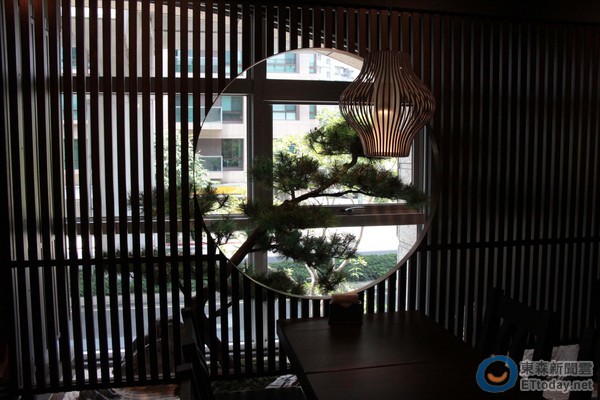
% The view from the second floor is also delightful.%
Share
This article is published by HowToTrip. Sharing and reposting are welcome — please credit the source.
Article URL: https://www.howtotrip.net/views-10681
Related Articles
- Shaoxing's "Grandpa Gourd" hangs the gourds back up: "If there are too many people, we'll interact less — just take a quick look from afar"
- Chinese authorities announce "reciprocal adjustment" to Japan visa fees — single-entry visa jumps from 2,250 to 16,750 yen!
- The "health stones" carried by a traveler were found to have radiation levels exceeding safety limits by a thousand times, potentially endangering fellow passengers on the same flight. Customs issues warning!
- Shenzhen Airport Issues Late-Night Notice: Unidentified Aerial Object Detected, Causing Widespread Flight Delays!
- “They only said it cost money after I opened the box and washed it!” 200g of grapes sold for 60 yuan on a high-speed train—12306 responds!
- Can't buy an airline ticket? Denied exit? Blocked from boarding? A large number of Chinese tourists have mysteriously become "discredited individuals"
- Adverse weather and economic fluctuations impact Colombia's coffee market
- Beach bathing area responds to 2 yuan/30 seconds fee for freshwater foot rinsing: Clearly priced!
- Taking off with an improperly closed cabin door? Wing malfunction? Multiple flights made emergency returns mid-journey!
- Experience the gifts of nature! A countdown of the world’s ten most stunning coastlines