Hand-grilled by ama divers themselves—A feast of seafood at Toba’s little hut in Japan

Text & Photos /TravelBAG
In the Toba, Ise, and Tsushima regions of Mie Prefecture, Japan, you can enjoy a rich and unique seafood lunch prepared at a seaside hut. Two local ama divers cook the meal, making this a memorable local experience. The term “ama” refers to women who dive into the sea to catch fish barehanded (men in the same profession are called “ama” as well, though the term is gender-neutral in origin), pronounced “あま” (AMA) in Japanese—a very elegant name.
Enjoy a delicious seafood meal prepared by them in the same hut where they once rested. There are still around 2,000 ama divers across Japan, with about 1,000 living in Ise-Shima. This profession exists only in Japan and South Korea worldwide. Due to the coastal location and thriving fishing industry, this unique vocation was born.

Besides the fresh and plump seafood, the area also boasts pristine sea views—crystal-clear waters and unpolluted air make it a perfect place to relax. Getting here might require a bit of travel: take the Kintetsu Railway to Toba Station, then transfer to a bus for 35 minutes and get off at Tsushima. However, it’s recommended to join an organized tour for easier transportation.

Here, seafood is grilled over charcoal using the most traditional methods, while the ama divers chat with guests as they cook. To experience the ama hut, advance booking is required, but English interpreters can be arranged for foreign visitors, so communication isn’t a big issue.
Traditional ama divers would wear all-white clothing when diving barehanded, but modern ama divers now use basic diving gear. Because they dive without equipment, after catching seafood they must surface to breathe. The breathing sound they make underwater resembles a humming noise. Without diving gear, staying too long underwater can hurt their lungs. However, this traditional fishing method has minimal ecological impact on the ocean.
It turns out that in the past, ama divers in Japan didn’t always wear white to work—many dove into the sea topless to catch seafood, with different attire varying by region. Nowadays, the ama divers who welcome guests at the huts no longer engage in fishing themselves. Although they don’t personally catch the seafood, what you enjoy at the hut is still locally caught, fresh from the day’s harvest.

The seafood served at the ama hut mainly includes shellfish, along with fish and octopus. Reservations are required in advance. Just joining for lunch (without the full experience) costs 2,000 yen, while the full experience including lunch is 2,500 yen. Tours are available for groups of two to a maximum of seven people. If you opt not to have lunch, you can still chat with the ama divers in the hut, though communication may be difficult if you don’t speak Japanese. The entire session lasts 1 hour and 30 minutes, which is ample time even with meals. However, prices and booking procedures differ if you require a translator guide, so choose according to your needs.
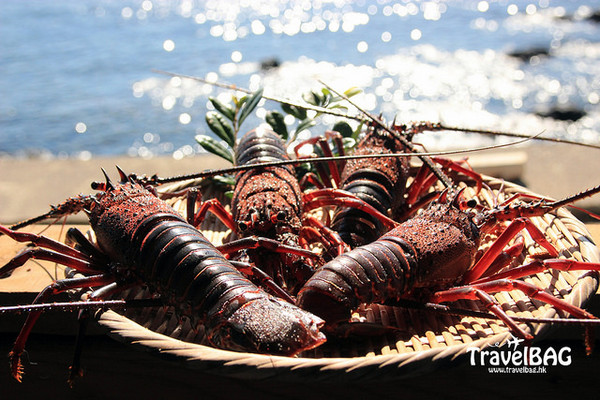
Among the seafood, of course, is Ise’s most famous delicacy—the Ise lobster. However, lobster comes at an additional cost, with half a lobster per person being more than enough. Lobster, known as “ebi” in Japanese, is extremely fresh when served at the ama hut. Please note, lobster is only available from October to April, while oysters are served during the other months.

Aside from lobster, each person can have two portions of each type of seafood. There’s one fish per person, and the octopus is shared among a few. Shellfish options include turban shells, pearl oysters, and scallops. The seafood is incredibly fresh—even without any seasoning, it tastes sweet and delicious. Thanks to slow grilling, the juices are locked in, so every bite bursts with flavor in your mouth, complemented by a subtle hint of ocean saltiness. This style of cooking showcases the most natural flavors.
Tsushima Town Ama HutWebsite:http://www.toba.or.jp/amahut/amahut.htm
Booking and inquiries (English only):http://www.toba.or.jp/english/index.html
Email for inquiries and bookings: foreign-visitors@toba.or.jp
Transportation: Take the JR Kintetsu Line to Toba Station, then transfer to a bus for 35 minutes and get off at “Tsushima Bus Stop.” Walk 10 minutes.
For an English-speaking guide, book through the following webpage. The tour includes not only the ama hut experience but also a visit to Ishigami Shrine: http://oz-group.jp/menu/8.html (69)
TravelBAG
Website:http://www.travelbag.hk/
FB Page:www.facebook.com/TravelBuyandGo
Share
This article is published by HowToTrip. Sharing and reposting are welcome — please credit the source.
Article URL: https://www.howtotrip.net/views-10589
Related Articles
- Shaoxing's "Grandpa Gourd" hangs the gourds back up: "If there are too many people, we'll interact less — just take a quick look from afar"
- Chinese authorities announce "reciprocal adjustment" to Japan visa fees — single-entry visa jumps from 2,250 to 16,750 yen!
- The "health stones" carried by a traveler were found to have radiation levels exceeding safety limits by a thousand times, potentially endangering fellow passengers on the same flight. Customs issues warning!
- Shenzhen Airport Issues Late-Night Notice: Unidentified Aerial Object Detected, Causing Widespread Flight Delays!
- “They only said it cost money after I opened the box and washed it!” 200g of grapes sold for 60 yuan on a high-speed train—12306 responds!
- Can't buy an airline ticket? Denied exit? Blocked from boarding? A large number of Chinese tourists have mysteriously become "discredited individuals"
- Adverse weather and economic fluctuations impact Colombia's coffee market
- Beach bathing area responds to 2 yuan/30 seconds fee for freshwater foot rinsing: Clearly priced!
- Taking off with an improperly closed cabin door? Wing malfunction? Multiple flights made emergency returns mid-journey!
- Experience the gifts of nature! A countdown of the world’s ten most stunning coastlines