Real floating homes!
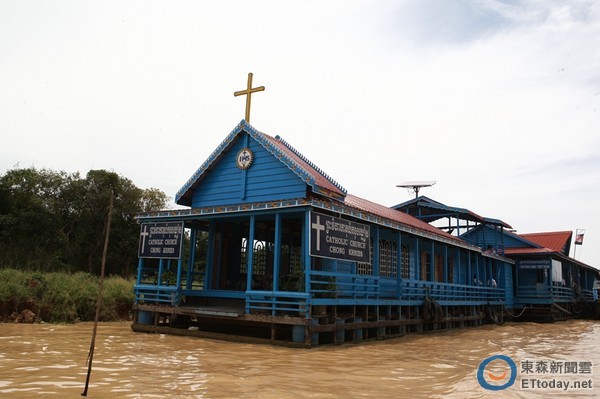
▲Even churches are built on floating houses on the lake. (Photo by reporter Chen Rui-zhong, same below)
Reporter Chen Rui-zhong / Reporting from Cambodia
Aside from the Angkor Wat ruins, many people in Cambodia also visit Tonlé Sap Lake. Located in western Cambodia, it is the largest freshwater lake in Southeast Asia. The name "Tonlé Sap" means "great freshwater lake" in Khmer.
The size of Tonlé Sap Lake mainly depends on rainfall. During the dry season from December to April of the following year, the lake covers about 2,700 square kilometers; during the rainy season, when water from the Mekong River flows back in, its area can reach 11,000 to 16,000 square kilometers. Compared to Taiwan’s approximate area of 32,000 square kilometers, it’s more than one-third the size of Taiwan!
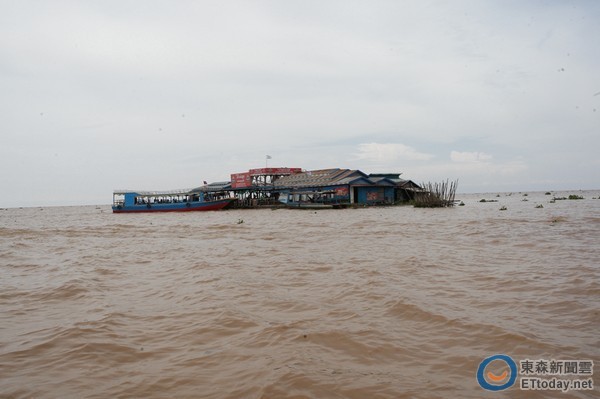
▲Tonlé Sap Lake is vast, making it the largest freshwater lake in Southeast Asia.
Within this massive body of water lies not only fertile soil but also a wealth of aquatic resources, making it an important food reservoir for Cambodia and home to many people. Due to the dramatic fluctuations in the lake’s water level, residents living along its shores mostly reside in houseboats or floating homes, moving with the water levels and forming unique “waterborne communities.”
During the dry season, the water level is only about 1 meter deep, and some restaurants move closer to the center of the lake. In the wet season, when the water depth can reach about 9 meters, they relocate back toward the riverbanks to avoid being washed away by the strong currents.
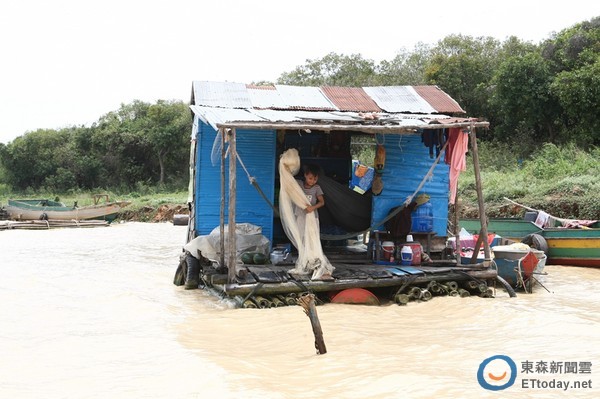
▲A simple wooden shack is a resident’s home.
The residents living around Tonlé Sap Lake have developed a way of coexisting harmoniously with nature. When taking a boat tour across the waters, you can see on both sides how people live in floating houses and houseboats. Just a few pieces of wood pieced together, with gasoline barrels at the base, fenced in and roofed over, make up a floating home—this becomes the residents’ “house.”
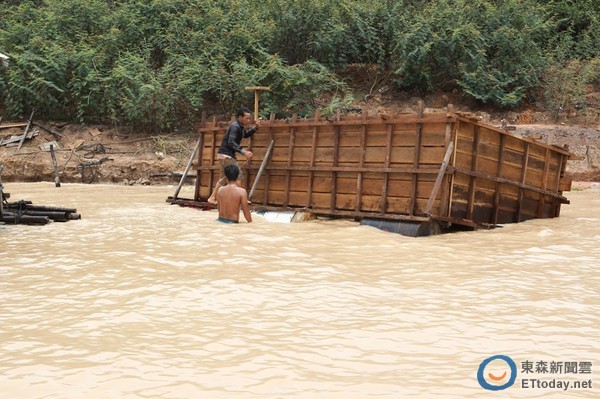
▲A floating house made of wood planks and gasoline barrels.
Tour guides reveal that the larger and more luxurious the floating house, the better off the family is; those cramped in small boats indicate a more difficult life. Additionally, small cages floating on the water are pens for the poultry or livestock raised by residents.
The rolling yellow muddy river symbolizes the vitality and vigor of Tonlé Sap Lake. Row after row of connected floating and houseboats protect all the belongings of the lake-dwelling residents, as well as connecting people with the water; bathing and cooking are done directly using lake water, and many people spend their entire lives on the water.
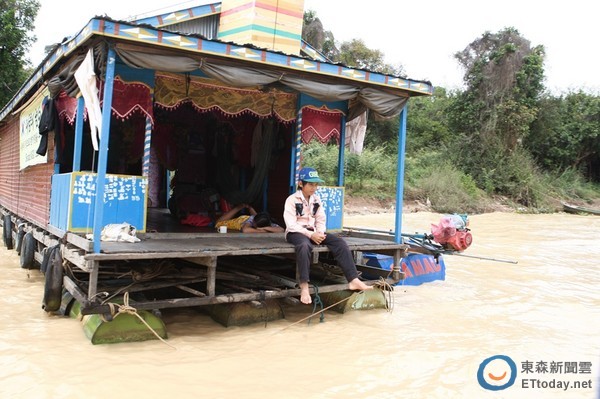
▲Floating homes.
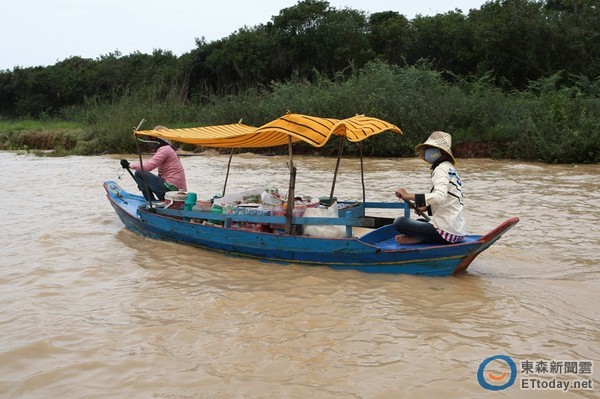
Though life isn’t as convenient as on land, residents who grow up in floating homes are adept swimmers and use small boats as transportation, creating waterborne villages. There are even “mobile convenience stores” shaped like little bees, laden with various daily necessities, food, and drinks, going door to door to sell goods.
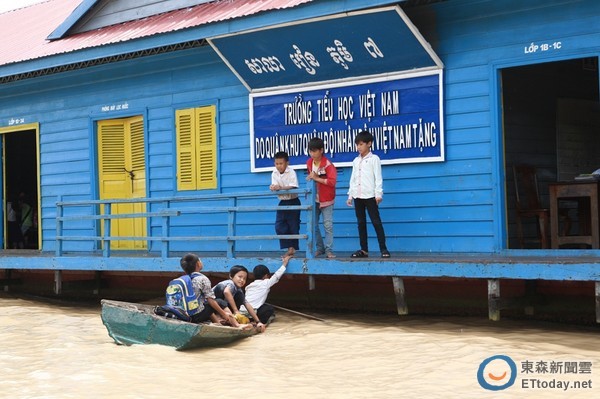
▲A school teaching the Khmer language, where children row boats to attend classes themselves.
In addition to homes, public infrastructure such as churches, schools, restaurants, and even basketball courts are also built on pontoons floating on the water. So during class breaks, you can often hear children laughing and playing, and see students moving around by boat.
According to local guides, initially, many people lived in houseboats due to poor economic conditions. Over time, as more gathered, the waterborne community took shape. Seeing these residents who need to take boats just to go out makes one realize that sometimes, having solid ground underfoot is a special kind of happiness.
%Namely, showcasing the charm of local produce.: HowToTrip
Share
This article is published by HowToTrip. Sharing and reposting are welcome — please credit the source.
Article URL: https://www.howtotrip.net/views-10508
Related Articles
- Shaoxing's "Grandpa Gourd" hangs the gourds back up: "If there are too many people, we'll interact less — just take a quick look from afar"
- Chinese authorities announce "reciprocal adjustment" to Japan visa fees — single-entry visa jumps from 2,250 to 16,750 yen!
- The "health stones" carried by a traveler were found to have radiation levels exceeding safety limits by a thousand times, potentially endangering fellow passengers on the same flight. Customs issues warning!
- Shenzhen Airport Issues Late-Night Notice: Unidentified Aerial Object Detected, Causing Widespread Flight Delays!
- “They only said it cost money after I opened the box and washed it!” 200g of grapes sold for 60 yuan on a high-speed train—12306 responds!
- Can't buy an airline ticket? Denied exit? Blocked from boarding? A large number of Chinese tourists have mysteriously become "discredited individuals"
- Adverse weather and economic fluctuations impact Colombia's coffee market
- Beach bathing area responds to 2 yuan/30 seconds fee for freshwater foot rinsing: Clearly priced!
- Taking off with an improperly closed cabin door? Wing malfunction? Multiple flights made emergency returns mid-journey!
- Experience the gifts of nature! A countdown of the world’s ten most stunning coastlines