Gannan Arboretum
Gannan Arboretum

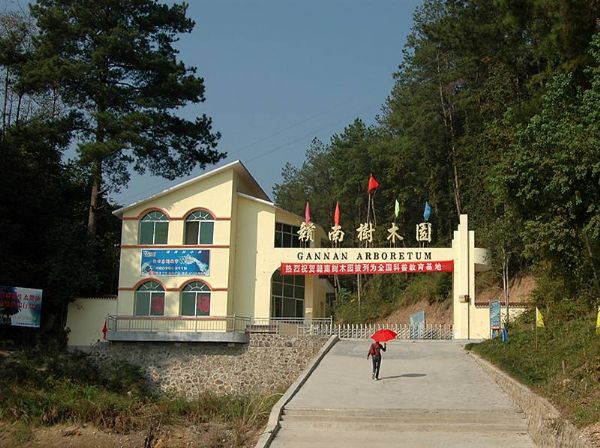
The arboretum is divided into six zones: the Ginkgo and Conifer Zone, the Magnolia and Berberis Zone, the Paulownia and Ash Zone, the Maple and Rose Zone, the Linden and Willow Zone, and the Plane and Oak Zone. It has currently planted over 1,700 species of plants, collected more than 10,000 herbarium specimens, and houses over 1,380 tree species, including 52 rare and endangered protected species such as the metasequoia, tournefortia argentea, and yew. It is known as the "Plant Gene Bank of Southern China" and serves as a transit hub for transplanting southern tree species to the north. The arboretum features garden plants introduced from all over China, as well as precious varieties from abroad, such as crabapples, cherry blossoms, conifers, and maples originating from the United States, Myanmar, Mexico, Japan, and various European countries.
As the saying goes, "Visit Doushui Lake, and your ailments will vanish; stroll through the arboretum, and you’ll live longer." Wandering along the forest paths in the arboretum, you can breathe fresh air rich in negative ions and enjoy the baptism of a “natural oxygen bar.” In autumn, the hills are dotted with red leaves, the water is tinged with their brilliance, and the shaded paths are carpeted with maple leaves, attracting countless visitors and photography enthusiasts who come to capture beautiful moments.

Share
This article is published by HowToTrip. Sharing and reposting are welcome — please credit the source.
Article URL: https://www.howtotrip.net/travel-9626
Related Articles
- Shaoxing's "Grandpa Gourd" hangs the gourds back up: "If there are too many people, we'll interact less — just take a quick look from afar"
- Chinese authorities announce "reciprocal adjustment" to Japan visa fees — single-entry visa jumps from 2,250 to 16,750 yen!
- The "health stones" carried by a traveler were found to have radiation levels exceeding safety limits by a thousand times, potentially endangering fellow passengers on the same flight. Customs issues warning!
- Shenzhen Airport Issues Late-Night Notice: Unidentified Aerial Object Detected, Causing Widespread Flight Delays!
- “They only said it cost money after I opened the box and washed it!” 200g of grapes sold for 60 yuan on a high-speed train—12306 responds!
- Can't buy an airline ticket? Denied exit? Blocked from boarding? A large number of Chinese tourists have mysteriously become "discredited individuals"
- Adverse weather and economic fluctuations impact Colombia's coffee market
- Beach bathing area responds to 2 yuan/30 seconds fee for freshwater foot rinsing: Clearly priced!
- Taking off with an improperly closed cabin door? Wing malfunction? Multiple flights made emergency returns mid-journey!
- Experience the gifts of nature! A countdown of the world’s ten most stunning coastlines