Baiyinnuo Ethnic Culture Park
Baiyinnuo Ethnic Culture Park
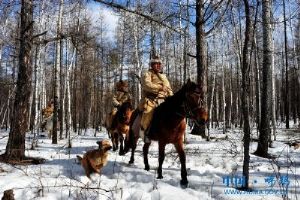
The name "Baiyinnuo" means happiness and prosperity in the Oroqen language. Baiyinnuo Oroqen Ethnic Township is located in the northern part of Huma County, on the alluvial plain on the north bank of the middle reaches of the Huma River, at 125°54′ east longitude and 50°49′ north latitude. It borders Xinghua Township and Hanjiayuan Town to the south, connects with Tahe County to the west, and adjoins Oupu Township to the north. It lies at the eastern foothills of the Yilehuli Mountains in the Greater Khingan Range. The township covers an area of 419.5 square kilometers and governs six administrative villages including Hongguang, making it the only ethnic minority township in Huma County. In September 1953, the first Oroqen hunting and fire prevention team settled here, eventually developing into a village. The total population of the township is 2,005, including 264 Oroqen people. Seven ethnic groups live here: Han, Oroqen, Manchu, Mongolian, Hui, Korean, and Daur, making it one of the concentrated settlements of the Oroqen people.
Baiyinnuo Oroqen Ethnic Township is situated at the northern edge of the North Temperate Zone and has a cold temperate continental climate, with higher elevation in the west and lower in the east. Apart from small plains along the Huma River, most of the area consists of mountains and hills. The annual average temperature is -2°C. The snow cover lasts over 150 days a year, and the freezing period averages seven months annually. Annual precipitation is around 450 mm, and the frost-free period lasts about 80 to 100 days. Springs are cool, summers are hot but brief, autumns have large day-night temperature variations, and winters are long and harsh.
Baiyinnuo Oroqen Ethnic Township boasts vast territory, abundant resources, and fertile land. It is a labor-intensive township with particularly rich natural resources. In the past, there was a saying: "Beat a roe deer with a stick, scoop fish with a ladle, and have pheasants fall into your cooking pot." The township has 36,000 mu of arable land, averaging 18 mu per person; forested areas cover 454,200 mu, giving each person 280 mu of forest. The main tree species are larch, followed by Scots pine, birch, oak, and poplar. The Huma River runs through the heart of the area. There are 138,700 mu of grassland, of which 124,600 mu are usable. With crisscrossing mountain ranges and lush water and grass, it provides an excellent habitat for wildlife. The wildlife here is highly diverse, and a significant number of nationally protected second- and third-class animals still inhabit the region. The area also has a wide variety of mineral resources with substantial reserves. Traditional Chinese medicinal herbs, wild vegetables, and local specialties are favored both domestically and internationally for being pollution-free.
In August 1984, the People’s Government of Heilongjiang Province approved the establishment of Baiyinnuo Oroqen Ethnic Township in Huma, separating it from Oupu Township, thus officially founding Baiyinnuo Oroqen Ethnic Township.
The Oroqen people transitioned from a nomadic hunting life supplemented by gathering and fishing to a settled life only after liberation. Factories, supply and marketing cooperatives, clinics, cultural stations, and primary and secondary schools were subsequently established. This area is rich in resources and lies beside mountains and rivers. Local rivers include the Huma River, Gedagan River, and Yishaxi River, all part of the Heilongjiang river system. The rivers are home to prized cold-water fish such as pike, catfish, lenok, taimen, crucian carp, common carp, Chinese shoveljaw carp, and salmon. The mountains host a wide variety of trees, especially larch and birch, and are inhabited by more than ten types of rare beasts such as bears, moose, deer, roe deer, and river deer, as well as over ten kinds of precious birds like capercaillie and hazel grouse. The forests also grow delicacies such as black fungus, mushrooms, hedgehog hydnum, and lingzhi. The area has been developed into a folk culture tourism destination, with June 8 designated as Bonfire Festival Day.
The Oroqen are one of China’s five smaller ethnic groups. The Oroqen people of Huma County originally belonged to the Kumal Route, established in 1893. For a long time, the Oroqen roamed and hunted along the northeastern frontier. Familiar with the geographic environment and brave in battle, they were conscripted by the Qing court for military service. "Oroqen" is the self-designation of the people, meaning "people of the mountains" or also interpreted as "people who use reindeer." Some refer to the Oroqen as a "horseback people" because they are indeed skilled riders and archers. For generations, they lived in the forests of the Greater and Lesser Khingan Mountains, relying on hunting. In earlier times, they had no fixed dwellings and led a nomadic life. Before liberation, although private ownership was established, remnants of a primitive social lifestyle were still retained among the Oroqen.
In 1953, with care from the Party and government, the Oroqen people settled down from the mountains, ending their nomadic hunting life. The Oroqen people became masters in politics, members of a multi-ethnic family with equal rights, directly participating in and managing state affairs and developing their ethnic economy. Guided by the Party’s policies to enrich the people, the Oroqen people’s living standards improved dramatically. Major changes took place in clothing, food, housing, and transportation. All sectors, including politics, economy, culture, education, and health, flourished, and the Oroqen people’s lives became increasingly better.
The Oroqen people are known for their bold character, love of music and dance, and warm hospitality. When guests come from afar, they don traditional festival clothing, light bonfires, and sing and dance. Visitors to the Oroqen village can enjoy a bonfire dinner with the Oroqen brothers, eat "hand-held meat," stay in "chum" tents, watch ethnic performances, and fully experience the simple charm of northern ethnic minorities. They will also present you with traditional handicrafts — exquisite birch bark products for your appreciation and purchase.
The Oroqen people follow Shamanism. Shamanism is a localized, folk religion commonly believed by ethnic minorities in northeastern China such as the Manchu, Daur, and Oroqen. Those who preside over religious activities are called "shamans," who are also representatives of the divine. The form of activities varies according to content and purpose, but generally involves shamans wearing ritual clothes, headdresses, and using ritual tools. Some Oroqen shamans even use horses, claiming that illnesses can be transferred to the horse, and there are also those who perform shaman dances, though not actively.
The Oroqen are one of the 56 ethnic groups in China, ranking 53rd in population. The Oroqen do not have their own written script. Throughout their long history of hunting, they created a wealth of cultural art through practical production experiences. Mythological stories, ballads, proverbs, and other forms of oral literature, though lacking written records, have been passed down through generations. They fully reflect the customs and practices of the Oroqen, showcasing their cultural characteristics and artistic emotions, and are treasures in the nation’s cultural and artistic heritage.
The Oroqen are known worldwide for their diligence and bravery. During the long history before settling down, they hunted in the vast forests and wilderness of the Greater Khingan Mountains, resisting extremely harsh living environments and exploitation from ruling classes with their primitive mode of production and way of life. They survived and multiplied tenaciously in adversity, fought alongside other ethnic groups against foreign invasions, and composed heroic songs defending the motherland’s borders with their blood and lives, demonstrating strong vitality and noble spirit. The Oroqen have shown unyielding perseverance and hard work, using their industrious hands to build their homeland, freeing themselves from poverty and ignorance caused by long-term plunder and exploitation, and rapidly presenting a new, prosperous, and thriving Oroqen village to the world.
Source: Huma County Party Committee and County Government
Share
This article is published by HowToTrip. Sharing and reposting are welcome — please credit the source.
Article URL: https://www.howtotrip.net/travel-9283
Related Articles
- Shaoxing's "Grandpa Gourd" hangs the gourds back up: "If there are too many people, we'll interact less — just take a quick look from afar"
- Chinese authorities announce "reciprocal adjustment" to Japan visa fees — single-entry visa jumps from 2,250 to 16,750 yen!
- The "health stones" carried by a traveler were found to have radiation levels exceeding safety limits by a thousand times, potentially endangering fellow passengers on the same flight. Customs issues warning!
- Shenzhen Airport Issues Late-Night Notice: Unidentified Aerial Object Detected, Causing Widespread Flight Delays!
- “They only said it cost money after I opened the box and washed it!” 200g of grapes sold for 60 yuan on a high-speed train—12306 responds!
- Can't buy an airline ticket? Denied exit? Blocked from boarding? A large number of Chinese tourists have mysteriously become "discredited individuals"
- Adverse weather and economic fluctuations impact Colombia's coffee market
- Beach bathing area responds to 2 yuan/30 seconds fee for freshwater foot rinsing: Clearly priced!
- Taking off with an improperly closed cabin door? Wing malfunction? Multiple flights made emergency returns mid-journey!
- Experience the gifts of nature! A countdown of the world’s ten most stunning coastlines