Taoyuanfeng Hydropower Station
Taoyuanfeng Hydropower Station
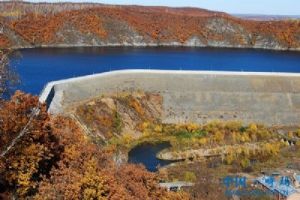
The scenic area is located within Sanka Township and is a hydropower station built on the upper reaches of the Kuanghe River, forming a large reservoir. The water surface meanders around the mountains, gracefully twisting and turning, spacious yet mysteriously enchanting. Both banks are covered with lush grass and scattered blossoms. Due to its unique geographical location and beautiful natural environment, it has become a great place for vacation and leisure—this is the northernmost hydropower station in China. Leveraging the region’s pristine and green ecological environment, a border tourism scenic area has been developed, integrating functions such as leisure vacation, cultural entertainment, green cuisine, and eco-tourism, all with strong local characteristics.
In his work “The Peach Blossom Spring,” the great Eastern Jin poet Tao Yuanming used positive romanticism to depict an idyllic society with “lush grass and falling petals.” Since then, a society free from urban noise and worldly worries, with tranquil natural surroundings and harmonious human relationships, has become the dream of all Chinese people. Their longing for such a place is no less passionate than Westerners’ yearning for “paradise” or the “Kingdom of Heaven.” Clearly, Tao’s “Peach Blossom Spring” could only exist on paper, and people’s yearning could only remain in dreams. In fact, in the far north of our motherland, in the beautiful and fertile Huma County, by the rushing Heilongjiang River, there is a place more beautiful and more real than the “Peach Blossom Spring”—that is the Taoyuanfeng Scenic Area in Huma County.
“Taoyuanfeng” is the name of Heilongjiang Kuanghe Taoyuanfeng Hydropower Co., Ltd. (referred to as Taoyuanfeng Hydropower Station), and indeed, it is a very beautiful and enticing name. Speaking of “Taoyuanfeng,” the people of Huma proudly say that the word “Taoyuan” (Peach Blossom Spring) naturally comes from the “Peach Blossom Spring” of an idyllic land, due to the hydropower station’s unique geographical location and beautiful natural environment. The character “Feng” (Peak) originally means “mountaintop,” but here we use its transferred meaning, referring to the “highest point” or “pinnacle,” symbolizing the hydropower station’s “abundant water storage and sufficient power.” One can’t help but marvel at the exceptional talent of the people of Huma County, who have given such a pure and beautiful name to a small hydropower station, and even more so at how everything here truly lives up to its name.
Taoyuanfeng Hydropower Station is located within Sanka Township, Huma County, on the lower reaches of the Kuanghe River, a right-bank tributary of the upper Heilongjiang River. It is less than 10 kilometers from the China-Russia border river—the Heilongjiang River—and 20 kilometers from Duli Kou, known as the “First Bay Under Heaven.” It is 90 kilometers from Huma County Town and is the northernmost hydropower station in China. In this sense, the geographical location of Taoyuanfeng Hydropower Station is truly at the remote northern edge, truly in an “idyllic land.”
The Kuanghe River is a first-level tributary of the Heilongjiang River, located in the southern part of Huma County. It originates from an elevation of 624.8 meters at the Heihe-Jie Mountain within Huma County. The river flows through Beijiang and Sanka townships in Huma County and joins the Heilongjiang River about 1 kilometer north of Sanka Township. It has many tributaries, with a width ranging from 5 to 26 meters. The Kuanghe River has rapid currents, with an average flow rate of 13.1 cubic meters per second, providing ample water sources for gold mining and also offering favorable conditions for hydropower station construction.
This northernmost hydropower station in the republic was completed and began generating electricity in 2002.
In the beautiful reservoir area of the hydropower station, one can see a dozens-of-meters-high river dam standing firmly on the Kuanghe River like a resolute man from the northeast, holding up its strong arms to block the freely flowing waters of the Kuanghe River that have run wild for thousands of years. In this pristine “idyllic” setting, a spectacular “high gorges and flat lake” has been artificially created. The water area of the hydropower station’s reservoir is extremely vast, stretching beyond what the eye can see, because the reservoir controls a catchment area as large as 1,062 square kilometers. The water quality in the reservoir area is extremely clear—you can see the fish in the water because it comes from the unpolluted Kuanghe River. The surrounding mountains of the reservoir area are all green, and that green is deep and even somewhat dark, as the mountains are covered with lush trees growing vigorously. The surrounding mountains are also serene, with a tranquility so enchanting it feels like a fairyland. In the morning, a thin mist rises over the reservoir surface, hazy and indistinct, making the area resemble a beautiful and shy bride. At noon, the water surface is bright and pristine, resembling a straightforward and cheerful northeastern village girl. In the evening, the surface is painted with colorful sunset hues, making the area look like the lively lights of a bustling city. If you visit Taoyuanfeng, you can take a motorboat to fully explore the mountain and water scenery of the reservoir—the beauty of Taoyuanfeng is for you to judge. You can also try your hand at fishing from the shore; your efforts will surely be rewarded handsomely. If you’re traveling with a loved one or friends, when you paddle a wooden boat on the “high gorges and flat lake,” with your loved ones freely chatting, laughing, and enjoying themselves on the poetic boat amidst the picturesque landscape, your hearts will grow closer and your bonds stronger. If you’re good at swimming, you can ride the waves and show off your skills. In this “idyllic” Taoyuanfeng, you can also visit the hydroelectric power generation facilities, observe the working and living environments of the hydropower station staff, and taste delicious cold-water fish, authentic farmhouse dishes, and seasonal wild fruits...
The predecessor of Taoyuanfeng Hydropower Station was Huma County’s Tuanjie Hydropower Station.
As early as 1991, the Heilongjiang Provincial Planning Commission approved Huma County’s inclusion in the second batch of national pilot counties for rural primary electrification, and Tuanjie Hydropower Station was a key project in Huma County’s rural primary electrification construction. This station is a large Type II hydroelectric hub project mainly for power generation, with comprehensive utilization including flood control and fish farming. The reservoir controls a catchment area of 1,062 square kilometers and has a total storage capacity of 145 million cubic meters. The main dam crest is at an elevation of 229.20 meters, with the wave wall crest at 230.40 meters. The main dam is 266 meters long, and the auxiliary dam is 370 meters long. The installed capacity of the power station is 3 × 3,500 kilowatts. The project was designed to withstand a 200-year flood and verified for the same. The project mainly consists of two parts: the hydropower station and the substation. Key structures include the river dam, spillway, water conveyance tunnel, power generation building, step-up station, tailrace channel, and power transmission and transformation projects. The designed annual power generation is 30 million kWh. The project officially commenced construction on December 18, 1992, but was halted for the first time on September 1, 1995, due to funding issues, stopping for 20 months. After efforts to secure funding, construction resumed for the first time in April 1997, but stopped again on November 9, 1998, due to insufficient funds, remaining halted for 28 months until March 2001, totaling four years. Later, with efforts by leaders at the provincial, prefectural, and county levels, Heilongjiang Xinda Company planned to invest 25 million yuan to restart construction. On July 18, 2002, after ten years of relentless effort and challenging construction, Tuanjie Hydropower Station successfully began trial power generation, filling the gap of no hydropower in China’s northernmost region and making significant contributions to Huma County’s electrification and socialist new rural development.
Although Tuanjie Hydropower Station had achieved power generation capability, overall construction was far from complete, and the station was heavily in debt and struggling. In early 2006, Heilongjiang Xinchang Geological Technology Development Co., Ltd. acquired the property rights of Huma County’s Tuanjie Hydropower Station and registered “Heilongjiang Kuanghe Taoyuanfeng Hydropower Co., Ltd.” in April of the same year. The first phase invested 67 million yuan for the full acquisition of Tuanjie Hydropower Station and partial continued construction, with a total investment reaching 220 million yuan. This project was one of the largest investment attraction projects in Huma County in 2006.
The introduction of the Taoyuanfeng Hydropower Station construction project not only revived Huma County’s Tuanjie Hydropower Station but also brought infinite hope for development in the region. Taoyuanfeng Hydropower Co., Ltd. plans that by 2010, the station’s power generation capacity will increase from the current 10 million kWh per year to 35 million kWh, creating 1,000 new jobs. At the same time, leveraging the region’s abundant fish resources, a deep-water Siberian grayling freezing and preservation plant will be built. Relying on the region’s pristine and green natural ecological environment, a border tourism scenic area integrating leisure vacation, cultural entertainment, green cuisine, and eco-tourism will be established. Leveraging the Huma Port, a border trade zone focusing on trade with Russia, import-export processing, tourism, technology R&D, and international logistics will also be developed.
The prospects for development are infinitely bright, and the confidence of the people of Taoyuanfeng is unwavering. With persistent effort, ambitious goals will surely be achieved. 2010 is no longer far away, and the even more beautiful and enchanting Taoyuanfeng is also within reach.
After visiting Taoyuanfeng Hydropower Station, there is another beautiful place worth seeing less than three kilometers away, where a sweet endeavor is underway, and there are excellent local specialties to take home—this is the Huma County Kuanghe Green Organic Bee Products Production Base. Kuanghe bee products are well-known far and wide. The Huma County Kuanghe Bee Products Production Base is located in Kuanghe Village, Sanka Township, Huma County. Kuanghe Village has 289 households and a permanent population of 907, formed by the merger of the former Kuanghe, Qingsong, and Tuanjie villages. Today’s Kuanghe Village is quiet and tidy, surrounded by green trees, with new houses dotting the landscape and full of vitality. The villagers are mainly engaged in farming, with 14,500 mu of arable land, and animal husbandry mainly involves beekeeping and cattle farming. The small village is named after the Kuanghe River to the north and has gained fame for its beekeeping industry.
Kuanghe Village is located deep in the southeastern part of the Greater Khingan Mountains, with a forest coverage rate of over 82%. The area boasts a rich variety of plants, including large amounts of wild blueberries (also called duofu fruit), locust trees, moss, forage grass, and over a hundred types of flowers and plants, all providing abundant nectar sources for beekeeping. The climate is mild and humid, the natural environment is fresh, and it is known as a “natural oxygen bar” and an “ecological paradise.”
Kuanghe Village has a long history of beekeeping. Local villagers have a tradition of keeping bees, and especially in recent years, with the continuous promotion of beekeeping techniques and the increasing number of skilled technicians, a number of large beekeeping households have emerged. Villagers have also formed a specialized beekeeping association through collective investment and entrusted management, providing pre-production, mid-production, and post-production services for beekeeping households, achieving integrated production, supply, and sales operations. This has greatly stimulated villagers’ enthusiasm for beekeeping, made bee production more scientific and professional, and helped establish their own brand and reputation. In 2006, there were 24 beekeeping households in the village, with 1,200 beehives, generating 300,000 yuan in benefits. In 2007, the number of beekeeping households increased to 32, with 1,500 beehives, generating 450,000 yuan in benefits. Currently, Huma County has decided to build Kuanghe Village into a ten-thousand-beehive base, and Heilongjiang Province has designated Kuanghe Village as a model village for new rural construction in the province.
Honey is produced when bees use their proboscis to suck nectar from the floral organs and nectaries of nectar-producing plants. They carry the nectar back to the hive and regurgitate it into the honeycomb from their honey stomachs. Through repeated ingestion and regurgitation, the nectar, mixed with enzymes secreted by the honey stomach, is stored in the comb. Enzymatic action breaks down the polysaccharides in the nectar into glucose and fructose, reducing the moisture content to about 20%. The final product, raw honey, is then extracted using the centrifugal action of a honey extractor. From a food science perspective, honey is classified as a plant-based food.
Natural honey series products are professionally physically processed from naturally collected honey. Impurities and pollen that may cause allergic reactions are filtered out, and the honey is then low-temperature concentrated to remove excess moisture, resulting in a thick, transparent or semi-transparent sweet gel-like liquid with a rich aroma.
Honey contains fructose, glucose, fatty acids, inorganic salts, various vitamins, and essential trace elements needed by the human body. Known as the “common tonic” and the “milk of the elderly,” it is widely used in food, medicine, and skincare, making it a high-grade nutritional food suitable for all ages. It also has good therapeutic effects on heart disease, hypertension, lung diseases, wind-heat colds, coughs, chronic bronchitis, gastrointestinal diseases, and urinary system disorders. It helps combat aging, beautify the skin, and promote health.
Kuanghe’s bee products are entirely natural, nutritious, free of side effects and pollution, and contain no artificial substances or chemical components. They fully comply with the national mandatory standard GB18796-2005. After physical processing, the shelf life can exceed three years, ensuring top-quality. Kuanghe bee products offer comprehensive health benefits to the human body, specifically: 1. Boosting the immune system. 2. Promoting metabolism. 3. Treating gastrointestinal diseases. 4. Treating constipation. 5. Treating prostate diseases. 6. Delaying menopause. 7. Repairing damaged liver cells. 8. Promoting insulin secretion and repairing pancreatic tissue. 9. Purifying the blood, lowering blood pressure, cholesterol, and blood viscosity. 10. Improving skin condition and delaying aging. 11. Detoxifying the body. 12. Effectively inhibiting tumors and reducing the side effects of chemotherapy and radiotherapy. That’s quite a list—looks like Kuanghe honey is truly a wonderful product.
Currently, Kuanghe’s bee products include four major categories: propolis, royal jelly, bee pollen, and honey. Varieties include honey powder, granulated honey, block honey, and crystallized honey. In the near future, the clever and hardworking people of Kuanghe plan to build a project producing 1,500 tons of honey series products annually. By then, new products such as powdered tea, pollen, beverages, royal jelly, freeze-dried powder, and honey milk will be introduced to society, adding sweetness to our happy lives. We sincerely wish the people of Kuanghe success in developing their specialty beekeeping village in the Greater Khingan Mountains, with a thriving and promising future.
Source: Huma County Party Committee and County Government
Share
This article is published by HowToTrip. Sharing and reposting are welcome — please credit the source.
Article URL: https://www.howtotrip.net/travel-9272
Related Articles
- Shaoxing's "Grandpa Gourd" hangs the gourds back up: "If there are too many people, we'll interact less — just take a quick look from afar"
- Chinese authorities announce "reciprocal adjustment" to Japan visa fees — single-entry visa jumps from 2,250 to 16,750 yen!
- The "health stones" carried by a traveler were found to have radiation levels exceeding safety limits by a thousand times, potentially endangering fellow passengers on the same flight. Customs issues warning!
- Shenzhen Airport Issues Late-Night Notice: Unidentified Aerial Object Detected, Causing Widespread Flight Delays!
- “They only said it cost money after I opened the box and washed it!” 200g of grapes sold for 60 yuan on a high-speed train—12306 responds!
- Can't buy an airline ticket? Denied exit? Blocked from boarding? A large number of Chinese tourists have mysteriously become "discredited individuals"
- Adverse weather and economic fluctuations impact Colombia's coffee market
- Beach bathing area responds to 2 yuan/30 seconds fee for freshwater foot rinsing: Clearly priced!
- Taking off with an improperly closed cabin door? Wing malfunction? Multiple flights made emergency returns mid-journey!
- Experience the gifts of nature! A countdown of the world’s ten most stunning coastlines