Huma Riverside Park
Huma Riverside Park
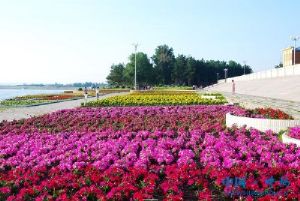
Huma Riverside Park is not only a scenic spot for tourists but also a great place for locals to relax and exercise. On summer mornings, you can see elderly people practicing tai chi and young people jogging along the river. Under the dense trees and on the benches by the river, diligent students can often be spotted, their loud reading voices filling the air. In the evening, the park becomes even more bustling. Thanks to the river, the area stays pleasantly cool at night, making it a popular spot to escape the heat. Elderly folks dance to music in the open-air ballroom, while groups of young people gather around barbecue stalls to enjoy skewers and grilled river fish. Fishing enthusiasts sit quietly by the water with their rods, and the splashes of fish biting the hooks draw bursts of laughter from children. The park remains peaceful only late at night, with the gentle sound of the river flowing through the silence, sounding both clear and distant.
The picturesque Heilongjiang River, like a winding giant dragon, flows joyfully. Its unrestrained waters rush forward like a carefree maiden, passing through Ou’pu and Jinshan townships in Huma County before entering the century-old town of Huma.
Huma Town is the seat of the Huma County People’s Government and the oldest historic city in the Greater Khingan Mountains. It was named after the Huma River that flows through it and was historically a renowned post station on the Heilongjiang River. According to historical records, it was one of the ancient courier stations established in 1683 during the 22nd year of the Kangxi Emperor’s reign in the Qing Dynasty. Originally called “Guzhan” (Ancient Station), it was a key stop on the historic Shuoyu Route. On this fertile land, the people of Huma Town have written heroic chapters resisting Russian invasions. Amidst these snowy mountains and rivers, brave soldiers of the Anti-Japanese United Army left their footprints in their desperate fight against the Japanese. It’s fair to say that Huma Town is one of the few cities in the Greater Khingan Mountains with over a century of history.
Covering an area of 2,443 square kilometers, Huma Town has a population of less than 30,000, making it sparsely populated. Yet, it boasts beautiful mountains and rivers, abundant resources, and outstanding people. Especially with its centuries-old cultural heritage and time-honored local customs, it retains the unique charm of northern Chinese ethnicities. Located in the cold high-latitude region of the Greater Khingan Mountains, the climate here is classified as a cold temperate continental monsoon climate, with long, harsh winters and short, intense summers. The town is not accessible by train, lies a thousand miles from the provincial capital Harbin, and is nestled among the towering mountains of the Greater Khingan range. These unique natural conditions have made it one of China’s rare pristine lands, untouched by industrial pollution, preserving a rare tranquility away from urban hustle. In recent years, with the rise of domestic tourism and growing interest in returning to simplicity, cherishing nature, and seeking eco-friendly environments, the beautiful and mysterious Heilongjiang River, unique ice and snow landscapes, pristine forests, wild berries and medicinal plants, and the rustic charm of ethnic minorities in Huma Town have become increasingly well-known and sought after. The number of domestic and international tourists visiting has grown steadily, making Huma Town an important tourist destination in the Greater Khingan Mountains. With the economic and social development of Huma County, proactive government policies to attract investment, exploration and development of rich mineral resources, and the establishment of green ecological agriculture bases, Huma County has become a hotspot for business investment. As the county seat, the century-old town of Huma has regained its vitality. If the beautiful and resource-rich Huma County is hailed as the “Emerald on the Golden Rooster’s Comb,” then the century-old town of Huma is the brightest gem on that treasure. Like an ancient golden road, it exudes mystery, or like untouched virgin land, it sparks curiosity and imagination, drawing people in to uncover its secrets and witness its stunning beauty.
When speaking of the beautiful natural landscapes of Huma Town, one must mention Huma Riverside Park by the Heilongjiang River. It is located on the eastern side of Huma Town, facing Russia across the river, covering an area of 10 hectares. As the largest comprehensive park in Huma Town and one of the iconic landscapes of this century-old city, it is a must-visit destination for every tourist. Originally a green space along the riverbank, after several rounds of meticulous design and renovation by the government, it has become an excellent place for leisure, vacation, and enjoying the beautiful scenery of the border river. The park is just a few miles from the town center, making it convenient for visitors to explore on foot. Heading east from the center, several streets lead directly to the river. No matter which street you take, the first thing you’ll cross is a wide, high permanent concrete embankment, resembling a long white dragon lying across the Heilongjiang River—like a loyal guardian of this historic town. Decades ago, the Heilongjiang River was not as gentle as it is now. Every spring when the ice broke, the upstream ice would often thaw first while the downstream remained frozen solid—a phenomenon known as “upstream ice jam.” During such events, massive ice floes from upstream would be pushed downstream by the current, accumulating against the solid ice downstream and forming dams that blocked the river’s flow, causing floods. In autumn, heavy rains also frequently led to river overflow. Back then, the Heilongjiang River was like a mischievous dragon, constantly threatening the safety of the century-old town. The original earthen embankments were much lower and narrower than they are today. In the spring of 1985, an upstream ice jam caused unprecedented flooding in Huma Town. The water surged over the riverbed, reaching the embankment, and at its peak, the water level nearly matched the top of the embankment, lasting nearly a week. The earthen embankment, soaked by the water, was on the verge of collapse, putting the historic town in grave danger. Perhaps the playful dragon of the Heilongjiang River couldn’t bear to destroy this beautiful town, as the waters miraculously receded, and the town was saved. After the flood, the county government learned from the experience and promptly organized manpower and resources to construct this concrete embankment. Today, it not only serves as a solid barrier for the historic town but also as a beautiful landmark. From above, the black river water and white embankment resemble two dragons—one black, one white—coiling around the eastern side of the town. As the old saying goes, “A mountain need not be high to be famous if it has immortals; water need not be deep to be spiritual if it has dragons.” It’s no wonder this century-old town, accompanied by two dragons, has become a land of prosperity and natural bounty.
Beyond the embankment lies a windbreak belt about fifty to sixty meters wide, composed of poplar trees. Like a green screen beside the white dragon, it stands straight on the eastern side of the embankment. These tall, dense poplars, especially in summer, are lush with foliage, blocking the view. From the river, due to this green barrier, the town is invisible, making the occasional Russian tourist passing by boat feel as though the town is a shy maiden draped in a green veil, her face hidden.
As visitors stroll through this poplar belt, the beautiful Heilongjiang River emerges like a glowing jade ribbon, gradually rising from the riverbank into view. As you approach the shore, the meandering river, the various boats docked along the banks, children playing in the water, women washing clothes, and the distant mountains of Russia with the nearby low woodlands all come into sight. Here, seeing the river up close, you might truly understand why the Heilongjiang River was called the “Black Water” in ancient times. Looking across the river, the entire waterway appears black, and it’s very difficult to see the riverbed even just a couple of meters down. But don’t assume the Heilongjiang is heavily polluted—it’s actually the only major border river in the world untouched by industrial pollution. Don’t believe it? Scoop up a handful of water, and you’ll find it crystal clear. Children playing in the water often drink from it, and fishermen consider it a delicacy to cook fresh river fish in the river water without any seasonings.
Huma Riverside Park stretches along the section of the Heilongjiang River that flows past the town, extending over 1,000 meters from north to south. This stretch of riverbank is built with stone blocks, whereas before 1963, it was not. Due to Huma Town’s location at a bend in the Heilongjiang shipping route, it faces the full force of the current, leading to severe erosion on the river-facing bank. From the founding of the People’s Republic of China until 1963, over 4.8 hectares of land had been eroded. Since the Sino-Soviet border at the time was defined by the main channel of the Heilongjiang River, erosion on our side meant a loss of national territory. To protect this sacred land, in 1963, the national government allocated funds, and the Huma County government organized the construction of this reinforced riverbank.
Moored along the riverbank are boats of various sizes, but the most eye-catching are several military vessels, including larger gunboats and neatly arranged small patrol boats, evoking a sense of border solemnity and adding a majestic touch to the picturesque riverbank. At the most prominent spot on the bank stands the China-Russia Border Marker No. 173, erected in the spring of 1993. After multiple meetings, negotiations, on-site surveys, and approvals by both governments, the border alignment was finalized, and it was decided to install a permanent boundary marker. Technical teams from both countries’ foreign ministries worked together to erect the monument. The positions of the markers on both sides correspond to each other. Along Huma County’s 371-kilometer border, 21 boundary markers have been installed, and this is one of them. The establishment of the China-Russia border and its markers has laid a solid foundation for stability and economic development in the border regions and symbolizes the strategic partnership between the two nations in this new historical era, demonstrating both governments’ commitment to peace, development, and friendly neighborly relations. Standing over two meters tall, Marker No. 173 has a cement base and features the solemn emblem of the People’s Republic of China, the Chinese characters for “China,” the marker number, and the year it was erected. It has become a highly notable structure in the park. Tourists often take photos in front of it, and for visitors, capturing a photo with the solemn marker, the beautiful river, and the Russian mountains in the background is undoubtedly the best souvenir from a trip to China’s northernmost frontier. In summer, if you rise early to photograph the sunrise at the park, don’t forget to shoot from the direction of the marker. As the sun rises behind the Russian mountains, its orange glow reflects on the shimmering river, casting a soft radiance on the calm waters. The riverbank and the trees in the park are bathed in the morning light, as if draped in a faint orange veil. The sunlight reddens the marker, making it appear even more dignified. Looking east from the marker, the Russian mountains, the rising sun, the glistening river, and the solemn marker form a stunning painting. You can’t help but marvel at the perfect harmony of movement and stillness, the brilliant colors, and their exquisite combination. Watching the sunrise in front of the marker fills you with pride in your country’s magnificent landscapes. Just as watching the flag-raising ceremony at Tiananmen Square stirs deep patriotism, so does watching the sunrise at this border marker—perhaps even more profoundly, offering an unforgettable patriotic experience for those from inland areas.
Huma Riverside Park is not only a comprehensive park but also home to several noteworthy sites worth visiting. On the riverbank stands an elegant two-story building—the Huma Port Joint Inspection Building. Approved by the State Council in May 1993 as a national Class I passenger and cargo port, it was recognized by both Chinese and Russian governments in January 1994 as an international transport port. Facing the Ushakovo Port in the Shimanovsky District of Russia’s Amur Oblast across the Heilongjiang River, the waterway distance is just 19 kilometers. Its annual cargo throughput capacity reaches 200,000 tons. In addition to operating water transport during the open-water season, the port also facilitates ice-road truck transport during the frozen winter months. The joint inspection building was completed in late 2005, covering a total area of 2,200 square meters with a total investment of 3.5 million yuan. The opening of the port will significantly boost the economic development of this historic town, transforming it from a secluded city into a window to the outside world. The charm and character of the century-old town will surely be showcased to the world through this port.
Another site worth visiting on the riverbank is the border outpost—a small cement-and-brick building about forty meters tall, shaped like a tower with an internal staircase. Climbing to the top floor leads to the soldiers’ observation room, equipped with high-powered military binoculars. Through these, the distinctive scenery of Russia comes into view. Directly opposite, the Russian border also has a watchtower, though its architecture differs significantly from ours in both materials and design. Through the binoculars, Russian soldiers on duty are clearly visible, bringing the neighboring country unnervingly close. Standing atop the observation deck, overlooking the nearby foreign land, you may feel an irresistible urge to “point at the rivers and mountains and compose stirring prose.” It also brings to mind the extraordinary history between China and the former Soviet Union. Today, times have changed—the once-superpower no longer exists, the tense relations of the past have given way to friendly cooperation between China and Russia, and our motherland has grown stronger and more prosperous. The winding Heilongjiang River stands as a silent witness to these transformations.
Gazing at the ceaseless flow of the river and reflecting on the changes of history, you’ll deeply grasp the meaning of the phrase, “Thus passes the glory of the world.” Time is the most relentless force of change, flowing incessantly like the waters of the Heilongjiang and enduring eternally like the mountains on both banks.
As the saying goes, “The barracks are made of iron, but the soldiers are made of water.” The border outpost standing on the riverbank has seen countless young soldiers come and go. Like the quietly flowing river, they guard the northern frontier and this beautiful century-old town with their youth and dedication.
Huma Riverside Park is not only a scenic spot for tourists but also a great place for locals to relax and exercise. On summer mornings, you can see elderly people practicing tai chi and young people jogging along the river. Under the dense trees and on the benches by the river, diligent students can often be spotted, their loud reading voices filling the air. In the evening, the park becomes even more bustling. Thanks to the river, the area stays pleasantly cool at night, making it a popular spot to escape the heat. Elderly folks dance to music in the open-air ballroom, while groups of young people gather around barbecue stalls to enjoy skewers and grilled river fish. Fishing enthusiasts sit quietly by the water with their rods, and the splashes of fish biting the hooks draw bursts of laughter from children. The park remains peaceful only late at night, with the gentle sound of the river flowing through the silence, sounding both clear and distant.
The picturesque Huma Riverside Park, like this century-old town, is beautiful and delicate. Perhaps you’ve visited Dalian’s Donghai Park, a vast seaside and mountain-side park where you can appreciate the boldness and vastness of the sea and admire the craftsmanship of its designers. But it often feels overly artificial, lacking the simple natural charm found here. Though smaller, Huma Riverside Park feels more genuine and unspoiled. Here, you can truly experience the state of mind described as “unmoved by praise or blame, calmly watching the flowers bloom and fade; indifferent to comings and goings, quietly observing the clouds drift by”—a feeling rarely experienced in modern, urban life. Perhaps this is why visitors are so drawn to the riverside park of this century-old town.
Source: Huma County Party Committee and County Government
Share
This article is published by HowToTrip. Sharing and reposting are welcome — please credit the source.
Article URL: https://www.howtotrip.net/travel-9268
Related Articles
- Shaoxing's "Grandpa Gourd" hangs the gourds back up: "If there are too many people, we'll interact less — just take a quick look from afar"
- Chinese authorities announce "reciprocal adjustment" to Japan visa fees — single-entry visa jumps from 2,250 to 16,750 yen!
- The "health stones" carried by a traveler were found to have radiation levels exceeding safety limits by a thousand times, potentially endangering fellow passengers on the same flight. Customs issues warning!
- Shenzhen Airport Issues Late-Night Notice: Unidentified Aerial Object Detected, Causing Widespread Flight Delays!
- “They only said it cost money after I opened the box and washed it!” 200g of grapes sold for 60 yuan on a high-speed train—12306 responds!
- Can't buy an airline ticket? Denied exit? Blocked from boarding? A large number of Chinese tourists have mysteriously become "discredited individuals"
- Adverse weather and economic fluctuations impact Colombia's coffee market
- Beach bathing area responds to 2 yuan/30 seconds fee for freshwater foot rinsing: Clearly priced!
- Taking off with an improperly closed cabin door? Wing malfunction? Multiple flights made emergency returns mid-journey!
- Experience the gifts of nature! A countdown of the world’s ten most stunning coastlines