Xia Mansion
Xia Mansion
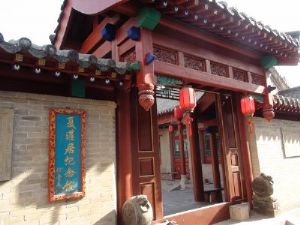
Xia Xinyou (1843–1908), courtesy names Shaogxiang and Gengtang, was a native of Xiayuan Village in Yuncheng County. In the seventh year of the Tongzhi reign of the Qing Dynasty (1868), he enlisted in Zuo Zongtang’s army and was stationed in Shaanxi. For his meritorious service in battle, he was promoted to the rank of defender. In the thirteenth year of the Tongzhi reign (1874), as Tsarist Russia sought to undermine China by instigating rebellions among ethnic minorities in Xinjiang, Xia Xinyou was ordered to lead troops in suppressing the unrest. He successively captured cities including Urumqi and Manas, and was recommended for promotion to the rank of general, awarded a peacock feather in his hat, and granted the right to wear a yellow mandarin jacket. In the summer of the third year of the Guangxu reign (1877), he pacified southern Xinjiang. In the fourth year of the Guangxu reign (1878), Liu Jintang, the Governor of Xinjiang, petitioned for him to command a spear unit and engage in battles in areas such as Altusheshi, achieving victory. He was again recommended for the rank of general and was honored with the first-rank official cap decoration, as well as hereditary noble titles for three generations. After six years of military campaigns, he quelled the rebellion in Xinjiang.
In the twentieth year of the Guangxu reign (1894), during the First Sino-Japanese War, Li Bingheng, the Governor of Shandong, appointed him to defend Dengzhou and serve as commander of the naval forces. Xia Xinyou maintained tight defenses, sank two Japanese warships during the conflict, and forced the rest of the Japanese forces to flee. The emperor was greatly pleased and appointed him as the Commander of Yanzhou Garrison. He was soon transferred to become the Commander of Dengzhou Garrison. In the twenty-sixth year of the Guangxu reign (1900), when the Eight-Nation Alliance (including Britain, France, Germany, and Russia) invaded China, Xia Xinyou led troops to defend the capital. After the fall of Beijing, he returned to protect Shandong, preventing the Eight-Nation Alliance from entering Shandong territory. Following the peace negotiations between the Eight-Nation Alliance and the Qing government, he was promoted to Viceroy of Yunnan. At the recommendation of Yuan Shikai, the Governor-General of Zhili, he remained in Zhili to command the standing army and also served as Assistant to the Minister of Beiyang. In the thirty-third year of the Guangxu reign (1907), he was ordered to guard Caozhou. Later, he commanded troops stationed along the Yangtze River, overseeing the defense of seven provinces along the river and serving as Assistant to the Minister of Nanyang. Before taking up the post, he fell ill and died at his camp in Juye. The emperor granted 1,000 taels of silver for his funeral, and his remains were transported back to Yuncheng.
Xia Jiquan, courtesy name Puzhai, art name Quyuan, used the name Xia Quan while in Japan, and later changed his name to Lianju and adopted the art name Yiweng. A native of Yuncheng County, Shandong, he was the eldest son of Xia Xinyou, who was the Viceroy of Yunnan during the late Qing Dynasty and posthumously honored with the title “Zhuangwu.” He was born on March 20, 1884 (the 23rd day of the second month in the year of Jiashen), in Yutian (now known as Yutian), Xinjiang, and spent his later years in Beijing. He passed away peacefully on December 14, 1965 (the 22nd day of the 11th month in the year of Yisi) at the age of 82.
He held official positions including Prefect of Zhili, Magistrate of Jinghai, Prefect of Jiangsu, and Deputy Commander of the Militia in Shandong. During the Xinhai Revolution, he was elected as the President of the Shandong Provincial Federation of All Circles, declaring Shandong’s independence. With the establishment of the Republic of China, he was appointed as the Supreme Advisor to the Shandong Military Government, as well as concurrently serving as Secretary-General and Chief of Staff. In 1916, he was appointed as an imperial secretary. In 1918, he was elected as a member of parliament and served as Supervisor of the Qilu Calligraphy, Painting, and Antiquities Museum, as well as Head of the Shandong Buddhist Laymen’s Forest. In 1920, he became the Salt Transport Commissioner of Shandong, completely eradicating years of malpractice in salt administration and earning widespread public acclaim. In 1921, he resigned to prepare for the establishment of Qufu University and also served as Principal of Donglu School. In 1925, in Jinan, Xia Lianju met Japanese Buddhist Kenji Kamiya, and accompanied him to Japan to devote himself to the study of Buddhism. In late 1938, Xia Lianju, together with Ngaphö Rinpoche, Minister of the Interior Wang Zhizhang, and Master Xianming, initiated the Buddhist Common Aspiration Association, hoping to unite different Buddhist sects in a shared commitment to prayer for the elimination of karmic hindrances. They aimed to invoke harmony in heaven and eliminate war. In 1939, initiated by Xia Lianju and co-founded with Retired Master Xianming of Guangji Temple and lay Buddhist Jin Yunpeng, the Pure Land Sect Learning Society was established, with the birthday of Mahāsthāmaprāpta Bodhisattva designated as its founding commemoration. The organization was a spontaneous group of equality among monastics and laypeople, without any formal institutional structure. It carried out learning and practice activities under the guidance of the principles of making Buddhism accessible to the public, vitalizing faith, and integrating Buddhist teachings into daily life. Later, to express his patriotism, he donated over 300 pieces of valuable historical artifacts that he had meticulously collected and preserved throughout his life, all acquired through frugal living, to institutions such as the Palace Museum, the Shandong Museum, and Yuncheng County. His contributions were reported in publications such as Guangming Daily and Masses Daily. Beyond scholarship, he was also skilled in epigraphy, calligraphy, painting, and the archaeology of antiquities, boasting an extensive collection and great expertise in authentication. Particularly in terms of the historical and artistic value of cultural relics, his perspective was one that could not be understood through ordinary commercial value judgments. Thus, he had significant influence in the field of cultural relics.
Xia Xinyou (1843~1908) Xia Xinyou (1843–1908), courtesy names Shaogxiang and Gengtang, was a native of Xiayuan Village in Yuncheng County. In the early years of the Tongzhi reign, he assisted Sengge Rinchen in suppressing the Nian Rebellion. In 1868 (the seventh year of the Tongzhi reign), he enlisted in Zuo Zongtang’s army and was stationed in Shaanxi. For his meritorious service in battle, he was promoted to the rank of defender. In 1874 (the thirteenth year of the Tongzhi reign), as Tsarist Russia sought to undermine China by inciting unrest among ethnic minorities in Xinjiang, Xia Xinyou was ordered to suppress the rebellion, successively capturing cities such as Urumqi. For his achievements in quelling the unrest in Xinjiang, he was promoted to the rank of general, awarded the first-rank official cap decoration, and hereditary noble titles for three generations, as well as the right to wear a yellow mandarin jacket. In 1894 (the twentieth year of the Guangxu reign), during the First Sino-Japanese War, he was in charge of Dengzhou's defenses, commanding... Details +
Xia Jiquan (1884~1965) Xia Jiquan, courtesy name Puzhai, art name Quyuan, used the name Xia Quan while in Japan, and later changed his name to Lianju and adopted the art name Yiweng. A native of Yuncheng County, Shandong, he was the eldest son of Xia Xinyou, who was the Viceroy of Yunnan during the late Qing Dynasty and posthumously honored with the title “Zhuangwu.” He was born on March 20, 1884 (the 23rd day of the second month in the year of Jiashen), in Yutian (now known as Yutian), Xinjiang, and spent his later years in Beijing. He passed away peacefully on December 14, 1965 (the 22nd day of the 11th month in the year of Yisi) at the age of 82. He held official positions including Prefect of Zhili, Magistrate of Jinghai, Prefect of Jiangsu, and Deputy Commander of the Militia in Shandong. During the Xinhai Revolution, he was elected as the President of the Shandong Provincial Federation of All Circles, declaring Shandong’s independence. With the establishment of the Republic of China, he was appointed as the Supreme Advisor to the Shandong Military Government, as well as concurrently serving as Secretary-General and Chief of Staff. In 1916, he was appointed as an imperial secretary. In 1918, he was elected as a member of parliament and served as Supervisor of the Qilu Calligraphy, Painting, and Antiquities Museum, as well as Head of the Shandong Buddhist Laymen’s Forest. In 1920, he became the Salt Transport Commissioner of Shandong, completely eradicating years of malpractice in salt administration and earning widespread public acclaim. In 1921, he resigned to prepare for the establishment of Qufu University and also served as Principal of Donglu School. In 1925, in Jinan, Xia Lianju met Japanese Buddhist Kenji Kamiya, and accompanied him to Japan to devote himself to the study of Buddhism. In late 1938, Xia Lianju, together with Ngaphö Rinpoche, Minister of the Interior Wang Zhizhang, and Master Xianming, initiated the Buddhist Common Aspiration Association, hoping to unite different Buddhist sects in a shared commitment to prayer for the elimination of karmic hindrances. They aimed to invoke harmony in heaven and eliminate war. In 1939, initiated by Xia Lianju and co-founded with Retired Master Xianming of Guangji Temple and lay Buddhist Jin Yunpeng, the Pure Land Sect Learning Society was established, with the birthday of Mahāsthāmaprāpta Bodhisattva designated as its founding commemoration. The organization was a spontaneous group of equality among monastics and laypeople, without any formal institutional structure. It carried out learning and practice activities under the guidance of the principles of making Buddhism accessible to the public, vitalizing faith, and integrating Buddhist teachings into daily life. Later, to express his patriotism, he donated over 300 pieces of valuable historical artifacts that he had meticulously collected and preserved throughout his life, all acquired through frugal living, to institutions such as the Palace Museum, the Shandong Museum, and Yuncheng County. His contributions were reported in publications such as Guangming Daily and Masses Daily. Beyond scholarship, he was also skilled in epigraphy, calligraphy, painting, and the archaeology of antiquities, boasting an extensive collection and great expertise in authentication. Particularly in terms of the historical and artistic value of cultural relics, his perspective was one that could not be understood through ordinary commercial value judgments. Thus, he had significant influence in the field of cultural relics. Details +
Share
This article is published by HowToTrip. Sharing and reposting are welcome — please credit the source.
Article URL: https://www.howtotrip.net/travel-9209
Related Articles
- Shaoxing's "Grandpa Gourd" hangs the gourds back up: "If there are too many people, we'll interact less — just take a quick look from afar"
- Chinese authorities announce "reciprocal adjustment" to Japan visa fees — single-entry visa jumps from 2,250 to 16,750 yen!
- The "health stones" carried by a traveler were found to have radiation levels exceeding safety limits by a thousand times, potentially endangering fellow passengers on the same flight. Customs issues warning!
- Shenzhen Airport Issues Late-Night Notice: Unidentified Aerial Object Detected, Causing Widespread Flight Delays!
- “They only said it cost money after I opened the box and washed it!” 200g of grapes sold for 60 yuan on a high-speed train—12306 responds!
- Can't buy an airline ticket? Denied exit? Blocked from boarding? A large number of Chinese tourists have mysteriously become "discredited individuals"
- Adverse weather and economic fluctuations impact Colombia's coffee market
- Beach bathing area responds to 2 yuan/30 seconds fee for freshwater foot rinsing: Clearly priced!
- Taking off with an improperly closed cabin door? Wing malfunction? Multiple flights made emergency returns mid-journey!
- Experience the gifts of nature! A countdown of the world’s ten most stunning coastlines