Tomb of Li Gu
Tomb of Li Gu

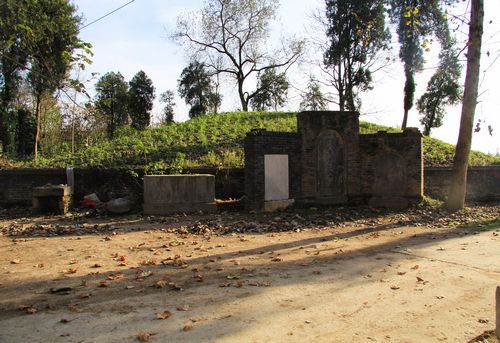
Tomb of Li Gu The Tomb of Li Gu, a cultural relic protection unit of Shaanxi Province, is located to the south of Xiaoying Village, Liulin Town, Chenggu County. The tomb mound is in the shape of an inverted truncated pyramid, facing west, measuring 14 meters in length from north to south, 10 meters in width from east to west, and 6 meters in height. In front of the tomb, there is one stone stele from the Southern Song Dynasty and one from the Qianlong reign of the Qing Dynasty. Behind the tomb stands a shrine dedicated to the worship of Li Gu. It consists of a single courtyard with two halls and features architecture from the Qing Dynasty. On every Tomb-Sweeping Day, visitors come in an endless stream to pay their respects.
Facing west, the Tomb of Li Gu is shaped like an inverted truncated pyramid. The base of the tomb measures 42 meters from east to west and 23 meters from north to south, with a height of 6 meters. The tomb mound itself is 14 meters long from east to west and 10 meters wide from north to south. There are three steles in front of the tomb: the one on the right was erected in the sixth year of the Qiandao era (1170) of the Southern Song Dynasty by Yan Cangshu, the then magistrate of Chenggu County. The stele is 120 cm high and 64 cm wide, inscribed with clerical script reading “Sacred Path of Lord Li, the Loyal Han Minister.” The middle stele was erected in the 41st year of the Qianlong reign (1776) of the Qing Dynasty by Bì Yuán, the governor of Shaanxi. It is 180 cm high and 80 cm wide, inscribed with clerical script reading “Tomb of Lord Li Gu, Grand Tutor of the Han.” The stele on the left, 115 cm high and 85 cm wide, also bears the inscription “Tomb of Lord Li Gu, Grand Tutor of the Han,” and was erected in 1986 by the People’s Government of Chenggu County. In front of the tomb stands a stone beast from the Han Dynasty (locally referred to as a stone tiger)—(originally there were two, but one has been missing to this day)—measuring 180 cm in length and 80 cm in height. Its carving is bold, and its posture vigorous. Behind the tomb grows a large medicinal tree with a girth of about 1.5 meters and a height of 15 meters. Around the tomb are 22 cypress trees planted in the 22nd year of the Republic of China (1933).
About 30 meters in front of the tomb lies the Temple of Li Gu, consisting of a single courtyard with two courtyards in depth. It is a dedicated shrine for worshipping Li Gu, and its original construction date is unknown. However, the central beam of the main hall bears an ink marking that reads “Renovated in the 19th year of the Guangxu reign (1893).” It now serves as the Cultural Relics Management Office of the Tomb of Li Gu. In April 1992, the Tomb of Li Gu was designated as a cultural relic protection unit by the People’s Government of Shaanxi Province.
Li Gu (94~147) Li Gu (94–147 AD), courtesy name Zijian, was a native of Nanzheng in Hanzhong (present-day Hanzhong, Shaanxi), and the son of Minister Over the Masses Li ?. From childhood, he was fond of learning and often traveled great distances to study under renowned masters. He eventually mastered various ancient and esoteric texts, becoming a scholar of great renown in his time. “Aspirants from all over were drawn to his influence and came to learn from him.” [Note: See Book of the Later Han · Biography of Li Gu] Local officials repeatedly recommended him for official positions, but he declined them all. However, he did write letters advising the then-renowned recluse Huang Qiong to accept an imperial summons and take up office, pointing out that: “‘The bright moon is easily dimmed, the pure white easily soiled.’ A melody as sublime as ‘Spring Radiance’ finds few who can harmonize with it; under the weight of great reputation, the reality often falls short.” [Note: See Book of the Later Han · Biography of Huang Qiong...] Details+
Share
This article is published by HowToTrip. Sharing and reposting are welcome — please credit the source.
Article URL: https://www.howtotrip.net/travel-8464
Related Articles
- Shaoxing's "Grandpa Gourd" hangs the gourds back up: "If there are too many people, we'll interact less — just take a quick look from afar"
- Chinese authorities announce "reciprocal adjustment" to Japan visa fees — single-entry visa jumps from 2,250 to 16,750 yen!
- The "health stones" carried by a traveler were found to have radiation levels exceeding safety limits by a thousand times, potentially endangering fellow passengers on the same flight. Customs issues warning!
- Shenzhen Airport Issues Late-Night Notice: Unidentified Aerial Object Detected, Causing Widespread Flight Delays!
- “They only said it cost money after I opened the box and washed it!” 200g of grapes sold for 60 yuan on a high-speed train—12306 responds!
- Can't buy an airline ticket? Denied exit? Blocked from boarding? A large number of Chinese tourists have mysteriously become "discredited individuals"
- Adverse weather and economic fluctuations impact Colombia's coffee market
- Beach bathing area responds to 2 yuan/30 seconds fee for freshwater foot rinsing: Clearly priced!
- Taking off with an improperly closed cabin door? Wing malfunction? Multiple flights made emergency returns mid-journey!
- Experience the gifts of nature! A countdown of the world’s ten most stunning coastlines