800 Show Creative Park
800 Show Creative Park (No. 8 Bridge)
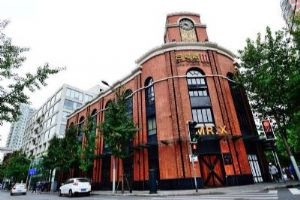
In the second half of 2003, with the support of the Shanghai Municipal Economic Commission and the People’s Government of Luwan District, Shanghai Huaqing Investment Co., Ltd., Hong Kong Fashion Life Planning & Consulting (Shanghai) Co., Ltd., and Shanghai Industrial Tourism Development Co., Ltd. jointly developed, renovated, leased, and managed the former premises of the Shanghai Automobile Brake Company. After a year of work, the old factory buildings, rich in historical significance and cultural heritage, were transformed into a new hub for attracting creative talent, inspiring innovation, and clustering creative industries. Today, nearly a hundred renowned domestic and international design firms and famous brands have set up in No. 8 Bridge, making it a platform for top-brand displays and information releases, as well as a bridge for economic and cultural exchanges between China and abroad. The industrialization of creativity and the creativization of industry not only preserved the old industrial architecture and the historical character of urban development but also generated significant social and economic benefits. Now, No. 8 Bridge has become a new landmark of Shanghai’s creative industry clusters, one of Shanghai’s seven “National Industrial Tourism Demonstration Sites,” and one of Shanghai’s three information-based demonstration parks.
To establish No. 8 Bridge as a platform for communication, promotion, and dissemination within the global creative industry, and as a multifunctional fashion and creative center, the renovation project significantly adjusted the original building functions, reserved ample public spaces, and implemented strict tenant selection. This ensures architectural harmony both inside and out while maintaining unique characteristics, striving to create an artistic space without compromising practicality. During the renovation, the original thick brick walls, exposed piping, and weathered flooring were preserved, infusing the entire space with the nostalgic charm of the industrial era. The design did not solely pursue floor area but instead incorporated numerous indoor, semi-indoor, and outdoor public spaces.
The name “No. 8 Bridge” comes from its location at No. 8 Jianguo Middle Road, and in Cantonese, the number “8” sounds like “fa,” which means prosperity — a symbol of good fortune. Additionally, the buildings in the No. 8 Bridge complex are interconnected by skybridges between floors, facilitating interaction and movement among the resident companies. More importantly, No. 8 Bridge is itself a bridge of friendship, connecting, transmitting, and communicating cultures of diverse backgrounds and styles from around the world.
Building 1 is the core venue of No. 8 Bridge. Originally a heat treatment workshop, the designers made full use of the original high ceilings to transform it into a three-story structure. The first floor is a multipurpose hall, where touchscreen computers are available at the reception desk for visitors to independently browse information about the park’s tenants. The second floor is for the audience; the third floor features semi-open VIP boxes, offering guests a premium experience, while the opposite side can be used as a podium or stage as needed.
The first floor of Building 2 was originally a warehouse for the brake company, and the second floor was a bicycle parking garage. The external staircase still retains its original iron railings. The structure of Building 2 remains largely unchanged, with the second-floor slab being original and the walls being newly constructed. The roof appears original but has actually been renovated with insulation and waterproofing treatments, after which the old tiles were re-laid. The building footprint remains the same, with some additional public spaces added. The ceiling of the corridor in Building 2 is very user-friendly, featuring a glass skylight. Although the corridor is narrow, sunlight streaming in from the roof creates a warm and cozy atmosphere throughout the park.
Building 3 was originally home to a sheet metal workshop and bathrooms. Due to its poor foundational structure, it was largely rebuilt on-site. The interior office walls here are all glass, and the tenants are primarily fashion designers and product designers. These transparent glass walls effectively showcase their products. The small plaza on the first floor below can be described as the backyard garden of No. 8 Bridge, where people can enjoy coffee, exchange creative ideas, seek inspiration, and discuss business during breaks.
Building 5 is mainly occupied by advertising, concept, and product design studios. The central hall is dedicated to hosting exhibitions, showcases, and new product launch events. There is a special feature here: a shared meeting room in the middle that tenants can rent by the hour.
Artists in the park display their works along the back street. The area also attracts art exhibits from various countries. Commuters can view these artworks on their way to and from work.
Building 6 serves as the living area of the park. The upper level houses the staff cafeteria, while the lower level contains a public parking lot. Newcomers and unfamiliar faces quickly become friends here.
The first floor of Building 7 operates as a French restaurant during the day and transforms into a disco after 10 PM. Foreigners especially enjoy the atmosphere here, and many international celebrities often dine here, making it one of the main entertainment, leisure, and social venues for foreigners in Shanghai. The residents and occupants of Building 7 include some of the world’s top architectural firms, such as the Canadian large-scale architectural design firm B&H and the American firm SOM.
The No. 8 Bridge project is not merely an old building renovation or rental venture but a model of creative development. Compared to the distinct atmosphere of Chinese artist communities in the Suzhou Creek warehouse area, No. 8 Bridge is more international, bringing together a diverse group of artists and designers, serving more as a window to the world. The “bridge” in No. 8 Bridge symbolizes providing a rich platform for exchange across different creative industries. This renovated old industrial compound thus becomes a bridge connecting the past and the present, the fashion, creativity, culture, and design of China and abroad, and people from all over the world.
Transportation
Address: 8–10 Jianguo Middle Road, Luwan District, Shanghai (near South Chongqing Road). Nearby attractions include Tianzifang on Taikang Road and the Shanghai Public Security Museum.
Accessible via buses 17, 24, 36, 41, 96, 146, 786, 869, 932, 933, 986, Daqiao Line 1, and Tunnel Line 8.
Admission: Free
Type: Gallery Creative Park
Recommended Visit Duration: 2 hours
Share
This article is published by HowToTrip. Sharing and reposting are welcome — please credit the source.
Article URL: https://www.howtotrip.net/travel-7571
Related Articles
- Shaoxing's "Grandpa Gourd" hangs the gourds back up: "If there are too many people, we'll interact less — just take a quick look from afar"
- Chinese authorities announce "reciprocal adjustment" to Japan visa fees — single-entry visa jumps from 2,250 to 16,750 yen!
- The "health stones" carried by a traveler were found to have radiation levels exceeding safety limits by a thousand times, potentially endangering fellow passengers on the same flight. Customs issues warning!
- Shenzhen Airport Issues Late-Night Notice: Unidentified Aerial Object Detected, Causing Widespread Flight Delays!
- “They only said it cost money after I opened the box and washed it!” 200g of grapes sold for 60 yuan on a high-speed train—12306 responds!
- Can't buy an airline ticket? Denied exit? Blocked from boarding? A large number of Chinese tourists have mysteriously become "discredited individuals"
- Adverse weather and economic fluctuations impact Colombia's coffee market
- Beach bathing area responds to 2 yuan/30 seconds fee for freshwater foot rinsing: Clearly priced!
- Taking off with an improperly closed cabin door? Wing malfunction? Multiple flights made emergency returns mid-journey!
- Experience the gifts of nature! A countdown of the world’s ten most stunning coastlines