The Blue Tingzhen Mansion
The Blue Tingzhen Mansion

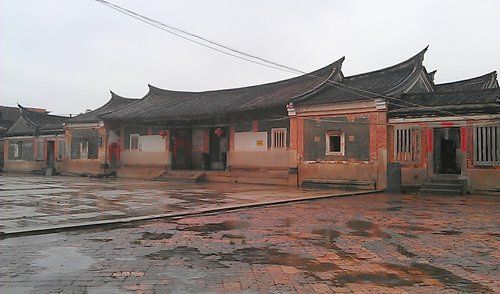
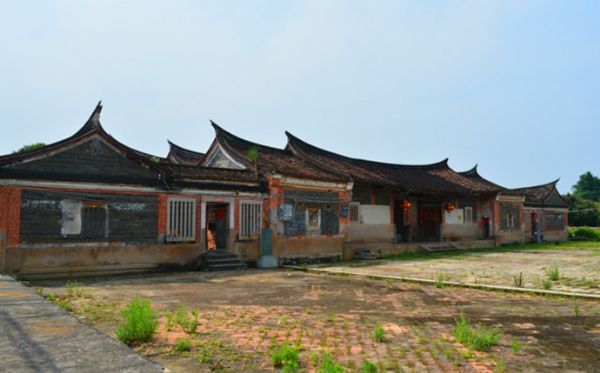
Lan Tingzhen (1664–1729), courtesy name Jingpu, was from Huxi, Zhangpu. He held official positions such as Commander-in-Chief of Nan Yue and Fujian Navy Commander. He once administered Taiwan and made significant contributions to the governance and stabilization of the island. After his death, he was posthumously honored as the Junior Guardian of the Heir Apparent and granted the posthumous title Xiangyi, with hereditary title of Qingche Duwei. During the Kangxi era, he joined the army alongside his clansman Lan Li (courtesy name Yifu, alias Wenshan, from Chiling, Zhangpu, who was a pioneering blood-battling platform general during the Kangxi era, later promoted to Left Duwei for his leading role and eventually reached the rank of Fujian Commander), enlisting under the Qing Prince Kang. From the 34th year of Kangxi (1695), he successively held positions such as Bazong of Dinghai Camp, Baoqi of Panshi, Youji of Wenzhou Town Middle Camp, Deputy Commander of Penghu, and Commander-in-Chief of Nan’ao. In the 60th year of Kangxi (1721), he led troops into Taiwan to suppress the Zhu Yigui uprising. After Taiwan’s recovery, he was appointed as the acting officer for Taiwan’s official seal affairs. During his interim military administration in Taiwan, he advised Fujian Governor Manbao and General Shi Shipiao against the indiscriminate killing of civilians, enabling many early settlers from the mainland who had joined Zhu Yigui to return to Qing rule. Among them were many immigrants from his hometown of Zhangpu, who emerged from “Zhangpu Liao” to assist Lan Tingzhen in stabilizing society and developing agriculture, playing an important role in Taiwan’s early development. He also submitted memorials advising the Qing court to prioritize Taiwan’s defense to prevent foreign invasion. Furthermore, following the advice of his clansman Lan Dingyuan (courtesy name Yulin, alias Luzhou, from Chiling, Zhangpu, an eminent official and master strategist in Taiwan’s planning during the early Qing period), he implemented a series of “aboriginal management” policies including strengthening unity between the Han and the Gaoshan peoples, improving Taiwan’s defenses, encouraging land cultivation, and developing production. These policies were later “referenced by generations of Taiwan administrators,” exerting far-reaching influence. In the first year of Yongzheng (1723), Lan Tingzhen was promoted to Fujian Navy Commander. His son, Lan Richong, inherited his position and rose to the rank of Canjiang of Tongshan Camp, while his grandson, Lan Yuanmei, served successively as Commander-in-Chief of Taiwan Town and Jiangnan Navy Commander, and suppressed the Lin Shuangwen uprising in Taiwan during the Qianlong era. The Blue Tingzhen Mansion is grand in scale and rigorously laid out. The architectural complex faces east and sits west, with a spacious plaza paved with 360 flagstones in front of the mansion. The flagstones are crisscrossed in an imposing and majestic arrangement. The main building’s foundation is supported by large granite blocks, with exterior walls combining red bricks, gray bricks, and white plaster walls, spanning a width of 50 meters and a depth of 86 meters, covering an area of over 4,300 square meters. A pair of blue stone drums, each 1.5 meters high, stand on either side of the gate, featuring exquisite carvings of qilins, lotuses, and aquatic plants on their surfaces. The gate pillars are inscribed with a couplet praising Lan Tingzhen’s historical achievements in pacifying and governing Taiwan:
Recaptured the Lu’er Strait in a single morning, his strategies rival those of Guan and Yue;
Secured the Eastern Capital in seven days, his military tactics comparable to Sun and Wu.
The entire structure features a combination of brick and earthen wall load-bearing systems with gable-and-hip roof trusses resting on purlins, integrated with wooden through-tenon frameworks. The entrance hall, main hall, and rear hall utilize wooden through-tenon frames, with thick beams and columns—the diameter of the round pillars reaches up to 40 centimeters. The wooden beams are richly decorated with carvings such as “yuanguang,” “tuori,” and “diaotong.”
The mansion complex is symmetrically distributed across five longitudinal sections along the central axis, in sequential order: entrance hall, main hall, rear hall, main tower, and rear wing rooms. The left and right wings are connected by “guoshui corridors,” forming a pattern of a large quadrangle enclosing smaller ones. The first section has seven bays, with the roof curving upward into a double-ridged flush-gable style. The second section also has a double-ridged flush-gable roof. The main hall is centrally located, backed by a screen wall and fronted by an eave corridor, serving as… [text cutoff] …and the front eave corridor, used for... [incomplete]. The third section is the rear hall, a space for rituals and ancestral worship. The rear hall connects to the courtyard, and its open corridors on both sides link seamlessly with the rear corridor of the main hall, creating the largest indoor space in the entire residence and highlighting its central status. The fourth section is a two-story earthen tower called the “Rijie Tower,” with a plaque personally inscribed by Lan Tingzhen reading “Rijie Tower,” along with seals such as “Jingpu,” “Zhubao Songmao,” and “Lan Tingzhen Seal.” The name of the tower is derived from the phrase “daytime triple reception” in the Book of Changes, symbolizing that Lan Tingzhen’s sons Richong, Richang, and Rining, and the future generations of the Lan family, will carry on the lineage. The tower’s ground floor is built from square flagstones, while the second floor is constructed with rammed earth walls 0.8 meters thick. The tower is 23 meters wide and 10 meters deep. Notably, the inclusion of an earthen tower within a mansion complex is extremely rare among Southern Fujian residences and is a unique feature of the Blue Tingzhen Mansion. The wooden structure of the tower was destroyed by fire in the 1940s, though the main tower’s outer walls remain intact. The fifth section consists of rear wing rooms, with the middle room serving as an open hall and rear doors at both ends. The rear wing rooms, together with the left and right wing rooms, form a continuous enclosure around a large quadrangle, with the earthen tower situated at the center, creating a distinctive “courtyard city” formation that is truly spectacular.
The Blue Tingzhen Mansion is a masterpiece of official residences in Southern Fujian and also serves as a historical testament to the relationship between Fujian and Taiwan, as well as the history of the Lan family. The mansion is grand in scale, symmetrically laid out, ingeniously conceived, and employs diverse craftsmanship techniques. The inclusion of an earthen tower within the mansion creates a courtyard city layout, reflecting the highest level of architectural artistry in Southern Fujian at the time. It is worth mentioning that over 300 years ago, the Lan family of Zhangpu produced dozens of military generals who held important positions due to their distinguished military achievements, making significant contributions to the unification of Taiwan, as well as its early development and governance. Among them, Lan Tingzhen, Lan Li, and Lan Yuanmei all held the rank of first-class officials and were listed by the Taiwan Literature Committee as key figures in Taiwan’s early development. Lan Li, Lan Tingzhen, and the renowned official and master strategist Lan Dingyuan are historically known as the “Three Outstanding LANS,” representing the finest of China’s Lan family. This unique familial phenomenon holds great significance for research on the history of China’s She ethnic group, She-Han relations, and sociology.
Share
This article is published by HowToTrip. Sharing and reposting are welcome — please credit the source.
Article URL: https://www.howtotrip.net/travel-7424
Related Articles
- Shaoxing's "Grandpa Gourd" hangs the gourds back up: "If there are too many people, we'll interact less — just take a quick look from afar"
- Chinese authorities announce "reciprocal adjustment" to Japan visa fees — single-entry visa jumps from 2,250 to 16,750 yen!
- The "health stones" carried by a traveler were found to have radiation levels exceeding safety limits by a thousand times, potentially endangering fellow passengers on the same flight. Customs issues warning!
- Shenzhen Airport Issues Late-Night Notice: Unidentified Aerial Object Detected, Causing Widespread Flight Delays!
- “They only said it cost money after I opened the box and washed it!” 200g of grapes sold for 60 yuan on a high-speed train—12306 responds!
- Can't buy an airline ticket? Denied exit? Blocked from boarding? A large number of Chinese tourists have mysteriously become "discredited individuals"
- Adverse weather and economic fluctuations impact Colombia's coffee market
- Beach bathing area responds to 2 yuan/30 seconds fee for freshwater foot rinsing: Clearly priced!
- Taking off with an improperly closed cabin door? Wing malfunction? Multiple flights made emergency returns mid-journey!
- Experience the gifts of nature! A countdown of the world’s ten most stunning coastlines