Yining Yuqunweng Hui Ethnic Flower Folk Culture Tourism Area
Yining Yuqunweng Hui Ethnic Flower Folk Culture Tourism Area
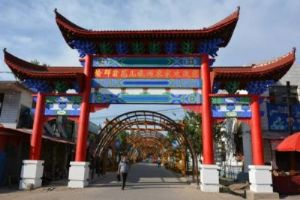
“Flower” songs, commonly referred to as “Mountain Tunes” among the Hui people, feature high-pitched melodies, lively rhythms, and a strong sense of daily life. Originally popular in regions such as Ningxia, Gansu, and Qinghai, the genre later spread to Changji in Xinjiang. After more than two hundred years of evolution, it has developed distinct local characteristics and has been listed as a National Intangible Cultural Heritage. As a product of Xinjiang’s multiculturalism, the Hui Flower songs of Xinjiang are now widely sung among the region’s Hui and Han communities, as well as other ethnic groups, adding immense vibrancy to the cultural and artistic landscape of Ili.
The name “Yuqunweng” means “three groups of ten households” in Uyghur, and its usage dates back to the Qianlong era of the Qing Dynasty. The current name “Yuqunweng” evolved from the original Uyghur meaning. In Chinese, it carries a new significance: “All ethnic groups who have become masters of their own destiny now lead happy and joyful lives.”
Yuqunweng Hui Ethnic Township is the most populous multi-ethnic township in Yining County and boasts abundant traditional folk culture and humanistic resources. National Highway 218 runs through Yuqunweng Village, ensuring convenient access. The township stands out as one of the most attractive rural tourism destinations along future tourism routes in Yining County and even across northern Xinjiang.
At the Yuqunweng Hui Ethnic Flower Folk Culture Tourism Area, visitors can not only enjoy the scenic beauty of a 3A-level attraction but also experience rich ethnic customs, savor authentic Hui cuisine, and most importantly, meet a group of warm and hospitable locals who are always ready to welcome you with their best, offering a truly home-like travel experience.
Share
This article is published by HowToTrip. Sharing and reposting are welcome — please credit the source.
Article URL: https://www.howtotrip.net/travel-20031
Related Articles
- Shaoxing's "Grandpa Gourd" hangs the gourds back up: "If there are too many people, we'll interact less — just take a quick look from afar"
- Chinese authorities announce "reciprocal adjustment" to Japan visa fees — single-entry visa jumps from 2,250 to 16,750 yen!
- The "health stones" carried by a traveler were found to have radiation levels exceeding safety limits by a thousand times, potentially endangering fellow passengers on the same flight. Customs issues warning!
- Shenzhen Airport Issues Late-Night Notice: Unidentified Aerial Object Detected, Causing Widespread Flight Delays!
- “They only said it cost money after I opened the box and washed it!” 200g of grapes sold for 60 yuan on a high-speed train—12306 responds!
- Can't buy an airline ticket? Denied exit? Blocked from boarding? A large number of Chinese tourists have mysteriously become "discredited individuals"
- Adverse weather and economic fluctuations impact Colombia's coffee market
- Beach bathing area responds to 2 yuan/30 seconds fee for freshwater foot rinsing: Clearly priced!
- Taking off with an improperly closed cabin door? Wing malfunction? Multiple flights made emergency returns mid-journey!
- Experience the gifts of nature! A countdown of the world’s ten most stunning coastlines