Dahongpao Scenic Area
Dahongpao Scenic Area
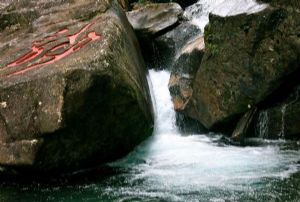
The cliff here features three bright red characters: "Dahongpao." The Dahongpao tea bush has dense foliage, with leaves slanting upward, broad oval in shape, tips drooping slightly, edges curling inward. The leaves are dark green and glossy, while new buds have a purplish-red tint. In early spring when the tea buds sprout, the whole tree looks fiery red from afar, as if draped in a red robe.
Spring arrives yearly from the southeast, warming Jianxi’s waters first. By the stream grows tea supreme under heaven, planted since ancient times by Wuyi’s immortals. —— Fan Zhongyan, Song Dynasty
Wuyi Rock Tea is very famous. By the Yuan Dynasty, an Imperial Tea Garden had already been established here to produce tribute tea. Dahongpao is the finest among Wuyi Rock Teas, growing in Jiulongke (Nine Dragon Pit) in the northern part of Wuyi Mountain. Only four bushes remain, making it extremely precious. Jiulongke is a valley with springs seeping through; Dahongpao grows at an altitude of over 600 meters, where streams cascade and clouds shroud the area. Spring water seeping from rock crevices nourishes the bushes, so they thrive even without fertilizers. Every year from May 13 to 15, locals set up ladders to pick tea from Dahongpao. The yield is minimal, just a few taels, considered a rare treasure.
Legend: Dahongpao seeds were carried here by a crane from Penglai Island and landed on this cliff where they grew. Another legend says that monks from Tianxin Temple once cured an emperor’s illness using tea from these bushes, and the emperor draped his red scholar’s robe over the bushes in gratitude, turning them red.
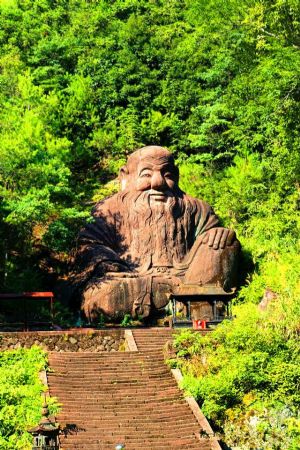
The name of Dahongpao Scenic Area comes from the mother tree of Dahongpao within the area. Dahongpao is the finest among Wuyi Rock Teas, growing in Jiulongke in the northern part of Wuyi Mountain. Currently, only a few mother trees of Dahongpao remain, making them extremely valuable. Major attractions in the scenic area include Niulankeng, Yongle Chan Temple, Dahongpao, Sanhua Peak, Leishi Rock, Matou Rock, Wuyuan Cave, and Dujie Rock. The main highlights are visiting the largest temple on Wuyi Mountain, Tianxin Yongle Chan Temple, and the legendary Dahongpao tea.
To see the Dahongpao mother tree, you’ll need to walk a bit. Along the way, on your left is the mountain cliff, and on your right are tea gardens. The terraced plots grow various tea varieties, all of which are rock teas, with Dahongpao being one of them. It’s a good opportunity to learn about the origins and types of Wuyi Rock Tea. The mother tree grows on the cliff face and no longer produces tea; even in the past, the yield was very small, reportedly reserved solely for the central government. When Nixon visited China in 1972, Chairman Mao gave him four taels, yet the annual yield of the Dahongpao mother tree is only ten taels.
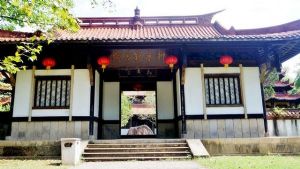
If you want to buy some regular Dahongpao tea, you can purchase it at the rest area nearby. The Dahongpao tea bags here are very popular and sell well, and there’s also tea eggs allegedly cooked with Dahongpao tea leaves. Besides the Dahongpao mother tree, another highlight of the scenic area is Yongle Chan Temple, whose architecture is grand and majestic. The temple complex includes halls such as Maitreya Hall, Heavenly King Hall, Mahavira Hall, Guanyin Hall, Dharma Hall, storage rooms, dining halls, meditation rooms, guest rooms, and pilgrim lodges. The pavilions rise majestically, appearing serene and elegant amid the surrounding trees, perfect for leisurely exploration.
Walking along the rugged path, you’ll be captivated by the beautiful scenery around you, making it hard to leave. The meaningful cliff inscriptions, rich and mellow tea culture, and profound Buddhist culture—when savored carefully—blend harmoniously with the picturesque surroundings, creating a delightful fusion of scene and mood. This is an ecological journey, a tea journey, and a cultural journey. Ancient literati left their inscriptions here, eminent monks paused here throughout history, and modern visitors find themselves lingering.
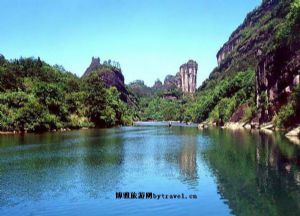
After entering Dahongpao Scenic Area, you’ll notice lush tea bushes planted along the roadside, arranged neatly yet with natural variation, blending harmoniously with the crimson cliffs and emerald waters, unique and full of charm. Wuyi Mountain has “Ten Oddities,” one of which is “every household sells tea.” People in Wuyi, young and old, are well-versed in tea culture, and when it comes to tea, they speak with great expertise. The Dahongpao tea culture tour route has become a classic among Wuyi Mountain attractions.
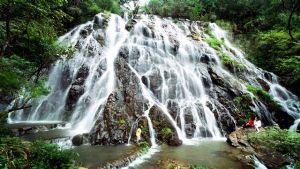
Dahongpao’s growing place: Jiulongke. Jiulongke is a deep, serene valley with rugged peaks, named after the nine dragons said to reside here. The valley is filled with scattered boulders, trickling springs, and clusters of tea bushes, creating a lively, vibrant scene—truly the “kingdom of tea.” At the last section of Jiulongke, nestled among the rocky cliffs, is a miniature tea garden built with stacked stones, where several tea bushes grow. These are the world-renowned “King of Teas”—Dahongpao tea bushes. Dahongpao earned the title of “King of Teas” due to its exceptional growing environment.
Wuyi Rock Tea has a long and glorious history in China’s tea development. As early as the Southern and Northern Dynasties, Wuyi tea was known as “Wangganhou” (a tea name). By the Tang Dynasty, it became a prized gift among scholars and nobles. In the Song Dynasty, it was presented as tribute to the imperial court, reaching its peak of popularity, becoming an everyday drink deemed “indispensable for every family.” By the Yuan Dynasty, the court established an Imperial Tea Garden by the fourth bend of the Nine-Bend Stream. Historical records state that during the Yuan Dynasty, when Pingzhang Happy from Zhejiang Provincial Administration passed through Wuyi Mountain, he tasted what was then called “Shiru” rock tea and found it fragrant, sweet, pure, and unparalleled. He immediately changed his travel plans, hired locals to gather several pounds, had it processed, and offered it to the court, earning high praise from the royal family. In the sixth year of the Dade era (1302), the court ordered Gao Jiuzhu, son of Happy and then superintendent of Shaowu Road, to oversee the production of tribute tea in Wuyi Mountain. In 1302, the court decreed the establishment of a Royal Tea Processing Bureau in Wuyi Mountain, dedicated to cultivating tea for the royal family and producing tribute tea. This bureau was located at the site of the “Imperial Tea Garden” within Dahongpao Scenic Area.
The original “Imperial Tea Garden” was entirely designed and constructed following the model of a royal tribute production site. Major structures included Renfeng Gate, Baifa Hall, Qingshen Hall, Sijing Hall, Beifang Hall, Yanjia Pavilion, as well as Tongxian Well and Hanshan Platform. The buildings were grand, luxurious, majestic, and spectacular. Every year on the Awakening of Insects, magistrates of Chongan County would go to the “Hanshan Platform” to worship the mountain god and pray for a bountiful rock tea harvest. Legend has it that one magistrate forgot the time for the worship ceremony and was punished by the emperor, losing his position and ending up back home eating plain rice, carelessly throwing away his career—a testament to how highly the court valued Wuyi Rock Tea at the time.






Share
This article is published by HowToTrip. Sharing and reposting are welcome — please credit the source.
Article URL: https://www.howtotrip.net/travel-19531
Related Articles
- Shaoxing's "Grandpa Gourd" hangs the gourds back up: "If there are too many people, we'll interact less — just take a quick look from afar"
- Chinese authorities announce "reciprocal adjustment" to Japan visa fees — single-entry visa jumps from 2,250 to 16,750 yen!
- The "health stones" carried by a traveler were found to have radiation levels exceeding safety limits by a thousand times, potentially endangering fellow passengers on the same flight. Customs issues warning!
- Shenzhen Airport Issues Late-Night Notice: Unidentified Aerial Object Detected, Causing Widespread Flight Delays!
- “They only said it cost money after I opened the box and washed it!” 200g of grapes sold for 60 yuan on a high-speed train—12306 responds!
- Can't buy an airline ticket? Denied exit? Blocked from boarding? A large number of Chinese tourists have mysteriously become "discredited individuals"
- Adverse weather and economic fluctuations impact Colombia's coffee market
- Beach bathing area responds to 2 yuan/30 seconds fee for freshwater foot rinsing: Clearly priced!
- Taking off with an improperly closed cabin door? Wing malfunction? Multiple flights made emergency returns mid-journey!
- Experience the gifts of nature! A countdown of the world’s ten most stunning coastlines