Ancient Residential Buildings of Xiamei
Ancient Residential Buildings of Xiamei

The area features beautiful mountains and clear waters, with convenient transportation. As early as the Neolithic Age, humans inhabited Xiamei Village. By the first year of the Xianping era of the Northern Song Dynasty (998 AD), it had developed into an administrative district. During the Southern Song Dynasty, the Confucian scholar Zhu Xi lectured here. With the influence of sages and the legacy of refined culture, the village has since produced many notable scholars, maintaining a long and enduring tradition of scholarship.
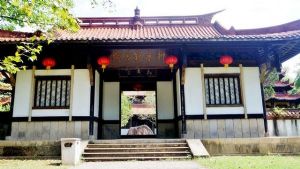
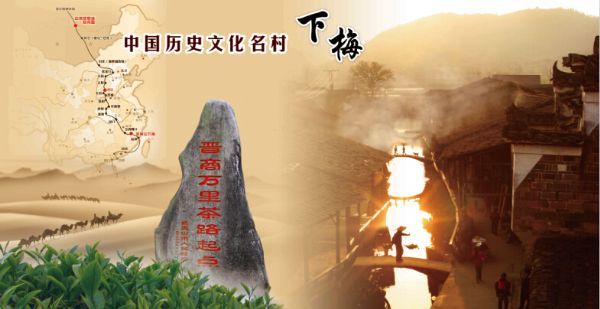
In the late Ming and early Qing dynasties, Xiamei Village was a distribution hub for the export of Wuyi Rock Tea. According to local chronicles, at its peak, over 300 bamboo rafts operated daily. More than 70 luxurious mansions were built, inhabited by wealthy families. From the preserved ancient architecture, one can still sense the prosperity of Xiamei during the flourishing Kangxi and Qianlong eras. Representative ancient residences include the residence of the Zou family’s Grand Master, the Zou Family Ancestral Hall, the retreat home of the Cheng family’s recluse, and the Confucian Hall of the Chen family. These complexes feature meticulous layouts, with east pavilions, west wings, towers, and terraces—all exquisitely designed. The exteriors are protected by tall firewalls, while brick carvings, wood carvings, stone carvings, and painted decorations showcase exceptional craftsmanship. These structures are part of the Wuyishan UNESCO World Heritage Site.
The gates of each residence are adorned with elaborate brick carvings, reflecting the wealth and luxury of the owners. Wood carvings are mainly found on windows, as well as on the brackets and spandrels of beams. The designs often feature elegant and auspicious motifs of animals, plants, and folk tales—such as “Five Blessings Descend Upon the Home,” “The Twenty-Four Filial Exemplars,” and “A Egret Brings Success in Exams.” These patterns demonstrate superb craftsmanship and carry moral teachings, vividly embodying Confucian ideals such as “loyalty and filial piety in family life, scholarship in conduct, and rising to high office.” They inspire deep admiration and reflection.
The villagers of Xiamei maintain simple and traditional customs. Activities such as paper-cutting, dragon dancing, mountain songs, and suona performances, along with exhibitions of traditional farming tools and household items, ancient workshops, wedding customs, and rustic farmhouse banquets, offer a glimpse into traditional rural life. The ever-flowing Meixi and Dangxi streams, together with the ancient village, lanes, wells, docks, markets, and timeless customs along their banks, create the quintessential charm of a southern water town with its picturesque bridges, flowing waters, and quaint homes.







Share
This article is published by HowToTrip. Sharing and reposting are welcome — please credit the source.
Article URL: https://www.howtotrip.net/travel-19478
Related Articles
- Shaoxing's "Grandpa Gourd" hangs the gourds back up: "If there are too many people, we'll interact less — just take a quick look from afar"
- Chinese authorities announce "reciprocal adjustment" to Japan visa fees — single-entry visa jumps from 2,250 to 16,750 yen!
- The "health stones" carried by a traveler were found to have radiation levels exceeding safety limits by a thousand times, potentially endangering fellow passengers on the same flight. Customs issues warning!
- Shenzhen Airport Issues Late-Night Notice: Unidentified Aerial Object Detected, Causing Widespread Flight Delays!
- “They only said it cost money after I opened the box and washed it!” 200g of grapes sold for 60 yuan on a high-speed train—12306 responds!
- Can't buy an airline ticket? Denied exit? Blocked from boarding? A large number of Chinese tourists have mysteriously become "discredited individuals"
- Adverse weather and economic fluctuations impact Colombia's coffee market
- Beach bathing area responds to 2 yuan/30 seconds fee for freshwater foot rinsing: Clearly priced!
- Taking off with an improperly closed cabin door? Wing malfunction? Multiple flights made emergency returns mid-journey!
- Experience the gifts of nature! A countdown of the world’s ten most stunning coastlines