Mount Huanggang, Wuyi Mountain
Mount Huanggang, Wuyi Mountain

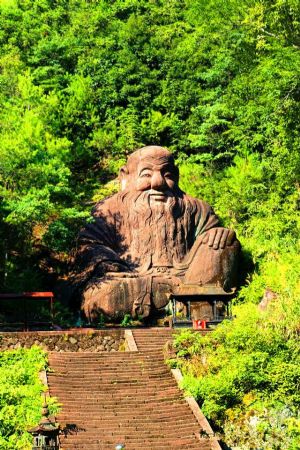
Mount Huanggang serves as the boundary mountain between Fujian and Jiangxi provinces. A boundary marker stone stands at the summit, with the highest point, 2,160.8 meters above sea level, located within Jiangxi territory. The mountain is approximately 40 kilometers from downtown Wuyishan City in Nanping and about 60 kilometers from Yanshan County in Shangrao. Its name, "Huanggang," comes from the dense growth of daylilies (commonly known as daylily flowers) on the mountaintop, which turn golden during their blooming season in August and September. In 1979, the state designated the well-preserved forests surrounding Huanggang Mountain as the Wuyishan Nature Reserve — one of the few remaining biodiversity oases at this latitude on Earth, making it an exceptionally precious ecological treasure.
The terrain of Mount Huanggang features dramatic elevation changes. Within a relatively small area of over 500 square kilometers, the altitude ranges from a minimum of 300 meters to a maximum of 2,160.8 meters, forming a vertical vegetation spectrum spanning ten kilometers. At the mountain’s base are evergreen broad-leaved forests and scattered patches of bamboo forests. As the altitude rises sharply, temperate tree species such as Huangshan pine and southern hemlock become more common, transitioning the forest vegetation from evergreen broad-leaved to mixed coniferous and broad-leaved forests. Around 1,900 meters above sea level, the landscape opens up to vast coniferous forests mainly composed of southern hemlock and Huangshan pine. Further upward, beyond 2,000 meters, low-growing evergreen and deciduous trees form the mid-mountain dwarf forest belt. The gentle slopes near the summit are covered with mid-mountain meadows dominated by grasses. From low to high elevations, these five distinct forest vegetation belts are clearly delineated, reflecting the vertical zonation of temperature, precipitation, and soil types at different altitudes.
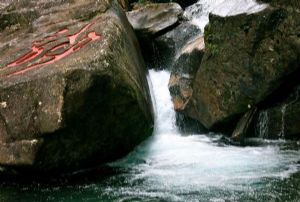
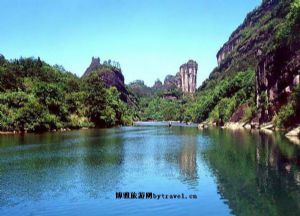
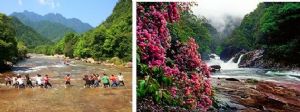
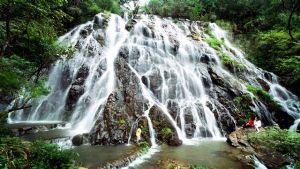
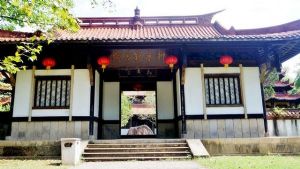
The scenic area spans a total area of over 500 square kilometers. It includes legendary sites such as Seven Star Mountain, Wangfu Mountain, Leigu Ridge, Fan’an Temple, and the Sword-Testing Stone, as well as red tourism spots like the Dongkeng historical site and the Soviet relic site of the Wang family in Shilong Village. The area also boasts some of the most intact and pristine mid-subtropical central forest landscapes in China, along with rich water resources that contribute to a diverse and vibrant ecological tourism destination. It is acclaimed as the “Kingdom of Rare Plants and the Paradise of Exotic Birds and Animals.”






Share
This article is published by HowToTrip. Sharing and reposting are welcome — please credit the source.
Article URL: https://www.howtotrip.net/travel-19017
Related Articles
- Shaoxing's "Grandpa Gourd" hangs the gourds back up: "If there are too many people, we'll interact less — just take a quick look from afar"
- Chinese authorities announce "reciprocal adjustment" to Japan visa fees — single-entry visa jumps from 2,250 to 16,750 yen!
- The "health stones" carried by a traveler were found to have radiation levels exceeding safety limits by a thousand times, potentially endangering fellow passengers on the same flight. Customs issues warning!
- Shenzhen Airport Issues Late-Night Notice: Unidentified Aerial Object Detected, Causing Widespread Flight Delays!
- “They only said it cost money after I opened the box and washed it!” 200g of grapes sold for 60 yuan on a high-speed train—12306 responds!
- Can't buy an airline ticket? Denied exit? Blocked from boarding? A large number of Chinese tourists have mysteriously become "discredited individuals"
- Adverse weather and economic fluctuations impact Colombia's coffee market
- Beach bathing area responds to 2 yuan/30 seconds fee for freshwater foot rinsing: Clearly priced!
- Taking off with an improperly closed cabin door? Wing malfunction? Multiple flights made emergency returns mid-journey!
- Experience the gifts of nature! A countdown of the world’s ten most stunning coastlines