Wuyi Palace
Wuyi Palace

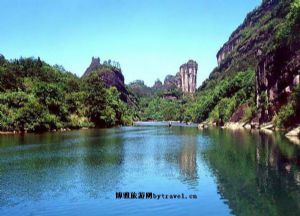
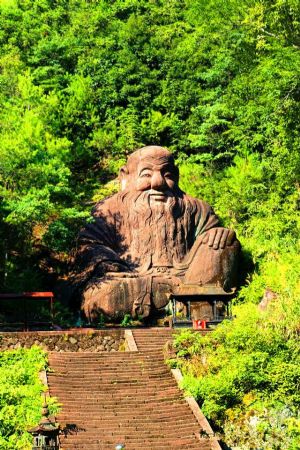
The Wuyi Palace scenic area is the core part of the Wuyishan National Scenic Area, also known as “Wuyi Palace.” The area is located at Qingchuan, the end point of the Nine Bend River rafting trip. Also called Huixian Temple, Chongyou Temple, and Ten Thousand-Year Palace, it lies at the southern foot of the Great King Peak of Wuyi Mountain, about fifteen kilometers south of Chongan County in Fujian Province. Facing the mouth of the Nine Bend River, it was historically where emperors worshipped the Wuyi God, and was one of the six most famous temples in China during the Song Dynasty.
Facing the stream and backed by beautiful peaks, with fertile fields and green rivers, and skillfully constructed buildings densely clustered, it is a gathering place for tourists. It was where emperors throughout history worshipped the Wuyi God, and was one of the six most famous scenic temples in the country during the Song Dynasty. It is the oldest palace on Wuyi Mountain, located at the foot of the Great King Peak, initially built during the Tang Dynasty’s Tianbao era (742–755). It was expanded during the Song Dynasty to over 300 rooms and bestowed the name “Chongyou Ten Thousand-Year Palace.” Every Mid-Autumn Festival, the Wuyi God and the Grand Empress Dowager were worshipped here. Currently, there are two Dragon Wells, the Ten Thousand-Year Palace, and the Three Pure Ones Hall preserved. It has been developed into a tourist attraction, featuring a Song-style commercial street, tea houses, the Zhu Xi Memorial Hall, Zhongshan Hall, and the Wanchun Botanical Garden, along with many tourism service facilities.
According to the Records of Wuyi Mountain, Wuyi Palace was first built during the Tang Dynasty’s Tianbao era (742–755), making it the oldest palace on Wuyi Mountain, with a history of over a thousand years. Initially, Wuyi Palace was not located at its current site but was built on the islet of the First Bend, known as the Tianbao Hall. In 944, during the second year of the Baoda era of the Southern Tang Dynasty, Emperor Yuanzong Li Jing moved the construction to its current location for his brother Li Liangzuo, who “retired from glory to pursue the Tao,” and named it “Huixian Temple.” After its completion, successive feudal rulers who devoutly believed in immortals spared no expense in multiple renovations and expansions of the palace, renaming it “Zhongyou Temple.”
Song Dynasty poet Xin Qiji, poet Lu You, neo-Confucianist Liu Zijun, Zhu Xi, and others all presided over Chongyou Temple. In 1328, during the fifth year of the Tai Ding era of the Yuan Dynasty, the temple was renamed a palace and called “Ten Thousand-Year Palace.” In 1439, during the fourth year of the Zhengtong era of the Ming Dynasty, the temple was destroyed in war. Although the government allocated funds for multiple renovations during the Tianshun and Chenghua eras (1457–1487), it failed to restore its former glory. In 1525, during the fourth year of the Jiajing era, the temple was again burned down, and rebuilt the following year. This is the current Wuyi Palace.
The long-standing Wuyi Palace, although renovated throughout the dynasties, could not withstand several fires and wars, leaving only a few empty rooms in the end. In recent years, with the support of tourism and cultural departments, the main hall of Wuyi Palace has been restored. The two osmanthus trees in the courtyard are relics from the Song Dynasty, ancient trees aged between 800 and 900 years. Plans to fully restore Wuyi Palace will be gradually carried out. This ancient and famous temple is bound to regain its former majesty.
Major attractions include the Wuyishan Museum, the Three Pure Ones Hall, the Great King Peak, the Manting Peak, the Lion Peak, the Bone-Changing Rock, the Three Aunts Stone, Song Street, the Zhu Xi Memorial Hall, the Liu Yong Memorial Hall, and more. It is a scenic area that integrates natural landscapes, garden architecture, and historical culture.
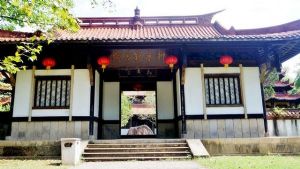
Ten Thousand-Year Palace: From Emperor Huizong to Emperor Ningzong’s Xiding era, 25 individuals including Zhu Xi, Lu You, Xin Qiji, Li Bai, and Yue Fei served as tahus (supervisors) at Chongyou Temple, managing temple affairs. Current image of Ten Thousand-Year Palace at Wuyi Palace.
This is the Zhu Xi Memorial Hall.
Three Pure Ones Hall: Now the site of the International Lanting Academy. Inside the hall are four precious stone inscriptions: the Zhongding Spirit Way Stele, the Cave Heaven Immortal Mansion, poems by Gong Yiqing from the Ming Dynasty and Guo Moruo from modern times about their visits to Wuyi.
Song-Style Street: Located at Wuyi Palace, it stretches 300 meters north to south. At the street’s entrance stands a stone archway, and at its end is an ancient gate tower, imitating the architectural style of the Song Dynasty, with the Zhu Xi Memorial Hall as its centerpiece.






Share
This article is published by HowToTrip. Sharing and reposting are welcome — please credit the source.
Article URL: https://www.howtotrip.net/travel-18605
Related Articles
- Shaoxing's "Grandpa Gourd" hangs the gourds back up: "If there are too many people, we'll interact less — just take a quick look from afar"
- Chinese authorities announce "reciprocal adjustment" to Japan visa fees — single-entry visa jumps from 2,250 to 16,750 yen!
- The "health stones" carried by a traveler were found to have radiation levels exceeding safety limits by a thousand times, potentially endangering fellow passengers on the same flight. Customs issues warning!
- Shenzhen Airport Issues Late-Night Notice: Unidentified Aerial Object Detected, Causing Widespread Flight Delays!
- “They only said it cost money after I opened the box and washed it!” 200g of grapes sold for 60 yuan on a high-speed train—12306 responds!
- Can't buy an airline ticket? Denied exit? Blocked from boarding? A large number of Chinese tourists have mysteriously become "discredited individuals"
- Adverse weather and economic fluctuations impact Colombia's coffee market
- Beach bathing area responds to 2 yuan/30 seconds fee for freshwater foot rinsing: Clearly priced!
- Taking off with an improperly closed cabin door? Wing malfunction? Multiple flights made emergency returns mid-journey!
- Experience the gifts of nature! A countdown of the world’s ten most stunning coastlines