Bijie National Forest Park Gonglongping Scenic Area
Bijie National Forest Park Gonglongping Scenic Area
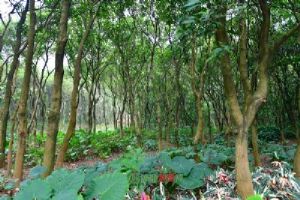
Guizhou Bijie National Forest Park is located within the territory of Bijie City. Situated in the heart of the Wumeng Mountains on the northwestern edge of Guizhou, it ranges in elevation from 1,435 to 2,217 meters, with a total area of 4,133 hectares and a forest coverage rate of 91.5%. It consists of three scenic areas: Gonglongping, Baimashan, and Wuqingling. Among them, Gonglongping Scenic Area is located in the southwestern part of Bijie City, covering an area of 1,718 hectares and situated 32 kilometers from downtown Bijie and 186 kilometers from Guiyang. Baimashan Scenic Area is located in the central part of Bijie City, covering 1,559 hectares and just 15 kilometers from the city center. Wuqingling Scenic Area lies in the southern part of Bijie City, with an area of 856 hectares and 50 kilometers from the city center. In December 2005, it was approved as a national forest park by the State Forestry Administration under document No. [2005]963. In December 2009, it was rated as a National 2A-level Tourist Attraction. In April 2010, it was approved as a National Defense Education Outdoor Military Training Base.
The park features distinctive forest characteristics and a rich variety of landscapes. Its forest vegetation mainly consists of coniferous forests and secondary forests. Tall and straight Masson pines stand like green waves; lush and orderly fir forests spread out as far as the eye can see; azaleas and camellias dot the woods, creating vibrant floral displays. Wuqingling’s secondary forests blanket the mountains and hills, bamboo groves fill valleys, dwarf Masson pine forests resemble potted landscapes, and peculiar rocks and trees look like naturally formed stumps. Each season is distinct, and the scenery varies from morning to night, rain or shine: sunrise over Wuqingling spreads dawn light across the Wumeng Mountains, sunset over Gonglongping bathes the forests in evening glow, the sea of clouds in Fanying Stream resembles solidified cream, and mist in Leiyin Valley shrouds the fields. Lawns nestle in mountain valleys, wildflowers cover the hillsides, rabbits roam the mountains, and birds sing in the blue sky. The moon casts magical shadows, while winter brings sparkling frost and icicles. It’s a naturally formed forest ecological painting.
The park combines the essence of natural, cultural, and celestial landscapes, integrating rare plants and animals, caves, streams, waterfalls, and ethnic customs. With unique scenery and convenient transportation, it is a composite landscape forest park. There are 62 scenic spots in total, including 57 natural spots and 5 cultural spots. Among them, there is 1 top-tier spot, 4 first-tier spots, 7 second-tier spots, 14 third-tier spots, and 36 fourth-tier spots.
The park is home to the “Leiyin Hall,” known as the “No. 1 Karst Hall in the World.” It is a natural landscape in the Leiyin Valley touring area. The area features the Yejiao Fault and extensive limestone exposures across two ridges and one valley. Over millions of years of erosion, these have formed numerous stunning and lifelike karst wonders—the Leiyin Valley Landscape Group. This includes the top-tier Leiyin Hall; first-tier Leiyin Valley and Shentouzhu (Divine Gate Pillar); second-tier Tienshen Stone (Heavenly God Stone) and Fozu Rock (Buddha Rock); third-tier Leiyin Cave, among others.
Top-tier Spot – Leiyin Hall:
Locally known as Yejiao Valley, it is located at the northern end of Gonglongping Scenic Area, in the northern section of Leiyin Valley. After passing Shentouzhu and turning northeast, it lies at the end of a blind valley, beyond a lawn approximately 150 meters long and 50 meters wide. Formed by crustal movement and years of wind and water erosion, this extraordinary rock shelter stands about 80 meters high and 100 meters wide, with a semicircular roof. Beneath the shelter is a hall about 50 meters deep. Between the steep cliffs of the shelter, nature has, through unknown means and over untold time, sculpted a vivid, life-sized statue of the Buddha about 10 meters tall. To the left of the Buddha Rock in Leiyin Hall, about 5 meters above the ground, is a karst cave called Leiyin Cave. The cave has multiple levels, with caves within caves and interconnected passages, resembling a maze that extends endlessly, with the sound of underground river water echoing inside. On the lawn to the left and below the Buddha Rock sits a yellow rock, Tian Shen Shi (Heavenly God Stone), which is attached to the cliff. It strikingly resembles a divine general wearing a helmet, golden armor, with arms outstretched, as if awaiting orders. The resemblance is uncanny, mysterious, and otherworldly. To the southwest of Leiyin Hall, two towering stone pillars rise on either side of the valley, resembling the sacred gate pillars in front of the hall. One pillar is about 100 meters high and 5 meters in diameter, the other about 80 meters high and 20 meters in diameter. These two majestic pillars stand facing each other like celestial gate pillars, hence named “Shentouzhu (Divine Gate Pillars).” The entire landscape resembles the Buddha’s divine hall in the legendary Thunder Sound Temple of the Western Paradise. The miraculous craftsmanship of nature is truly awe-inspiring.
First-tier Spots: Mainly include four landform landscapes—Leiyin Valley, Shentouzhu (Divine Gate Pillar), Qimu Guai Shi Yuan (Garden of Strange Trees and Rocks), and Tuntianjing (Heaven-Swallowing Well).
Leiyin Valley is located in the northwest of Gonglongping Scenic Area. It is a blind valley formed when surface runoff disappears into the valley floor, becoming an underground river. It is named after the Leiyin Hall at the valley’s end. The valley is about 3,000 meters long, with a relative elevation difference of 100–300 meters. Both sides of the valley are cliffs, while the valley floor is flat and covered with grass and flowers, forming a large lawn about 500 meters long and 50–100 meters wide. The end of the valley features a mysterious and extraordinary karst landscape group.
Qimu Guai Shi Yuan (Garden of Strange Trees and Rocks) is located at the northern edge of the lawn at the foot of Guanyin Rock in the southeastern part of Wuqingling Scenic Area. It is a natural bonsai garden covering about 30 hectares. The garden is filled with oddly shaped rocks of various sizes, resembling animals, human figures, or objects. Among and atop these rocks grow thousands of ancient and uniquely shaped trees, some over a hundred years old. The trees range from 0.5 to 10 meters in height, most sprouting from stumps and growing around or embracing the rocks. Many shoots grow in great numbers with peculiar forms—some resembling dinosaurs or monsters, others like standing lions or seated elephants, some like coiled dragons or giant lizards, some clustered in groups forming green painted screens, some entwined with vines and ancient trees depending on each other for survival, some with hollow trunks like carved vases, and some stump shoots reviving like withered trees in spring... Each is a natural bonsai masterpiece.
Tuntianjing (Heaven-Swallowing Well),
also known as a sinkhole, is located at the northwest end of the scenic area. It is a karst wonder—a large collapse-type doline. The sinkhole is surrounded by four mountains. The opening is about 400 meters from north to south and 150 meters from east to west, with a depth of about 200 meters, resembling a massive vertical shaft. Standing at the bottom and looking up, the sky appears narrow, with cascading waterfalls and an overwhelming sense of grandeur, evoking the feeling of a giant mouth swallowing the heavens or a dragon diving into the earth. The bottom and cliffs of the pit are covered with lush vegetation, and the area boasts a rich collection of attractions, including the Tongtian Diepu (Sky-Reaching Cascading Waterfall), Tianwang Zhang (Heavenly King’s Palm), Yuxu Tai (Jade Void Platform), Wulong Gu (Five Dragons Valley), Tianzi Yan (Heaven Character Rock), Wudi Dong (Bottomless Cave), and Chuantian Feng (Sky-Piercing Seam). Wulong Gu is located at the bottom of the sinkhole, consisting of five deep valleys connected to the mountain and forming openings to the shaft, resembling five giant dragons coiled around the bottom—hence the name “Wulong Gu.” Chuantian Feng is located on the southern side inside Tuntianjing. Cliffs stand close together, separated by just over 1 meter, forming a rock seam about 100 meters high that lets in a sliver of sky. On sunny days, sunlight shines directly through the seam to the valley floor, hence the name “Chuantian Feng.” Tongtian Diepu is located on the eastern cliff of Tuntianjing. The Fangcao Stream and Luohua Stream converge at the cliff top before plunging about 300 meters in two tiers, creating the park’s most spectacular dynamic water feature. The first tier (about 50 meters) splits the waterfall flow over Yuxu Tai into three streams. The second tier drops 250 meters straight down to the sinkhole floor, eroding the limestone cliff into three semi-circular tubes. Viewed from the bottom, the waterfall seems to reach the sky. During the wet season, the roaring waterfall echoes through the valley; in the dry season, it resembles rain or mist, and in the coldest days, ice waterfalls glisten. Tianzi Yan is located on the southern side of Tuntianjing. A sheer white cliff, smooth as jade, bears dark natural patterns forming the three bold clerical script characters “石一古” (Stone One Ancient), centrally framed in a rectangular rock outline—it’s quite unique. Tianwang Zhang is located on Yuxu Tai in the northeast of Tuntianjing. Over millions of years of water erosion and dissolution, the rock platform has been carved into a giant footprint resembling five toes. Legend says it’s the footprint left by Zhu Bajie when he chased a demon that fled into the bottomless cave of Tuntianjing. Yuxu Tai is located on the eastern side of Tuntianjing and is the first-level rock platform of the Tongtian Waterfall. Viewed from the sinkhole floor, the rock ledge appears like a heavenly altar—hence the name “Yuxu Tai.” The entire Tuntianjing area, from rim to walls to floor, is covered with lush vegetation. Among the park’s four first-tier spots, it stands out for its majestic presence.
Share
This article is published by HowToTrip. Sharing and reposting are welcome — please credit the source.
Article URL: https://www.howtotrip.net/travel-17484
Related Articles
- Shaoxing's "Grandpa Gourd" hangs the gourds back up: "If there are too many people, we'll interact less — just take a quick look from afar"
- Chinese authorities announce "reciprocal adjustment" to Japan visa fees — single-entry visa jumps from 2,250 to 16,750 yen!
- The "health stones" carried by a traveler were found to have radiation levels exceeding safety limits by a thousand times, potentially endangering fellow passengers on the same flight. Customs issues warning!
- Shenzhen Airport Issues Late-Night Notice: Unidentified Aerial Object Detected, Causing Widespread Flight Delays!
- “They only said it cost money after I opened the box and washed it!” 200g of grapes sold for 60 yuan on a high-speed train—12306 responds!
- Can't buy an airline ticket? Denied exit? Blocked from boarding? A large number of Chinese tourists have mysteriously become "discredited individuals"
- Adverse weather and economic fluctuations impact Colombia's coffee market
- Beach bathing area responds to 2 yuan/30 seconds fee for freshwater foot rinsing: Clearly priced!
- Taking off with an improperly closed cabin door? Wing malfunction? Multiple flights made emergency returns mid-journey!
- Experience the gifts of nature! A countdown of the world’s ten most stunning coastlines