Mount Echeng
Mount Echeng
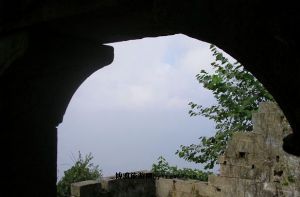
Located at the junction of Dongxiang Town, Tiansheng Town, and Bajiao Town in Xuanhan County, Dazhou City, Sichuan Province
Contact number: 0818-5228923
Brief overview: The falling azaleas’ graceful charm and the noble spirit of the bamboo sea together compose the delightful melody of Mount Echeng. Mount Echeng is a place rich in cultural heritage. In ancient times, there was a saying, “West has Mount Emei, East has Mount Echeng.” Not to mention its towering peaks stretching far and wide that form an impregnable barrier of “one man at the pass can hold off ten thousand,” the title “First Major Pass to the West” alone is widely known. Though it may not possess the elegance of Mount Emei, the steepness of Mount Qingcheng, or the altitude of Mount Gongga, its peril and charm captivate you, allure me!
Attraction Introduction:
With over 5,000 acres of forests and bamboo woods, Mount Echeng is also known as the Echeng Bamboo Sea Park. It is situated in the Echeng Mountain Range in the southeastern part of Xuanhan County, approximately 22 kilometers from Xuanhan County town and 40 kilometers from the main urban area of Dazhou City. The average elevation here is 960 meters, with an annual average temperature of 14.5 degrees Celsius, offering views such as “misty clouds and seas of mountains creating sudden wonders; listening to the pine waves under the moon echoing through the valley; rain tapping on the bamboo forest, sounding crisp like a zither; streams murmuring amid overlapping mountain ridges.” It is not only a summer retreat but also a natural oxygen bar—truly a rare “geographically blessed land.”
During the Jiaqing era of the Qing Dynasty, Qing troops fought a three-day-and-three-night bloody battle with nearly ten thousand White Lotus Rebellion forces defending near Mount Echeng, after which the rebels broke through and fled. In 1933, General Xu Shiyou led his troops from Kaijiang to capture Mount Echeng, engaging in a seven-day-and-seven-night fierce battle with 200,000 troops of the Communist Suppression Commander Liu Xiang at Bao Ta Dam, inflicting heavy casualties of three to four thousand enemies. There is also a long-standing legend that the Han Dynasty general Fan Kuai once stationed troops here, building a fortress on the steep terrain. One of his strategists, named Echeng, became so enchanted by the area’s wondrous mountains, exotic waters, and beautiful scenery that he grew weary of worldly life and the mundane world. He abandoned military service and official rank to live in seclusion here. Later, he built temples, devoted himself to spiritual practice, attained enlightenment, and became immortal—thus giving the mountain its name, Mount Echeng.
Vast fields of nanmu bamboo and white bamboo have turned Mount Echeng into a sea of bamboo, earning it the reputation of “Bamboo Sea of Eastern Sichuan, Natural Oxygen Bar.”
When spring just begins to shed the cold, bamboo roots break through the soil like handsome youths reaching for the sky, brimming with boundless vitality. In the gentle spring breeze, bamboo shoots shed their layers of sheaths, resembling lively young girls standing gracefully in the bright spring scenery. Wandering through this bamboo sea, stepping on the soft bamboo leaves, you may try to see to the edge of the sea—but it remains out of reach.
Of course, besides the lush green bamboo sea, the area is also filled with bamboo culture. There are bamboo banquets, bamboo art museums, bamboo tourism products, and even the tourism center for purchasing these products is a bamboo house. The Bamboo Culture Performance Corridor in Echeng Square is entirely built from bamboo. Though not elaborately decorated, it features fine carvings, slightly upturned eaves, and especially vividly carved dragons along the eaves—truly lifelike.
Azaleas, known as the “Beauty of Paintings,” were praised by the Tang Dynasty poet Bai Juyi: “I pluck two sprigs at leisure and hold them in my hand, examining closely—nothing in the human world compares. Among flowers, this one is the beauty; lotus and peony are plain women.”
Mount Echeng, with its mid-to-high altitude and cool, moist climate, is ideal for azalea growth. Over 20 colors and varieties of azaleas—red, purple, yellow, white, pink, blue—compete in splendor across the mountain’s ridges and valleys. As the boundless spring light pours down, the azaleas burst into bloom in vibrant hues, elegantly arranged and full of charm. Standing at the viewing platform and gazing over the vast Mount Echeng, you’ll see azaleas scattered throughout, adorning the landscape in various forms, dressing the entire mountain in a fashionable coat. The flowers are overwhelmingly beautiful.
“Thousands of peaks cradle Mount Echeng; golden fortresses layered in green spread the civilization of the Ba Kingdom; myriad bamboos look up to the general; iron-willed integrity promotes the virtue of the Han. In this bustling world, who is the hero? Do not look back—youth as your companion, dance together in the open sky. Gaze upon Mount Echeng, ascend Mount Echeng, savor Mount Echeng—not I, not yet complete, not stopping, not moving forward; clouds roll and unfold, beyond the city lies a naturally splendid realm. View the bamboo sea, listen to the bamboo sea, wander the bamboo sea—it is bamboo, it is sea, benevolent and embracing, tides rise and fall, within the seas a naturally formed thousandfold world.” Mount Echeng, a shining pearl of Bashu Three Kingdoms culture and an emerald gem of ecological beauty nestled in the heart of Sichuan, now sways gracefully, calling out to travelers around the world. Friends, what are you waiting for? Go experience Mount Echeng now!
Share
This article is published by HowToTrip. Sharing and reposting are welcome — please credit the source.
Article URL: https://www.howtotrip.net/travel-15399
Related Articles
- Shaoxing's "Grandpa Gourd" hangs the gourds back up: "If there are too many people, we'll interact less — just take a quick look from afar"
- Chinese authorities announce "reciprocal adjustment" to Japan visa fees — single-entry visa jumps from 2,250 to 16,750 yen!
- The "health stones" carried by a traveler were found to have radiation levels exceeding safety limits by a thousand times, potentially endangering fellow passengers on the same flight. Customs issues warning!
- Shenzhen Airport Issues Late-Night Notice: Unidentified Aerial Object Detected, Causing Widespread Flight Delays!
- “They only said it cost money after I opened the box and washed it!” 200g of grapes sold for 60 yuan on a high-speed train—12306 responds!
- Can't buy an airline ticket? Denied exit? Blocked from boarding? A large number of Chinese tourists have mysteriously become "discredited individuals"
- Adverse weather and economic fluctuations impact Colombia's coffee market
- Beach bathing area responds to 2 yuan/30 seconds fee for freshwater foot rinsing: Clearly priced!
- Taking off with an improperly closed cabin door? Wing malfunction? Multiple flights made emergency returns mid-journey!
- Experience the gifts of nature! A countdown of the world’s ten most stunning coastlines