Shengshui Peach Blossom Garden Scenic Area
Shengshui Peach Blossom Garden Scenic Area
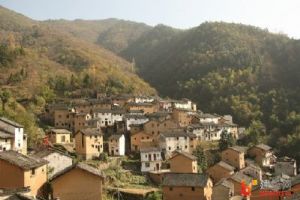
Standing atop Dingjialiang in Shengshui Village, at an altitude of over 1,000 meters, one can gaze into the distance to see vast seas of clouds and a panorama of countless mountains and valleys stretching out before the eyes. Looking around, four ancient fortresses stand majestically, facing each other from afar. On clear spring mornings with gentle breezes and bright sunshine, one can admire the expansive mountain sea of clouds and the spectacular sunrise in the east. Nestled below Dingjialiang are the two ancient villages of Tahé and Chahé, whose modern townships sparkle like two pearls on either side of the ridge. Among the mountains, scattered farmsteads lie nestled within bamboo groves, arranged in picturesque disorder, with wisps of cooking smoke curling up. The paddy fields shimmer under the spring sunlight, glinting like gold; a warm breeze drifts through, accompanied by the sounds of mountain winds, crowing roosters, mooing cattle, and chirping birds. A crystal-clear stream winds its way from Tahé Township, flowing from east to west along the foot of Lüzou Fortress, twisting like a jade ribbon. What a peaceful rural mountain scene, what a tranquil landscape of green hills and clear waters!
Looking northwest from Dingjialiang, across the river rises a towering mountain that is sometimes shrouded in drifting clouds, resembling a fairyland from Penglai; at other times, when the clouds part, the lush green peaks appear; and occasionally, when bathed in radiant sunlight, the mountains are gilded in gold—especially striking are the blooming cherry blossoms scattered among them, looking from afar like piles of dazzling white snow. Turning around and standing atop the lofty Lüzou Fortress, the view suddenly opens up before you: a giant “fan” elegantly unfurls. The towering Lüzou Fortress is like the handle of the fan, while the over 2,000-acre red-flesh kiwifruit base—formed by three contiguous villager groups—spreads out in a semi-circular slope down the mountain. On this “giant fan,” rows of neat cement pillars supporting the red-flesh kiwifruit plants resemble silk quilts covering the land; wide cement roads cut through these like golden ribbons, dividing the quilt into uneven sections; and small Western-style houses with gray-tiled roofs and white walls are dotted throughout... In this moment of pure joy, inspiration strikes—you are looking at a beautiful landscape painting!
Backed by Lüzou Mountain, Shengshui Village sits at an elevation of 1,038 meters. On the mountain stands Lüzou Fortress, a stone-built stronghold constructed during the Xianfeng era of the Qing Dynasty. Following a tree-lined ridge and ascending gently along a winding path, you will reach the fortress. Once there, a network of crisscrossing shaded paths connects every corner of the mountain stronghold, resembling a vast net spread over the emerald-green terrain. Beside the paths, under the shade of trees, you’ll find rustic farm tools like stone mills, stoves, tables, stools, bowls, and chopsticks, along with fresh vegetables, free-range chickens and ducks, fragrant cured pork, dense groves of trees, refreshing air, and warm sunlight—all combining to create a comfortable leisure and wellness environment on Lüzou Fortress. When you’re tired from walking, a cup of farm-brewed tea refreshes the soul; when hunger strikes, several dishes of green, organic vegetables make your mouth water; and when poetic inspiration hits, a glass of homemade sorghum liquor fuels your creativity. Dishes like tender yet richly flavored cured pork sausages, the famously delicious Xuanhan tofu, the bright-red oil-infused Nánbà beef, the aromatic mutton skewers, and uniquely flavored farmhouse stir-fries—all these mountain specialties delight the eyes, tantalize the taste buds, and nourish the heart. “On sunny days, dozens of cars come here for fun,” the village Party secretary laughs heartily, adding, “Now, with targeted poverty alleviation efforts, we’ve consolidated thousands of acres of land, attracted investors to build two fruit bases growing red-flesh kiwifruit, green plums, crispy red plums, and Qínwáng peaches. In another year or two, not only will our natural scenery be breathtaking, but we’ll also integrate leisure, sightseeing, and hands-on experiences—making it even more delightful.”
At the top of Lüzou Fortress stands an ancient temple, towering into the sky. Villagers often come here to burn incense, with wisps of smoke lingering in the air. They pray for favorable weather, the health of loved ones, or the prosperity of their families and the nation. According to the village Party secretary, from the strategically impregnable Lüzou Fortress, one can still see the ancient fortress gate and the couplet inscribed on it—the surviving lower line reads: “The gate faces the rising sun in the east.” In addition, remnants of a beacon tower, stone carvings, steles, and plaques can still be found at the site.
Descending the mountain, as you walk along the winding cement paths in the fruit base that exude the fresh scent of soil, you’ll be awestruck by the sheer scale of the plantation. Endless rows of red-flesh kiwifruit seedlings stand in orderly formation, like rows of green-clad sentinels, welcoming you with military precision. Against the backdrop of blue skies and white clouds, two-story white-walled, gray-roofed villas are scattered neatly and elegantly; newly paved village roads, group roads, and farm roads weave like ribbons, connecting every household and field. Along the roadsides and in the fields, expanses of rapeseed flowers bloom vibrantly, shining like a golden ocean; the fragrance is intoxicating, the breeze refreshing, and the mood uplifting...
The fame of Shengshui Village stems from the nearby Shengshui Temple. Though not large, the temple once had at least seven ancient cypresses, each over a meter in diameter and requiring several people to encircle—some of which are over 200 years old. Today, three remain. Beneath the cypresses is a dragon’s mouth from which clear spring water has flowed year after year, month after month, day after day, warm in winter and cool in summer, never ceasing even in the driest droughts. Next to Shengshui Temple stands a modern water plant. Secretary Li says that no matter how dry the weather gets, the ancient well water continues to flow uninterrupted. Several visitors couldn’t help but scoop up a handful of water from a pipe near the temple’s entrance—its taste was fresh, sweet, and refreshing, invigorating the whole body.
Shengshui Village in Chahexiang Township has undergone a remarkable transformation—from a once impoverished and desolate “lonely bachelor’s backwater” to a vibrant and thriving “happy and beautiful new village.” Now, it opens its warm and passionate arms to welcome your visit. Once you come, you won’t want to leave—Shengshui Village!
Share
This article is published by HowToTrip. Sharing and reposting are welcome — please credit the source.
Article URL: https://www.howtotrip.net/travel-15368
Related Articles
- Shaoxing's "Grandpa Gourd" hangs the gourds back up: "If there are too many people, we'll interact less — just take a quick look from afar"
- Chinese authorities announce "reciprocal adjustment" to Japan visa fees — single-entry visa jumps from 2,250 to 16,750 yen!
- The "health stones" carried by a traveler were found to have radiation levels exceeding safety limits by a thousand times, potentially endangering fellow passengers on the same flight. Customs issues warning!
- Shenzhen Airport Issues Late-Night Notice: Unidentified Aerial Object Detected, Causing Widespread Flight Delays!
- “They only said it cost money after I opened the box and washed it!” 200g of grapes sold for 60 yuan on a high-speed train—12306 responds!
- Can't buy an airline ticket? Denied exit? Blocked from boarding? A large number of Chinese tourists have mysteriously become "discredited individuals"
- Adverse weather and economic fluctuations impact Colombia's coffee market
- Beach bathing area responds to 2 yuan/30 seconds fee for freshwater foot rinsing: Clearly priced!
- Taking off with an improperly closed cabin door? Wing malfunction? Multiple flights made emergency returns mid-journey!
- Experience the gifts of nature! A countdown of the world’s ten most stunning coastlines