Xuanhan Guanyin Mountain Forest Park
Xuanhan Guanyin Mountain Forest Park
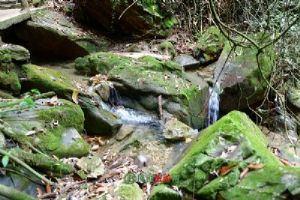
Address: Baishu Town, Xuanhan County, Dazhou City, Sichuan Province
Contact Number: 0818-5220889
Brief Overview: The Guanyin Mountain Provincial Forest Park consists of “ten mountains, one plateau, ten valleys, and eight entrances,” with a forest coverage rate of 95%. It features dense forests, diverse peaks, murmuring streams, a mysterious drought sea, enchanting caves, ancient animal and plant fossils, the ruins of Baogai Temple at the mountaintop, as well as sites of Red Army battles, the White Lotus Sect uprising, and the legendary tale of the Child-Making Pit. There are also beautiful forests of red, white, and purple azaleas, abundant wildlife, sunrises, sunsets, rainbows, snowscapes, and other landscapes that integrate vegetation, nature, water bodies, and celestial phenomena.
Park Introduction:
The Guanyin Mountain Provincial Forest Park is located at the southern foot of the Daba Mountains in the northeast of the Sichuan Basin, in Baishu Town, Xuanhan County, Dazhou City, covering an area of 24,488 mu, with the highest elevation at 1,058.6 meters. The terrain is mainly low mountains and hills, and it lies within the mid-subtropical humid monsoon climate zone.
The forest park is known for its rich natural landscapes, characterized by being “unique,” “beautiful,” “ancient,” “secluded,” and “mysterious.” Standing atop the mountain, watching the sunrise in the morning is “just like Mount Emei,” while enjoying the sunset in the evening brings a radiant Buddha’s halo. Its dense forests, varied peaks, murmuring streams, mysterious drought sea, enchanting caves, and marine animal and plant fossils... together form a series of mysterious, serene, beautiful, and fantastical natural landscapes. Spring brings especially vibrant azaleas, summer is perfect for admiring green pines, autumn showcases red maple leaves covering the mountains, and winter is graced with snow blanketing the lush greenery. All four seasons offer views of spectacular sights such as sunrises and sea of clouds. The park is home to abundant animal resources, including over 200 species of forest insects, rich and diverse vegetation, fresh air with high negative oxygen ion content, and wild medicinal herbs scattered throughout the mountains.
Guanyin Mountain Forest Park is not only an ecotourism destination but also holds historical value and rich cultural heritage. The myths and legends of Guanyin Mountain, the legendary tales of Shenlong Palace, the ruins of Baogai Temple at the mountaintop, the sites of Red Army battles, and the “White Lotus Sect” uprising all bear witness to historical imprints.
Azalea Forest: Xuanhan Guanyin Mountain Provincial Forest Park is home to many wild tree azaleas, covering an area of more than 8,000 mu, with the core area spanning 1,500 mu. Identified by experts from the Provincial Forestry Academy, there are over twenty varieties, including deep red, light red, rose, purple, light purple, and other colors of azaleas, as well as pink-white, snow-white, and purple azaleas that bloom before their leaves emerge. When the azaleas bloom in spring, they cover the mountains in vibrant hues, resembling colorful clouds swirling around the forest, with reds, whites, and purples intermingling as they compete in beauty—an absolutely stunning sight. From April 26 to May 5, 2010, the “First China·Sichuan·Xuanhan Azalea Festival” was successfully held under the auspices of the county party committee and government—bringing people closer to nature and celebrating the beauty of azaleas. Viewing period: early March to early May. Best viewing time: mid to late April.
Fossils: Guanyin Mountain belongs to the Echeng Mountain Range. Two hundred million years ago, it was a shallow lake. Through crustal changes, it has formed pure white, crystal-clear marine shell fossils. The park also houses a large number of rooster fossils, isatis root fossils, large tree root fossils, and more, collectively presenting a living textbook on the origin and evolution of life, making it a base for science education.
Baogai Temple Ruins: Also known as Baogai Chan Monastery, it was first built during the Tang Dynasty, located at the mountaintop of Guanyin Mountain, at an elevation of 1,058 meters, covering an area of over 2,000 square meters. It sits at the junction of Xuanhan County, Daxian County, and Kaijiang County, hence the saying “a rooster’s crow can be heard in three counties.” The temple originally had four main halls: the Jade Buddha Hall, Guanyin Hall, Samantabhadra Hall, and Elephant Hall, each further divided into smaller halls such as the Great Buddha Hall, Patriarch Hall, Bamboo Hall, and Duoduo Hall. The stone carvings and inscriptions inside the halls feature exquisite craftsmanship, with inscriptions and paintings as vivid as new. Legend has it that one early morning long ago, an eagle flew from Miaoziling to the mountaintop, perched there for three days and nights without eating or moving. The villagers regarded it as a divine sign and thus initiated the construction of a temple for the sacred eagle. Monks tilled vegetable gardens, incense burned incessantly in the temple, with the fragrance wafting through the air, while Guanyin Bodhisattva sat smiling on the lotus throne, attracting throngs of worshippers whose prayers were remarkably answered. According to the legend, a thief who fled under the cover of darkness to Baogai Temple leaned against a stone-carved pig statue and was frightened to death on the spot by the statue’s “hehe” laughter. Since then, the tales of “punishing evil and promoting good, healing the sick and saving lives” have been passed down. People suffering from headaches would touch the head of the pig statue and find relief, while those with stomach pain would touch its belly and be cured.
: The tourist road from Xuanhan County to the park is fully paved with cement and asphalt, allowing vehicles to reach the scenic area in just one hour. Roads within the park are smooth and safe, with connections to Daxian County, Kaijiang County, and other areas. National Highway 210, the Xiangyu Railway, and Provincial Highway Liangshuang all run through Xuanhan. The Dazhou–Shaanxi Expressway passes through the county, while the Dazhou–Wanzhou Expressway runs through the park. Travel route: Chengdu – Dazhou (374 km, 2 hours 40 minutes by train) – Baishu Town, Xuanhan County – Guanyin Mountain Forest Park. Chongqing – Dazhou (255 km, via highway, 3-hour drive) – Baishu Town, Xuanhan County – Guanyin Mountain Forest Park. The park is 36 km from Dazhou City, 40 km from Heshi Airport in Dazhou, and 45 km from Xuanhan County, all accessible via cement and asphalt roads.
Share
This article is published by HowToTrip. Sharing and reposting are welcome — please credit the source.
Article URL: https://www.howtotrip.net/travel-15351
Related Articles
- Shaoxing's "Grandpa Gourd" hangs the gourds back up: "If there are too many people, we'll interact less — just take a quick look from afar"
- Chinese authorities announce "reciprocal adjustment" to Japan visa fees — single-entry visa jumps from 2,250 to 16,750 yen!
- The "health stones" carried by a traveler were found to have radiation levels exceeding safety limits by a thousand times, potentially endangering fellow passengers on the same flight. Customs issues warning!
- Shenzhen Airport Issues Late-Night Notice: Unidentified Aerial Object Detected, Causing Widespread Flight Delays!
- “They only said it cost money after I opened the box and washed it!” 200g of grapes sold for 60 yuan on a high-speed train—12306 responds!
- Can't buy an airline ticket? Denied exit? Blocked from boarding? A large number of Chinese tourists have mysteriously become "discredited individuals"
- Adverse weather and economic fluctuations impact Colombia's coffee market
- Beach bathing area responds to 2 yuan/30 seconds fee for freshwater foot rinsing: Clearly priced!
- Taking off with an improperly closed cabin door? Wing malfunction? Multiple flights made emergency returns mid-journey!
- Experience the gifts of nature! A countdown of the world’s ten most stunning coastlines