Yangxia Village
Yangxia Village
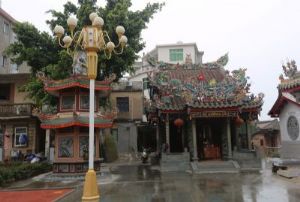
Yangxia Village is divided into five communities—east, west, south, north, and central—where 24 newly renovated ancestral halls of varying sizes are located. At the central community sit the 1,000-year-old Shrine of General Fang Zizhong, the first-generation Fang ancestor in Zhangzhou, and the 700-year-old Fang Family Ancestral Temple “Xiaosi Hall.” These stand solemnly, exuding an air of ancient refinement. Beside them are smaller branch ancestral halls such as Zhiai Hall, Xianzheng Hall, Tai Nan Fang Ancestral Residence, and Shaojing Hall, forming a rare and spectacular cluster of ancestral halls.
Among them, the most famous is the Fang Family Ancestral Temple with the hall name “Xiaosi Hall.” Originally built in the early Ming Dynasty, this ancestral hall has a history of 600 years, covering an area of 2,000 square meters with a built-up area of 900 square meters. It serves as the common ancestral temple for both local Fang descendants in Yunxiao and those who have migrated elsewhere. Inside the main hall, wooden plaques inscribed with titles such as “jinshi” and “juren” bear witness to the glory of the Fang descendants.
As a historic and ancient village, Yangxia Village also carries a rich and profound cultural heritage. Many of its traditional buildings embody the essence of architectural craftsmanship and historical features of both southern Fujian and Taiwan. The roofs of these earthen-and-timber structures feature various artistic styles such as “hip-and-gable,” “flush gable,” and “hard gable.” The roof ridge designs of the village’s buildings are also notably intricate, serving as important historical evidence for studying the folk culture and historical humanistic connections between both sides of the Taiwan Strait.
Moreover, many of the time-honored customs passed down through generations of villagers have been included in national, provincial, and municipal “Intangible Cultural Heritage” lists. Examples include the “Mirror the King” ceremony and large-bowl feast during the “Patrol of King Koxinga” prayer festival on the 13th day of the first lunar month; the “City Patrol and King Procession” rituals; the Dragon Boat Festival customs held every early May, such as recommending drums to summon the dragon, beating calabash boats, and dragon boat races; and the local Hua Chao Festival (commonly called “Pulling Out of the Garden”) on the 15th day of the third lunar month—all of which have been observed since ancient times without interruption.
Source: Fujian Provincial Tourism Development Commission
Share
This article is published by HowToTrip. Sharing and reposting are welcome — please credit the source.
Article URL: https://www.howtotrip.net/travel-11388
Related Articles
- Shaoxing's "Grandpa Gourd" hangs the gourds back up: "If there are too many people, we'll interact less — just take a quick look from afar"
- Chinese authorities announce "reciprocal adjustment" to Japan visa fees — single-entry visa jumps from 2,250 to 16,750 yen!
- The "health stones" carried by a traveler were found to have radiation levels exceeding safety limits by a thousand times, potentially endangering fellow passengers on the same flight. Customs issues warning!
- Shenzhen Airport Issues Late-Night Notice: Unidentified Aerial Object Detected, Causing Widespread Flight Delays!
- “They only said it cost money after I opened the box and washed it!” 200g of grapes sold for 60 yuan on a high-speed train—12306 responds!
- Can't buy an airline ticket? Denied exit? Blocked from boarding? A large number of Chinese tourists have mysteriously become "discredited individuals"
- Adverse weather and economic fluctuations impact Colombia's coffee market
- Beach bathing area responds to 2 yuan/30 seconds fee for freshwater foot rinsing: Clearly priced!
- Taking off with an improperly closed cabin door? Wing malfunction? Multiple flights made emergency returns mid-journey!
- Experience the gifts of nature! A countdown of the world’s ten most stunning coastlines