Heyu
Heyu

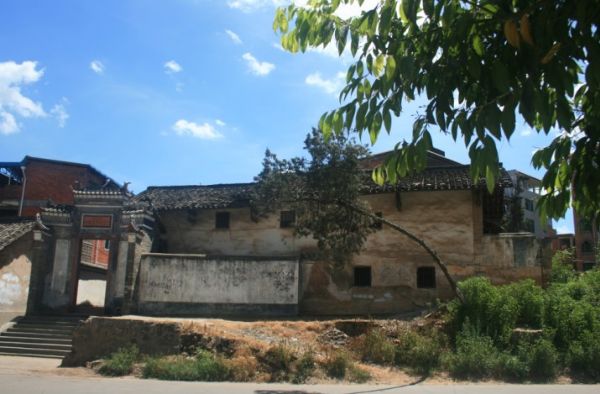
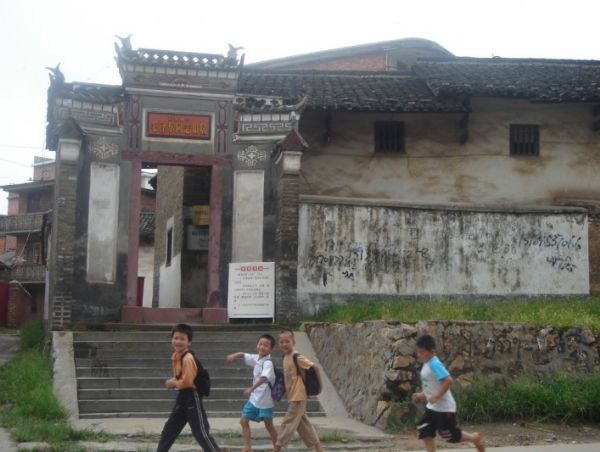
This building was originally a residential house belonging to the He family. It is relatively spacious, with small front and rear courtyards, comprising over 30 rooms in total and covering an area of 636 square meters. In July 1934, in response to the needs of the revolutionary situation, the Gannan Provincial Committee and the Soviet Government were established in Yudu County, with the provincial Soviet authorities stationed here. Upon its establishment, the Gannan Soviet administered four counties—Yudu, Dengxian, Yangyin, and Ganxian—as well as two remote guerrilla zones, Xinkang and Nanxiong. The Chairman of the Gannan Provincial Soviet was Zhong Shibin, and the Vice Chairman was Wang Fushan. The Gannan Provincial Soviet Government included various departments such as the Internal Affairs Department, Finance Department, National Economic Department, Land Department, Food Department, Labor Department, Education Department, Workers and Peasants Inspection Department, Judiciary Department, and Political Security Bureau. Gannan Province was one of the five important provinces established within the Central Soviet Area. From its inception, following the directives of the Central Committee, it led the people of the entire province to actively join the military and participate in battles, supported the revolutionary war, and extensively carried out guerrilla warfare to contain and strike the enemy. When the Central Red Army gathered in Yudu, the Gannan Provincial Soviet Government undertook large-scale efforts to raise grain, funds, expand the Red Army, and conscript laborers, providing full human and material support for the Red Army to construct pontoon bridges, thereby ensuring the successful departure of the Red Army on the Long March from all aspects.
Comrade Mao Zedong once resided here on the eve of the Long March. In early September 1934, Mao Zedong came to Yudu from Yunshishan in Ruijin and stayed in the east wing room of this house. Although he was not in the best health during his time in Yudu, Mao Zedong still carried out his work in a tense yet organized manner. He often went deep among the masses to conduct investigations and research, inspecting and guiding the work of the Gannan Provincial Soviet Government. At Heyu, he personally presided over symposiums with poor workers and peasants, as well as with district, township, and village cadres. He spoke intimately with the representatives present, learning about their lives and production situations, and advised Soviet cadres to care about the lives of the masses, pay attention to working methods, diligently study Marxism-Leninism, voluntarily admit their shortcomings and mistakes to the masses, and regularly engage in criticism and self-criticism. Mao Zedong also attended the meeting of the Judiciary Department cadres held by the Gannan Provincial Soviet Government at Zhengwu in the North Gate of the county town, visited and consoled all the representatives of the Yudu County Red Army Family Representatives Conference at the Wang Family Ancestral Hall in the county town, and participated in the Gannan Provincial Three-Level Cadres Conference held at Xiejia Ancestral Hall in the county town. During his investigation, Mao Zedong learned that Dengxian County had committed “Left” sectarian errors in the suppression of counter-revolutionaries. He immediately wrote a letter and sent it via his guard who delivered it overnight, leading to the timely correction of these “Left” errors in Dengxian’s suppression work. During his time in Yudu, Mao Zedong was also entrusted by the then Vice Chairman of the Central Revolutionary Military Commission to go deep into areas such as Luojiang and Xiaoxi to investigate enemy conditions. On September 20, he issued the “Mao Zedong Telegram on Enemy Activities in Xinfeng, Yudu, and Other Areas” from this location, providing crucial decision-making information for the deployment of the strategic transfer of the Red Army. On October 18, Mao Zedong left Heyu, crossed the Yudu River with the Central Column, and embarked on the long journey of the Long March.
Share
This article is published by HowToTrip. Sharing and reposting are welcome — please credit the source.
Article URL: https://www.howtotrip.net/travel-10871
Related Articles
- Shaoxing's "Grandpa Gourd" hangs the gourds back up: "If there are too many people, we'll interact less — just take a quick look from afar"
- Chinese authorities announce "reciprocal adjustment" to Japan visa fees — single-entry visa jumps from 2,250 to 16,750 yen!
- The "health stones" carried by a traveler were found to have radiation levels exceeding safety limits by a thousand times, potentially endangering fellow passengers on the same flight. Customs issues warning!
- Shenzhen Airport Issues Late-Night Notice: Unidentified Aerial Object Detected, Causing Widespread Flight Delays!
- “They only said it cost money after I opened the box and washed it!” 200g of grapes sold for 60 yuan on a high-speed train—12306 responds!
- Can't buy an airline ticket? Denied exit? Blocked from boarding? A large number of Chinese tourists have mysteriously become "discredited individuals"
- Adverse weather and economic fluctuations impact Colombia's coffee market
- Beach bathing area responds to 2 yuan/30 seconds fee for freshwater foot rinsing: Clearly priced!
- Taking off with an improperly closed cabin door? Wing malfunction? Multiple flights made emergency returns mid-journey!
- Experience the gifts of nature! A countdown of the world’s ten most stunning coastlines