Uganda
The Pearl of Africa, home to Lake Victoria and the source of the Nile, is famed for its mountain gorillas, Murchison Falls, and the snow-capped peaks of the Rwenzori Mountains.
Uganda (Republic of Uganda)
| Capital | Kampala |
|---|---|
| Continent | Africa |
| Languages | English, Swahili |
| Currency | Ugandan Shilling (UGX USh) |
| Time Zone | UTC+3 |
| Dialling Code | +256 |
| Area / Population | Approximately 241,500 square kilometers / Approximately 48 million |
| Visa | Most foreign visitors need to apply for a visa in advance to visit Uganda. It is recommended to apply online via the official E-Visa platform. Alternatively, you can apply for the East African Tourist Visa, which covers Uganda, Kenya, and Rwanda. A yellow fever vaccination certificate is required upon entry. |
| Best Season | The dry seasons from June to September and December to February are the best times for hiking and gorilla trekking. Gorilla permits should be booked 3–6 months in advance. |
| Main Cities | Kampala, Entebbe, Jinja, Mbale, Kasese, Mbarara, Masaka, Kumasi |
Uganda in Detail
Overview of Uganda
Uganda is a landlocked country located on the East African Plateau. It borders Kenya to the east, Tanzania and Rwanda to the south, the Democratic Republic of the Congo to the west, and South Sudan to the north, covering an area of approximately 241,500 square kilometers. The country is dotted with lakes, with a significant portion of Lake Victoria lying within its borders. The White Nile flows out of the lake near Jinja on the northern shore, earning Uganda the title of the "Pearl of Africa." The capital, Kampala, is situated on the Seven Hills along the northern shore of Lake Victoria and serves as the nation’s political and commercial hub. International flights operate through Entebbe International Airport, located about 40 kilometers away.
With a population of around 48 million, Uganda is one of the youngest countries in the world, with an average age under 20. The official languages are English and Swahili, while Bantu languages such as Luganda and Runyoro, as well as Nilotic languages, are widely spoken across the country.
Geography and Climate
Uganda lies at the intersection of the East African Rift Valley and the East African Plateau. Its terrain is dominated by a highland plateau featuring lakes, swamps, volcanoes, and mountains, with an average elevation of 1,000–1,400 meters. Although the equator runs through the country, the high altitude results in a mild climate. Notable landmarks include: Murchison Falls, where the White Nile is forced through a narrow 7-meter gap before plunging 43 meters; the Rwenzori Mountains, whose highest peak, Margherita Peak, stands at 5,109 meters and is known as the "Mountains of the Moon" due to its glaciers and alpine vegetation; and the volcanic forests of Bwindi and Mgahinga in the southwest, which are home to mountain gorillas. Queen Elizabeth National Park’s Kazinga Channel hosts large populations of hippos and elephants, while Ishasha is known for its tree-climbing lions.
The country has a tropical highland climate, with average temperatures ranging from 22–25°C. There are two rainy seasons (March–May and September–November) and two dry seasons (June–August and December–February). The dry seasons are the best times for wildlife viewing and mountain hiking.
Historical Background
For millennia, Bantu farmers and Nilotic pastoralists have coexisted in the region. Around the 16th century, kingdoms such as Buganda, Bunyoro, Toro, and Ankole were established, with the Kingdom of Buganda being the most powerful due to its centralized chiefdom system and the Kabaka (king) institution. In the mid-to-late 19th century, European explorers such as Speke arrived and identified Ripon Falls near Jinja as the source of the Nile. The Buganda palace became a key base for British colonial expansion. Uganda became a British protectorate in 1894 and gained independence on October 9, 1962, with the last king of Buganda, Mutesa II, serving as the first president.
Post-independence Uganda experienced periods of turmoil: the regime of Idi Amin (1971–1979) was infamous for its authoritarian rule and expulsion of Asian businessmen. Despite subsequent civil wars and leadership changes, the country has been relatively stable since 1986, with steady economic recovery. Tourism, particularly gorilla conservation projects, has grown rapidly, making Uganda a significant player in the East African Community.
Economy and Currency
Uganda’s economy is primarily agricultural, with coffee being the most important export crop. Ugandan Robusta coffee is highly regarded globally. Other exports include tea, cotton, flowers, and fisheries—particularly Nile perch from Lake Victoria. In recent years, oil exploration, hydropower (such as the Nalubaale and Karuma dams), and the information technology sector have begun to develop. The official currency is the Ugandan Shilling (UGX), issued by the Bank of Uganda. Efforts are underway to integrate currencies within the East African Community. Kampala and Entebbe are the centers of financial and payment services.
Culture and Society
Uganda is a cultural melting pot, with traditions such as the royal court etiquette of the Kingdom of Buganda, Luganda-language drama and folk songs, the Eastern Busoga drum festival (recognized by UNESCO), and the forest culture of the Batwa Pygmies in the southwest. The majority of the population practices Christianity or Islam, with churches and mosques found throughout urban and rural areas. Staple foods include matooke (steamed banana puree), often served with peanut sauce stews and lake fish. Street food favorites include "Rolex" (a rolled chapati with egg), a popular and affordable snack.
Tourism Overview
Uganda’s most unique asset is its wildlife. Bwindi Impenetrable National Park is home to nearly half of the world’s mountain gorillas. While gorilla tracking permits are expensive (around $800), they are in high demand year-round. Mgahinga National Park is known for its golden monkeys and volcano hikes. Visitors can take boat trips to the base of Murchison Falls, spot tree-climbing lions in Queen Elizabeth National Park, go white-water rafting on the Nile in Jinja, or tackle the seven-day trek up Mount Rwenzori. Note that security remains unstable in some border areas, particularly in the western highlands near the Democratic Republic of the Congo and parts of northern Uganda, where armed attacks have occurred. Avoid remote border zones and follow guidance from local authorities and park management.
Local Currency: Ugandan Shilling (UGX)
Currency Overview
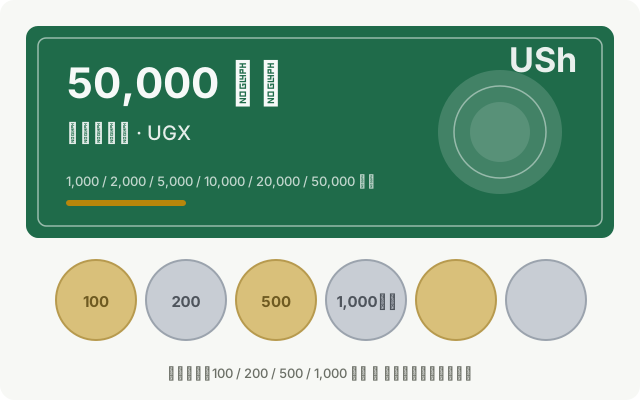
The official currency of Uganda is the Ugandan Shilling (currency code UGX, symbol often written as USh), issued by the Bank of Uganda. While the shilling theoretically has smaller denominations, coins are no longer in circulation, and cash is denominated in whole shillings, often in amounts of tens of thousands. One US dollar is approximately equivalent to 3,700–3,800 Ugandan Shillings (subject to exchange rate fluctuations). As a member of the East African Community, Uganda maintains close trade and movement ties with Kenya, Rwanda, Tanzania, and others, but each country uses its own currency, so visitors must exchange money upon arrival.
Denominations
Banknotes come in six denominations: 1,000, 2,000, 5,000, 10,000, 20,000, and 50,000 shillings. The 2010 series features Ugandan natural and cultural heritage: the 5,000-shilling note depicts Mount Rwenzori, the 10,000-shilling note shows a canoe at the source of the Nile, the 20,000-shilling note features Rwenzori glaciers and a golden monkey, and the 50,000-shilling note showcases the iconic Baganda drum. Coins in denominations of 50, 100, 200, 500, and 1,000 shillings are less commonly used, with most change given in notes.
Cash and Payment Habits
Uganda has widespread mobile payment adoption, with locals commonly using MTN MoMo and Airtel Money. However, these services have high barriers for foreign users to register. Most travelers rely on a combination of cash and bank cards. Hotels, supermarkets, and mid-to-upper-range restaurants in Kampala, Entebbe, and Jinja often accept cards (Visa is more widely accepted than UnionPay), but park entry fees, guide tips, rural lodges, and markets typically require cash. ATMs are common in Kampala and other town centers. Machines from banks like Stanbic, Standard Chartered, and Absa are generally foreign-card friendly, with a maximum withdrawal limit of around 2 million shillings per transaction.
US dollars are also widely used: gorilla permits, national park fees, and safari costs are often quoted in dollars. Newer banknotes issued after 2013 are preferred, and older or damaged bills may be rejected. It’s advisable to carry the equivalent of 300,000–600,000 shillings (about $80–$160) in cash per day and withdraw a sufficient amount in Entebbe or Kampala before heading to rural areas.
Traveler Tips
- Park entry fees, gorilla permits, and safari packages are often priced in US dollars. Carry both dollars and shillings.
- Small shilling denominations (1,000, 2,000, 5,000) are useful for markets and tipping, while large 50,000-shilling notes may be hard to break in rural areas.
- Carry US dollars issued after 2009 in good condition, avoiding heavily creased or older small-head bills.
- Use ATMs located inside bank branches and avoid withdrawing cash on the street at night.
- Options to exchange leftover shillings back to dollars are limited. Estimate your needs and keep small amounts for airport fees and tips.
Flag Meaning
Flag Design
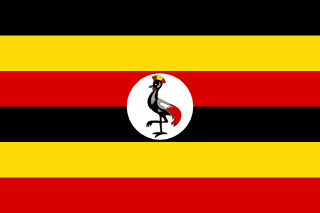
The Ugandan flag consists of six equal horizontal stripes in black, yellow, and red, repeated twice (black, yellow, red, black, yellow, red). The flag has a 2:3 aspect ratio. At the center is a white circle featuring a grey-crowned crane (also known as the crested crane), standing on one leg in an upright posture. The grey-crowned crane is Uganda’s national bird and also appears on the national emblem, making it the only figurative element on the flag.
Meaning
Black represents the Ugandan people, yellow symbolizes the bright sun of Africa, and red stands for the brotherhood of the African continent—derived from the color of blood, signifying unity and shared destiny. The repetition of the three colors emphasizes their enduring significance. The central white circle symbolizes peace, while the crane’s raised leg signifies progress and forward movement. In African tradition, the crane also represents grace and vigilance.
History and Legal Status
The current flag was designed under the direction of Grace Ibingira, then Minister of Justice and a member of the Constituent Assembly, and officially adopted on October 9, 1962, Uganda’s Independence Day. It replaced the British Union Jack and the protectorate flag. Earlier proposals included a green-and-blue flag by the Uganda People’s Congress, but the black-yellow-red design with the crane was chosen and enshrined in the constitution. Despite political upheavals, including the turbulent era of Idi Amin, the flag has remained unchanged, symbolizing national continuity.
Today, the black-yellow-red flag with the grey-crowned crane is flown at government buildings, schools, and border posts, and is prominently displayed during national celebrations such as Independence Day (October 9). The crane is a legally protected national symbol, and hunting or trading it is prohibited.
Uganda Travel Guide
All Guides »Uganda Pre-Travel Guide: Visas, Gorilla Permits, Seasons, Budget, and Etiquette
Uganda Travel Checklist: Choosing Between an E-Visa and the East Africa Pass, Bo...
Classic 7-Day Uganda Safari Circuit: Murchison Falls – Kibale – Queen Elizabeth – Bwindi 7 days
One route covering Nile waterfalls, chimpanzees, hippos in the Kazinga Channel, ...
Uganda 4-Day Short Trip: Source of the Nile in Jinja and a Dual-City Tour of Entebbe–Kampala 4 days
Experience Uganda’s highlights without long drives: the Source of the Nile, whit...
Top Attractions in Uganda: Mountain Gorillas, Waterfalls, the Rwenzori Mountains, and the Source of the Nile
From Bwindi to Rwenzori: A Regional Guide to Uganda’s 12 Must-Visit Attractions ...
Uganda Food Guide: Matoke Staple, Street Rolex, and Lake Victoria Fish
Understanding the East African Highland Table: How to Pair Steamed Banana Mash M...
Uganda Transport Guide: Entebbe Airport Transfers, Matatus, Private Cars, and Domestic Flights
How to get from the airport to the city, how to take a matatu without getting lo...
Practical Tips for Uganda: Gorilla Permits, Health Precautions, Cash Access & Border Safety
Top 10 Essentials Before and After Your Trip: Book Permits Early, Carry Yellow F...