Norway
A wealthy kingdom in the Nordic fjord country, renowned for glacier-carved deep fjords, Viking history, the midnight sun, and the Northern Lights.
Norway (Kingdom of Norway)
| Capital | Oslo |
|---|---|
| Continent | Europe |
| Languages | Norwegian |
| Currency | Norwegian Krone (NOK kr) |
| Time Zone | UTC+1 |
| Dialling Code | +47 |
| Area / Population | 385,000 square kilometers (excluding Svalbard and Jan Mayen Islands) / Approximately 5.55 million |
| Visa | Norway is part of the Schengen Area. Most foreign visitors need to apply for a Schengen visa in advance. It is recommended to submit the application at the Norwegian embassy or consulate in your own country. Single or multiple-entry visas for stays up to 90 days are available; please check your passport’s validity before traveling. |
| Best Season | The period from May to September has mild weather and very long daylight hours, making it ideal for fjord trips and hiking. From October to March is the aurora season, with the best viewing around Tromsø in the north. Be mindful of possible weather-related disruptions to roads and ferries in winter. |
| Main Cities | Oslo, Bergen, Tromsø, Stavanger, Trondheim, Lofoten Islands, Geiranger, Flåm |
Norway in Detail
About Norway
Norway (officially the Kingdom of Norway) is located on the western side of the Scandinavian Peninsula in northern Europe. It borders Sweden to the east, Finland and Russia to the northeast, faces the Norwegian Sea to the west, and looks across the North Sea to Denmark to the south. The mainland covers approximately 385,000 square kilometers. Including Svalbard and Jan Mayen Islands, the total area is slightly over 385,000 square kilometers, making it one of Europe’s larger countries. The capital, Oslo, is situated at the head of the Oslofjord in the southeastern part of the country and serves as the national center for politics, economy, and culture. Norway is a constitutional monarchy with parliamentary legislative power, a king as the head of state, and is divided into multiple counties and municipalities.
Norway has a population of about 5.55 million, making it one of the European countries with the lowest population density. Most residents live in southern coastal areas and fjord towns, while the Arctic Circle region in the north is sparsely populated, home to the Sámi people who have herded reindeer there for generations.
Geography and Climate
Norway has a long, narrow shape, and its western coastline is deeply indented by glaciers, forming countless deep fjords. Among them, the Geirangerfjord and Nærøyfjord are listed as UNESCO World Heritage Sites. About two-thirds of the country consists of plateaus, mountains, and wilderness, with the highest peak, Galdhøpiggen, reaching approximately 2,469 meters. When including coastal islands and fjords, Norway’s total coastline exceeds 100,000 kilometers.
Despite its high latitude, the coastal areas enjoy relatively mild winters and ice-free ports year-round, thanks to the influence of the North Atlantic Current. In the north, the summer brings the midnight sun that lasts for several weeks, while the winter features polar nights and stunning displays of the Northern Lights. The inland mountainous areas experience harsh winters with heavy snowfall, making them ideal for cross-country and alpine skiing.
Historical Background
Norway flourished during the Viking Age from the 8th to the 11th century. Vikings sailed longships to Europe, Iceland, and North America, leaving behind a rich maritime and shipbuilding heritage. In 872, Harald Fairhair united Norway into a single kingdom for the first time. Later, Norway entered into personal unions with Denmark and Sweden: it was under Danish rule from 1380, then united with Sweden in 1814, until it peacefully gained independence through a referendum in 1905, establishing its own royal family and adopting a parliamentary monarchy.
During World War II, Norway was occupied by Germany. After the war, it rebuilt and joined NATO. In 1969, large-scale oil resources were discovered in the North Sea, fundamentally transforming the nation’s economic trajectory and turning it from a fishing and shipping nation into a wealthy energy exporter.
Economy and Currency
Norway has a highly developed mixed economy. Key industries include oil and gas extraction, shipping, marine engineering, hydropower, fishing, and aquaculture. The government deposits oil and gas revenues into a sovereign wealth fund (the Government Pension Fund Global), which is one of the largest in the world, helping to accumulate wealth for future generations. The official currency is the Norwegian Krone (NOK, symbol kr).
Culture and Society
Norwegian society emphasizes equality, pragmatism, and public welfare. The historical concept of "Janteloven" (the Law of Jante) encourages modesty and discourages considering oneself superior to others, and it has long influenced Nordic social behavior. Norwegians are passionate about outdoor life, known as "friluftsliv," enjoying hiking, skiing, boating, and cabin holidays in both winter and summer. The country has produced literary and artistic masters such as playwright Henrik Ibsen, composer Edvard Grieg, and painter Edvard Munch.
Tourism Overview
Norway is one of Europe’s most spectacular natural travel destinations. Attractions include the colorful wooden houses of Bryggen in Bergen, the Flåm Railway, cruises through the Sognefjord and Geirangerfjord, the red fishermen’s cottages of the Lofoten Islands, the Northern Lights and whale watching in Tromsø—all offering travel options for all durations. While Norway’s cost of living is consistently among the highest in the world and travel budgets should be planned in advance, efficient public services and well-organized infrastructure make independent travel highly enjoyable.
Local Currency: Norwegian Krone (NOK)
Currency Overview
The official currency of Norway is the Norwegian Krone (currency code NOK, symbol kr, written as krone in Norwegian, plural kroner). One krone is divided into 100 øre, but øre coins are no longer in circulation. The Norwegian Krone is issued by Norges Bank (the Central Bank of Norway). As Norway is not a member of the European Union, it has not adopted the euro and its currency floats independently.
Denominations
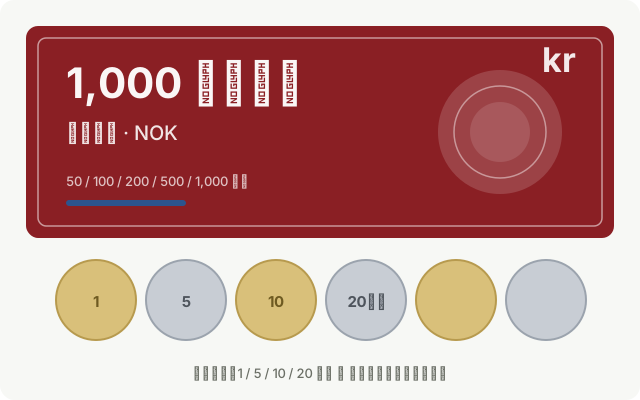
Currently circulating banknotes come in denominations of 50, 100, 200, 500, and 1,000 kroner. The new series of banknotes feature themes related to the ocean and nature, with designs including lighthouses, Viking ships, codfish, and waves. They are modern and highly recognizable. Coins are issued in 1, 5, 10, and 20 kroner denominations, with the 20-krone coin featuring a distinctive round hole.
Cash and Payment Habits
Norway is one of the most cashless societies in the world. Card and mobile payments are accepted almost everywhere, from convenience stores and street hot dog stands to public restrooms. Locals commonly use mobile payment apps like Vipps. Many merchants no longer accept cash, so travelers only need to carry a small amount of kroner for emergencies.
It is recommended to use international credit cards (Visa/Mastercard, with overseas transactions enabled) as the primary payment method. Cash can be withdrawn at airports, banks, and some ATMs. ATMs are relatively scarce in Norway and mostly located in urban centers, so avoid searching for cash withdrawal points in remote areas.
Tips for Travelers
- Norway has a high cost of living. A cup of coffee often costs 40–60 kroner, and restaurant meals typically start from 200–400 kroner.
- Most places accept cards, but it’s wise to carry 200–500 kroner in cash for emergencies.
- Tipping is not mandatory. The bill is usually the final amount, but leaving 5–10% for good service is appreciated.
- Tax refunds for shopping may be available for a portion of VAT. Check the minimum spending requirement per store and keep your receipts.
Flag Meaning
Flag Design
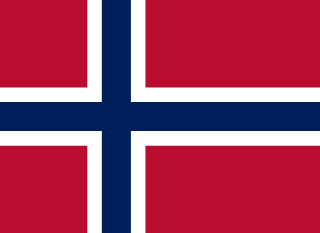
The Norwegian flag features a red background with a dark blue Scandinavian (Nordic) cross outlined in white. The flag’s aspect ratio is approximately 22:16 (or 11:8), with the cross shifted slightly toward the hoist side. The vertical and horizontal arms of the cross have fixed proportions, and the width of the blue cross is roughly twice the width of the white border. The overall design is balanced and dignified. The officially designated colors are deep red, pure white, and deep blue. Red symbolizes courage and patriotism, blue reflects historical legacy, and the white borders enhance the visibility of the cross against the red background.
Meaning
The Nordic cross originates from Christian tradition, symbolizing faith and unity, and is considered a cultural bond linking the Nordic countries. The red, white, and blue colors of the Norwegian flag draw inspiration from the Danish flag (red with a white cross), the Swedish flag (blue with a yellow cross), and the French tricolor, blending elements that signify Norway’s respect for shared Nordic heritage and its pursuit of freedom and republicanism. Red is also seen as representing the blood and bravery in the struggle for independence, white stands for peace and purity, and blue symbolizes the ocean, sky, and freedom. This color combination has become one of Norway’s most important national symbols.
History and Legal Status
The Norwegian flag was designed by politician Fredrik Meltzer and officially adopted in 1821. Initially, it was mainly used for identifying merchant ships to distinguish them from the Swedish flag, which was shared under the union at the time. After Norway peacefully separated from Sweden in 1905, the flag was established as the national and government flag, with legal specifications put in place. Flag laws define regulations for display times, hoisting and lowering ceremonies, and flag dimensions. Government agencies and naval vessels use special variants with swallowtails or the national emblem. Today, on Norway’s National Day, May 17 (Constitution Day), children’s parades and streets across the country are filled with red and blue Nordic crosses, making it one of the most iconic national scenes. On ordinary days, residents and merchant ships may also fly the flag to express their respect and loyalty to the nation and its constitution.
Norway Travel Guide
All Guides »Norway Travel Quick Guide: Visa, Seasons, Budget & Fjord Etiquette
Clarify Schengen visa requirements, polar day/night, high costs, and outdoor eti...
Classic 7-Day Norway Itinerary: Oslo – Flåm – Sognefjord – Bergen 7 days
Connecting the capital, a mountain railway, world heritage fjords, and a Hanseat...
Norway 4-Day Short Trip: Highlights of Bergen and Sognefjord 4 days
Cover only the most essential stretch of Norway’s west coast: Hanseatic old town...
A must-visit list of attractions in Norway: fjords, old towns, and the city of the Northern Lights
From Oslo to Bergen, fjords, and the Arctic Circle — a regional guide to Norway’...
A Guide to Norwegian Cuisine: Salmon, Brown Cheese, and Fresh Flavors from Fishing Ports
Norwegian cuisine is simple and emphasizes the natural flavors of ingredients. U...
Norway Transport Guide: Airport Rail, Scenic Trains & Fjord Ferries
Navigating Norway’s transportation is straightforward for this long, narrow coun...
10 Practical Tips for Traveling in Norway
From saving money and using cards to seeing the aurora and staying safe—these de...