Mauritius
A high-end volcanic island nation in the southwest Indian Ocean, renowned for its atoll lagoons, seven-colored earth, dodo legends, and diverse Creole culture.
Mauritius (Republic of Mauritius)
| Capital | Port Louis |
|---|---|
| Continent | Africa |
| Languages | English, French, Creole |
| Currency | Mauritian Rupee (MUR ₨) |
| Time Zone | UTC+4 |
| Dialling Code | +230 |
| Area / Population | 2,040 square kilometers / Approximately 1.26 million |
| Visa | Most foreign visitors can enter Mauritius visa-free for tourism, typically for up to 60 days per visit (subject to immigration stamp), with a valid passport, return flight ticket, and hotel booking required. Immigration may ask for an itinerary and proof of funds. |
| Best Season | The cooler, dry season from May to December offers calm seas and is ideal for vacationing; the hot, humid summer from January to March includes occasional tropical cyclones—monitor weather alerts before traveling. |
| Main Cities | Port Louis, Grand Baie, Chamarel, Le Morne, Mahebourg, Cap Malheureux, Flacq, Île aux Cerfs, Black River Gorges |
Mauritius in Detail
Overview of Mauritius
Mauritius (officially the Republic of Mauritius) is an island nation in the southwest Indian Ocean, located about 800 kilometers east of Madagascar. Along with French Réunion and Rodrigues, it forms part of the Mascarene Islands. Covering approximately 2,040 square kilometers, its capital, Port Louis, lies on the northwest coast and serves as the political, economic, and maritime hub, as well as an important free port in East Africa. Since gaining independence, Mauritius has enjoyed long-term political stability and is one of the few African countries classified as upper-middle-income.
Mauritius is a parliamentary republic with a president as head of state and a prime minister holding executive power. The population is around 1.26 million, making it one of Africa’s most densely populated countries. Society comprises Indian, Creole, Chinese, and French-descended communities, which have coexisted harmoniously for generations. Hinduism, Christianity, Islam, and Buddhism are all practiced, and the country’s defining characteristic is its rich cultural diversity.
Geography and Climate
Mauritius is a volcanic island with a central plateau ranging from 300 to 800 meters in elevation; the highest point is Piton de la Petite Rivière Noire at 828 meters. The coastline features narrow plains, and the island is surrounded by coral reefs that form calm lagoons and white-sand beaches. Notable landscapes include the Seven Colored Earths of Chamarel in the southwest, the rainforest canyons of Black River Gorges National Park, and the peninsula home to Le Morne Brabant (a UNESCO World Heritage Site). From offshore Le Morne, the famous optical illusion of an “underwater waterfall” can also be seen.
The climate is subtropical maritime and warm year-round: the hot, humid southern hemisphere summer runs from November to April, with temperatures between 25–33°C and occasional tropical cyclones from January to March; the cooler, dry winter lasts from May to October, with temperatures around 20–26°C, clear waters, and moderate humidity—this is the preferred travel season for most visitors. Day-night temperature variations are greater in the highlands, so a light jacket is recommended for mountain areas.
Historical Background
Mauritius was uninhabited for much of its history. Portuguese sailors were the first to visit around 1505, and the Dutch occupied the island in 1598, naming it after Prince Maurice of Nassau and beginning colonization. It was during this period that the endemic dodo became extinct due to human activity and introduced species, around 1681—a lasting symbol of conservation. France took control in 1715, renaming it Île de France, and established large sugarcane plantations. Britain seized the island in 1810 and restored its name to Mauritius. After abolishing slavery in 1835, Britain brought in indentured laborers from India, shaping the current demographic makeup dominated by people of Indian descent.
Mauritius gained independence on March 12, 1968, and became a republic in 1992. Since independence, its economy has diversified from sugarcane monoculture into manufacturing, tourism, financial services, and information technology. The Aapravasi Ghat in Port Louis—a UNESCO World Heritage Site commemorating the arrival of indentured laborers—bears witness to this migration history.
Economy and Currency
Mauritius has one of Africa’s most diversified economies, with sugar, textiles, tourism, financial services, and information and communication technology serving as key sectors. In recent years, the country has invested in marine economy and green energy. By income per capita, Mauritius ranks among the top in Africa and enjoys a favorable business environment and strong international credit. The official currency is the Mauritian Rupee (MUR), issued by the Bank of Mauritius. Visitors can exchange foreign currency at the airport, banks, and authorized exchange counters, and most hotels and shops accept major international credit cards.
Culture and Society
Mauritian society is strongly influenced by Indian culture. Nearly half the population practices Hinduism, and the Grand Bassin (also called Ganga Talao) lake in the south is a major Hindu pilgrimage site. During the annual Maha Shivaratri festival, hundreds of thousands of devotees hike to the lake—the event is one of the largest Hindu gatherings in the southern hemisphere. Sega, a music and dance form originating from the era of slavery, has been recognized by UNESCO as intangible cultural heritage and is at the heart of Creole culture. The local cuisine blends Indian curries, French culinary techniques, Chinese stir-fries, and Creole spicy stews. Street food culture is especially vibrant.
English is the official language, used in parliament and official documents, while French and Mauritian Creole are widely spoken in daily life. Most people are multilingual. Society is peaceful, people are friendly, and the quality of tourism services is highly rated among Indian Ocean destinations.
Tourism Overview
Mauritius is one of the Indian Ocean’s premier resort islands, known for its “multiple landscapes in one.” The east coast offers quiet beach holidays, the northwest around Grand Baie is popular for dining and nightlife, while the southwest boasts natural wonders such as the Seven Colored Earths, Black River Gorges, and Le Morne. Classic experiences include catamaran island-hopping (Île aux Cerfs, Tamarin Bay dolphin watching), whale watching, scuba diving, helicopter tours over the underwater waterfall illusion, and plantation and rum distillery tours. Mark Twain famously quipped that “Heaven was copied after Mauritius,” giving rise to the nickname “the paradise of origin”—now a flagship slogan for Mauritian tourism. With convenient direct flights, Mauritius has become a top destination for honeymoons and family vacations.
Local Currency: Mauritian Rupee (MUR)
Currency Overview
The official currency of Mauritius is the Mauritian Rupee (currency code MUR, often symbolized as ₨ or Rs), issued by the Bank of Mauritius (the national central bank, established in 1967). One rupee is divided into 100 cents. The rupee is not widely used internationally, and travelers are advised to bring U.S. dollars or euros for exchange locally, or use international credit cards for cash withdrawals and payments upon arrival.
Denominations
Banknotes in circulation come in seven denominations: 25, 50, 100, 200, 500, 1,000, and 2,000 rupees. The current series features designs based on historical figures and iconic buildings, along with tactile braille elements for the visually impaired. Each denomination is distinctly colored. Coins include 1, 5, 10, and 20 rupees; smaller cent coins have largely fallen out of use. Small denominations under 200 rupees, including both notes and coins, are most commonly used in daily transactions, especially for taxi fares, markets, and street food where cash change is often needed.
Cash and Payment Habits
Urban and resort areas in Mauritius have relatively well-developed financial infrastructure. Areas such as Port Louis, Grand Baie, and Flacq have numerous bank branches and ATMs, many of which accept international cards with UnionPay, Visa, or Mastercard logos. Hotels, restaurants, supermarkets, and travel agencies generally accept card payments, but rural markets, street vendors, and taxis mostly operate on a cash-only basis. Official exchange counters are available at the airport, though bank rates in town are usually better—keep exchange receipts in case you need to convert currency back before departure.
Budget reference: Budget travelers can manage daily expenses (meals and local transport) with around 1,000–2,000 rupees in cash. At upscale resorts, many purchases can be charged to your room and settled by card upon checkout. Tipping is not mandatory but is appreciated for good service—common amounts are 100–200 rupees per service.
Traveler Tips
- Exchange rates between the rupee and other currencies fluctuate significantly—always check the daily rate rather than relying on estimates.
- Large denominations (such as 2,000 rupees) may not be usable in small shops—carry some smaller bills (under 100 rupees) for convenience.
- You may need to show exchange receipts when converting rupees back to foreign currency before departure—keep them safe.
- Tipping is not obligatory, but rounding up or leaving 5–10% for good service is a common local practice.
Flag Meaning
Flag Design
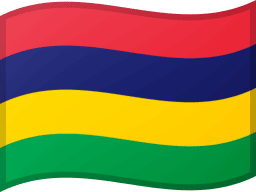
The flag of Mauritius, commonly known as the “Four Bands,” is a rectangular flag with a 2:3 aspect ratio. It consists of four equal horizontal stripes of red, blue, yellow, and green—from top to bottom—each occupying one quarter of the flag. The design is simple, symmetrical, and highly distinctive among world flags.
Meaning
The official symbolism of the colors is as follows: red represents the struggle for independence and sovereignty, honoring the efforts made for national freedom; blue symbolizes the Indian Ocean surrounding the country; yellow stands for the new light of independence and the light of freedom; green represents agriculture and the lush sugarcane fields found across the island year-round, as well as the vitality of the island itself. Together, the four colors represent the union of sea, land, light, and people, reflecting the national ideal of unity in diversity for this multiethnic island nation.
History and Legal Status
The Four Bands flag was officially adopted on March 12, 1968, the day of Mauritius’ independence, and has been in continuous use since the establishment of the republic in 1992. Its specifications, usage, and legal status have been defined by laws such as the Flag Act. The flag is flown at government buildings, schools, embassies and consulates, and during Independence Day celebrations. It is also used as the civil ensign on Mauritian vessels.
National symbols also include the coat of arms, which features images of native species such as the dodo and the extinct Mauritius red rail, along with the motto “Stella Clavisque Maris Indici” (“Star and Key of the Indian Ocean”), highlighting Mauritius’ strategic location in the Indian Ocean. Though the dodo is extinct, it remains a national emblem appearing on the coat of arms, stamps, and souvenirs—a constant reminder of the importance of protecting nature.
Mauritius Travel Guide
All Guides »Mauritius Travel Quick Guide: Visa-Free Entry, Best Time to Visit, Budget Breakdown & Local Etiquette
How to Travel Visa-Free with Ease: Visa Requirements, Best Travel Seasons, Three...
Classic 7-Day Island-Hopping Route in Mauritius: Port Louis – Seven Colored Earths – Le Morne – Grand Bassin Full Experience 7 days
A non-backtracking island route that connects the capital’s culture, southwester...
Mauritius 4-Day Short Break Itinerary: Explore by Northwest, Capital, Southwest, and Southeast Regions 4 days
Even with limited time, you can experience the best of the island—spend each day...
A Must-Visit Attractions List in Mauritius: From Seven Colored Earths to Dodo Museum
Twelve of the most representative attractions, organized by region, with highlig...
Mauritius Food Guide: Dholl Puri, Spicy Bean Fritters, and Street Eats Blending Three Cuisines
Indian, Creole, and Chinese flavors collide on the island — from 20-Rupee street...
Complete Guide to Transportation in Mauritius: Airport Transfers, Island Tours, Buses, and Car Rentals Compared
How to Get Around This Train-Free Island: Price Comparisons, Pros and Cons, and ...
10 Practical Tips for Traveling in Mauritius: From Cyclone Season to Diving Safety
Beyond the visa-free entry, it’s the climate, transport, etiquette, and spending...