Iraq
The cradle of Mesopotamian civilization, renowned for the ruins of Babylon, the ancient city of Ur, and Islamic heritage in Baghdad. Travelers should closely monitor regional safety conditions.
Iraq (Republic of Iraq)
| Capital | Baghdad |
|---|---|
| Continent | Asia |
| Languages | Arabic, Kurdish |
| Currency | Iraqi Dinar (IQD ع.د) |
| Time Zone | UTC+3 |
| Dialling Code | +964 |
| Area / Population | Approximately 438,300 square kilometers / Approximately 45 million |
| Visa | Most foreign visitors need to apply for a visa to enter Iraq in advance, usually through the Iraqi embassy or consulate in their home country. In some cases, the inviting party in Iraq can help with the visa application. The Kurdistan Region in the north has its own entry rules. Several official advisories recommend avoiding travel to Iraq due to complex and potentially dangerous security conditions in some areas. If travel is essential, stay informed about the latest travel advice, assess the situation carefully, and get travel insurance that covers emergency medical treatment and evacuation. |
| Best Season | The climate is milder from November to March, making it the best time to visit cities and historical sites. Summers are extremely hot and dry, with temperatures often exceeding 40°C in July and August, so travel should be carefully planned. |
| Main Cities | Baghdad, Babylon, Najaf, Karbala, Mosul, Erbil, Sulaymaniyah, Ur |
Iraq in Detail
Overview of Iraq
Iraq (Arabic: العراق) is located in the heart of West Asia and the Middle East, covering an area of approximately 438,300 square kilometers. It borders Turkey to the north, Iran to the east, Jordan and Syria to the west, and Kuwait and Saudi Arabia to the south, with the Persian Gulf to the southeast. The capital, Baghdad, is situated along the banks of the Tigris River and serves as the country’s political, economic, and cultural center. The official languages are Arabic and Kurdish, with Kurdish primarily spoken in the Kurdistan Region in the north. The population is predominantly Arab and Kurdish, with the majority practicing Islam.
The country has a population of about 45 million. Iraq lies at the core of the Fertile Crescent, known as the Cradle of Civilization, and is one of the birthplaces of the world’s oldest civilizations. Ancient Sumerian, Babylonian, and Assyrian civilizations left behind walls, temples, and cuneiform script, profoundly influencing early human history.
Geography and Climate
Iraq’s terrain is mainly composed of plains and deserts. The central and southeastern regions form the Mesopotamian Plain, created by the Tigris and Euphrates rivers. These rivers converge in the south before flowing into the Persian Gulf. The fertile plain is the agricultural and population hub. The northeastern part consists of the Kurdistan mountainous region at the western edge of the Zagros Mountains, with higher elevations and cooler climates, home to cities like Erbil and Sulaymaniyah. The southwestern area features the vast Syrian and Arabian Deserts. The river basins also include large marshlands, forming unique ecological zones.
The climate is primarily tropical desert and Mediterranean, with long, extremely hot summers. Daytime temperatures in July and August often exceed 40°C and can approach 50°C. Winters are milder, with snowfall possible in the northern mountains. Precipitation is concentrated in winter, and the region is generally dry with significant diurnal temperature variations. Winter and spring are the most suitable seasons for travel, while summer requires heat precautions.
Historical Background
Mesopotamia, where Iraq is located, is one of the cradles of human civilization. Around 4000 BCE, the Sumerians established city-states here, inventing cuneiform writing, the wheel, and early urban centers. Sites like Ur and Uruk bear witness to this history. Later, kingdoms such as Akkad, Babylon, and Assyria rose to prominence. The Code of Hammurabi, enacted by Babylonian King Hammurabi, is a representative example of ancient written law. Cities like Nineveh and Babylon were once among the most prosperous in the ancient world.
Ancient Mesopotamia was successively ruled by Persia, the Alexander Empire, the Seleucid Empire, and the Sassanid Empire. After the rise of Islam in the 7th century, the region gradually became Islamic. In 762 CE, the Abbasid Caliphate built Baghdad on the banks of the Tigris River, establishing it as a major center of academia, commerce, and urban civilization. This period is known as the Islamic Golden Age. In 1258, Mongol forces captured Baghdad, causing severe destruction. The city later came under the rule of the Timurids, the Black Sheep, and the White Sheep dynasties, and from the 16th century, it was governed by the Ottoman Empire for centuries. In the 20th century, Iraq gained nominal independence under British mandate in 1932 and became a republic in 1958. Since then, the country has experienced multiple wars and political changes, with recent years seeing gradual post-war reconstruction. These are objective historical facts, and no political commentary is provided in this article.
Economy and Currency
Iraq’s economy is heavily reliant on oil, with the country possessing some of the world’s largest proven oil reserves. Oil exports are the primary source of government revenue and foreign exchange, and the country also has substantial natural gas resources. Agriculture traditionally produces dates, barley, wheat, and citrus fruits, with a long history of cultivation in the southern marshes and along riverbanks. Prolonged conflicts and insufficient investment have constrained the development of infrastructure, industry, and tourism, although reconstruction efforts are ongoing.
The official currency of Iraq is the Iraqi Dinar (currency code: IQD, symbol: ع.د). One dinar is nominally equal to 1,000 fils, but fils coins are no longer in circulation. Daily transactions are conducted in dinars, with relatively large denominations.
Culture and Society
Iraq is a crossroads of Mesopotamian civilization, Islamic culture, and Kurdish heritage, with an exceptionally rich historical and cultural legacy. Museums house numerous cuneiform tablets and ancient artifacts, while mosques, castles, and markets continue the traditions of Islamic urban life. Society places great importance on family and hospitality. The cuisine features river fish, grilled meats, and rice dishes. Grilled carp from the Tigris River (masgouf) is Iraq’s most iconic dish, along with stuffed rice dishes, dolma (stuffed vegetables), meatballs, and date-based desserts.
Literature and poetry hold a revered place in Iraqi culture, with cafes and old book markets serving as windows into urban cultural life. Different ethnic and religious groups have distinct languages, clothing, and festivals. The Kurdish culture in the north is characterized by mountain traditions and the Nowruz festival. Understanding these cultural layers is key to appreciating Iraq’s deep historical roots.
Tourism Overview
Iraq boasts world-renowned ancient and religious heritage: the National Museum and Abbasid Palace ruins in Baghdad, along with the old book market; the ancient city of Babylon, famous for the Ishtar Gate, the legendary Hanging Gardens, and ancient city remains, is a UNESCO World Heritage Site; the ziggurat of Ur represents Sumerian civilization; Mosul and Nineveh carry the legacy of the Assyrian civilization; Erbil Citadel is the historic core of the Kurdistan Region and is also a UNESCO World Heritage Site; Najaf and Karbala are important Islamic holy sites, and Samarra’s Spiral Minaret is widely known.
It is important to note objectively that some regions in Iraq have complex security situations, with risks of terrorist attacks, armed conflict, and unexploded ordnance not yet fully eliminated. If travel is essential, closely monitor the latest travel advisories from your home country’s foreign ministry and the Iraqi authorities, choose relatively stable areas and reputable agencies for travel arrangements, avoid remote or unstable regions, and purchase travel insurance that covers emergency medical treatment and evacuation.
Local Currency: Iraqi Dinar (IQD)
Currency Overview
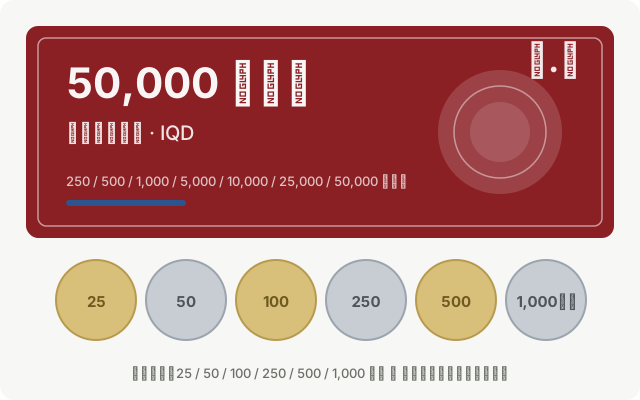
The official currency of Iraq is the Iraqi Dinar (currency code: IQD, symbol: ع.د, English: Iraqi Dinar), issued by the Central Bank of Iraq. One dinar is nominally equal to 1,000 fils, but fils coins have long been withdrawn from circulation, and actual transactions are conducted in dinars. Iraqi Dinar denominations are relatively large, related to purchasing power, and first-time visitors need to adapt to price tags in the thousands. There are multiple exchange channels for the dinar, both official and market-based, with slight price variations. Travelers should rely on banks or reputable exchange services for rates and pay attention to different versions of banknotes in circulation.
Denomination System
Currently circulating Iraqi Dinar banknotes include denominations of 250, 500, 1,000, 5,000, 10,000, 25,000, and 50,000 dinars. The notes feature designs of historical buildings, rivers, agriculture, and notable figures, with various editions. Coins are rarely seen in circulation, and daily transactions primarily use banknotes. Smaller transactions commonly use 250, 500, and 1,000 dinar notes, while 25,000 and 50,000 dinar notes are used for larger payments. Older editions may still circulate, with similar designs, requiring careful identification. Due to the generally large denominations, small change is often given using multiple smaller notes.
Cash and Payment Habits
Iraq is a cash-based society, with markets, shops, restaurants, and taxis typically conducting transactions in cash. International debit and credit cards have limited acceptance, and ATMs are mainly found in hotels and commercial areas of cities like Baghdad and Erbil. Always confirm whether your card supports overseas withdrawals before use. Foreign currencies, particularly US dollars, are sometimes used in large transactions, but daily purchases are priced in dinars. Use banks or reputable exchange services for currency exchange, and avoid street-level informal transactions. In cities like Baghdad, some exchange counters and hotel front desks may assist with currency exchange, but exchange rates and fees vary significantly. Compare options before proceeding.
Due to the large denominations and bulkiness of banknotes, it is advisable to carry a money pouch and exchange money in smaller amounts, carrying only the cash needed for the day to reduce security risks.
Traveler Tips
- Cash is the primary payment method, and international credit cards have limited acceptance. Carry an appropriate amount of Iraqi Dinars in small denominations and store them separately.
- Use banks or authorized exchange services for currency exchange, keep receipts, and check the daily exchange rate and fees.
- Dinar denominations are large. Verify the numbers and counts during transactions to avoid confusion due to denomination differences.
- The security situation significantly impacts cash handling and travel plans. Plan finances and itineraries carefully in line with consular advisories.
- Retain some smaller denominations after exchange to facilitate payments for transportation and market purchases, reducing issues with change.
Flag Meaning
Flag Design
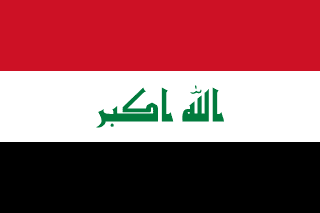
The Iraqi flag is a horizontal tricolor rectangle with a 2:3 aspect ratio, consisting of three equal horizontal bands of red, white, and black from top to bottom. A green Arabic inscription, “Allahu Akbar” (الله أكبر, meaning “God is the Greatest”), is centered on the white band, prominently displayed. The combination of red, white, black, and green text gives the flag its distinctive visual identity.
Meaning
Red symbolizes courage, struggle, and sacrifice for the nation; white represents peace, purity, and generosity; black signifies remembrance of historical suffering and victory over darkness, often associated with the Abbasid Caliphate; the green Arabic text means “God is the Greatest,” embodying Islamic faith. Together, the colors and text reflect a blend of Arab heritage and Islamic belief, with the central text reinforcing the flag’s religious and national symbolism. The script uses the Kufic style, characterized by angular, straight strokes, making it highly recognizable. This calligraphic style is commonly used in Islamic architecture and scripture.
History and Legal Status
The current red, white, and black horizontal design originated from the 1963 Iraqi flag, which originally featured three green stars in the center. During the 1991 Gulf War, the phrase “Allahu Akbar” was added to the center of the flag. In 2004, Iraq modified the flag, replacing the stars with the Kufic-scripted phrase. In January 2008, the Iraqi parliament passed a new flag law, further standardizing the font, placement, and proportions of the text, resulting in the current design. Due to past controversies over flag changes, the 2008 legislation ensured a balanced approach to font, placement, and proportions, enhancing the flag’s unity and recognizability. The flag is widely used in government buildings, schools, and international settings, serving as an important symbol of Iraqi national identity.
Iraq Travel Guide
All Guides »Iraq Travel Quick Guide: Visa, Safety Alerts, Seasons, Budget, and Local Customs & Taboos
Before traveling to Iraq, it is essential to understand the security situation, ...
7-Day Historical Route in Iraq: Baghdad – Babylon – Najaf – Ur – Erbil 7 days
Starting from Baghdad, this route connects the ancient Mesopotamian sites of Bab...
4-Day Short Trip in Iraq: Highlights of Baghdad and Babylon 4 days
A short trip based in Baghdad, connecting museums, the old city, and the ruins o...
Essential Attractions in Iraq: Babylon, Ur, Baghdad, and Erbil
Categorized by Mesopotamian heritage sites, Islamic cities, and Kurdish landmark...
A Complete Guide to Iraqi Cuisine: Tigris River-Grilled Carp, Kebabs, and Date Desserts
From the national dish of grilled carp to meat-filled rice dishes, stuffed veget...
Complete Guide to Transportation in Iraq: Airport Transfers, Private Car Hire, and Inter-city Travel Notes
This guide covers Iraq’s main airports and how to get into the city, options for...
10 Practical Tips for Traveling in Iraq: Safety, Etiquette, and Daily Life
Against the backdrop of a complex regional security situation, this guide outlin...