Guinea
West Africa’s Water Tower and Bauxite Nation: Three Major Rivers Originate Here, with Highlights Including Fouta Djallon Plateau Waterfalls, Mount Nimba Chimpanzees, and Los Islands Beaches
Guinea (Republic of Guinea)
| Capital | Conakry |
|---|---|
| Continent | Africa |
| Languages | French |
| Currency | Guinean Franc (GNF FG) |
| Time Zone | UTC+0 |
| Dialling Code | +224 |
| Area / Population | 245,900 square kilometers / Approximately 14 million |
| Visa | Most foreign visitors need to apply for a visa in advance to visit Guinea. Visas can be obtained through the Guinean embassy or consulate in your own country or via the official e-Visa platform, and proof of yellow fever vaccination is required. Guinea is currently in a transitional political phase, with limited public safety and transportation infrastructure in some areas. Authorities advise travelers to closely monitor the local situation and security advisories, proceed with caution, and if travel is essential, take proper safety precautions and purchase insurance that includes emergency assistance. |
| Best Season | The dry season runs from November to April, featuring relatively dry and pleasant weather, making it the best time to visit the Fouta Djallon Plateau, Mount Nimba, and coastal areas. The rainy season lasts from May to October, with concentrated rainfall, muddy roads, and restricted access to mountainous and forested regions. |
| Main Cities | Conakry, Kankan, Labé, Nzérékoré, Boké, Kindia, Los Islands, Mount Nimba, Fouta Djallon Plateau |
Guinea in Detail
Overview of Guinea
Guinea (officially the Republic of Guinea) is located on the west coast of West Africa, bordering the Atlantic Ocean to the west, Guinea-Bissau, Senegal, and Mali to the north, Côte d'Ivoire to the east, and Liberia and Sierra Leone to the south. The country covers an area of approximately 246,000 square kilometers. Its capital, Conakry, is built on a peninsula extending into the Atlantic Ocean and is the largest city as well as the political and economic center. French is the official language, while Fulani, Malinké, and Susu are the main local languages. The population is around 14 million.
Guinea’s diverse terrain and climate are standout features in West Africa: coastal areas feature mangroves and beaches, inland areas include plateaus, waterfalls, and rainforests, and the eastern region is dominated by vast savannahs. As the source of three major West African rivers, Guinea is known as the “Water Tower of West Africa,” and its water resources are of great significance to neighboring countries.
Geography and Climate
The country is broadly divided into four natural zones: Lower Guinea consists of coastal plains and mangroves, where the capital Conakry and the Los Islands are located; Middle Guinea is the Fouta Djallon Plateau, with elevations mostly between 800–1,500 meters, cool and humid year-round, and the source of the Niger, Senegal, and Gambia Rivers. The plateau features numerous waterfalls and expansive pasture landscapes; Upper Guinea comprises northeastern plateaus and savannahs, through which the Niger River flows from west to east, with Kankan as a key city in the region; Forest Guinea lies in the southeast, covered by dense rainforests, and the Mount Nimba area has peaks exceeding 1,700 meters in elevation, making it a biodiversity hotspot.
The climate is tropical monsoonal, with distinct dry and rainy seasons: the dry season runs from November to April, when the Harmattan winds bring dryness and dust; the rainy season spans May to October, with heavy rainfall along the coast and plateau, often causing localized storms and road disruptions. Temperatures are noticeably cooler in the plateau regions than on the coast, with significant day-night temperature variations—light jackets are recommended.
Historical Background
The region of Guinea has historically been influenced by the Ghana Empire, Mali Empire, and Songhai Empire, serving as an important part of West Africa’s gold and salt trade networks. In the 18th century, the Fulani people of the Fouta Djallon Plateau established an Islamic theocratic state, leaving a profound religious and cultural legacy. In the late 19th century, Malinké leader Samori Touré resisted French colonial forces for many years, becoming a symbol of anti-colonial resistance in West Africa.
In the 1890s, Guinea became a French colony. In 1958, under the leadership of Sékou Touré, Guinea voted to reject membership in the French Community, becoming one of the first countries in Francophone Africa to gain independence. Since then, the country has experienced prolonged one-party rule and multiple changes in government. Multiparty elections were held in 2010, and a political transition took place in 2021. The Guinean people have strong expectations for ethnic harmony and national development, giving the society and culture a blend of traditional and transformative characteristics.
Economy and Currency
Guinea is one of the world’s leading producers and exporters of bauxite. The mines around Boké are massive, and bauxite has long been the country’s most important export. Additionally, the Simandou iron ore deposit in the southeast is considered one of the world’s highest-quality untapped iron reserves. The country also has abundant gold, diamond, and hydropower resources. Agriculture mainly focuses on rice, cassava, bananas, and coffee, but weak infrastructure and unstable power supply limit the development of manufacturing and processing industries.
The official currency is the Guinean Franc (currency code GNF, symbol FG, French: franc guinéen), issued by the Central Bank of the Republic of Guinea. Guinean Franc denominations are high, and exchange rates are volatile. The local currency is not easily exchanged for foreign currencies outside major centres, and travelers typically carry Euro or US Dollar cash for conversion.
Culture and Society
Guinea is home to over twenty ethnic groups, including the Fulani, Malinké, and Susu, and boasts a rich tradition of music and oral heritage. The Malinké are known for their griot storytelling traditions, and instruments like the kora and djembe have deep roots here, with several musical instruments having originated or spread widely from Guinea. Islam is the predominant religion, with some Christians in coastal and forested areas. Ethnic groups generally coexist peacefully in daily life.
The local diet features rice, corn, cassava, and peanut sauce stews, with grilled fish, bananas, and palm oil adding distinctive flavors. Markets are central to social life, and Conakry’s large markets are bustling hubs that offer a vivid glimpse into local daily life.
Tourism Overview
Guinea’s tourism appeal lies primarily in its natural landscapes and ethnic culture. The Fouta Djallon Plateau is a destination for hikers and waterfall enthusiasts, with attractions such as waterfalls around Kindia, the cool highlands of Dalaba, and the markets of Labé. Mount Nimba Strict Nature Reserve in the southeast is a UNESCO World Heritage Site, home to tool-using chimpanzees and many endemic species, earning it recognition as a biodiversity treasure of West Africa. The Los Islands (Îles de Los) off the coast of Conakry attract both locals and regional visitors with their beaches and mangrove scenery, making them a popular weekend getaway. Kankan in Upper Guinea is an ancient city on the banks of the Niger River, rich in Malinké cultural history.
It should be noted objectively that some areas of Guinea have limited road and medical infrastructure, and risks increase during the rainy season. While security in the capital and surrounding areas is generally manageable, avoid traveling alone at night, carrying large amounts of cash, or visiting remote areas in the southeast and near borders. With the country in a political transition, policies and conditions may change. Travelers should pay close attention to updates from local authorities and their own country’s foreign ministry, choose reputable travel agencies and reliable local guides, and purchase travel insurance covering medical care and emergency evacuation.
Local Currency: Guinean Franc (GNF)
Currency Overview
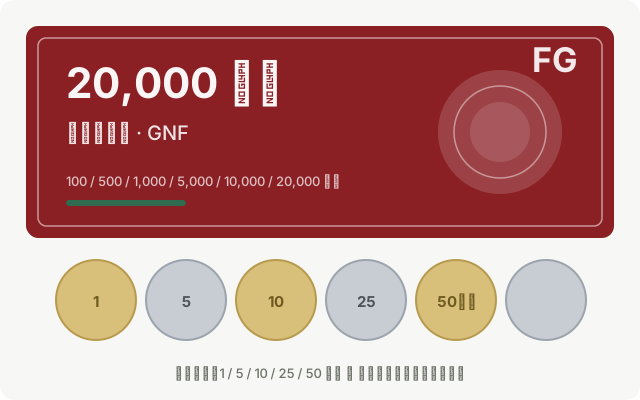
The official currency of Guinea is the Guinean Franc (currency code GNF, symbol FG, French: franc guinéen), issued by the Central Bank of the Republic of Guinea. The Guinean Franc is subdivided into centimes (1 franc = 100 centimes), but centime coins have long been withdrawn from circulation. Due to historical inflation, Guinean Franc denominations are high, and exchange rates against foreign currencies are relatively low. Daily transactions often involve large numbers, and travelers will need to adapt to pricing in large figures. A quick estimation method is to “drop the last three zeros and adjust accordingly.”
Denomination System
Current banknotes in circulation include denominations of 25, 50, 100, 500, 1,000, 2,000, 5,000, 10,000, and 20,000 francs. Banknotes feature French and local language inscriptions, with designs often depicting national symbols such as figures, traditional musical instruments, rivers, and farmland. Different denominations are distinguished by color and size. Coins in denominations of 1, 5, 10, 25, and 50 francs exist but are rarely used in practice due to their low value, with banknotes dominating everyday transactions.
Cash and Payment Practices
Guinea is a predominantly cash-based society. Aside from a few hotels, restaurants, and international institutions in Conakry that accept Visa and Mastercard, markets, public transport, small shops, and gas stations generally only accept cash. ATMs are limited and often unreliable, with low success rates for withdrawals using foreign bank cards. It is advisable to carry Euro or US Dollar cash and exchange it at banks or authorized exchange points upon arrival in Conakry. Local mobile payment systems are being promoted but remain difficult for foreign travelers to use.
Always exchange currency at official banks, airport counters, or authorized exchange points, and count the bills in person, paying attention to old or damaged notes. Informal street money changers may offer better rates but carry higher risks of counterfeit bills and disputes. Guinean Francs are generally not exchangeable abroad, so use up remaining cash or convert it back to hard currency before departure.
Traveler Tips
- Guinean Franc denominations are large, and prices are often in the tens of thousands—familiarize yourself with common notes to avoid payment errors.
- Cash access is nearly impossible in remote areas, so carry sufficient cash before heading to the Fouta Djallon Plateau or forested regions.
- Cash transactions dominate in markets and on public transport, so carry commonly used denominations like 1,000, 5,000, and 10,000 francs.
- Guinean Francs cannot be exchanged abroad, so convert any leftover cash to Euros or Dollars at the airport or a bank before leaving.
Flag Meaning
Flag Design
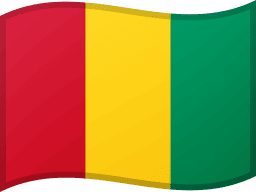
The flag of Guinea is rectangular, consisting of three vertical bands of equal width, colored (from left to right) red, yellow, and green, in a 2:3 ratio. The arrangement of the vertical stripes is structurally similar to the French tricolor flag, but the colors are replaced with the Pan-African colors of red, yellow, and green, making it simple and striking—one of the classic flag designs among West African nations. The three bands are of equal width with straight edges, creating a neat, three-section visual effect.
Meaning
Red symbolizes the spirit of struggle and sacrifice for national independence and freedom, as well as the passion and courage of the people. Yellow represents the equatorial sun and the country’s mineral wealth, particularly reflecting Guinea’s abundant gold and bauxite resources. Green symbolizes lush tropical vegetation and agricultural development, as well as hopes for the land’s enduring fertility. These three colors are also shared symbols of the Pan-African movement, reflecting Guinea’s identity during the African independence movement and often interpreted as representing the national qualities of “hard work, justice, and unity.”
History and Legal Status
Guinea adopted this red-yellow-green vertical tricolor flag in 1958 when it voted to reject membership in the French Community and gained independence, becoming one of the first Francophone African countries to raise an independent flag. The flag’s colors and layout are believed to be related to the emblem of the Democratic Party of Guinea (PDG), which led the independence movement. The vertical stripe design is also often seen as a symbolic reworking of the structure of the former colonial power’s flag. As a national symbol, the flag is widely used in government buildings, military facilities, schools, embassies and consulates abroad, and sporting events. It is also a key emblem of Guinean national identity and African unity. National law regulates the display, use, and protection of the flag, and the public is expected to treat it with respect.
Guinea Travel Guide
All Guides »Guinea Travel Quick Guide: Visa, Dry Season, Budget & Safety Tips
How to prepare your visa and yellow fever certificate, the best time to visit du...
Guinea 7-day classic itinerary: Conakry – Fouta Djallon – Upper Guinea 7 days
Starting from the capital’s peninsula and Los Islands, venture into the waterfal...
Guinea 4-Day Short Trip: Conakry, Los Islands, and Kindia 4 days
An easy short trip based in the capital: a mix of city, islands, and nearby wate...
A must-visit attractions list for Guinea: highland waterfalls, Mount Nimba, and islands
Organized by highlands & waterfalls, nature reserves, and islands & cities—highl...
Guinea Food Guide: Peanut Sauce Stews and River Fish with Rice
Guinean cuisine is built around rice, cassava, and peanut sauce, paired with riv...
Guinea Travel Guide: Airports, Shared Taxis, and Mountain Roads
Understand transport options from Conakry Airport, shared taxis within the city,...
10 Practical Tips for Traveling in Guinea
From political and safety advisories to malaria prevention, cash tips, and road ...