Want to improve your love life? Don’t miss Dragon Palace Shrine in Kagoshima to pet turtles or soak at Ryoma Park.
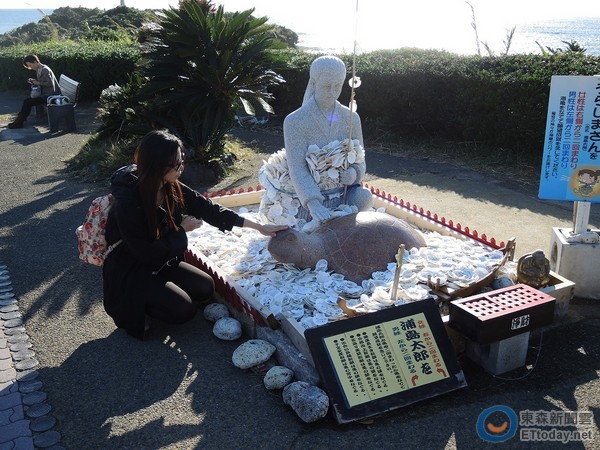
▲ Urashima Taro and the turtle quietly guard everyone’s wishes. The small Turtle Rock carries the hopes of countless people. What’s more special is that you must “rub” it to make a wish. (Photo by reporter Chao Yuting, same below)
Reported by Chao Yuting / Kagoshima
Both “Salt Bath Onsen Ryoma Park” and “Dragon Palace Shrine” are known among Japanese people as“destinations for forging great relationships”. Ryoma Park is widely associated with Sakamoto Ryoma, a notable historical figure from Japan’s Edo period. Legend has it that the Ryoma couple enjoyed their happiest honeymoon trip at the salt baths back then. Meanwhile, Dragon Palace Shrine is famous for its connection to Urashima Taro and turtles—turtles are known to regularly lay eggs along the coast, and the shrine’s nearby Turtle Rock can be rubbed to make a wish.
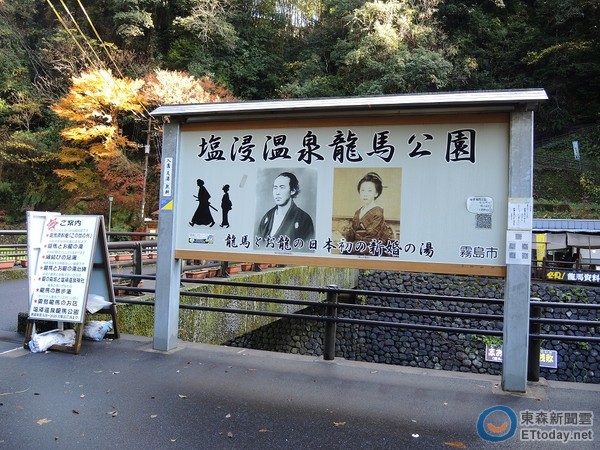
▲ Sakamoto Ryoma visited this hot spring resort 149 years ago to recover from his injuries.
Salt Bath Onsen Ryoma Park
Located in Kirishima, Salt Bath Onsen Ryoma Park is famous for Sakamoto Ryoma, a notable historical figure from Japan’s Edo period. Hirokazu Ikeda, a local representative, said the onsen here is completely natural, and its waters are particularly effective for wound healing. It was these very hot springs that Sakamoto Ryoma used to treat his injuries. Moreover, he brought his wife here for their honeymoon, which is why it’s also called a “destination for forging great relationships.”
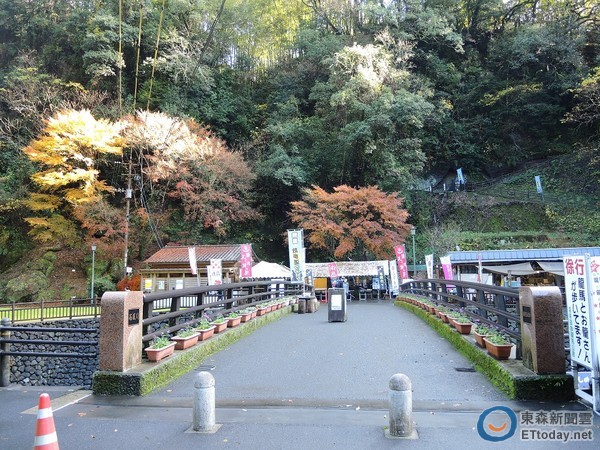
▲ The salt baths, which Sakamoto Ryoma described as an outdoor paradise.
Ryoma Park is tucked away in the mountainside, offering pleasant scenery. Hirokazu Ikeda mentioned that this area only gradually attracted visitors after the road was opened in Meiji 36 (1903). Historical records indicate that Ryoma came here about 149 years ago to heal after being injured. There is alsoa legend that Ryoma wrote to his sister saying, “The salt baths are an outdoor paradise, and the happiest days of my honeymoon.”
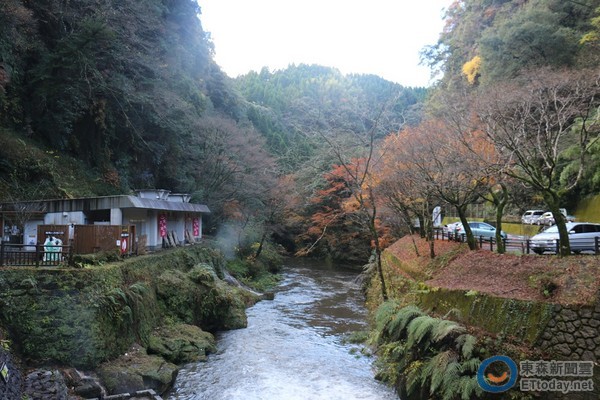
▲ The beautiful environment of the salt baths captivated Sakamoto Ryoma.
At the time, there were around seven or eight hot spring inns in Kirishima City. It’s said that during their 83-day honeymoon, the Ryomas spent 26 days in Kirishima City, including 18 days at the salt baths. To commemorate this, a “statue of the Ryoma couple” was later erected in the park. Hirokazu Ikeda noted that due to this legend, many Japanese couples specifically choose this spot for their honeymoon, and many tourists also visit out of curiosity about Ryoma’s legendary story.
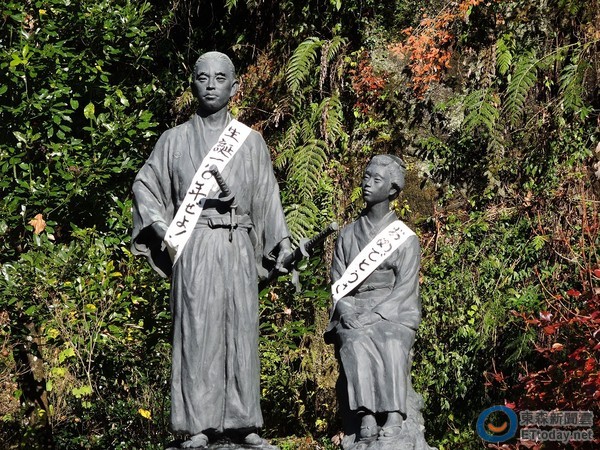
▲ The statue of Sakamoto Ryoma and his wife.
Currently, the park offers two types of hot springs: one is the “Salt Bath,” and the other is the “Crane’s Bath” that Ryoma used for healing. The park also features indoor public baths and free foot baths. Additionally, there is a nearby Ryoma Museum where visitors can learn more about this legendary figure in Japanese history.
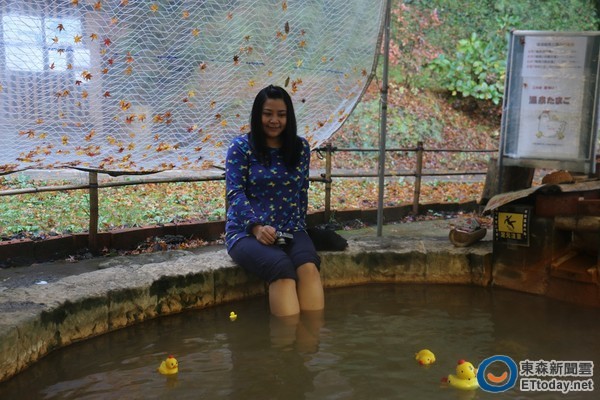
▲ The park provides free hot spring foot baths.
Salt Bath Onsen Ryoma Park
Business hours: 9:00 AM – 6:00 PM (open year-round)
Onsen fee: 360 yen per person
Address: 3606 Mukawadani, Makizonocho, Kirishima City
Phone: 0995-45-5111 (ext. 2614-2615)
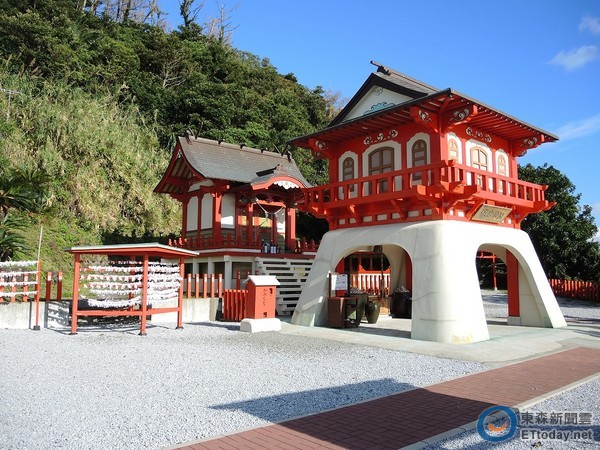
▲ Dragon Palace Shrine standing in Nagasaki Cape Park tells the beautiful legend of Urashima Taro and Princess Otohime. (Photo by reporter Chao Yuting, same below)
Dragon Palace Shrine
A Japanese folktale about Urashima Taro is popular in the Mishima area. Inspired by this tale, a “Dragon Palace Shrine” was built in Nagasaki Cape Park, enshrining Princess Otohime, who appears in the Urashima Taro story.“Shell wishing” is the most unique feature of Dragon Palace Shrine. Write your romantic wishes on a shell, place it in front of the shrine, and your wish is made.There is also a small “omikuji (fortune) machine” nearby. After making a wish, insert 100 yen to draw a fortune. Additionally, there is a small area dedicated to tying ema (votive plaques), but only for “bad fortunes.” It is said that tying them up will prompt the shrine to pray for you.
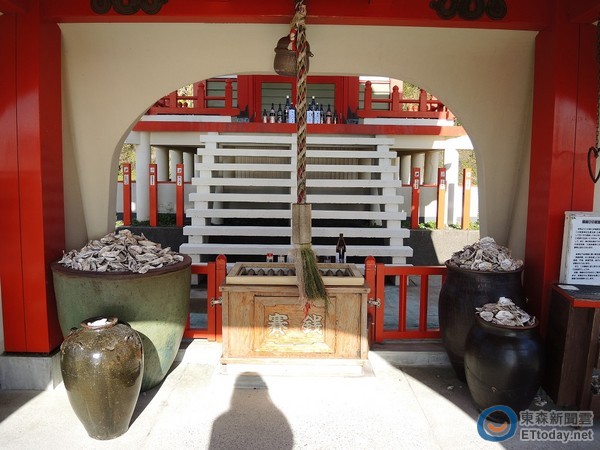
▲ Wishing shells overflow, adding a touch of romance to the shrine.
Additionally, turtles are also central to the Urashima Taro legend. It is said that a turtle, in gratitude for saving its life, took Urashima Taro to visit the Dragon Palace, where he met Princess Otohime. Nowadays, turtles regularly come to the shores of Nagasaki Cape Park to lay eggs, adding authenticity to the legend, and turtles have become a symbol of good fortune.

▲A small wooden stake used to tie "bad fortune slips."
Walking down from Nagasaki Nose Park, you’ll come across a turtle-shaped rock nearly buried in seashells. This tiny turtle rock carries the wishes of countless people. What’s more special is that you must “touch” it to make a wish. Legend has it that...“To pray for health and exam success, touch its head; for beauty, rejuvenation, and a good match, touch its face; and for safe childbirth, touch its back.”But before touching it, you must walk around the turtle rock twice—men should go clockwise from the left, women counterclockwise from the right.
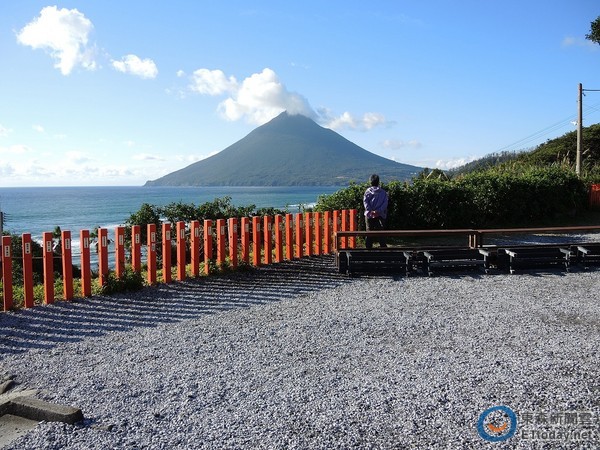
▲The scenery around the shrine is beautiful, and you can even see Kaimon-dake from here.
Ryugu Shrine
Business hours: Open all year, 24 hours a day
Wish fees: 100 yen per shell, 100 yen per fortune slip
Address: 1578-8 Okachogamizu, Yamagawa, Kagoshima Prefecture, Ishizaki
Phone: 0993-22-2111 (Ishizaki Tourism Division)
Share
This article is published by HowToTrip. Sharing and reposting are welcome — please credit the source.
Article URL: https://www.howtotrip.net/views-9062
Related Articles
- Shaoxing's "Grandpa Gourd" hangs the gourds back up: "If there are too many people, we'll interact less — just take a quick look from afar"
- Chinese authorities announce "reciprocal adjustment" to Japan visa fees — single-entry visa jumps from 2,250 to 16,750 yen!
- The "health stones" carried by a traveler were found to have radiation levels exceeding safety limits by a thousand times, potentially endangering fellow passengers on the same flight. Customs issues warning!
- Shenzhen Airport Issues Late-Night Notice: Unidentified Aerial Object Detected, Causing Widespread Flight Delays!
- “They only said it cost money after I opened the box and washed it!” 200g of grapes sold for 60 yuan on a high-speed train—12306 responds!
- Can't buy an airline ticket? Denied exit? Blocked from boarding? A large number of Chinese tourists have mysteriously become "discredited individuals"
- Adverse weather and economic fluctuations impact Colombia's coffee market
- Beach bathing area responds to 2 yuan/30 seconds fee for freshwater foot rinsing: Clearly priced!
- Taking off with an improperly closed cabin door? Wing malfunction? Multiple flights made emergency returns mid-journey!
- Experience the gifts of nature! A countdown of the world’s ten most stunning coastlines