Endless vitality in motion: 14 must-visit spots on a contemporary art mini-tour of Paris

Text and photos byOne day in Paris, excerpted from *One Day in Paris: A Guide to Exploring Paris*, published by Times Publishing
Route 6 — Contemporary Art Route: Endless New Vitality
Culture is the lifeblood of a great city. In France, many buildings are classified as cultural heritage sites, and any alterations or renovations must comply with national regulations. The pristine Haussmann-style architecture of Paris owes its beauty to a legal requirement mandating exterior wall cleaning every ten years, with costs shared among residents. The distinctive gray-blue "Roof of Paris" (Toit de Paris) also has hopes of being listed as a UNESCO World Heritage Site, thanks to efforts by the newly elected mayor in 2014. Even when ordinary people buy homes, they often prefer to retain historic features like fireplaces and exposed wooden beams. Although Paris, the "City of Light," is synonymous with fashion, many are still enamored with vintage clothing, secondhand book stalls, and antique furniture... In this city’s timeline, there seems to be no such thing as true garbage.

Even as the French prioritize heritage conservation, each era continues to breathe new life into the city. Some enjoy buying secondhand old tables and chairs to DIY and restore, then mixing them with modern decor. These reborn antiques seem to carry their own stories and cultural warmth, rather than being cold, lifeless objects.
Secondhand clothing worn on the body even better embodies the spirit of "breathing new life into the old." Many people enjoy styling vintage pieces to reflect their personal flair and creativity. Don’t underestimate old clothes or antique garments from bygone eras—some can even be pricier than new ones. Many vintage clothing enthusiasts specialize in certain periods. For instance, those particularly fond of 1930s fashion will hunt down matching outfits and accessories for the full experience. Sourcing includes specialty vintage shops for specific eras, as well as trading with fellow enthusiasts who share a passion for fashion from that time. Moreover, vintage clothing has its own "trends"—one period might see a surge in 1960s styles, only for post-WWII fashion to become popular a few years later.
Next, let’s uncover the new life sprouting in Paris’s ancient city through the interplay of modern trends and classical architecture.

[1] Place des Vosges (Vosges Square)
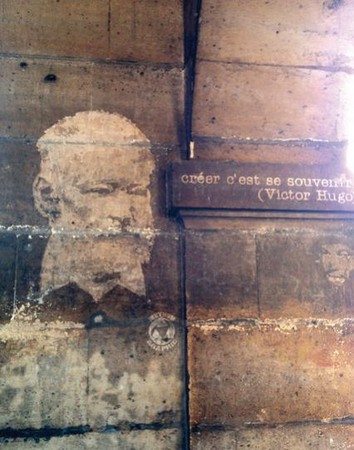
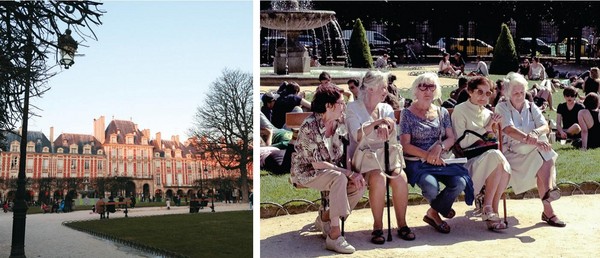
Paris’s oldest square, Place des Vosges, is considered the most beautiful square by many Parisians: its uniformly arranged red-brick buildings feature white-brick window trimmings, paired with gray-blue roofs, while the ground floor boasts lofty arcade shops, exuding the aristocratic elegance of the Renaissance era. Near the entrance on Rue Birague, you’ll spot an old depiction of Victor Hugo spray-painted on a weathered wall. Hugo’s most famous work, *Les Misérables*, was largely written during his time living here.
This area was a favored residential district for nobility in the Middle Ages, and the square’s site was originally a horse-trading market. It wasn’t until King Henry IV envisioned transforming Paris into the most beautiful city that he ordered the design of a royal square here as a model. However, before the square was completed, Henry IV was assassinated. After its completion in 1612, the square underwent several name changes over the course of history. It was renamed Place des Vosges after the French Revolution in honor of the Vosges department (Les Vosges), the first to pledge allegiance and pay taxes to the government. The once-prominent nobility, salon-hosting ladies, literary figures like Hugo, and other greats... have all faded into history. Today, the square is a free public green space for sunbathing and picnics, but back in the days of Louis XIII, it was a place where daytime duels were held and nobles secretly rendezvoused at night. Beneath its beautiful arcades, alongside upscale cafés, are numerous avant-garde art galleries showcasing abstract paintings and uniquely styled sculptures—yet they blend seamlessly with the classical, elegant corridors.
[2] Le Marais (Marais District)
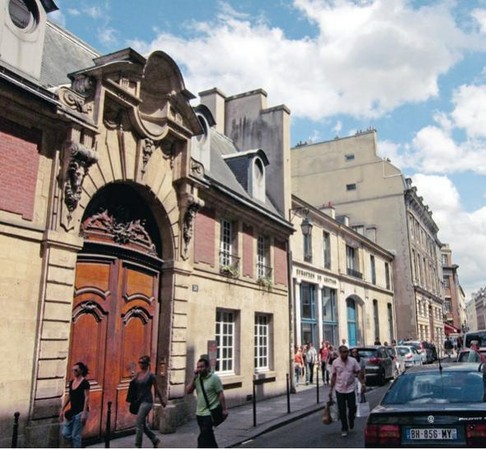
Exiting the northern gate of Place des Vosges and heading west along Rue des Francs-Bourgeois leads you to the heart of Le Marais. Le Marais is one of Paris’s most unique and vibrant districts—and one we’ve loved for years. In fact, just from the street names, you can glimpse the district’s distinctive blend of aristocratic and commoner history: the area around Place des Vosges has long been a gathering place for nobility since the Middle Ages. In the early 15th century, a nobleman donated a large house to shelter 24 impoverished individuals. These poor residents, living among the nobility and exempt from taxes due to their poverty, came to be called "Francs-Bourgeois" (free burghers). Along this street and its side alleys, you can still find many splendid former noble mansions, the most famous being the current Musée Carnavalet (Paris History Museum). During Haussmann’s urban redevelopment, this area was bypassed due to its muddy, difficult-to-develop terrain, but now, Paris’s oldest and most distinctive district has become the epitome of youthful fashion trends.
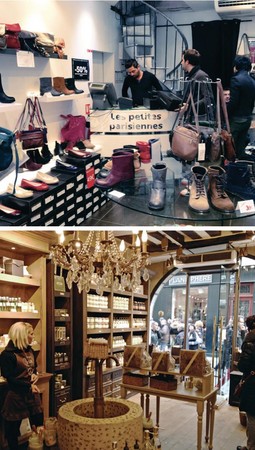
In recent years, the fastest-growing fashion trend in France has been designer (Mode Créateurs) brands. About a decade ago, Spanish brand ZARA
and Swedish brand H&M built massive fast-fashion empires with their rapid product turnover and affordable pricing, creating a two-pronged dominance alongside high-end couture. Later, a new path emerged from young French designers: affordable luxury (le luxe abordable).
These brands emphasize original designer creations—just like haute couture—not mass-produced runway replicas—but at accessible price points. Though still not cheap, many quality- and design-conscious consumers flock to them. Beyond strong designer aesthetics, these brands also embody the French philosophy of "expressing individuality, practicality, versatility, and comfortable fabrics," quickly winning over Parisian hearts.

These next-generation designers often started small in Le Marais boutiques. Once spotted by major department store buyers, they could rocket to fame. Paris’s top department stores have dedicated designer brand floors, grouping these labels together. In 2014, BHV Marais underwent a major renovation opposite Paris City Hall to spotlight designer brands on its ground floor, catering to the stylish crowds frequenting Le Marais. In the past three years, this trend has rapidly expanded to other European countries, the U.S., Japan, South Korea, and has even been dubbed a "French invasion" by the New York fashion scene.
This is a rare part of Paris that hasn’t been overrun by tourists yet swarms with locals on weekends, preserving the French way of shopping—browsing small shops one by one rather than cold, cavernous malls.
You can also duck into ancient noble mansions here, where hidden gems like up-and-coming designer boutiques or discerning vintage shops await. Over the years, sleek Sandro, romantic Maje, classically refined Claudie Pierlot, soft yet wearable Comptoir des Cotonniers, and stylishly intellectual The Kooples—brands now iconic across Europe, America, Japan, and Korea—have become common sights on Parisian streets, with branches in major shopping districts. But Parisians who love Le Marais don’t follow trends blindly; they have strong personal styles and enjoy discovering lesser-known designers that perfectly suit them.
Following Rue des Francs-Bourgeois to Rue Vieille du Temple, you enter the most lively district of Parisian everyday culture. Around Rue Vieille du Temple, the stylish vibe continues, with plenty of snack stalls, teahouses, restaurants, and bars to take a break. A bit farther north lies an area historically home to Breton immigrants and more recently Jewish communities, so you’ll find many crêperies and Jewish bakeries.

Our favorite is Mariage Frères (Mariage Brothers) tea house. The Mariage family served as trade representatives for the French East India Company during the 17th-century Age of Exploration, dispatched by Louis XIV to negotiate in places like Persia and Madagascar and handle tea trade. Later, in 1854, they opened Paris’s first tea trading company.
They’re best known for their aromatic teas (Thé Parfumé)—blended teas combining various types of tea leaves with floral and fruity flavors. Though the tea house’s
interior decor and staff attire still evoke the Age of Exploration, their products always surprise with delightful new flavors.
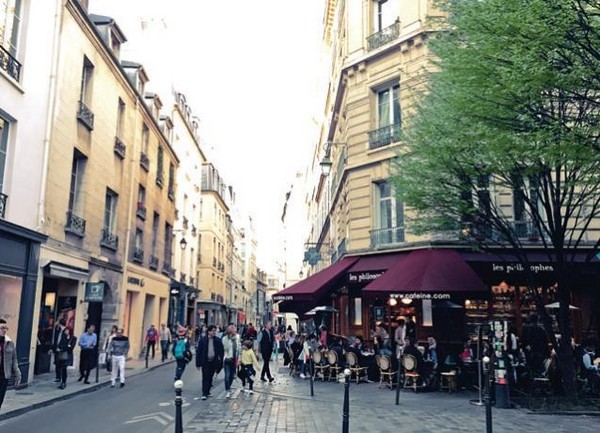
From Place des Vosges to the streets nearby, almost all roads are narrow and winding, with even old buildings slightly tilted. This area preserves the original old Paris look but is also one of the liveliest districts for street art (graffiti), keeping the ancient city vibrant. While striking graffiti carries artistic social commentary, the city struggles with these "uneven yet ever-thriving" illegal artworks, setting up a 3975 hotline for citizen reports and spending substantial budgets on wall clean-ups annually. Many "street artists" favor punk-style graffiti, "publishing" their work via spray paint or paper-mâché on walls—some even becoming local legends, like Fred le Chevalier (Fred the Knight).
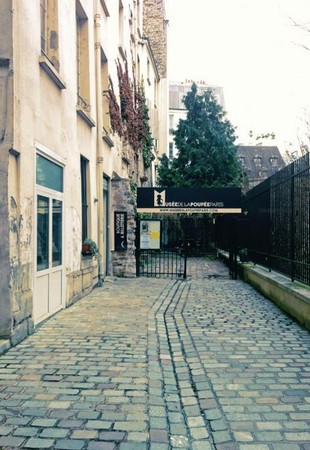
[3] Musée de la Poupée (Doll Museum)
Continuing along Rue des Francs-Bourgeois leads to Rue Rambuteau, a bustling local market street with supermarkets, bakeries, produce stands, seafood shops, and butcher stalls... The scene gradually shifts from fashionable Le Marais to the youth fashion hub around the Centre Pompidou. In fact, the area north of the Pompidou toward Les Halles often reminds us of Taipei’s Ximending.
Hidden in a mysterious alleyway nearby is a private doll museum—one of Paris’s finest examples of antique revival. The museum houses antique dolls and even a doll clinic.

Once, at a friend’s home, we stumbled upon a teddy bear and a portable typewriter identical to Ernest Hemingway’s. The bear had been picked up by the friend’s mother over fifty years ago on the roadside. A former artist, she kept the bear in her Montparnasse studio, where it appeared in many photos with her. This wasn’t a branded teddy bear—the eyes were different colors, the ears seemed resewn, and its once-articulated limbs were dislocated, nearly falling off. But its earnest face made it hard for us antique lovers to let go. Eventually, we convinced our friend to let us take the battered bear in for medical care. After evaluation by museum experts, the nameless bear was estimated to have been born in the 1950s. The restorer sewed the ears and limbs back, manually cleaned decades of dust, and the total cost? 270 euros.
Yet the memories of childhood, the nostalgia for a mother, and the thrill of unearthing an antique—none of that can be measured in money. After its "recovery," we took the bear to the park near the museum, where adorable children immediately swarmed it. The kids could never imagine this bear might be older than their grandparents.
Doll Museum Musée de la Poupée
Quartier Beaubourg Impasse Berthaud 75003 Paris
www.museedelapoupeeparis.com
Subway station: M11 Rambuteau
Business hours: Tuesday to Saturday, 1:00 PM – 6:00 PM, closed on public holidays
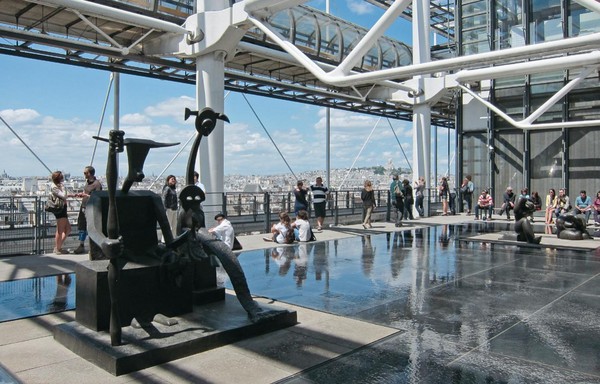
[4] Centre Pompidouu
Over forty years ago, President Pompidou decided to build a “modern art exhibition hall combined with a multimedia library” in the heart of Paris. He invited architects from around the world to submit proposals, and ultimately the ultra-avant-garde design with “all pipes exposed on the exterior” stood out from nearly seven hundred competing entries. To this day, the colorful pipes on the façade remain one of its most striking features. Though somewhat jarring against the classical elegance of Paris, they give the building a uniquely youthful and vibrant energy.
In addition to its impressive collection of cutting-edge contemporary art, the view from the rooftop is absolutely spectacular—especially on sunny days when the bright sunlight illuminates Paris. Looking through the backlit steel beams, amidst the deep geometric lines, you can see the Parisian rooftops stretching far into the distance, gradually rising toward Montmartre, culminating in the white dome of the Sacré-Cœur Basilica shining like a bright moon in the sun.
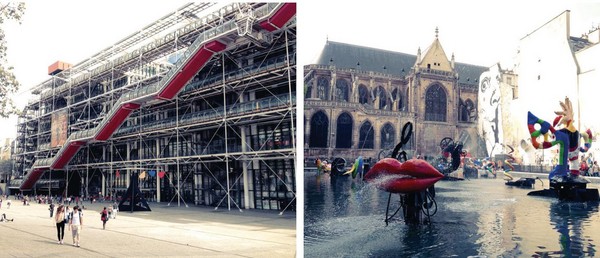
[5] Rue Aubry le Boucher
Standing at the entrance of the Centre Pompidou, just around the corner from the Starbucks on the small road diagonally ahead to the left, lies the real-life site of the bloody suppression of students by the military depicted in Victor Hugo’s Les Misérables—Rue Aubry le Boucher. On June 5, 1832, Hugo happened to pass by here and was unexpectedly caught up in a sudden outbreak of conflict. Although the protesters were primarily aristocratic students, the root cause stemmed from the long-suppressed outcry of the impoverished lower classes struggling to survive. Later, Hugo would write about these events in Les Misérables, where the fictional orphan boy Gavroche also loses his life at this very spot.
The vast area extending from the Centre Pompidou toward Les Halles represents one of Paris’s greatest rebirths. Since the 12th century, this district had been the city’s largest cemetery. But as urban development rapidly accelerated and the population soared, it quickly became overcrowded and inadequately maintained. Many of the deceased were ordinary citizens, and their bodies were often simply dumped en masse into large pits. By the 18th century, multi-story morgues were added around the site, and within the limited space, corpses were piled on top of each other, producing an absolutely horrifying stench. During the reign of Louis XVI, after Paris suffered widespread outbreaks of smallpox and plague, authorities finally resolved to clean up the area, relocating the mountain of bones to the underground catacombs created from former quarries in the southern suburbs of Paris. In fact, just by considering Hugo’s Les Misérables or the film Perfume, one can imagine just how dreadful 18th-century Paris truly was...
[6] Fontaine des Innocents
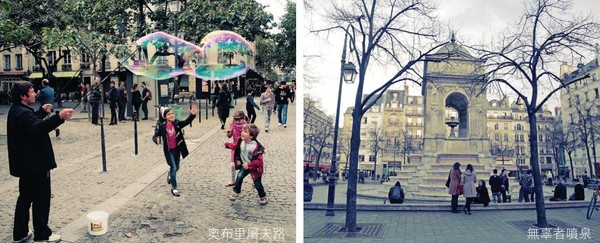
The impoverished souls of commoners who were once carelessly buried in mass graves were referred to as “the innocents.” This Renaissance-style fountain, built in the 16th century and forming part of the original cemetery wall, thus earned its name—and it is also the oldest fountain in Paris. Over two hundred years ago, this was one of the darkest spots in Paris, but today it is bright and open, serving as a space for leisurely chats, skateboarding teenagers, and dance practices. Such a transformation is truly something to be grateful for.
[7] Rue de la Ferronnerie
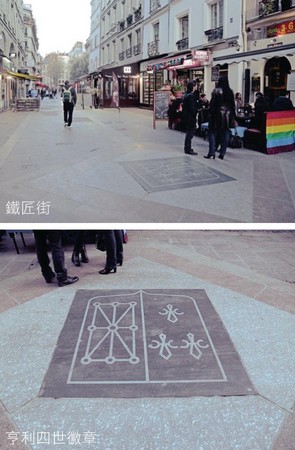
On Rue de la Ferronnerie, passing through the archway behind the fountain, another even more innocent figure met his tragic end—Henry IV, the founder of the Bourbon dynasty, featured in Alexandre Dumas’ novel and its film adaptation La Reine Margot. In 1572, Protestant Huguenot leader Henry IV traveled from southern France to Paris to marry Princess Margot. However, this political marriage was actually part of Queen Mother Catherine de’ Medici’s scheme to eliminate the Protestant faction. Shortly after the wedding, Catherine, in alliance with Catholic forces, instigated a three-day bloodbath across Paris, slaughtering thousands of Protestants and filling the Seine River with corpses.
Later, Margot’s brothers died one after another, making Henry IV next in line for the throne, but he faced opposition from the Catholic Church. Eventually, Henry IV realized that decades of religious warfare were only tearing society apart. In a sacrifice of his own faith, he converted to Catholicism, then issued the Edict of Nantes, declaring Catholicism the state religion while simultaneously recognizing the freedom of Protestant worship—making France the first European nation to quell religious wars. In 1610, as Henry IV’s carriage passed along this street, its wheel suddenly got stuck. While everyone was busy pushing the carriage, an assassin stabbed the king twice—bringing his life of sacrifice and tragedy to an end.
This road has since been transformed into a beautiful pedestrian walkway, lined with classical arched colonnades and flanked by shops and cafés. The Henri IV crest embedded in the ground serves as a reminder of a pivotal moment in French cultural history.

[8] Les Halles
Paris’s central transport hub “Châtelet–Les Halles” is served by five metro lines and three RER rapid transit lines. The subway transfer tunnels, resembling underground caves, not only suffer from poor ventilation but also have perpetually dark floors. The crowds are packed shoulder to shoulder, with some playing violins while others lie on the ground begging… it all evokes images of the sewers in Les Misérables.
The above-ground Les Halles shopping mall isn’t much better. It originally began as a large market in the 12th century, located right next to the terrifying cemetery near the Fontaine des Innocents. Imagine—fresh produce being sold alongside decaying, foul-smelling corpses... King Philip II finally had enough and ordered a cleanup, constructing a roofed, walled central market, which became known as Les Halles, meaning “the great hall.”
Today’s beautiful and orderly Parisian cityscape is largely thanks to 19th-century urban planning. But curiously, the Les Halles area at the very heart of Paris seems cursed—over the past century, it has been demolished and rebuilt multiple times. Since we’ve been in Paris, every time we pass through over the years, it’s either under construction or being torn down to be rebuilt, like a never-healing wound. Additionally, the convergence of multiple RER lines serving the suburbs draws in delinquents from impoverished outskirts who come here to brawl due to the “convenient transportation,” and pickpocketing and drug dealing are also common. As a result, locals mock it as the “marijuana plaza” or “urban disaster zone”—it’s quite pitiful.
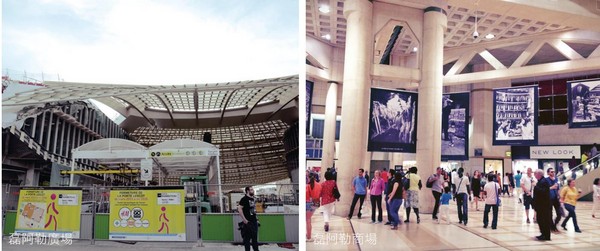
Finally, in 2011, the Paris municipal government tore it all down again. This reconstruction aims to turn Les Halles into a beautiful shopping mall, even launching an elaborate website for citizens to track the progress. While the exterior still looks like a construction site, the underground mall is already bustling and open. While soaking in Paris’s romance, why not also visit this area to experience the “rebirth in progress” of Paris?
[9] Église Saint-Eustache
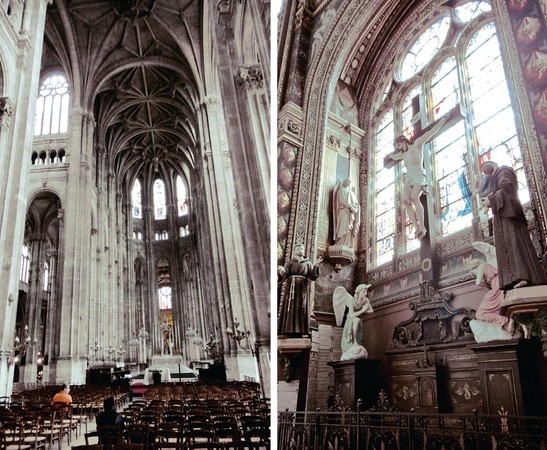
Located next to Les Halles, Église Saint-Eustache is arguably one of the most beleaguered landmarks in Paris. Although construction began in the 16th century during the Renaissance, the royal ambition at the time was to build a church taller and larger than Notre-Dame—so Gothic architecture was still used. Gothic churches are built from the back forward, hence the rear of the church boasts beautiful flying buttresses, and the interior pointed-arch roof is indeed taller than Notre-Dame’s. But over the course of a century, the style gradually evolved into a mix of Gothic and Renaissance. Due to financial difficulties, construction was repeatedly interrupted and eventually had to be scaled back, leading to an abrupt halt. In the 18th century, the main gate was demolished and rebuilt in Neoclassical style, yet the church still remained unfinished. In the 19th century, a major fire nearly destroyed it. In fact, the main gate remains unbuilt to this day, with only the left bell tower standing—while the right side appears as if it’s missing an ear. Truly unfortunate.
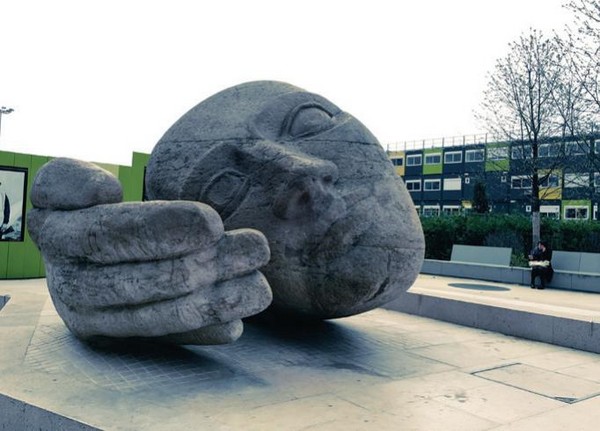
Right in front of the church square lies a giant human head, a sculpture titled Écoute (Listen) created by French artist Henri de Miller in 1986. Compared to the troubled old church, this serene human head appears rather humorous and has become a favorite climbing toy for children.
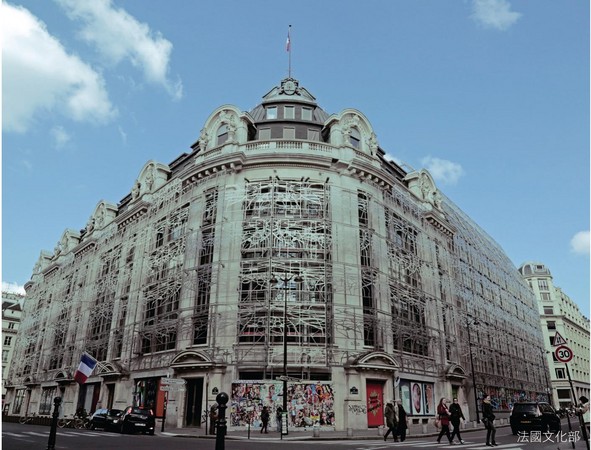
[10] The Wire Mesh Façade of the Ministry of Culture Building L’immeuble « Bons Enfants »
Walking along Rue du Louvre and then turning left onto Rue Saint-Honoré, you’ll spot a building enclosed in stainless steel mesh. This stone structure was built in the early 20th century as a storage facility for the Louvre department store, while the adjacent mid-20th-century building was formerly the Ministry of Finance.
To harmonize the differing styles of the two buildings and integrate them as the “Ministry of Culture office complex,” French architect Francis Soler drew inspiration from paintings by Italian Renaissance artist Giulio Romano. He digitally deconstructed the human figures in the artwork into abstract Arabic forms, then wrapped both buildings with delicate lace-like wire mesh. The perforated mesh creates a play of light and shadow, blending the solid and the void.
Interwoven visual effects.
This building is located near the Palais Royal, the Louvre, the Stock Exchange, the Banque de France, and the luxury shopping district of Place Vendôme. Soler wanted to highlight the unique significance of this location: “All major revolutionary movements began here, and it is also where all capital flows. It is a district that is both wealthy and rebellious, conservative and modern—perfect for treating classical stone walls with contemporary methods...” The stainless steel fencing fuses painting, sculpture, and architectural techniques, existing somewhere between the figurative and the abstract, while also building a bridge between the past and the present. The convergence of so many concepts makes this a truly fitting home for the French Ministry of Culture.
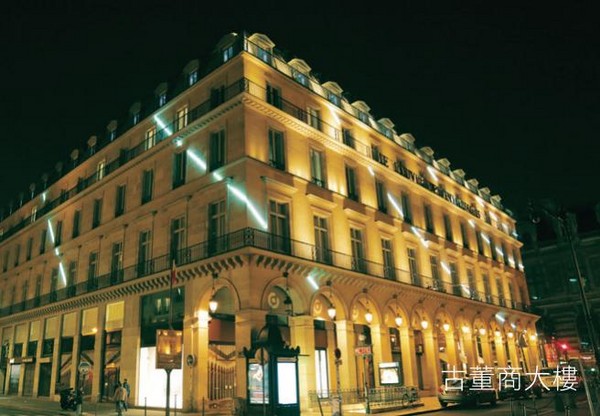
[11] The “Big Waves” of the Louvre Antique Dealers Building Les Grands Ondes
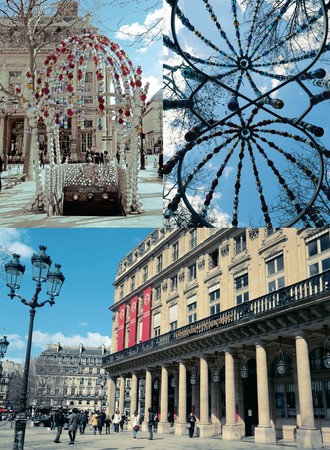
As dusk falls, the façade of the Louvre des Antiquaires building, situated between the Louvre and the Palais Royal, lights up with undulating waves of blue neon—a breathtaking sight under the setting sun or night sky. This is an installation artwork by French geometric minimalist master François Morellet.
This Ottoman-style building was originally constructed as a hotel for the 1855 World's Fair. Back then, it was the bustling and thriving department store, the Louvre. By the mid-1970s, part of the building became offices, while another section was used as a gathering place for French antique dealers.
In 2013, under the project “Memory of Contemporary Art,” artist Daniel Buren installed hundreds of sky-blue neon tubes in concentric circles on all four sides of the building, arranged like water droplets to form nine waves. This added a softened aesthetic to the vertically styled Ottoman architecture. The blue glow reflecting off the stone walls creates a romantic, dreamlike atmosphere.
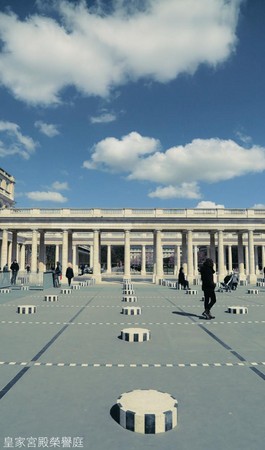
[12] Les Deux Plateaux (The Two Plateaus) in the Royal Palace Gardens
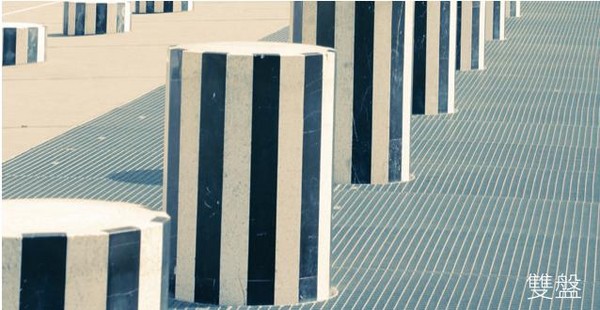
Upon entering the Cour d'Honneur (Court of Honor) of the Royal Palace, your attention is immediately drawn to 220 marble columns of varying heights, arranged in black and white. This is the public art installation “Les Deux Plateaux” (also known as “Colonnes de Buren”), commissioned in 1986 by the French Ministry of Culture to transform the parking lot courtyard. It was created by French conceptual artist Daniel Buren.
The upper parts of the columns feature Buren’s signature 8.7 cm black-and-white vertical stripes (we even brought a ruler to measure them!). The white marble comes from Carrara, and the black marble is sourced from the Pyrenees—both premium stones used by sculptors since ancient times. The uneven heights of Buren’s columns echo the classical stone pillars along the Royal Palace colonnade, creating a visual rhythm. Beneath the perforated iron grating on the ground lies the lower part of the installation: an underground fountain allows water to flow among the marble columns, casting beautiful mirrored reflections through light projection!

[13] Le Kiosque des Noctambules (The Noctambules Kiosk) in front of Place Colette
After seeing three classical buildings reborn through modern installations, let’s admire another piece of public art adorning Place Colette (Colette Square)! At the exit of the Palais Royal–Musée du Louvre metro station stand two dazzling, colorful glass-bead domes.
Whether in sunlight or under the lights of dusk, they remain crystal clear, like a giant piece of jewelry. Created in 2000 by French contemporary artist Jean-Michel Othoniel for the Paris Metro operator RATP, this work is titled “Le Kiosque des Noctambules.” The base of the installation features a fence made of aluminum rings inlaid with colorful Murano glass from Venice, resembling submarine observation windows. One dome is strung with warm-toned glass beads, representing sunlight and daytime; the other features cool-toned beads, symbolizing the moon and night. The two domes intersect to form a horizontal Arabic numeral “8,” signifying eternity. The vibrant colors, luxurious structure, and fairy-tale-like forms echo the plays historically performed at the nearby Comédie-Française.

[14] The Glass Pyramid of the Louvre
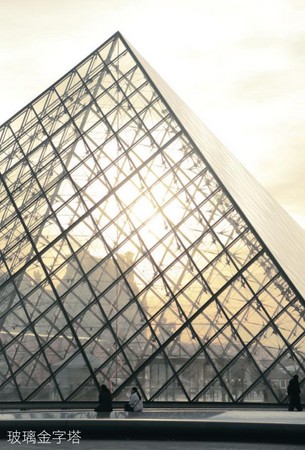
Designed by master architect I.M. Pei, the transparent glass pyramid is hailed as one of the “Three Treasures of the Louvre,” alongside the Mona Lisa and the Winged Victory of Samothrace. However, its construction was as controversial as the Eiffel Tower was at the end of the 19th century. In 1981, newly elected President François Mitterrand, a passionate patron of culture and the arts, launched the “Grand Louvre” project. Though the Louvre was already regarded as a world-class museum and pride of French culture, it had lacked proper maintenance for centuries, with the right wing still housing the French Finance Ministry. The Grand Louvre plan aimed to relocate the Finance Ministry and modernize the museum, addressing outdated exhibition halls, insufficient storage space, and cramped ticket offices.
In 1983, Chinese-American architect I.M. Pei was appointed to lead this major project. The modern pyramid, supported by an aluminum frame and composed of 673 rhombus-shaped glass panels, sparked intense public debate. Conservatives argued that it would ruin the integrity of the Louvre, and the pyramid—as a symbol of pharaoh tombs—was seen as a curse. After numerous negotiations, the Grand Louvre project was completed in 1989. To everyone’s surprise, the glass pyramid seamlessly blended into the classical Louvre plaza, looking entirely natural—as if it had always belonged there.

In recent years, the Louvre has become even more bold, regularly collaborating with contemporary artists to innovate atop this historic monument. In 2013, Michelangelo Pistoletto added a glowing infinity symbol to the pyramid. He was the first artist invited to alter the pyramid since its completion!
Acts of change and innovation do not mean erasing history. The “reborn landmarks” along this journey are proof of that. Just as French Culture Minister André Malraux once said in 1959:“Culture is not inherited, it is conquered.” – La culture ne s'hérite pas, elle se conquiert. —André Malraux, 1959
Many corners of Paris are steeped in stories. These tales drift down through the ages, revitalized in us, transforming into new perspectives and ideas, which will then drift toward the future, merging with another person’s taste and being reborn. The old inspires the new, and the new gives life to the old, together creating the richly layered city of Paris.
Sick of work or school and desperate for a vacation?
Download the “ETtoday News Cloud APP” and take a virtual trip with us →
iOS:https://goo.gl/rmIDdx
Android:https://goo.gl/XPe8Uj
Share
This article is published by HowToTrip. Sharing and reposting are welcome — please credit the source.
Article URL: https://www.howtotrip.net/views-8852
Related Articles
- Shaoxing's "Grandpa Gourd" hangs the gourds back up: "If there are too many people, we'll interact less — just take a quick look from afar"
- Chinese authorities announce "reciprocal adjustment" to Japan visa fees — single-entry visa jumps from 2,250 to 16,750 yen!
- The "health stones" carried by a traveler were found to have radiation levels exceeding safety limits by a thousand times, potentially endangering fellow passengers on the same flight. Customs issues warning!
- Shenzhen Airport Issues Late-Night Notice: Unidentified Aerial Object Detected, Causing Widespread Flight Delays!
- “They only said it cost money after I opened the box and washed it!” 200g of grapes sold for 60 yuan on a high-speed train—12306 responds!
- Can't buy an airline ticket? Denied exit? Blocked from boarding? A large number of Chinese tourists have mysteriously become "discredited individuals"
- Adverse weather and economic fluctuations impact Colombia's coffee market
- Beach bathing area responds to 2 yuan/30 seconds fee for freshwater foot rinsing: Clearly priced!
- Taking off with an improperly closed cabin door? Wing malfunction? Multiple flights made emergency returns mid-journey!
- Experience the gifts of nature! A countdown of the world’s ten most stunning coastlines