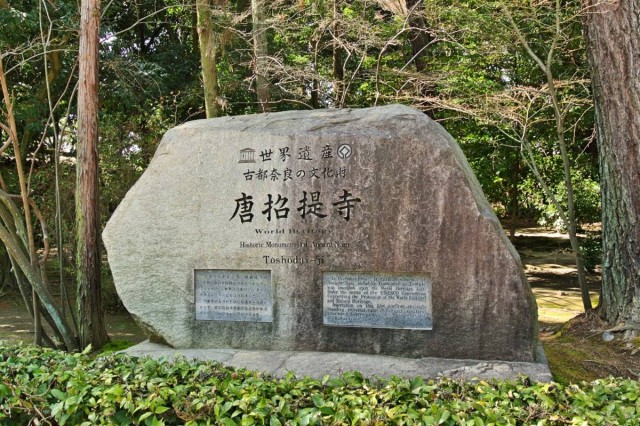
After visiting Yakushi-ji Temple, we headed to Tōshōdai-ji Temple, just a 10-minute walk away. DouDou came here, of course, because it’s another World Heritage Site. But now, looking back at the photos and writing this travelogue, what stands out the most is the moss!
Before talking about the moss, let me briefly share some info. Just hearing the name might make it seem unfamiliar. It’s said to have been built by the Chinese Tang Dynasty monk Jianzhen after he traveled to Japan. “Tang” naturally refers to China, and “Shōdai” (招提) in Sanskrit means “four directions” or “vastness.” Monks from all directions were called Shōtai monks, so Tōshōdai-ji means the temple of the Tang monk Jianzhen.
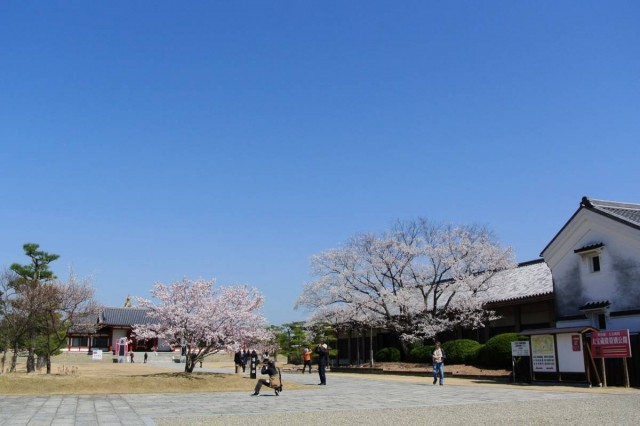
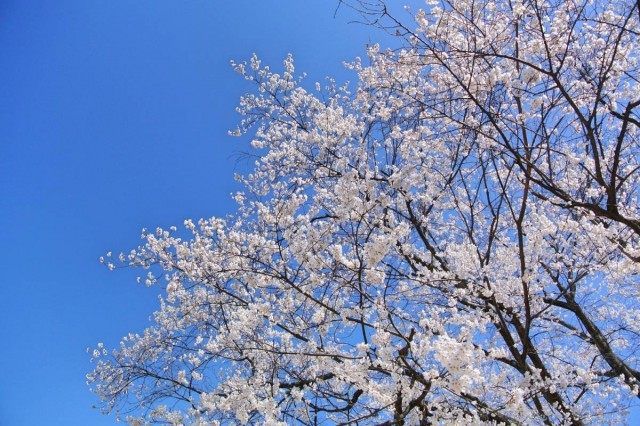
The square of Tōshōdai-ji Temple has several cherry blossom trees that attract visitors.
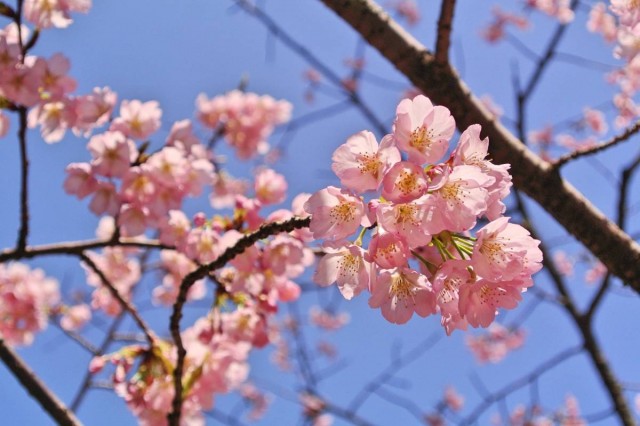
The Usuzumi cherry blossoms at Tōshōdai-ji Temple.
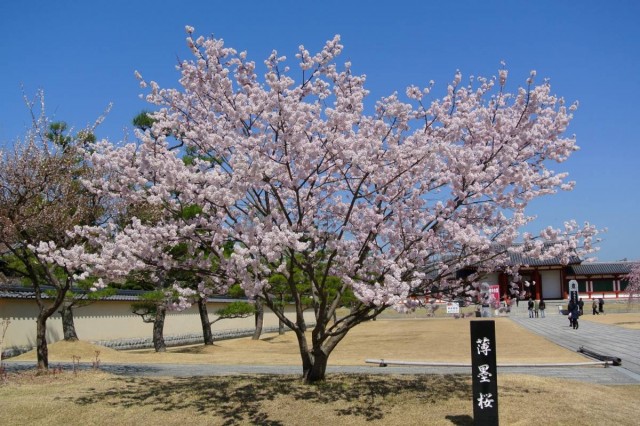
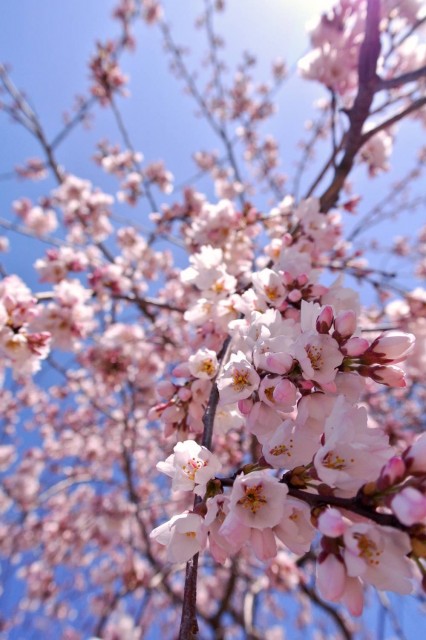
A close-up of the Usuzumi cherry blossoms. The weather was great, so no matter how you shoot, it looks beautiful.
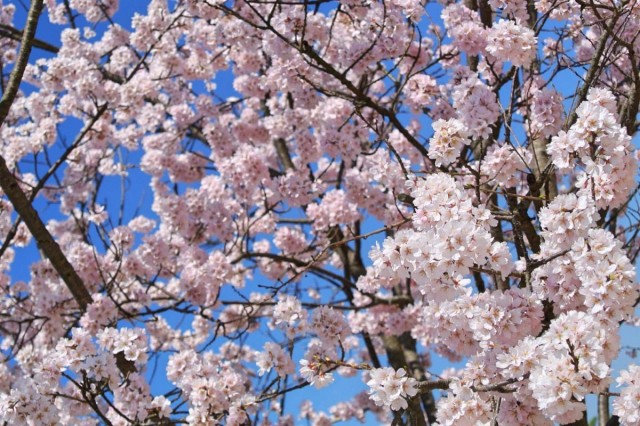
There are also pink weeping cherry blossoms.
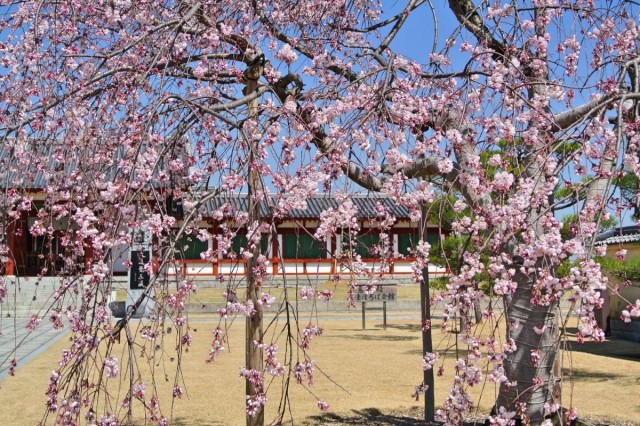
Although not yet in full bloom, they are already stunningly beautiful.
Then we entered the grounds of Tōshōdai-ji Temple. The admission fee is 600 yen. The area isn’t very large, but it’s packed with cultural treasures. There’s the Kondō (main hall), where the principal object of worship is enshrined, the Kōdō (lecture hall), the Tō (pagoda), the Kyōzō (sutra repository), the Shōrō (bell tower), and the Rōmon (two-storied gate). Each one is a national treasure.
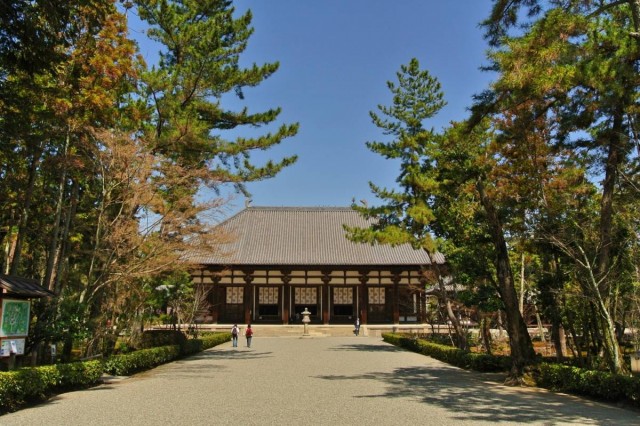
The National Treasure Bell Tower houses the relics of Monk Jianzhen, which is why it’s also called the Relic Hall.
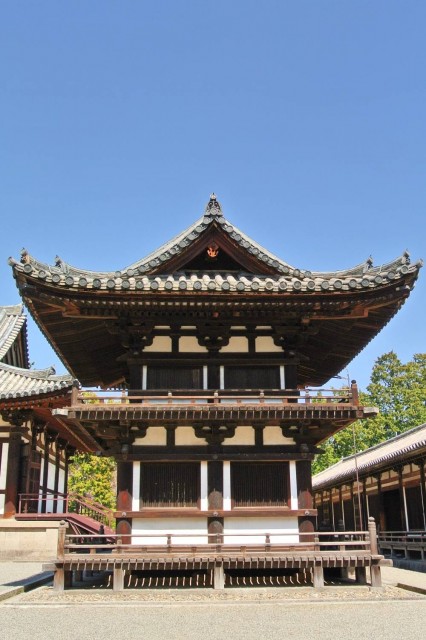
The Important Cultural Property Reception Hall.
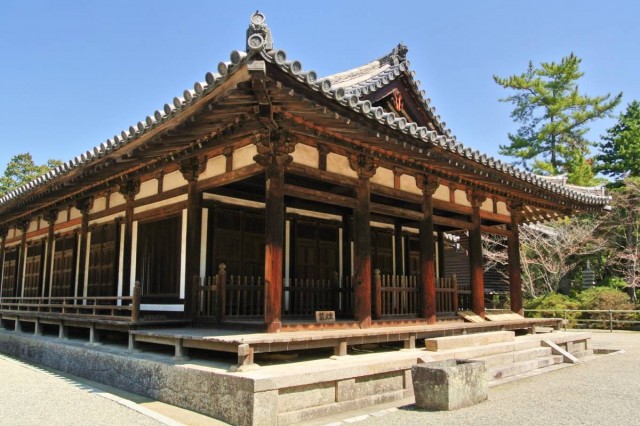
The National Treasure Kōdō (Lecture Hall), located behind the Kondō, is also a building from the Nara period.
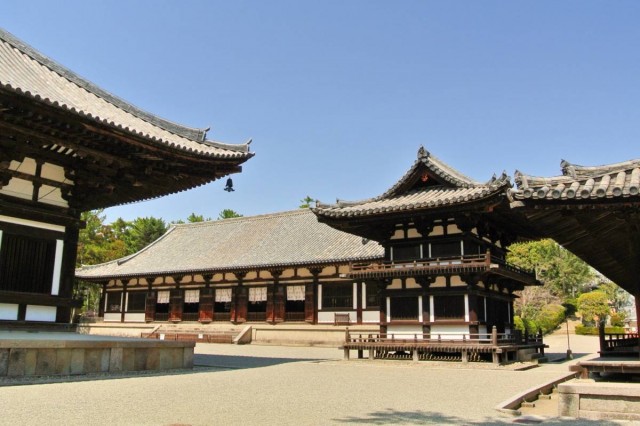
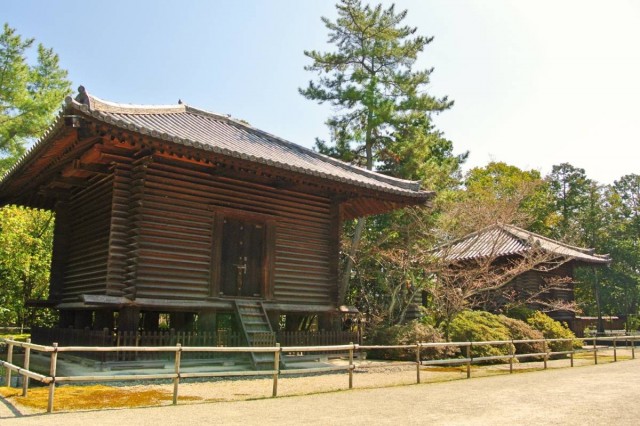
The National Treasure Hōmotsukan (Treasure Repository) (left) and the National Treasure Kyōzō (Sutra Repository) (right) next to the Reception Hall.
Although DouDou really enjoys history and loves learning about the stories of various deities and Buddhas, I’m even more drawn to natural scenery. So when I saw the cherry blossoms, I went over to take photos again.
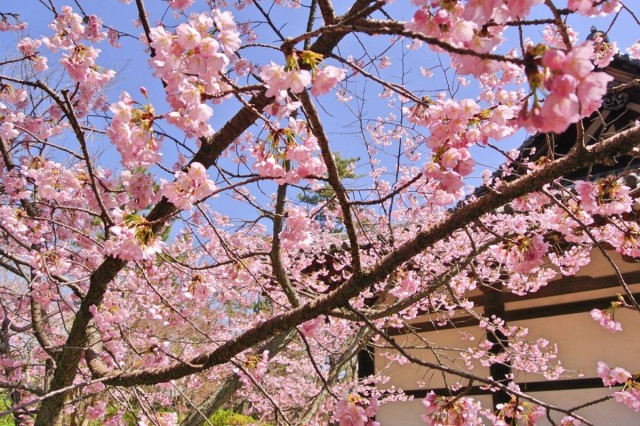
Cherry blossoms in the sunlight.
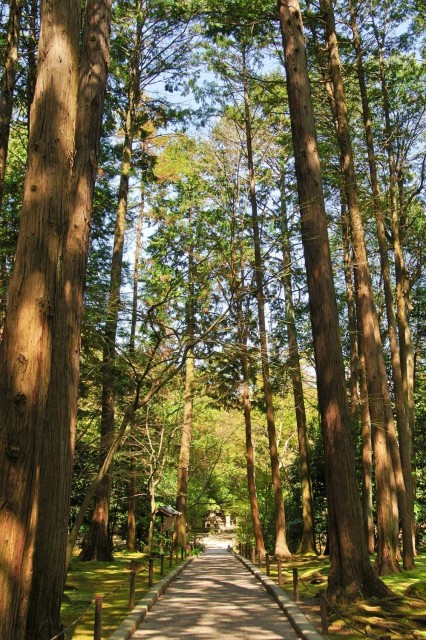
Then there’s a small path leading to other areas. Exploring these sites is always a spontaneous walk.
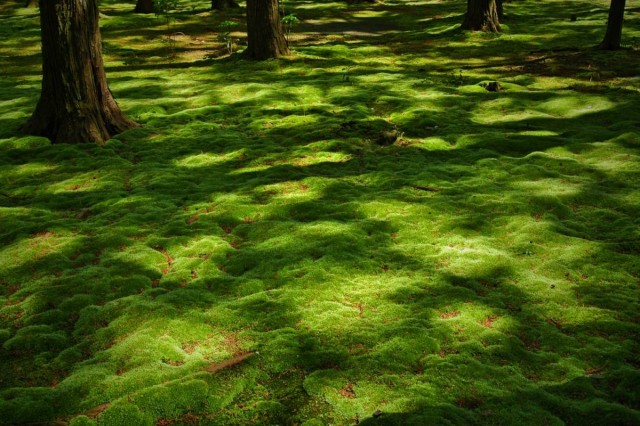
And then the small path is lined with moss, which looks so soft. The sunlight filters through the tall trees onto the ground covered with moss, and I found it incredibly beautiful. The moss here is much prettier than usual!
The moss grows so beautifully in the famous Moss Temple (Koke-dera) in Kyoto, which is also a World Heritage Site. But visiting it is quite troublesome—you have to apply in advance and get approval before you can even see the moss garden. There’s also a similar moss landscape in Shiratani Unsuikyō, Yakushima Island, Kagoshima Prefecture, but none are as beautiful as this. That impression really stuck with me. Later, after learning more about the ancient capital of Kyoto, I became very eager to visit the Moss Temple, but I still haven’t made it there yet.
At the end of the path is the Kaizan Gosho, the tomb of Monk Jianzhen.
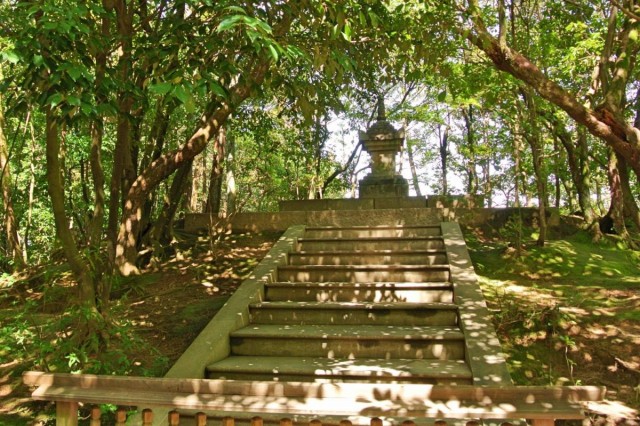
Then our Nara itinerary came to an end, and in the afternoon, we took a train to Takayama in Gifu.
Tōshōdai-ji Temple Official Website (Japanese/English/Chinese/Korean): http://www.toshodaiji.jp/index.html
Having traveled to over 30 countries/regions, lived in Taiwan for a year and a half, spent months traveling and living in Japan, worked and traveled in Canada for two months chasing the Northern Lights. Travelogues published on U blog, DC fever, likeJapan, now.com, and Travel Bar. Open to various forms of collaboration.
Facebook: https://www.facebook.com/k.doudou/
Instagram: http://www.instagram.com/k.doudou/
Youtube: https://www.youtube.com/channel/UCFM9xSqL_HYem9q9FppDYGg