Breathtaking scenery, a must-visit in a lifetime — Arctic Circle skinny-dip experience for “extreme rafting”
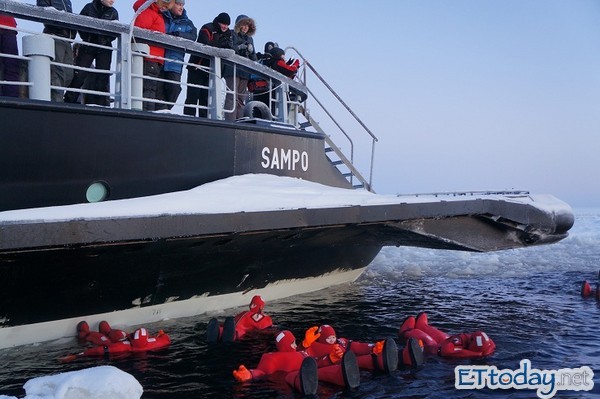
▲ The only sea ice-breaking rafting experience in Northern Europe.
Reported and photographed by You Ru / Finland
“Take off all your thermal layers inside. The sea is only at zero degrees, you really won’t feel cold.” As the crew member helped me into the “float suit,” they glanced at my outerwear — a thermal top, a thick hoodie, and an additional insulated jacket — and blurted out this unexpected remark. Swimming in waters near minus 30 degrees Celsius? According to experienced individuals, you truly don’t feel cold. After much hesitation, I still had to “strip down.”

▲ The icebreaker, named and operated by the company “Sampo,” is not very large and has a fairly limited passenger capacity.
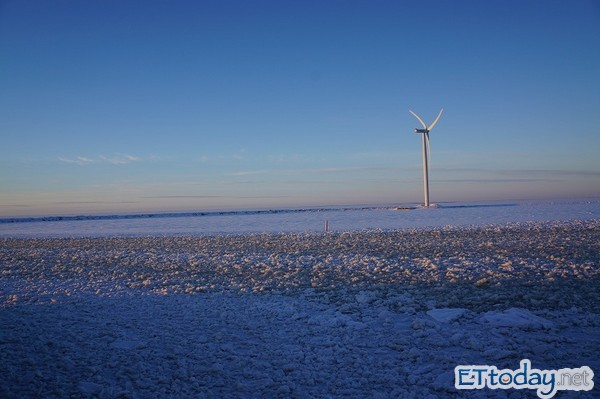
▲ Looking out, the sea surface is a vast expanse of pure white, and the wind is biting.
I boarded the icebreaker located near the Kemi (Kemi) dock in northern Finland. It is the only icebreaker in all of Northern Europe that can carry passengers for a tour on the frozen sea, and getting on it is no easy feat. First, because this icebreaker only operates in winter and not every day, one must carefully check its schedule before making arrangements. Second, booking the icebreaker requires full confirmation of the itinerary and payment to be completed a month in advance. Additionally, the icebreaker is not docked within the city, so round-trip transportation must be reserved in advance to avoid being stranded in the snowy wilderness. Finally, one must also carefully plan how to reach the small town of Kemi (Kemi), which is not a major tourist destination in Finland. Only then is the entire preparation process complete.
The icebreaker, named and operated by the company “Sampo,” is not very large and has a fairly limited passenger capacity. The historic Sampo was built in Helsinki, Finland, in 1960. It was designed as a massive vessel for extremely cold polar conditions. To navigate through ice, unlike other passenger ships, its hull is specially crafted to be round. When breaking through extremely thick and heavy ice, the ship travels at a speed of only about 15 kilometers per hour — slower than riding a bicycle.
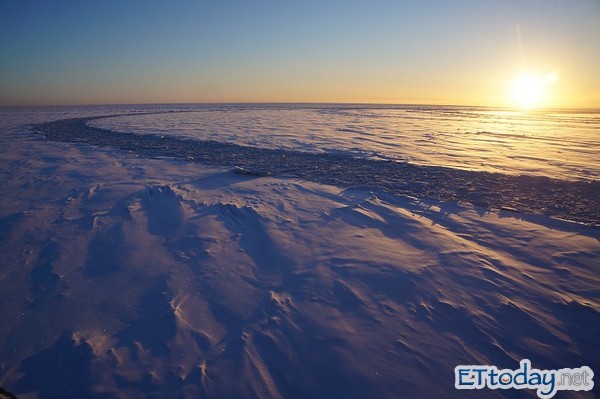
▲ You can see the trails left by the icebreaker on the sea surface.
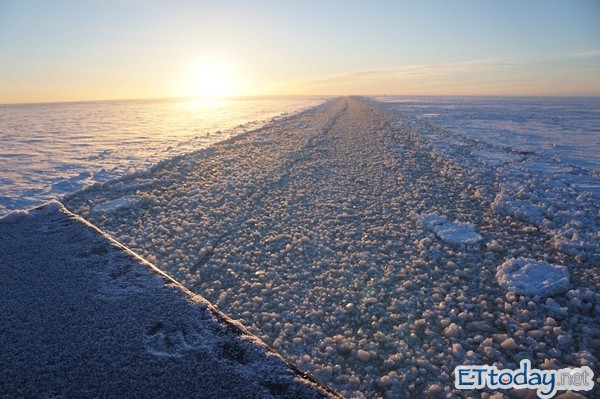
▲ The ice layer is extremely thick; looking toward the stern, it’s all fragmented ice.
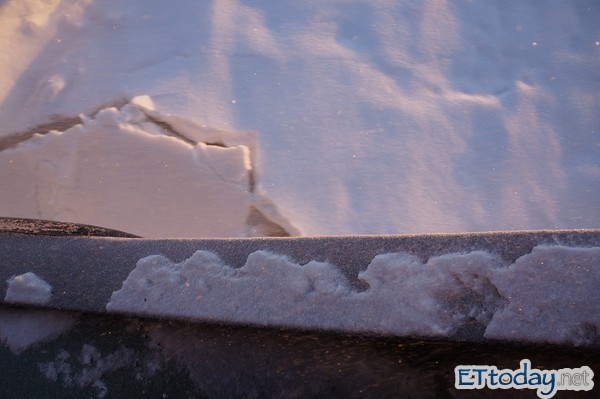
▲ Ice breaking moment visible from the side of the ship.
In the Kemi region, close to the Arctic Circle, the sun rises around 10 a.m. in winter and starts to get dark by about 3 p.m. The icebreaker’s operating hours are from 12 p.m. to 4 p.m. When boarding, it’s still light out, but by the time you disembark, it’s dark. While waiting at the dock before boarding, the sea surface is a vast expanse of pure white, and the wind is biting.
Upon boarding the Sampo icebreaker, the interior is not cold. Upon entering, the ship offers lunch options such as salmon soup and reindeer meat soup. The ship sails within the Bothnian Bay, allowing passengers to freely move around the cabin and deck to observe the ice breaking beneath the vessel. From the ship, the ice on the sea looks thick and pristine, as if you’re not on the open sea, but on an untouched polar land. The spectacular view is deeply moving.
After about three hours of sailing, once passengers have finished lunch and the ship finds a suitable spot for people to “go into the sea,” you can head to the back of the ship to get ready to put on the “float suit.” While putting on the float suit, the crew assists and reminds passengers to remove all warm clothing, because once you’re in the sea — which is “only at zero degrees” — you won’t feel cold at all.
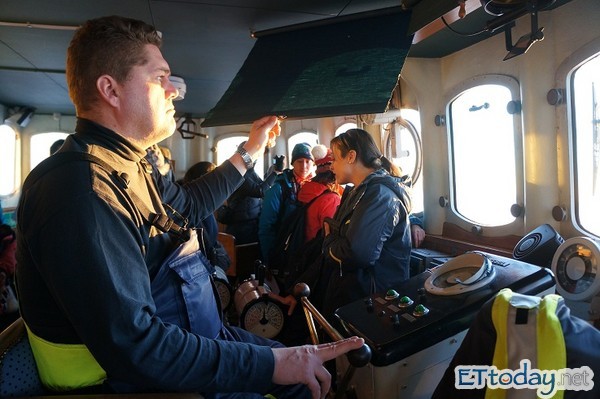
▲ The frozen sea surface makes the sunlight especially glaring, and the crew adjusts the position of the sunshade while steering the ship.
Putting on the silicone float suit, zipping it up to the nose, and tightening the ankle straps as much as possible, you can carefully step onto the semi-frozen deck and slowly make your way toward the sea via the ladder. By this time, warning flags marking a safe distance have been set up on the water, and staying within that area means you’re on thick ice. While approaching the water, all you can hear is the howling wind in your ears, and the land seems frozen in silence.
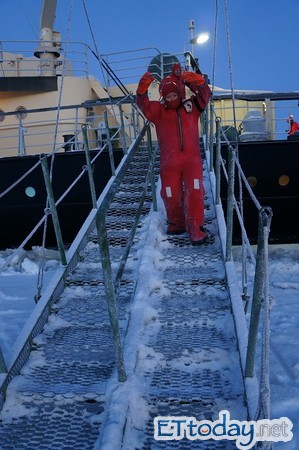
▲ Stepping from the deck into the sea.

▲ Sliding into the water along the edge of the ice, every passenger is visibly nervous.
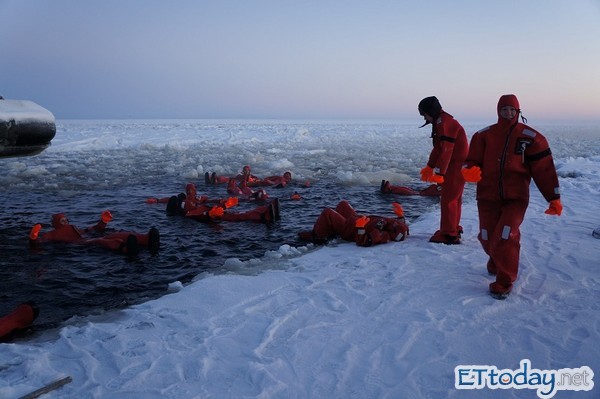
▲ Drifting on the sea among broken ice, with the water at around zero degrees, while the air temperature is below minus 30 degrees.
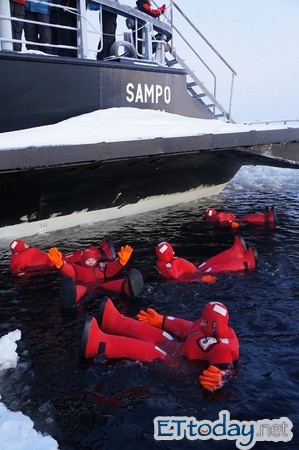
▲ Lying in the sea, feeling both nervous and exhilarated.
Sliding into the water through the ice layer, the crew explains that wearing the “float suit” in the seawater is much warmer than staying on the surface, because the air temperature on the surface is around minus 30 degrees, while the water remains at zero degrees. Lying on the sea surface, letting your body float naturally in the icy ocean, with occasional pieces of ice drifting by, the sky is a clear blue — a scene that words cannot fully capture. It feels as though the world is crystal clear and bright, as if you’re completely alone, with the sky feeling both close and distant.
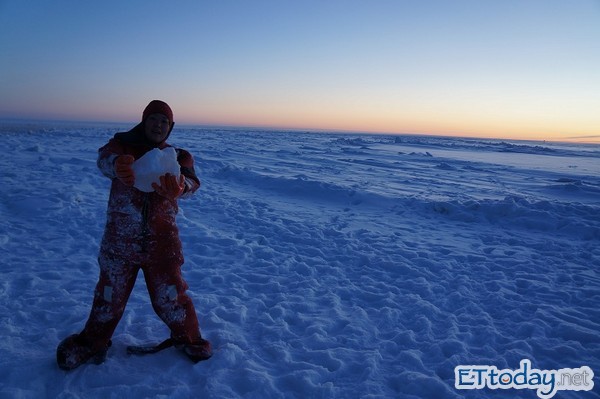
▲ The sky is a brilliant blue, and the view before you is beyond description.
Share
This article is published by HowToTrip. Sharing and reposting are welcome — please credit the source.
Article URL: https://www.howtotrip.net/views-29263
Related Articles
- Shaoxing's "Grandpa Gourd" hangs the gourds back up: "If there are too many people, we'll interact less — just take a quick look from afar"
- Chinese authorities announce "reciprocal adjustment" to Japan visa fees — single-entry visa jumps from 2,250 to 16,750 yen!
- The "health stones" carried by a traveler were found to have radiation levels exceeding safety limits by a thousand times, potentially endangering fellow passengers on the same flight. Customs issues warning!
- Shenzhen Airport Issues Late-Night Notice: Unidentified Aerial Object Detected, Causing Widespread Flight Delays!
- “They only said it cost money after I opened the box and washed it!” 200g of grapes sold for 60 yuan on a high-speed train—12306 responds!
- Can't buy an airline ticket? Denied exit? Blocked from boarding? A large number of Chinese tourists have mysteriously become "discredited individuals"
- Adverse weather and economic fluctuations impact Colombia's coffee market
- Beach bathing area responds to 2 yuan/30 seconds fee for freshwater foot rinsing: Clearly priced!
- Taking off with an improperly closed cabin door? Wing malfunction? Multiple flights made emergency returns mid-journey!
- Experience the gifts of nature! A countdown of the world’s ten most stunning coastlines